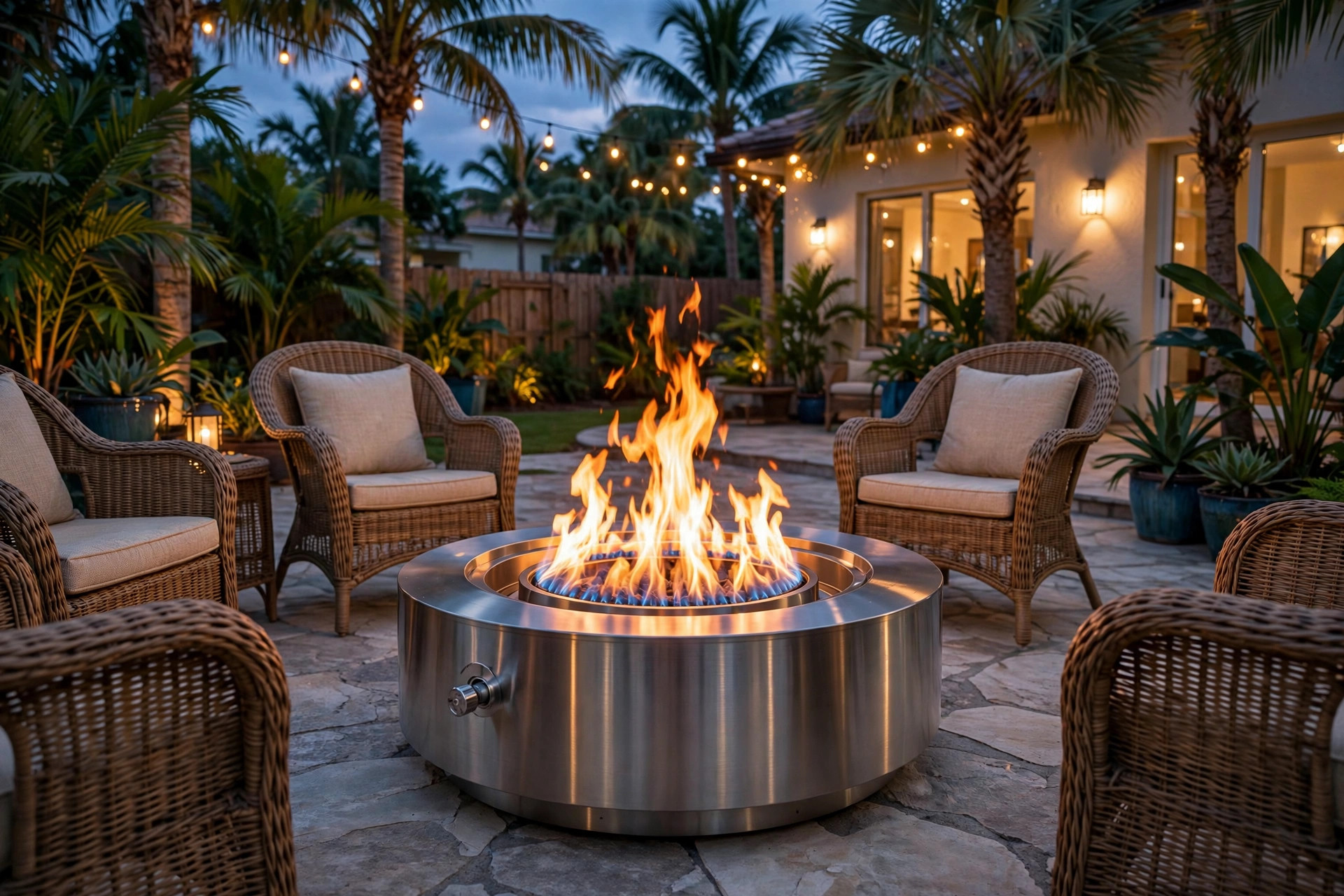

Homeowners across the Sunshine State have one common question as outdoor living grows more popular: where to buy propane fire pits in florida. The answer matters more than most buyers expect. Florida has its own climate rules, local codes, and shopping options that shape what you should buy and where you should buy it. This guide walks through the best places to shop, what to look for, what to pay, and how to stay safe. By the end, you will know exactly where to find a propane fire pit that fits your yard, your budget, and your local rules.
Why It Matters Where You Shop
A propane fire pit is not like a garden chair. It uses fuel, it produces heat, and it must meet local fire codes. Buying from a store that understands Florida rules can save you real trouble. Big chain stores in Miami, Tampa, Orlando, and Jacksonville stock models that meet state standards. Local hearth shops know which units pass the county inspection. Online sellers may not.
Florida also has a humid climate. Salt air near the coast can corrode metal parts in a single season. Models built for dry inland states may fail faster here. Stores that sell to Florida buyers year after year carry brands and finishes made for humidity and heat, and their staff can tell you which ones last. That local knowledge is one reason the question of where to buy propane fire pits in florida is worth asking in the first place.
What to Look for Before You Buy: Where to Buy Propane Fire Pits in Florida
Before you visit a store or click an order button, decide what you need. A good propane fire pit has a few clear marks of quality.
BTU rating. BTU measures heat output. Most backyard units run from 40,000 to 65,000 BTU. A higher number gives more heat but burns fuel faster. For a small patio, 40,000 BTU is enough. For a large open yard, aim higher.
Tank size and connection. Most portable units connect to a standard 20-pound propane tank. Some hide the tank inside the base. Some need a larger tank or a plumbed gas line. Know which setup you want before you shop.
Ignition type. Push-button ignition is common and simple. Match-lit units cost less but need a long lighter. Electronic ignition starts faster and is easier in wind.
Material and finish. Look for powder-coated steel, stainless steel, or concrete tops. These resist rust and sun damage. Bare iron and cheap painted metal fade and flake in Florida sun.
Safety certification. A CSA or UL listing means the unit was tested by an independent lab. This matters for warranty claims and for local code checks.
Size and shape. Round bowls seat a group well. Square and rectangular tables fit modern patios. Measure your space and leave at least ten feet of clear space around the unit.
A quick visit to a consumer testing resource can help you compare models, though for fireplace products many buyers rely on retailer reviews and manufacturer pages instead.
Types of Propane Fire Pits
Propane fire pits come in several styles. Each suits a different yard and a different buyer.
Fire bowls. These are round, open, and simple. They cost the least and fit small patios. Many are portable, which helps renters.
Fire tables. These look like coffee tables with a flame in the center. They suit modern patios and double as a surface for drinks. They cost more than bowls.
In-ground or built-in units. These are set into a patio or outdoor kitchen. They cost the most and need a pro to install. They add real value to a home.
Portable campfire units. These are light, small, and easy to move. They suit renters and small decks. Their heat output is modest.
For buyers who want lower fuel use, energy efficient models use burner designs that squeeze more heat from each tank. And if your yard stays cool on winter nights but you want heat beyond one pit, propane patio heaters are worth a look as a companion purchase.
Where to Buy Propane Fire Pits in Florida
Here is the heart of the question. Florida gives buyers many choices, from large chains to local shops to online sellers.
Large Home Improvement Stores
Stores such as Home Depot and Lowe’s carry propane fire pits in almost every Florida location. You can see the unit in person, check the build quality, and carry it home the same day. Their websites let you check local stock by ZIP code, which saves a wasted trip. These stores also sell propane tanks, tank gauges, covers, and spare parts. Prices are fair, and seasonal sales in fall and spring can cut the price by a quarter or more.
Local Hearth and Patio Shops
Every Florida city has at least one specialty hearth shop. These stores sell gas fireplaces, outdoor kitchens, and fire pits all year. Their staff know local codes and can tell you if a unit needs a permit in your county. Many offer delivery, setup, and a gas line hookup service. You will pay more than at a chain store, but you get expert advice and after-sale service. For built-in units or natural gas conversions, a local shop is the best choice.
Outdoor Living and Patio Furniture Stores
Patio furniture stores in Florida carry fire tables and fire bowls as part of their outdoor sets. Shopping here lets you match the fire pit to your chairs and tables. Staff can help you plan the whole patio layout. Prices sit in the middle range.
Online Retailers
Online stores give the widest choice and often the lowest prices. You can compare dozens of models in an hour. But you cannot see the unit before it arrives, and returns for heavy items are a hassle. Check the return policy and the warranty before you order. Make sure the seller ships to Florida and that the unit meets Florida fire codes.
Warehouse Clubs and Department Stores
Warehouse clubs sell fire pits in season at sharp prices. The choice is limited to a few models, but the value is strong. Department stores with home sections also carry them, mainly in the cooler months.
Secondhand Markets
Used fire pits show up on local classified sites and community boards. You can save real money, but check the burner, hoses, and gas connections with care. Old hoses crack in Florida heat. If a used unit lacks a CSA or UL label, pass on it. A consumer safety source posts recalls for outdoor heating products, and it is worth checking the model number there before you buy used.
Manufacturer and Brand Sites
Brands such as Napoleon and Heatilator sell direct or point you to authorized dealers. Buying from an authorized dealer keeps your warranty valid. Brand sites also carry spare parts and accessories that chain stores may not stock.
Hardware and DIY Guides
Before you buy, it helps to read plain how-to guides. Sites like This Old House, Family Handyman, and The Spruce explain BTU ratings, tank setup, and patio placement in simple terms. A few hours of reading can keep you from buying the wrong unit.
Cost and Price
Propane fire pit prices in Florida follow a clear range.
Budget tier: 100 to 300 dollars. Basic fire bowls with match-lit or push-button ignition. Steel construction. Fine for small patios and light use.
Mid tier: 300 to 800 dollars. Fire tables and better bowls. Electronic ignition, stainless steel or concrete finishes, hidden tank storage. This is the sweet spot for most buyers.
High tier: 800 to 2,000 dollars and up. Large fire tables, built-in units, and designer models. Premium materials and high BTU output. Built-in units add installation cost on top.
Beyond the purchase price, budget for extras. A 20-pound propane tank costs about 40 to 60 dollars to refill in Florida, depending on the dealer. A weather cover runs 30 to 80 dollars. A tank gauge costs about 15 dollars. If you want a plumbed gas line, a licensed gas fitter may charge 300 to 800 dollars for the work.
Watch for seasonal sales. Florida stores discount fire pits in late spring and early summer, when the weather turns hot and demand drops. Fall brings the best new-model arrivals.
Care and Upkeep
Florida weather is hard on outdoor gear. A little care keeps your fire pit working for years.
Cover it. Use a fitted cover when the pit is cool. This blocks rain, sun, and salt spray. It is the single best thing you can do.
Check hoses and connections. Before each season, check the hose for cracks and the fittings for leaks. A simple leak test: brush soapy water on the connections with the gas on. Bubbles mean a leak. Replace worn hoses at once.
Clean the burner. Leaves, sand, and bugs can clog the burner ports. Brush the burner clean and clear the ports with a thin wire. A clogged burner burns uneven and wastes fuel.
Protect the finish. Wipe down metal surfaces and touch up paint chips before rust starts. Stainless steel still needs a wash now and then to stop surface spots.
Store the tank right. Keep the tank upright, in the open air, away from the house. Never store a propane tank indoors or in a closed garage. The EPA offers general guidance on safe fuel handling around the home.
Winterize for the rare freeze. North Florida gets a few cold nights. If you will not use the pit for months, disconnect the tank, cap the line, and cover the unit.
Safety
A propane fire pit is safe when used right. Florida buyers should know these rules.
Clear space. Keep at least ten feet between the flame and walls, fences, trees, and overhangs. Never use a fire pit under a roof or screen enclosure unless the unit is rated for it and local code allows it.
Check local rules. Florida counties and cities set their own open-flame rules. Some HOA communities ban fire pits outright. Some counties require a permit. Call your local fire department or check the county website before you buy. This step takes ten minutes and can save you a fine.
Never leave it lit. Stay with the pit while it burns. Keep children and pets at a safe distance. Let the unit cool fully before you cover it.
Mind the wind. Florida afternoons bring strong sea breezes. If the flame blows out, shut the gas off, wait five minutes, and relight. Repeated blowouts mean the spot is too windy. Move the unit or add a wind guard.
Keep a fire extinguisher nearby. A small ABC extinguisher costs little and belongs within reach of any outdoor flame.
Watch for burn bans. During dry spells, Florida counties issue burn bans. A ban may cover propane fire pits too, depending on the wording. Check before you light up.
FAQ
Do I need a permit for a propane fire pit in Florida? It depends on your county and city. Many places allow portable CSA-listed fire pits without a permit. Built-in units and gas line hookups usually need one. Call your local fire marshal or building office to confirm.
How much does it cost to run a propane fire pit? A standard 20-pound tank holds about 4.6 gallons of propane. A 50,000 BTU unit burns through it in about 8 to 10 hours. At Florida refill prices, that works out to roughly 4 to 7 dollars per hour of use. Lower heat settings stretch the tank further.
Can I use a propane fire pit on a wood deck? Yes, if the unit is rated for deck use and sits on a heat shield or fire mat. Keep it away from railings and overhangs. Check the manual for the exact clearance numbers.
How long do propane fire pits last in Florida? With a cover and basic care, a mid-tier unit lasts 5 to 10 years in Florida. Cheap steel models may rust out in 2 to 3 years near the coast. Stainless steel and concrete units last longest.
Is propane better than wood for Florida yards? For most Florida buyers, yes. Propane lights fast, burns clean, and shuts off with a knob. Wood pits make smoke and ash, and many Florida communities restrict them. Propane also works during burn bans that bar wood fires.
Where can I refill propane tanks in Florida? Home improvement stores, hardware stores, gas stations, and dedicated propane dealers refill tanks across Florida. Many offer tank exchange programs too, where you swap an empty tank for a full one.
A Final Word
The question of where to buy propane fire pits in florida has no single answer, but it has a clear method. Start with what you need: size, heat, and budget. Shop at stores that know Florida codes and Florida weather. Check the unit for certification and build quality. Ask about permits before you buy. Then cover it, care for it, and use it with respect for the rules. Do that, and your fire pit will give you years of warm evenings on the patio.
References
Consumer Reports. (n.d.). Product reviews and ratings. https://www.consumerreports.org Family Handyman. (n.d.). DIY home repair and maintenance. https://www.familyhandyman.com Heatilator. (n.d.). Fireplaces and fireplace products. https://www.heatilator.com Lowe’s. (n.d.). Home improvement products. https://www.lowes.com Napoleon. (n.d.). Fireplaces, grills, and heating products. https://www.napoleon.com The Home Depot. (n.d.). Home improvement products. https://www.homedepot.com The Spruce. (n.d.). Home and garden advice. https://www.thespruce.com This Old House. (n.d.). Home renovation guidance. https://www.thisoldhouse.com U.S. Consumer Product Safety Commission. (n.d.). Product safety information. https://www.cpsc.gov U.S. Environmental Protection Agency. (n.d.). Protecting human health and the environment. https://www.epa.gov
Was this guide helpful?

About James Carter
The My Garden US editorial team writes practical, in-depth home and garden guides for American homeowners — tested advice, no fluff.
You May Also Like
Ventless Propane Patio Heaters With Free Shipping: A Complete Buying Guide
July 1, 2026 0 views
Best Fireplace Log Holders for First Time Homeowners
January 25, 2026 0 views
Best Electric Fireplaces for Living Rooms Buying Guide
May 7, 2026 0 views