---
Table of Contents
Table of Contents
- Clean Soot from Fireplace Glass: Why Soot Builds Up on Fireplace Glass
- Safety First: Let It Cool Completely
- What You Will Need
- Method 1: The Wood Ash Paste
- Method 2: Vinegar and Water Spray
- Method 3: Baking Soda Paste
- Method 4: Commercial Fireplace Glass Cleaner
- Tackling Stubborn, Baked-On Soot
- Cleaning White Film on Gas Fireplace Glass
- What Not to Do
- How to Prevent Soot Buildup
- When to Call a Professional
- Frequently Asked Questions
- References
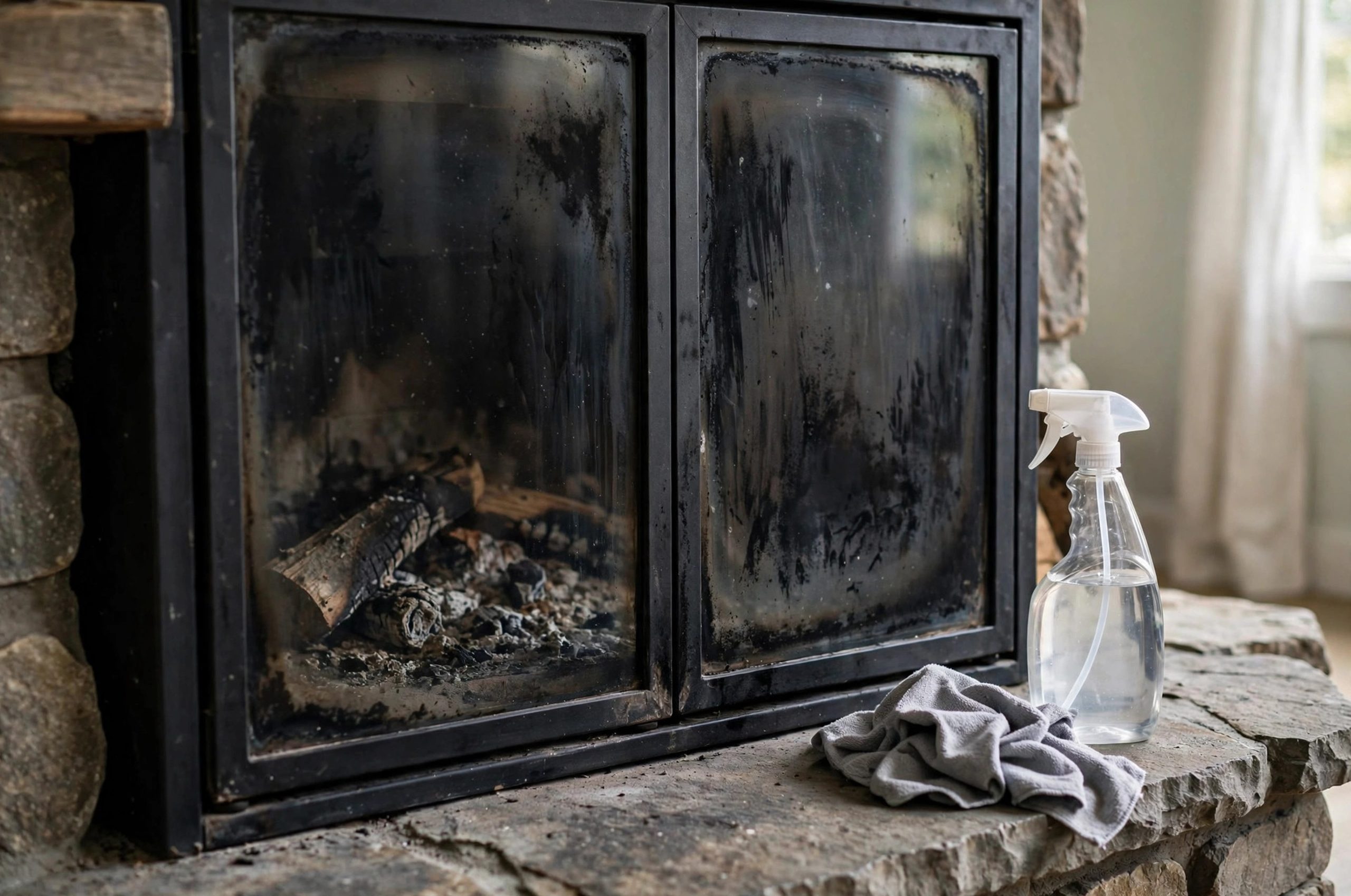
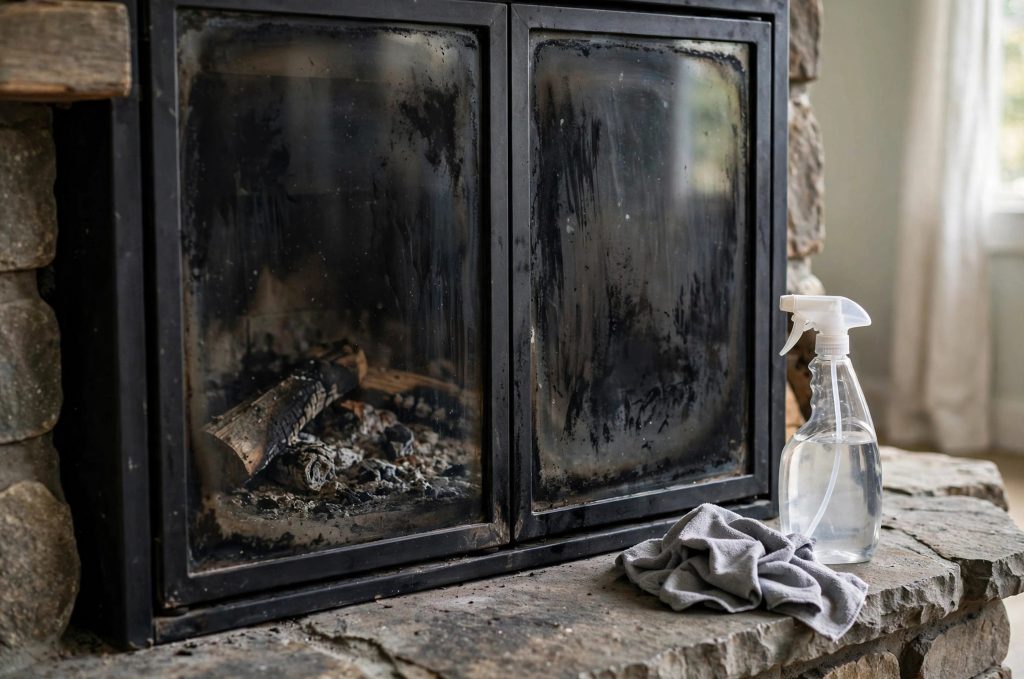
Nothing ruins the look of a cozy fire like black, cloudy glass. Soot builds up on fireplace doors fast, and it can turn a beautiful firebox into a dark box you cannot see through. The good news is that you do not need fancy tools to clean soot from fireplace glass. A few household items and some patience will bring back the clear view of your flames. This guide shows how to clean soot from fireplace glass in plain steps.
This guide walks you through the safest and most effective ways to clean soot from fireplace glass, what to avoid so you do not scratch or damage the glass, and how to slow down future buildup.
Clean Soot from Fireplace Glass: Why Soot Builds Up on Fireplace Glass
When it comes to clean soot from fireplace glass, getting the details right makes all the difference.
When it comes to clean soot from fireplace glass, getting the details right makes all the difference.
Many homeowners find that clean soot from fireplace glass is easier than they expected once they know the basics.
Soot is made of tiny carbon particles. When wood burns, it gives off smoke and gases. Some of those particles stick to the cooler surface of the glass doors. Wet or unseasoned wood makes the problem much worse because it smolders and gives off far more smoke than dry wood. A fire that does not get enough air will also coat the glass quickly.
Gas fireplaces can get a white film on the glass instead of black soot. This haze comes from minerals and sulfur in the gas, and it needs a slightly different approach. We cover that below.
A thin layer of soot is normal after a few fires. But if the glass turns dark after a single burn, your fires may be burning too cool, your wood may be too wet, or your damper may not be open enough. Fixing the cause will cut your cleaning work in half.
Safety First: Let It Cool Completely
Many homeowners find that clean soot from fireplace glass is easier than they expected once they know the basics.
Many homeowners find that clean soot from fireplace glass is easier than they expected once they know the basics.
The key to clean soot from fireplace glass is choosing the right approach for your space and budget.
Never clean glass that is still warm. Fireplace glass can hold heat long after the flames die down. Wait until the glass is fully cool to the touch before you start. Rushing this step can cause the glass to crack from the shock of cold cleaner on a hot surface, and you can burn your hands.
Put on gloves to keep soot off your skin, and lay down old newspapers or a drop cloth around the hearth. Soot is fine and gets everywhere. A dust mask is a smart idea too, since the fine particles can irritate your lungs. Angi's guide to cleaning fireplace glass also stresses working with cool glass and protecting the surrounding area before you begin (Angi).
What You Will Need
The key to clean soot from fireplace glass is choosing the right approach for your space and budget.
With a little planning, clean soot from fireplace glass can fit even a busy schedule.
Gather your supplies before you start:
- Soft cloths or microfiber towels
- Old newspapers
- A spray bottle
- White vinegar
- Baking soda
- Water
- Rubber gloves
- A dust mask
For tougher jobs, you may want a cleaner made for fireplace glass, such as the products Rutland makes for stove and fireplace glass (Rutland). Keep a melamine sponge on hand as well for stubborn spots.
Method 1: The Wood Ash Paste
With a little planning, clean soot from fireplace glass can fit even a busy schedule.
Before you start, it helps to understand how clean soot from fireplace glass works in real homes.
This is the oldest trick in the book, and it works because wood ash is a mild abrasive. About a quarter of wood ash is calcium carbonate, a natural cleaner. Chimney professionals have used damp newspaper dipped in ash for years (Swede Chimney Sweep).
1. Scoop up a small amount of cool, white ash from the firebox. Make sure there are no hot embers hiding in it. 2. Dip a damp cloth or a ball of damp newspaper into the ash. 3. Rub the glass in small circles, focusing on the darkest spots. 4. Wipe the glass clean with a fresh damp cloth. 5. Dry and buff with a clean microfiber towel.
The ash method is best for light to moderate soot. It costs nothing and uses what is already in your fireplace. Work gently. Even though ash is mild, pressing too hard with gritty ash can leave fine scratches.
Method 2: Vinegar and Water Spray
Before you start, it helps to understand how clean soot from fireplace glass works in real homes.
A good plan for clean soot from fireplace glass saves time, money, and frustration.
White vinegar cuts through soot and grease well. It is cheap, safe, and you probably have it in the kitchen already.
1. Mix equal parts white vinegar and warm water in a spray bottle. 2. Spray the glass generously and let it sit for several minutes. 3. Wipe with a soft cloth in circular motions. 4. For heavy buildup, spray again and let it sit longer before wiping. 5. Buff dry with a clean microfiber towel for a streak-free finish.
Some guides recommend adding a tablespoon of ammonia to the mix for extra power, but never mix vinegar with bleach, which creates toxic gas (Essential Home and Garden). Keep it simple: vinegar and water handle most jobs.
Method 3: Baking Soda Paste
A good plan for clean soot from fireplace glass saves time, money, and frustration.
For most people, clean soot from fireplace glass comes down to a few smart choices.
Baking soda gives you a gentle scrubbing action without harsh chemicals. It is a good middle ground between the ash method and a commercial cleaner.
1. Mix equal parts baking soda and water into a thick paste. 2. Spread the paste over the sooty areas with a soft cloth. 3. Let it sit for ten minutes to loosen the grime. 4. Scrub gently with a soft-bristled brush or an old toothbrush, working in small circles. 5. Wipe clean with a damp cloth, then dry.
Vancouver's Best Cleaners recommends following the baking soda scrub with a vinegar spray, since the two react and lift remaining residue (Vancouver's Best Cleaners).
Method 4: Commercial Fireplace Glass Cleaner
For most people, clean soot from fireplace glass comes down to a few smart choices.
If you are new to clean soot from fireplace glass, start with the simplest option and build from there.
When home methods are not enough, a cleaner made for the job will finish it. Rutland's stove and fireplace glass cleaners use micro-scrubbers that remove baked-on soot, creosote, and carbon without scratching the glass (Rutland). The conditioning formula also leaves a thin silicone layer that makes the next cleaning easier.
To use a commercial cleaner:
1. Shake the bottle well. 2. Apply a small amount to the cool glass with a damp paper towel or cloth. 3. Rub firmly in circles over the sooty areas. 4. Wipe off all residue and buff with a dry towel. 5. Do not let the cleaner dry on the glass.
Lehman's, a longtime seller of hearth supplies, notes that these cleaners are made to be non-abrasive and safe for fireplace glass when used as directed (Lehman's).
Tackling Stubborn, Baked-On Soot
If you are new to clean soot from fireplace glass, start with the simplest option and build from there.
Sometimes the soot has been baked on for so long that it feels like part of the glass. Try these steps:
- Apply your chosen cleaner and let it sit for thirty minutes before scrubbing.
- Use a melamine sponge dampened with water, working gently in circles.
- Repeat the process two or three times instead of scrubbing harder once.
If a spot still will not budge, the glass may have permanent staining or etching from years of heat and neglect. At that point, replacement glass for the door frame may be the only fix. Supreme Fireplaces suggests checking whether the staining is surface-level or permanent before giving up on the glass (Supreme Fireplaces).
Cleaning White Film on Gas Fireplace Glass
When it comes to clean soot from fireplace glass, getting the details right makes all the difference.
Gas fireplace glass often develops a white haze rather than black soot. This film is a mix of minerals, and plain glass cleaner usually cannot remove it. Tips Bulletin recommends white vinegar as a first try, since the acid breaks the bond between the film and the glass (Tips Bulletin).
For a thick white film, use a cream cleaner made for gas fireplace glass, such as Rutland's White Off glass cleaning cream. It is non-abrasive and made to remove the mineral haze without scratching or pitting the glass. Apply with gloves, rub firmly, and buff clean. Exceptional Fire, a fireplace manufacturer, notes that natural acids like vinegar or lemon juice are safe choices for routine glass care (Exceptional Fire).
What Not to Do
Many homeowners find that clean soot from fireplace glass is easier than they expected once they know the basics.
A few common mistakes can ruin your glass or your doors:
- Do not use oven cleaner on a regular basis. It is harsh and can damage gaskets and metal trim around the glass.
- Do not use steel wool or scouring pads. They will scratch the glass permanently.
- Do not spray cleaner on hot glass. Thermal shock can crack it.
- Do not use ammonia-based cleaners on gas fireplace glass without checking the maker's advice. Some manufacturers warn that ammonia can react with the coatings on gas fireplace glass.
- Do not soak the door gaskets. Too much liquid can weaken the gaskets that seal the doors.
How to Prevent Soot Buildup
The key to clean soot from fireplace glass is choosing the right approach for your space and budget.
Cleaning is easier when there is less soot to remove. These habits will keep your glass clearer between cleanings:
- Burn seasoned wood only. Wood with low moisture burns hotter and cleaner. Wet wood is the top cause of heavy soot.
- Keep the damper fully open while the fire burns. Starving the fire of air makes it smoky.
- Build hot fires, not smoldering ones. A small, hot fire makes less soot than a large, lazy one.
- Clean the glass regularly. A quick wipe every few fires is easier than a deep scrub once a season.
- Have your chimney swept once a year. A clean flue draws better, which means a hotter, cleaner burn. A good chimney sweep service can also check that your system is drafting properly.
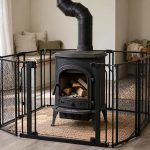
Pairing clear glass with the right accessories makes the whole fireplace safer and nicer to use. A quality fireplace screen with doors keeps sparks in while you enjoy the view, and a hearth rug protects your floors from stray embers. If you have little ones around, a childproof fireplace screen adds an extra layer of safety.
When to Call a Professional
If your glass blacks out after every single fire no matter what you change, something may be wrong with your setup. Poor draft, a blocked flue, or the wrong size firebox for your chimney can all cause chronic soot. A certified chimney sweep can inspect the system and find the cause. Annual inspection is the standard advice from chimney safety groups, and it keeps small problems from turning into dangerous ones.
Clear fireplace glass makes every fire better. Pick the method that matches your level of buildup, work with cool glass, and stay on top of it with quick cleanings through the burning season. Your fireplace will look like new, and you will actually be able to enjoy the flames.
Frequently Asked Questions
How often should I clean my fireplace glass? A quick wipe every three to five fires keeps soot from baking on. If you burn daily, a weekly wipe-down takes only minutes. Deep cleaning once or twice per burning season handles the rest.
Can I use regular glass cleaner like Windex? Standard glass cleaner works on light haze, but it struggles with baked-on soot and creosote. For real buildup, use the ash, vinegar, or baking soda methods above, or a cleaner made for fireplace glass.
Why does my glass turn black after a single fire? Something is off with the burn. The most common causes are wet wood, a damper that is not fully open, or a fire smoldering at too low a temperature. Switch to seasoned wood and give the fire more air.
Is blackened glass dangerous? The black glass itself is not dangerous, but heavy soot is a warning sign. It means your fires are burning dirty, which also means creosote is building up in the chimney. Take it as a cue to check your wood and your burning habits. With these steps, you can clean soot from fireplace glass with confidence.
References
Angi. (n.d.). How to clean fireplace glass the right way. https://www.angi.com/articles/how-to-clean-glass-fireplace.htm
Exceptional Fire. (n.d.). 7 maintenance tips for fireplace glass doors. https://www.exceptionalfire.com/blogs/news/7-maintenance-tips-for-fireplace-glass-doors
Rutland Products. (n.d.). Fireplace & wood stove glass cleaner. https://rutland.com/collections/stove-and-fireplace-glass/products/fireplace-wood-stove-glass-cleaner
Rutland Products. (n.d.). Stove, grill & hearth conditioning glass cleaner. https://rutland.com/products/stove-grill-hearth-conditioning-glass-cleaner
Supreme Fireplaces. (n.d.). How to clean fireplace glass doors fast & easily. https://supremefireplaces.com/blogs/tips/how-to-clean-fireplace-glass-doors
Swede Chimney Sweep. (n.d.). 10 easy steps to cleaning out the fireplace. https://swedesweep.com/tag/fireplace-glass-doors/
Tips Bulletin. (n.d.). Gas fireplace glass: Tips for cleaning glass on gas fireplaces. https://www.tipsbulletin.com/how-to-clean-gas-fireplace-glass/
Vancouver's Best Cleaners. (n.d.). How to clean fireplace glass doors? A comprehensive guide. https://www.vancouversbestcleaners.com/how-to-clean-fireplace-glass-doors-a-comprehensive-guide/
Was this guide helpful?

About My Garden US
The My Garden US editorial team writes practical, in-depth home and garden guides for American homeowners — tested advice, no fluff.
You May Also Like
How to Buy Fireplace Mantel Shelves Online in California
March 22, 2026 12 views
Where to Buy Wood Burning Stoves in Colorado
September 13, 2026 16 views
The Best Fireplace Grates for Southern States: A Buyer's Guide
August 21, 2026 19 views