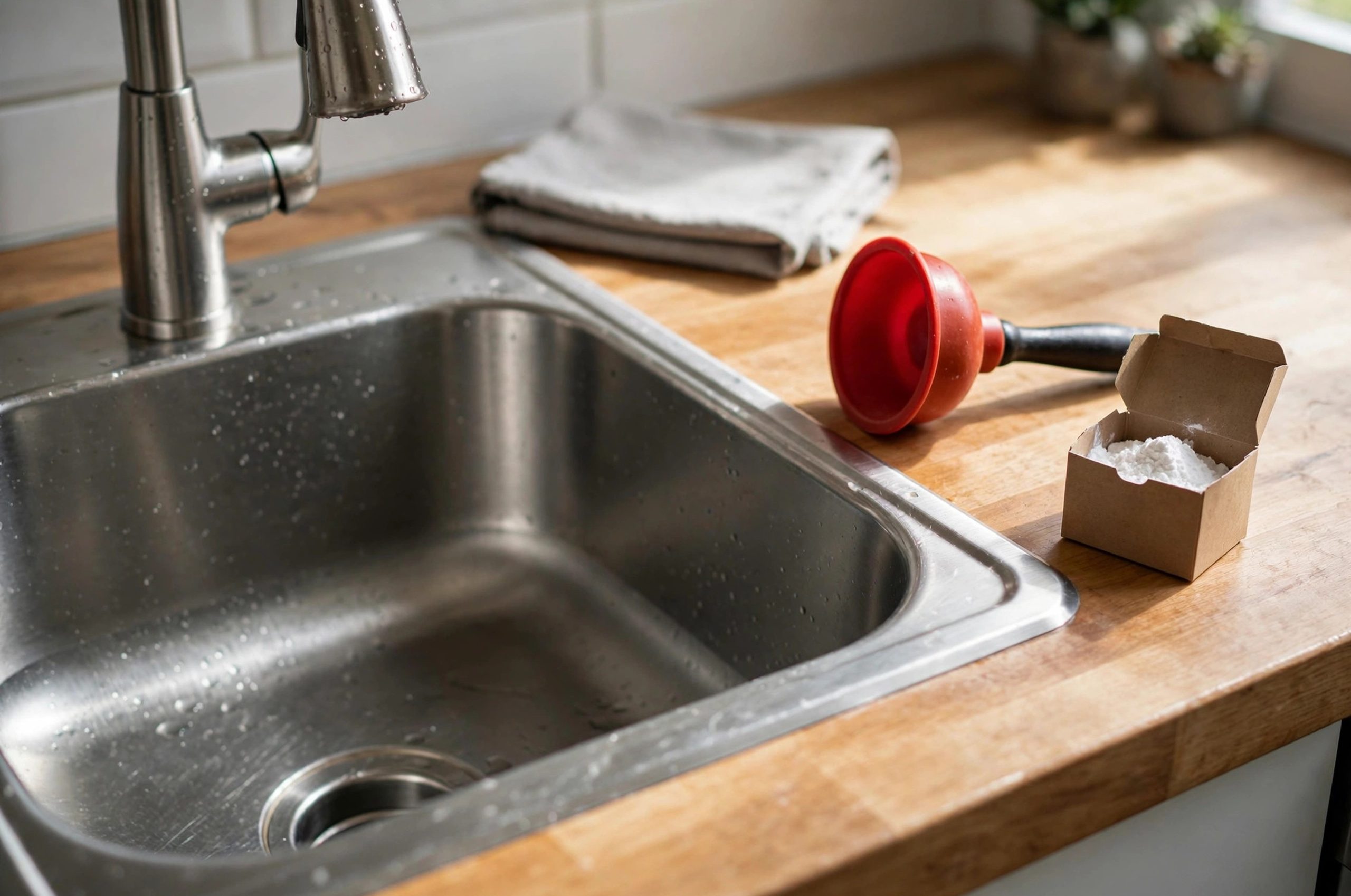
Water pools in the sink and refuses to leave. Dinner dishes pile up. The garbage disposal hums but the water just sits there. Before you reach for the chemical drain cleaner, stop. Those caustic chemicals can damage pipes, ruin the disposal's seals, and burn skin. Most kitchen sink clogs clear with natural methods and simple tools.
Table of Contents
Table of Contents
- Unclog a Kitchen Sink Naturally: What Causes Kitchen Sink Clogs
- Before You Start
- Method 1: Hot Water Flush
- Method 2: Dish Soap and Hot Water
- Method 3: Baking Soda and Vinegar
- Method 4: The Plunger
- Method 5: Clean the P-Trap
- Method 6: The Drain Snake
- When to Call a Plumber
- Keeping the Sink Flowing
- The Bottom Line
- References
This guide shows how to unclog a kitchen sink naturally, in order from gentlest to strongest: hot water, dish soap, baking soda and vinegar, plunging, and cleaning the P-trap. Work through them in order. Most clogs surrender by step three or four.
Unclog a Kitchen Sink Naturally: What Causes Kitchen Sink Clogs
When it comes to unclog a kitchen sink naturally, getting the details right makes all the difference.
When it comes to unclog a kitchen sink naturally, getting the details right makes all the difference.

Many homeowners find that unclog a kitchen sink naturally is easier than they expected once they know the basics.
Kitchen clogs are almost always the same few culprits:
- Grease and cooking oil. Poured down hot, they cool and harden on the pipe walls, catching everything else.
- Food scraps. Starchy foods like rice and pasta swell. Coffee grounds pack into sludge. Fibrous peels tangle.
- Soap scum. Dish soap residue builds up over time, especially in hard water areas.
- Foreign objects. Bottle caps, twist ties, small utensils. They wedge in the drain and collect debris around them.
House Digest's sink unclogging guide notes that clogs rarely appear out of nowhere. The drain usually slows for weeks first. If your sink has been draining slowly, the clog is already forming. Act now and the gentle methods will work. Wait and you will need the tools.
Before You Start
Many homeowners find that unclog a kitchen sink naturally is easier than they expected once they know the basics.
Many homeowners find that unclog a kitchen sink naturally is easier than they expected once they know the basics.
The key to unclog a kitchen sink naturally is choosing the right approach for your space and budget.
- Put on rubber gloves. Drain water is dirty.
- Remove standing water from the sink with a cup or small bowl. You need to see the drain and the methods work better without a full basin diluting them.
- If you have a garbage disposal, make sure it is not the problem. Flip its switch. If it hums without grinding, it may be jammed, not clogged. Our guide to unclogging a garbage disposal safely covers that fix.
- Never mix chemical cleaners. If someone already poured drain cleaner in, do not add anything else and consider calling a plumber. Mixing chemicals can create dangerous fumes.
Method 1: Hot Water Flush
The key to unclog a kitchen sink naturally is choosing the right approach for your space and budget.
With a little planning, unclog a kitchen sink naturally can fit even a busy schedule.
The gentlest method, and it works on fresh grease clogs.
1. Boil a full kettle of water. 2. Pour it slowly into the drain in two or three stages, pausing between pours. 3. Wait a few minutes and run the hot tap to test.
The heat melts grease and loosens soap scum. This only works on metal pipes in good shape. If your drain pipes are PVC, use very hot tap water instead of boiling water. Boiling water can soften PVC joints over time. TestFoodKitchen's natural unclogging guide makes the same distinction: hot, not boiling, for plastic pipes.
Method 2: Dish Soap and Hot Water
With a little planning, unclog a kitchen sink naturally can fit even a busy schedule.
Before you start, it helps to understand how unclog a kitchen sink naturally works in real homes.
For grease clogs, dish soap is the secret weapon. Plumbers use this trick constantly.
1. Squirt a generous amount of liquid dish soap directly into the drain. Half a cup is about right. 2. Let it sit for 10 minutes. The soap works into the grease. 3. Follow with a kettle of hot (not boiling) water, poured slowly. 4. Wait a few minutes. The clog often breaks up on its own as the soap lubricates the pipe walls.
Dagens' plumber tip roundup calls this the widely used professional trick for a reason: it is cheap, safe, and it works on the most common type of kitchen clog. Give it several minutes before you judge. Grease takes time to soften.
Method 3: Baking Soda and Vinegar
Before you start, it helps to understand how unclog a kitchen sink naturally works in real homes.
A good plan for unclog a kitchen sink naturally saves time, money, and frustration.
The classic natural drain cleaner. The fizzing reaction loosens light blockages and scrubs the pipe walls.
1. Pour half a cup of baking soda directly into the drain. 2. Follow immediately with half a cup of white vinegar. 3. Cover the drain with a stopper or a wet cloth to hold the fizz down in the pipe. 4. Wait 15 to 30 minutes. 5. Flush with hot tap water for a full minute.
Southern Living asked plumbers about this method and got a useful verdict: it works on mild clogs and slow drains, especially with gurgling sounds. For thicker clogs, move on to mechanical methods. If the first round helps but does not finish the job, you can repeat it once before moving on.
Method 4: The Plunger
A good plan for unclog a kitchen sink naturally saves time, money, and frustration.
For most people, unclog a kitchen sink naturally comes down to a few smart choices.
A plunger is not just for toilets. A cup-style sink plunger, the kind with the flat bottom, works well on kitchen sinks.
1. If you have a double sink, plug the other drain with a wet cloth. You need the pressure to go down, not across. 2. Fill the clogged side with enough water to cover the plunger's cup. 3. Place the plunger over the drain and press down to seal it. 4. Pump vigorously up and down for 20 seconds. Keep the seal. 5. Pull the plunger up sharply on the last stroke. 6. Check if the water drains. Repeat two or three times if needed.
The key is the seal. No seal, no pressure, no result. Family Handyman's kitchen sink guide covers plunging as the step before bringing out the drain snake, and notes that patient, repeated plunging clears many clogs that the chemical-free methods leave behind.
Method 5: Clean the P-Trap
For most people, unclog a kitchen sink naturally comes down to a few smart choices.
The P-trap is the curved pipe under the sink. It holds water to block sewer gas, and it catches most clogs. Cleaning it is a fifteen-minute job.
1. Put a bucket under the trap. 2. Unscrew the slip nuts on both ends of the curved section by hand or with channel-lock pliers. They are the big plastic or metal rings. 3. Pull the trap down and dump its contents into the bucket. It will be gross. That is normal. 4. Reach into the trap with a bottle brush or an old toothbrush and scrub out the sludge. 5. Check the straight pipe sections going into the wall for clogs too. 6. Reassemble hand-tight, then run water and check for leaks at the joints.
This fixes a large share of stubborn clogs because the clog is usually sitting right in the trap. JNM Plumbing's sink guide lists P-trap cleaning as the step after the plunger fails, and National Assemblers walks the same sequence: baking soda, plunger, then the trap.
Method 6: The Drain Snake
If you are new to unclog a kitchen sink naturally, start with the simplest option and build from there.
For clogs deeper than the trap, a manual drain snake, also called an auger, reaches them. A basic hand-crank snake costs little and lives under the sink for years.
1. Remove the P-trap as above to get straight access to the wall pipe. 2. Feed the snake cable into the pipe until you feel resistance. 3. Tighten the chuck and crank the handle while pushing gently. The cable either bores through the clog or hooks it. 4. When the resistance gives way, pull the cable back, wiping it clean as it comes. 5. Reassemble the trap and flush with hot water.
Family Handyman details the snaking technique: feed eight inches at a time, crank while pushing, and stop if the cable starts spiraling instead of turning. A snake used with patience clears clogs that no chemical or natural remedy can touch.
When to Call a Plumber
When it comes to unclog a kitchen sink naturally, getting the details right makes all the difference.
Stop and call a professional if:
- Multiple drains are clogged at once. That means the blockage is in the main line, not the sink.
- Water backs up into the other basin or into the dishwasher.
- You smell sewage. That can mean a vent or sewer line problem.
- The clog returns days after you clear it. Something deeper is wrong.
- You have already tried everything above and the water still stands.
Southern Living's plumber sources give blunt advice: if the clog does not clear on the first serious attempt, stop. Repeated DIY efforts can push the clog deeper and turn a simple fix into an expensive one.
Keeping the Sink Flowing
- Scrape plates into the trash or compost before rinsing. The disposal and the drain are not trash cans.
- Never pour grease down the drain. Collect it in a can and throw it out.
- Run hot water for 30 seconds after each use to flush oils through.
- Use a mesh drain strainer. It catches the food that causes most clogs.
- Once a month, do the baking soda and vinegar flush as maintenance.
- Run the garbage disposal regularly with cold water to keep it clear.
Home Kitchen Magazine's drain guide and TestFoodKitchen's plunger-free methods both end with the same prevention list. A strainer and a no-grease rule prevent the great majority of kitchen clogs.
For related kitchen fixes, see our guides to kitchen cabinet organizers for keeping under-sink storage tidy and kitchen island seating if the sink area is due for a bigger refresh.
The Bottom Line
To unclog a kitchen sink naturally, work in order: hot water, dish soap, baking soda and vinegar, plunger, P-trap cleaning, drain snake. Each step handles tougher clogs than the last. Skip the chemical drain cleaners; they risk your pipes, your disposal, and your skin. And once the water flows again, keep it flowing with a strainer, a no-grease rule, and a monthly maintenance flush.
References
- Dagens. (n.d.). Plumber's secret tip: A simple home remedy can unclog a blocked sink. https://www.dagens.com/home/plumbers-secret-tip-a-simple-home-remedy-can-unclog-a-blocked-sink
- Family Handyman. (n.d.). How to unclog a kitchen sink. https://www.familyhandyman.com/project/unclog-a-kitchen-sink/
- Home Kitchen Magazine. (n.d.). How to unclog a kitchen sink drain: Simple steps to fix it fast. https://homekitchenmagazine.com/how-to-unclog-a-kitchen-sink-drain/
- House Digest. (n.d.). How to unclog your kitchen sink (without calling a plumber). https://www.housedigest.com/1927628/how-to-unclog-kitchen-sink-hack/
- JNM Plumbing. (n.d.). How to unclog a kitchen sink? https://www.jnmplumbing.com.au/blog/how-to-unclog-a-kitchen-sink
- National Assemblers. (n.d.). Guide to unclogging your kitchen sink. http://www.nationalassemblers.com/post/unclogging-kitchen-sink
- NDTV Food. (n.d.). All you need is a plastic water bottle to unclog a kitchen sink drain in seconds. https://food.ndtv.com/food-drinks/all-you-need-is-a-plastic-water-bottle-to-unclog-a-kitchen-sink-drain-in-seconds-12152632
- Southern Living. (n.d.). Can baking soda really unclog a drain? Plumbers explain when it works. https://www.southernliving.com/unclog-drain-with-baking-soda-12116245
- TestFoodKitchen. (n.d.). How to unclog a kitchen sink naturally? https://testfoodkitchen.com/how-to-unclog-a-kitchen-sink-naturally/
- TestFoodKitchen. (n.d.). How to unclog kitchen sink without plunger? https://testfoodkitchen.com/how-to-unclog-kitchen-sink-without-plunger/
Was this guide helpful?

About My Garden US
The My Garden US editorial team writes practical, in-depth home and garden guides for American homeowners — tested advice, no fluff.
You May Also Like

Best Chimney Sweep Services Near Me: A Homeowner's Plain Guide
October 4, 2026 27 views
Carpet Cleaning Service Companies Cost Guide USA
July 5, 2026 18 views
Eco Friendly Cleaning Supplies: Reviews and Buying Guide
April 19, 2026 14 views