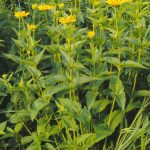
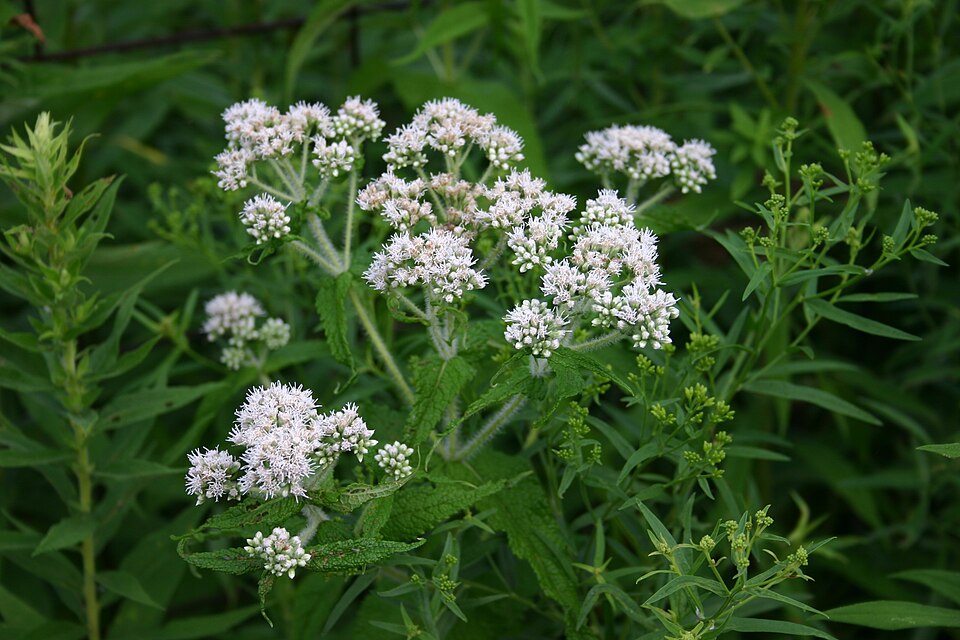
Boneset - Eupatorium perfoliatum - is the native perennial for the soggy spot that defeats everything else. Where the yard stays damp, where the rain garden fills after storms, where the pond edge turns to mud, boneset stands four feet tall with flat white flower clusters that butterflies mob in late summer. Learning how to grow boneset is about giving a wetland native the wet feet it evolved for and then stepping back.
Table of Contents
Table of Contents
The plant is unmistakable once you know the trick: the leaves join completely around the stem, as if the stem pierces straight through them - "perfoliate," the botanists call it. No other common garden plant does this, which makes identification easy. It is a traditional herb with centuries of American use, a pollinator powerhouse, and one of the toughest plants you can put in damp ground.

Photo: Wikimedia Commons
Getting Started: A Wetland Native
When it comes to how to grow boneset, getting the details right makes all the difference.

Many homeowners find that how to grow boneset is easier than they expected once they know the basics.
Boneset is native to eastern North America, hardy in zones 3 through 8, growing wild in wet meadows, along stream banks, and in roadside ditches. The Lady Bird Johnson Wildflower Center lists it among the top native plants for rain gardens and wet soils - its natural habitat is the template for its garden care. This is not a plant to force into a dry border; it wants the wettest spot you have.
It is a true perennial that returns bigger each year, spreading by rhizomes in wet soil to form a colony. Flowers appear in the second year on established plants - first-year seedlings make foliage while they build roots. The white flower clusters bloom in late summer, right when the pollinator garden needs them most, and the show lasts for weeks.
The name needs addressing: "boneset" comes from its traditional use for breakbone fever (dengue), not from any effect on bones. It is a potent traditional herb, not a casual tea - grow it with respect, harvest it properly, and do not dose casually. The USDA PLANTS database documents the species and its wide eastern distribution.
When and How to Plant
Many homeowners find that how to grow boneset is easier than they expected once they know the basics.
The key to how to grow boneset is choosing the right approach for your space and budget.
Start seed indoors about eight weeks before your last spring frost. Sow on the surface of moist mix - the seed needs light - and keep it damp; germination is slow and uneven, so patience is required. Transplant seedlings out about two weeks after your last frost, spacing them 18 to 24 inches apart. They look modest at first, but they are building the root system that powers a four-foot plant. If you want to check your USDA zone planting dates, our planting calendar will help you count back those eight weeks.
Alternatively, direct sow around your last spring frost date, pressing the seed onto the surface of prepared wet ground. Or divide established clumps in spring - divisions are the fastest way to new plants and bloom sooner than seedlings. Fall sowing also works: scatter seed on the surface in fall and let winter stratify it naturally.
Give it room. A single plant becomes a three-foot clump, and the rhizomes spread in wet soil. Space 18 inches apart minimum, and site it where a colony is welcome - the back of the rain garden, the pond edge, the low corner - not in the middle of a formal bed where its spreading will annoy you. The Old Farmer's Almanac notes that wetland natives are best planted where their vigor is an asset.
Soil and Sun
The key to how to grow boneset is choosing the right approach for your space and budget.
With a little planning, how to grow boneset can fit even a busy schedule.
Full sun to partial shade suits boneset, with full sun giving the sturdiest stems and heaviest bloom. In the wild it grows in open wet meadows; in the garden, give it the sunniest wet spot available. Shade makes it leggy and reduces flowering.
The soil should be moist to wet and rich - this plant wants wet feet constantly. Pond edges, rain gardens, low spots, the outflow of a French drain: these are boneset territory. It sulks in dry soil, wilting and stunting, and no amount of wishing changes that. If your garden has no naturally wet spot, a sunken bed with heavy mulch can work, but honestly, grow boneset where the water already is. Unlike sage and other dry-soil herbs, this one drowns in the conditions they love.
No fertilizer is needed. Rich, wet soil is already fertile, and excess nitrogen makes tall, weak stems. A yearly mulch of shredded leaves holds moisture and feeds the soil gently - all the fertility program required.
Watering and Feeding
With a little planning, how to grow boneset can fit even a busy schedule.
Before you start, it helps to understand how how to grow boneset works in real homes.
Never let the soil dry out. This is the entire watering philosophy for boneset: in its proper wet site, rainfall and groundwater handle it; in a merely moist bed, you water deeply through every dry spell. Mulch heavily - three to four inches - to hold moisture in the root zone. A new planting that dries out in its first summer may never recover properly.
Do not fertilize. This bears repeating because the instinct to feed a big, fast-growing plant is strong. Boneset in rich wet soil needs nothing; feeding makes floppy stems that need staking. The plant evolved in wet meadows, not fertilized beds.
In drought years, even established plantings in "moist" (not wet) sites need supplemental water. If you cannot commit to watering through dry spells, restrict boneset to genuinely wet ground - the pond edge, the rain garden basin - where it takes care of itself. The University of Minnesota Extension rain-garden guides list boneset as a backbone plant for exactly these sites.
Care Through the Season
Before you start, it helps to understand how how to grow boneset works in real homes.
A good plan for how to grow boneset saves time, money, and frustration.
Watch for leaf spot in humid weather - brown spots on the foliage that rarely kill the plant but look ragged. Space plants for airflow (the full 18 to 24 inches), avoid overhead watering, and remove badly affected lower leaves. It is mostly cosmetic; established plants power through it.
The tall stems - up to four feet - stand well without staking in full sun and lean soil. In rich soil or part shade they can lean; a few twiggy supports or neighboring sturdy plants prop them up. Do not be tempted to cut the plant back mid-season for tidiness - you would sacrifice the late-summer bloom, which is the whole point.
Deer usually leave it alone - the foliage is bitter and unpalatable, one of the plant's practical virtues in deer country. Slugs rarely bother the tough leaves. In the pest department, boneset is refreshingly trouble-free, unlike fussier herbs such as chamomile.
It spreads by rhizomes in wet soil - steadily, not aggressively, but persistently. Every few years, dig the edges of the clump in spring to keep it in bounds, replanting divisions elsewhere or sharing them. This is maintenance, not warfare; the spread is slow enough to manage with an annual edging.
Harvest
A good plan for how to grow boneset saves time, money, and frustration.
For most people, how to grow boneset comes down to a few smart choices.
Harvest the leaves and flowering tops just as the white flower clusters open - this is the traditional peak-harvest moment. Cut the top third of the stems with sharp shears in the morning after the dew dries. Dry them quickly in a warm, airy spot out of direct sun; good air circulation prevents the mold that ruins a harvest in humid climates. Store dried herb in jars away from light.
A word on use: boneset is a potent traditional herb, not a beverage tea. The old herbals prescribe it for specific purposes in measured amounts. Grow it, harvest it properly, dry it well - and respect it as a medicinal plant rather than a casual one. The USDA National Agricultural Library preserves the historical herbals that document its traditional uses in detail.
For the garden's sake, harvest from the front of the planting and leave the back for pollinators. Boneset in bloom is a butterfly magnet - swallowtails, monarchs, and skippers crowd the white clusters - and its wildlife value rivals its herbal one. Plant extra at the back of the bed for the butterflies and harvest from the front: everybody wins.
Cut stems to the ground when the foliage dies back in fall, or leave them standing for winter interest and cut in early spring. Either works; the plant does not care.
Troubleshooting
For most people, how to grow boneset comes down to a few smart choices.
If you are new to how to grow boneset, start with the simplest option and build from there.
Plants wilt constantly. The site is too dry - this is a wetland plant in the wrong place. Water deeply and mulch heavily as triage, then move divisions to genuinely wet ground in fall. Chronic wilting means wrong site, not wrong care.
No flowers the first year. Normal. Boneset blooms in its second year on established plants. First-year seedlings make roots and foliage; the flower show comes next summer.
Leaf spot everywhere. Humid weather plus tight spacing. Improve air flow, water at the base, remove affected leaves. It is usually cosmetic - the plant blooms anyway.
It is spreading beyond its bounds. Rhizomes in wet soil do that. Edge the clump with a spade each spring, cutting through the spreading rhizomes, and replant or share the divisions. In a rain garden or pond edge, a colony is the goal - site it accordingly from the start. Gardenia.net growing guides note the spreading habit as a siting consideration.
Stems flopping. Too rich, too shady, or too dry at the roots (stressed plants flop). Full sun, no fertilizer, and constant moisture grow stiff stems. The Missouri Botanical Garden plant profiles confirm the sun-and-moisture formula.
Boneset turns the problem spot into the pollinator hotspot - the plant that makes a virtue of wet ground. The Clemson Home and Garden Information Center includes it in rain-garden plant lists for good reason. Give it the wettest corner, harvest the tops at bloom, and let the butterflies have the rest.
References
If you are new to how to grow boneset, start with the simplest option and build from there.
When it comes to how to grow boneset, getting the details right makes all the difference.
- Clemson University Cooperative Extension. (n.d.). Home & garden information center. https://hgic.clemson.edu/
- Gardenia. (n.d.). Boneset growing guide. https://www.gardenia.net/
- Lady Bird Johnson Wildflower Center. (n.d.). Native plant database. https://www.wildflower.org/plants/
- Missouri Botanical Garden. (n.d.). Plant finder. https://www.missouribotanicalgarden.org/
- U.S. Department of Agriculture. (n.d.). PLANTS database. https://plants.usda.gov/home
Many homeowners find that how to grow boneset is easier than they expected once they know the basics.
When it comes to how to grow boneset, getting the details right makes all the difference.
Many homeowners find that how to grow boneset is easier than they expected once they know the basics.
Was this guide helpful?

About My Garden US
The My Garden US editorial team writes practical, in-depth home and garden guides for American homeowners — tested advice, no fluff.