When it comes to how to grow bok choy, getting the details right makes all the difference.
Table of Contents
Table of Contents
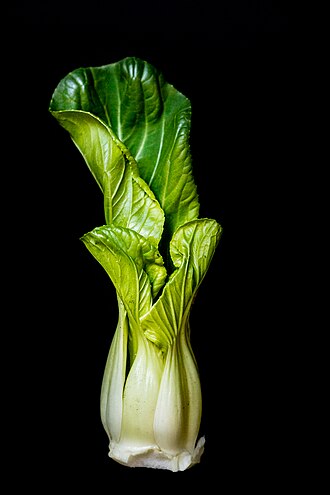
Photo: Wikimedia Commons
Bok choy is a staple of Chinese cooking, and its rise in American gardens follows the same logic as its rise in American kitchens: it is fast, versatile, and mild enough for everyone at the table. The white stalks stay crisp in stir-fries while the dark leaves wilt in seconds. Because it matures in 45 to 60 days, it fits into gaps in the garden calendar that slower crops cannot use. Three successions a season from one packet of seed is normal.
Bok choy goes from seed to plate in 45 to 60 days, which makes it one of the fastest vegetables you can grow. The crisp white stalks and tender dark leaves work in stir-fries, soups, and salads, and a short row feeds a household for weeks. The catch is heat. Bok choy bolts, sending up a flower stalk and turning bitter, at the first real warm spell. Learning how to grow bok choy is really learning how to dodge heat: sow for spring with caution, sow for fall with confidence.
The plant is Brassica rapa subsp. chinensis, a cool-season brassica hardy in zones 4 through 9. The USDA PLANTS Database places it in the mustard family alongside its cousins cabbage and turnip. Fall sowings are the most reliable in nearly every region, because cool nights mean sweeter leaves and far less bolting.
Choosing a Variety
When it comes to how to grow bok choy, getting the details right makes all the difference.

Many homeowners find that how to grow bok choy is easier than they expected once they know the basics.
Two main types fill seed racks. Shanghai bok choy stays small, with pale green stalks and spoon-shaped leaves, and it matures fast enough for tight fall windows. Standard white-stalked types grow larger heads with the classic crisp texture. Dwarf varieties suit containers and small beds.
For fall planting, pick a variety listed at 45 to 50 days. Speed matters when frost is coming. For spring, choose a slow-bolting variety, though no bok choy truly resists a hot spell. Buy fresh seed each year; brassica seed keeps reasonably well, but germination drops after a couple of seasons. The Missouri Botanical Garden vegetable notes help compare Asian greens if you are choosing between several.
When and How to Plant
Many homeowners find that how to grow bok choy is easier than they expected once they know the basics.
The key to how to grow bok choy is choosing the right approach for your space and budget.
Sow directly where the plants will grow. Bok choy transplants poorly and bolts faster when its roots are disturbed, so skip the indoor start. Sow a quarter inch deep as soon as the soil can be worked in spring, right around your last frost date, and again in late summer for fall. Count back 50 to 60 days from your first fall frost for the fall sowing.
Thin seedlings to 6 inches apart. Some gardeners sow thickly and eat the thinnings as baby greens, which is a fine use of the extras. Keep the bed weed-free while plants are small. The Old Farmer's Almanac planting calendar gives local frost dates for timing both sowings, and our planting calendar shows USDA zone dates for fall crops.
Sow in succession. A short row every two to three weeks in fall gives a continuous supply. One big sowing matures all at once and overwhelms the kitchen. This is the cut-and-come-again rhythm that makes small gardens productive.
Soil and Sun
The key to how to grow bok choy is choosing the right approach for your space and budget.
With a little planning, how to grow bok choy can fit even a busy schedule.
Rich, well-drained soil with a pH between 6.0 and 7.5. Work several inches of compost into the bed before sowing; bok choy grows so fast it needs fertility ready from day one. It will not wait while you fix poor soil mid-season.
Full sun to part shade. In spring, full sun is fine. For summer and early fall sowings, afternoon shade reduces heat stress and delays bolting. A spot that gets morning sun and afternoon shade is ideal for the fall crop. The University of Minnesota Extension leafy-green guides stress the same point: cool roots, cool leaves, better greens.
Bok choy's cousins share the bed well. Tatsoi and mizuna sow the same way and harvest on the same schedule, so plant them side by side for a mixed Asian greens bed.
Watering and Feeding
With a little planning, how to grow bok choy can fit even a busy schedule.
Before you start, it helps to understand how how to grow bok choy works in real homes.
Keep the soil evenly moist. Drought triggers premature flowering, which is the other bolting trigger besides heat. Mulch with straw or shredded leaves to hold moisture and keep the soil cool. In hot spells, water deeply in the morning.
Feed lightly. Bok choy grows so fast it needs little beyond the compost worked in at planting. A weak liquid feed halfway through helps in poor soil, but heavy nitrogen late in growth makes soft, watery stalks. The Clemson Home & Garden Information Center advises light feeding for fast greens, and the Old Farmer's Almanac growing guides agree.
Care Through the Season
Before you start, it helps to understand how how to grow bok choy works in real homes.
A good plan for how to grow bok choy saves time, money, and frustration.
Cover with row fabric from day one. Flea beetles are the main pest, and they riddle the leaves with tiny shot-holes. A lightweight floating row cover, laid over hoops or directly on the plants, excludes the beetles completely. Leave it on until harvest. It also shelters young plants from light frost.
Watch for cabbage worms, the green caterpillars that chew brassicas. Hand-pick them, or spray with Bt, a bacterial spray that kills caterpillars and nothing else. Check leaf undersides for the tiny yellow eggs. Slugs like the low leaves too; traps and clean mulch help.
Heat is the enemy you cannot spray away. If a hot spell hits the spring crop, harvest what you can as baby greens and move on. The fall crop rarely has this problem. Shade cloth over the bed buys a few degrees of relief in marginal weather.
Harvest
A good plan for how to grow bok choy saves time, money, and frustration.
For most people, how to grow bok choy comes down to a few smart choices.
Harvest baby plants at 4 to 6 inches for salads, pulling whole plants or snipping leaves. For full heads, wait until the stalks are thick and crisp, then cut at the base with a sharp knife. You can also pick outer leaves over several weeks and let the center keep growing, which stretches one sowing into many meals.
Harvest in the morning when leaves are crisp. Rinse, spin dry, and refrigerate. Bok choy keeps about a week in the crisper. The stalks and leaves cook at different rates: start the stalks first, add the leaves for the last minute. Napa cabbage harvests on the same fall rhythm if you want a bigger heading brassica alongside.
Bok Choy Through the Seasons
For most people, how to grow bok choy comes down to a few smart choices.
If you are new to how to grow bok choy, start with the simplest option and build from there.
Spring sowing is a gamble. Sow as soon as the soil can be worked, and you might get a crop before heat arrives. More often, a warm spell bolts the plants just as they size up. If you sow in spring, choose a slow-bolting variety, give afternoon shade, and harvest young as baby greens at the first sign of a flower stalk. Cut your losses early and the bed is free for summer crops.
Late summer is the main sowing. Count back 50 to 60 days from your first fall frost and sow directly. The seedlings grow through the cooling weeks, and the fall crop is almost always better than spring: sweeter leaves, tighter heads, far less bolting. Sow a short row every two to three weeks for continuous harvest.
Fall is harvest season. Cut baby plants for salads or full heads for cooking. Cover the bed with row fabric to exclude flea beetles and to shelter plants from light frosts. In mild climates, the harvest stretches deep into the cold months.
Winter in warm regions keeps giving. Where frosts are light, fall-sown bok choy survives under cover and can be cut all winter. In cold regions, pull the last heads before hard freezes and compost the remains.
Troubleshooting
If you are new to how to grow bok choy, start with the simplest option and build from there.
When it comes to how to grow bok choy, getting the details right makes all the difference.
Bolting is the number one problem, and heat or drought causes it. Sow for fall, water evenly, mulch well. Once a plant has bolted, the leaves turn bitter; pull it and compost it. The yellow flowers are edible and pretty, but the crop is done.
Flea beetle holes mean the row cover went on too late or not at all. Next sowing, cover from the day of sowing. Leggy, pale seedlings need more light; thin earlier and give them full sun. Tipburn, the brown edges on inner leaves, usually signals uneven watering or calcium shortage; steady water and composted soil prevent it.
In zones 10 and warmer, summer sowing is pointless. Treat bok choy strictly as a fall-through-winter crop. The UF IFAS Gardening Solutions site covers cool-season vegetables for warm climates, and Gardenia.net variety notes flag heat tolerance honestly.
Root maggots tunnel the stems at the soil line, and affected plants wilt suddenly. Row cover from sowing day excludes the flies that lay the eggs. Rotate the bed yearly; never follow one brassica with another in the same spot.
Tipburn, the brown dead edges on inner leaves, ruins heads. It comes from uneven watering or calcium shortage. Water consistently, mulch well, and lime the bed if a soil test shows acidity. Once tipburn appears in a head, it cannot be fixed; prevention is everything.
If seedlings disappear overnight, cutworms are the likely culprit. They sever stems at the base. Cardboard collars around transplants stop them, and clearing weeds removes their daytime hiding places.
References
When it comes to how to grow bok choy, getting the details right makes all the difference.
Clemson University Cooperative Extension. (n.d.). Home & Garden Information Center. https://hgic.clemson.edu/
Missouri Botanical Garden. (n.d.). Plant finder. https://www.missouribotanicalgarden.org/
U.S. Department of Agriculture. (n.d.). PLANTS database. https://plants.usda.gov/home
University of Minnesota Extension. (n.d.). Yard and garden. https://extension.umn.edu/
Was this guide helpful?

About My Garden US
The My Garden US editorial team writes practical, in-depth home and garden guides for American homeowners — tested advice, no fluff.