---
Table of Contents
Table of Contents
- Replace Hvac Filters: The Standard Rule: Check Monthly, Replace Every 1 to 3 Months
- What Changes the Schedule
- Pets
- Allergies and Asthma
- Heavy Use Seasons
- Home Projects and Dust
- Filter Thickness
- How to Check a Filter
- Choosing the Right Filter: MERV Ratings
- Signs Your Filter Is Overdue
- How to Replace It
- Beyond the Filter: The Bigger Maintenance Picture
- A Schedule That Works
- References
It is a five-minute job that most people forget for months. The air filter sits inside the furnace or air handler, quietly trapping dust, and nobody thinks about it until the house feels dusty, the allergies flare, or the energy bill climbs. Then comes the question: how often should you replace HVAC filters, really? This guide shows how to replace hvac filters in plain steps.
The short answer: check it every month, and replace it every one to three months. The longer answer depends on your filter type, your pets, your allergies, and the season. Here is the full picture.
Replace Hvac Filters: The Standard Rule: Check Monthly, Replace Every 1 to 3 Months
When it comes to replace HVAC filters, getting the details right makes all the difference.
When it comes to replace HVAC filters, getting the details right makes all the difference.
Many homeowners find that replace HVAC filters is easier than they expected once they know the basics.
The U.S. Department of Energy advises checking the filter every month and replacing it at least every three months, as summarized in this co-op energy guide citing DOE guidance. ENERGY STAR's homeowner guidance says the same: check monthly, change as needed, and never go longer than three months. A DOE-focused breakdown puts it plainly: there is a floor, and it does not wait for the filter to look dirty.
The EPA's guide to air cleaners in the home adds that manufacturers typically recommend replacement every 60 to 90 days, and that if a filter looks heavily soiled at change time, you should be changing it more often.
Why so often? A clogged filter chokes airflow. The system runs longer to heat or cool the house, uses more energy, and wears out faster. The DOE notes that a dirty filter can raise energy use noticeably. One commonly cited figure is up to 15 percent higher energy consumption, mentioned in this HVAC filter benefits guide.
What Changes the Schedule
Many homeowners find that replace HVAC filters is easier than they expected once they know the basics.
The key to replace HVAC filters is choosing the right approach for your space and budget.
Three months is the ceiling, not the rule. Many homes need changes far more often.
Pets
One dog or cat sheds enough hair and dander to load a filter in a month. Multiple pets cut that time further. If you have pets, plan on checking every month and replacing every 30 to 60 days. The filter is the first line of defense against pet dander circulating through the house.
Allergies and Asthma
Anyone in the house with allergies, asthma, or other breathing issues benefits from a cleaner filter changed on the short end of the range. A loaded filter stops trapping fine particles and starts letting them through. A guide to central air and filters notes that dirty filters worsen indoor air quality, which hits allergy sufferers first.
Heavy Use Seasons
Summer and winter run the system hardest. Check the filter before each heavy season and expect to change it during the season too. A filter that lasts three months in mild spring weather may load up in six weeks of August air conditioning.
Home Projects and Dust
Remodeling, sanding drywall, or even a stretch of very dusty weather loads a filter fast. After any dusty project, check the filter and change it if it looks gray.
Filter Thickness
Standard one-inch filters need the most frequent changes. Thicker media filters, the four- and five-inch kind, hold more dust and can go six months to a year. They cost more up front but need less attention. Your system's manual will say what it accepts.
How to Check a Filter
The key to replace HVAC filters is choosing the right approach for your space and budget.
With a little planning, replace HVAC filters can fit even a busy schedule.
Checking takes one minute:
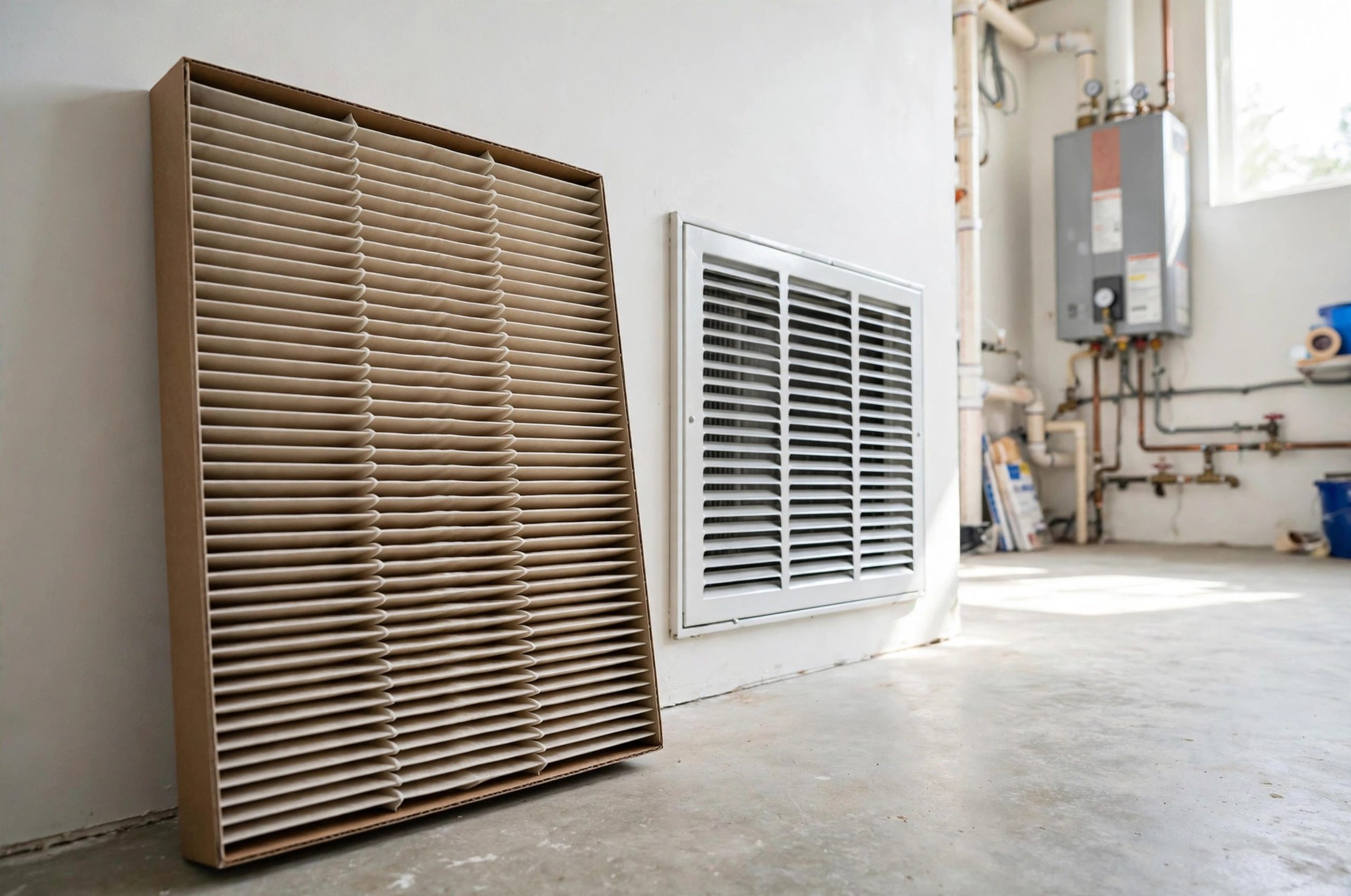
1. Turn the system off at the thermostat. 2. Find the filter slot. It is usually in the return air duct near the furnace or air handler, or behind a return grille in a hallway or wall. 3. Slide the filter out. 4. Hold it up to a light. If you cannot see light through it, it is time to change it. 5. Note the size printed on the frame and the direction of the airflow arrow before you put it back or replace it.
Write the date on the new filter's frame with a marker when you install it. That small habit ends the guessing game. A filter replacement overview recommends treating the filter like a system upgrade rather than an afterthought, and dating each one is the simplest version of that.
Choosing the Right Filter: MERV Ratings
With a little planning, replace HVAC filters can fit even a busy schedule.
Before you start, it helps to understand how replace HVAC filters works in real homes.
Filters are rated by MERV, which stands for Minimum Efficiency Reporting Value. The scale runs from 1 to 16 for home filters. Higher numbers trap smaller particles.
- MERV 1 to 4: Basic fiberglass filters. They protect the equipment from large dust but do little for air quality. Cheap, and they clog fast.
- MERV 5 to 8: The common pleated filters. Good balance for most homes. They trap dust, pollen, and pet dander reasonably well.
- MERV 9 to 12: Better filtration for allergies. They catch finer particles including some mold spores.
- MERV 13 to 16: Hospital-grade territory. A MERV 13 filter guide for HVAC systems explains the trade-off: excellent filtration, but the denser material restricts airflow more.
That trade-off matters. A filter that is too dense for your system makes the blower work harder, which can raise energy use and strain the motor. Check your system's manual for the maximum MERV it supports. Most homes do well with MERV 8 to 11. If anyone has serious allergies, ask an HVAC tech whether your system can handle MERV 13 before upgrading. The filter buyer's guide makes the same point: match the filter to what your system can breathe through.
Signs Your Filter Is Overdue
Before you start, it helps to understand how replace HVAC filters works in real homes.
A good plan for replace HVAC filters saves time, money, and frustration.
The calendar is the main guide, but the house gives hints too:
- More dust on furniture. If surfaces get dusty faster than usual, the filter is not catching it.
- Longer heating or cooling cycles. The system runs and runs without quite reaching the set temperature.
- Higher energy bills. A struggling system uses more power for the same comfort.
- Weak airflow from vents. Hold your hand at a vent. Weak flow can mean a clogged filter.
- Musty or dusty smell when the system starts up.
- Allergy symptoms getting worse indoors.
Any one of these is worth a filter check. The RPM Wake furnace filter guide lists the same warning signs and notes that a dirty filter is the most common reason systems break down.
How to Replace It
A good plan for replace HVAC filters saves time, money, and frustration.
1. Buy the right size. Read the size printed on the old filter's frame, such as 16x25x1. Buy the exact size. A filter that does not fit snugly lets air bypass it, which defeats the purpose. The EPA guide stresses a snug fit with no air leaking around the edges. 2. Turn the system off. 3. Slide out the old filter and note the airflow arrow direction. 4. Slide in the new filter with the arrow pointing the same way, toward the blower. 5. Close the slot or grille, turn the system back on, and write the date on your calendar or on the filter frame.
Keep a spare or two on hand so a dirty filter never waits a week for a store trip.
Beyond the Filter: The Bigger Maintenance Picture
For most people, replace HVAC filters comes down to a few smart choices.
The filter is the homeowner's job. The rest of the system needs a pro once a year. A yearly tune-up covers the coils, the blower, the refrigerant levels, and the electrical connections. A guide to how often to service a furnace lays out the full schedule. An HVAC air purifier add-on can supplement the filter for homes that need cleaner air than filtration alone provides.
ENERGY STAR's maintenance advice, summarized by Corcoran & Harnist and Alpine Heating, bundles it together: change the filter every one to three months, tune up the equipment yearly, and seal leaky ducts. The filter is the cheapest and easiest item on that list, and it is the one most people skip.
A Schedule That Works
If you are new to replace HVAC filters, start with the simplest option and build from there.
Put it on the calendar and it happens. A simple version:
- First of every month: Quick visual check. Hold it to the light.
- Every one to three months: Replace, based on what you see and your household factors.
- Before summer and before winter: Fresh filter going into each heavy season.
- After dusty projects: Check and replace as needed.
That is the whole routine. One minute to check, five minutes to change, and the system breathes easy all year. With these steps, you can replace hvac filters with confidence.
References
When it comes to replace HVAC filters, getting the details right makes all the difference.
- Air Filter Guides. (n.d.). How to choose the best HVAC furnace replacement air filters. https://www.air-filter-20x25x1.com/how-to-choose-the-best-20x23x4-bdp-hvac-furnace-replacement-air-filters-to-boost-performance-save-energy-and-improve-indoor-air-quality
- Alpine Heating and Cooling. (n.d.). Energy Star HVAC maintenance guidance. https://www.alpineheat.com/tag/energy-star/
- BrightGram. (n.d.). Department of Energy filter guidance: check monthly, replace quarterly. https://brightgram.com/corona-ca/10641389/you-wait-for-the-ac-filter-to-look-dirty-but-the-department-of-energy-says-to-check-it-monthly-and-replace-it-at-least-once-every-three-months/
- Corcoran & Harnist. (n.d.). What is Energy Star? HVAC maintenance steps. https://www.corcoranharnist.com/resources/what-is-energy-star/
- Green Apple Mechanical. (n.d.). The air quality benefits of changing your HVAC filters. https://www.greenapplemechanical.com/the-air-quality-benefits-of-changing-your-hvac-filters/
- Green Apple Mechanical. (n.d.). How changing your air filters can improve your central air. https://www.greenapplemechanical.com/how-changing-your-air-filters-can-improve-your-central-air/
- NEC Co-op Energy. (n.d.). It's true: Energy efficiency is in the air. https://neccoopenergy.com/its-true-energy-efficiency-is-in-the-air/
- RPM Wake. (n.d.). 5 reasons to change your furnace filter. https://www.rpmwake.com/5-reasons-change-furnace-filter
- Top Organic Farming. (n.d.). Why regular HVAC and furnace air filter replacements are crucial. https://www.top-organic-farming.com/why-regular-20x20x2-hvac-and-furnace-air-filter-replacements-are-crucial-for-your-home-s-air-purity-hvac-efficiency-and-energy-savings
- U.S. Environmental Protection Agency. (n.d.). Guide to air cleaners in the home. https://www.epa.gov/indoor-air-quality-iaq/guide-air-cleaners-home
Was this guide helpful?

About My Garden US
The My Garden US editorial team writes practical, in-depth home and garden guides for American homeowners — tested advice, no fluff.
You May Also Like
Reliable Whole House Water Filters Buying Guide
June 11, 2026 19 views
Affordable Professional House Cleaning Services Near Me
February 12, 2026 16 views
Top Rated Mold Remediation Services Reviews: How to Pick the Right Company
July 29, 2026 20 views