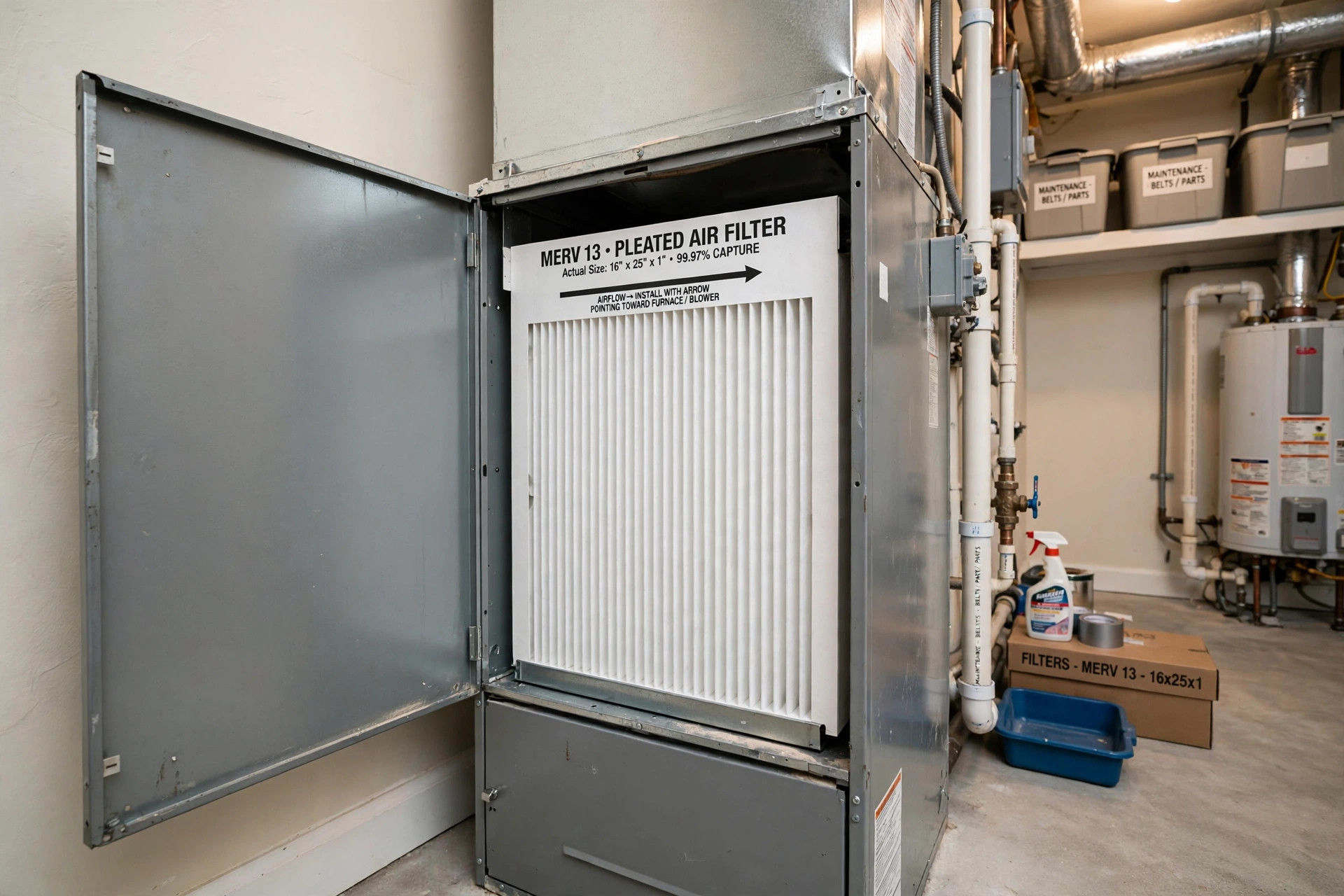

If you want the best merv 13 filter for hvac reviews usa to point you toward, you are not alone. Many American homeowners now look for a filter that traps fine dust, pollen, and other small particles without choking their heating and cooling system. MERV 13 has become a common middle ground. It catches much more than a cheap fiberglass filter, yet it works in many standard systems when sized and rated the right way. This guide reviews what MERV 13 means, how to pick the best filter for your home, what you will pay, and how to keep it working well.
Why a MERV 13 Filter Matters
The air in your home carries dust, pet dander, pollen, mold spores, and other fine bits. A weak filter lets most of this pass through. Over time, that dirt settles on the blower wheel and the cooling coil inside your system. A dirty coil makes the system work harder, and it can raise your electric bill. Clean coils run cooler and move air more freely.
A MERV 13 filter catches a large share of particles in the 1 to 10 micron range. That includes pollen, dust mites, and many mold spores. Some MERV 13 filters also catch a share of smaller particles, such as bacteria and smoke. For families with allergies or asthma, this level of filtration can make the air feel fresher. Family Handyman explains that regular filter care is one of the simplest ways to protect both your lungs and your equipment.
MERV stands for Minimum Efficiency Reporting Value. The scale runs from 1 to 16. A MERV 13 rating sits near the top of what a normal home system can handle. Filters rated 14 and above are common in hospitals and clean rooms, not in houses. MERV 13 is the sweet spot for many homes.
How to Choose the Best MERV 13 Filter for HVAC: Best Merv 13 Filter for Hvac Reviews Usa
Choosing the right filter takes a few simple checks. Start with size. Measure the filter rack in your system, or read the size printed on your old filter. Common home sizes are 20x25x1, 16x25x1, and 20x20x1 inches. A filter that does not fit snugly lets dirty air slip around the edges.
Next, check the actual MERV rating on the box. Some filters say “MERV 13 equivalent” or “MERV 13-like.” That is not the same as a tested MERV 13 rating. Look for filters that carry the real MERV 13 label under the ASHRAE 52.2 test method. Honest reviews, such as those gathered for this best merv 13 filter for hvac reviews usa roundup topic, favor brands that publish test data.
Then check your system’s blower. A thick MERV 13 filter resists airflow more than a cheap fiberglass panel. Most modern systems with a healthy blower handle this fine. Older systems or long duct runs may strain. If your system is more than 15 years old, ask a technician to check static pressure before you upgrade. Carrier notes that proper airflow is the key to comfort and long equipment life.
Look at pleat count and media depth. Deeper pleats hold more dust before they clog. A 4-inch deep MERV 13 filter lasts longer than a 1-inch version and resists airflow less over time. If your rack accepts only 1-inch filters, you can still use MERV 13, but plan to change it more often.
Finally, read real reviews. Reviews tell you which filters hold their pleats, which frames bend, and which filters rattle in the rack. They also warn you about filters that drop their rating after a month of use. The best air filter for allergies reviews usa page pairs well with this guide if allergies are your main concern.
Types and Options Worth Knowing
Pleated Disposable Filters
Most MERV 13 filters are pleated and disposable. The pleats are made of synthetic media or cotton-poly blends. They come in 1-inch, 2-inch, and 4-inch depths. The 1-inch type fits most home racks. The 4-inch type needs a deeper cabinet or a media air cleaner box.
Electrostatic Pleated Filters
Some MERV 13 filters add an electrostatic charge to the media. The charge helps the filter grab small particles. These filters can cost a bit more. Their charge fades over time, but the pleated media still works like a plain MERV 13 filter after that.
Activated Carbon Hybrid Filters
A few MERV 13 filters add a layer of activated carbon. Carbon helps cut odors from cooking, pets, and smoke. These filters cost more and clog faster in dusty homes. They suit homes where odors are a real problem, not just dust.
Washable MERV-Rated Filters
Washable filters with MERV 13 ratings are rare. Most washable filters rate MERV 8 or lower. If you see a washable filter claiming MERV 13, check the test data with care. A truly washable MERV 13 filter must be cleaned often to keep its rating, and Lennox advises that disposable pleated filters give more steady results for most families.
Buy from a store that lists the full specs on the box, not just the front label. Big home stores, HVAC supply shops, and maker websites all carry MERV 13 lines. This Old House buying guides note that the cheapest filter often skips the gasket on the frame, which lets dust leak past.
If you run a ductless unit, filters work differently. Read how often to change hvac filter usa guide to match your change schedule to your system type.
Cost and Price in the USA
A single 1-inch MERV 13 filter for a home system usually costs between $8 and $20. Brand name filters from well-known makers sit near the top of that range. Store brands cost less. Buying a 6-pack or 12-pack cuts the per-filter price to $5 to $12.
Four-inch deep MERV 13 filters cost more per unit, often $25 to $60 each. They last longer, so the yearly cost stays fair. A 4-inch filter in a clean home may last 6 to 9 months. A 1-inch filter in the same home may need a change every 2 to 3 months.
An electronic air cleaner costs far more up front, often $600 to $2,000 installed, but its cells are washable. If you are weighing that choice, read electronic air cleaner vs media filter usa before you spend.
Beyond the filter itself, watch for hidden costs. A filter that is too restrictive can raise energy use. The ENERGY STAR program reminds homeowners that heating and cooling eat a large share of home energy, so steady airflow pays off in lower bills.
Care and Upkeep
Check your MERV 13 filter once a month. Pull it out and hold it up to a light. If you cannot see light through the media, change it. Homes with pets, construction nearby, or heavy pollen seasons need changes more often.
Mark the change date on the filter frame with a pen. This simple habit keeps you on schedule. Many homeowners tie the check to the first of the month or to their electric bill.
Keep spare filters on hand. A dirty filter left in place for months does more harm than no change at all. A clogged filter starves the system of air, which can freeze the cooling coil in summer and trip safety switches in winter.
When you change the filter, look at the coil and blower through the access panel if you can. Dust buildup there means your old filter was letting dirt pass. Goodman maintenance guides stress that clean filters are the first line of defense for the blower and coil.
Do not run the system without a filter, even for a day. Dust settles fast on a wet coil. One week without a filter can soil a coil that took years to stay clean.
If you use a 4-inch media filter, follow the maker’s calendar, not guesswork. Six months is common, but check at three months the first time to learn your home’s dust load. This Old House home guides suggest keeping a written log of filter changes and system service.
Safety
Filters are simple parts, but a few safety points matter. Always turn off the system at the thermostat before you open the filter rack. This keeps the blower from starting while your hands are near moving parts.
Make sure the filter arrows point toward the blower, in the direction of airflow. A filter set in backward still fits, but it filters poorly and can collapse into the duct.
Never stack two filters in one slot to “double” the filtration. Stacking chokes airflow and can overheat the furnace or freeze the coil. One proper MERV 13 filter is the right answer.
If anyone in the home has breathing trouble, talk to your doctor before you raise filtration levels. MERV 13 helps many people, but it is not a medical device. The U.S. Department of Energy offers plain guides on indoor air and home systems for further reading.
Dispose of used filters in a bag. Shake-free handling keeps captured dust out of your lungs. Wash your hands after you handle a dirty filter.
FAQ
Is MERV 13 too high for a home HVAC system?
Not in most cases. Many systems built in the last 20 years handle MERV 13 fine. The key is correct size and fit. If your ducts are very long or your blower is weak, have a technician measure static pressure. A clean MERV 13 filter resists airflow less than people think.
How often should I change a MERV 13 filter?
A 1-inch MERV 13 filter usually needs a change every 1 to 3 months. A 4-inch deep filter can last 6 to 9 months. Homes with dogs, cats, or smokers need the shorter end of the range. Check monthly and let the filter’s looks guide you.
Does MERV 13 remove viruses from the air?
MERV 13 catches some very small particles, but it is not rated as a virus filter. It traps many particles that carry germs, such as dust and droplets, which helps. For true virus-level control, buildings use HEPA systems with sealed housings, which most homes cannot support.
Will a MERV 13 filter raise my electric bill?
A clean MERV 13 filter adds only a small load. A dirty one adds a lot. The bill rises when filters stay in too long, not because of the MERV 13 rating itself. Change on time and the cost stays low.
Can I use a MERV 13 filter in a window unit or portable AC?
Most window units use washable foam or mesh filters, not slot filters. MERV 13 slot filters are made for central forced-air systems. Check your unit’s manual. Rheem product guides list the right filter type for each model.
Which size MERV 13 filter do I need?
Read the size on your old filter or measure the rack. Buy the exact size. A filter that is even a half inch short lets dirty air bypass it. When in doubt, take the old filter to the store to match it.
A Short Final Word
The search for the best merv 13 filter for hvac reviews usa ends with a simple rule. Buy a true MERV 13 pleated filter in the exact size your system takes, from a maker that publishes test data. Change it on time. That habit protects your equipment, trims energy waste, and gives your family cleaner air to breathe. Reviews help you dodge weak brands, but steady upkeep matters more than any brand name.
References
Carrier. (n.d.). Heating and cooling systems. https://www.carrier.com ENERGY STAR. (n.d.). Energy efficient products. https://www.energystar.gov Family Handyman. (n.d.). DIY home repair and maintenance. https://www.familyhandyman.com Goodman. (n.d.). Heating and cooling equipment. https://www.goodmanmfg.com Lennox. (n.d.). Heating and cooling systems. https://www.lennox.com Rheem. (n.d.). Heating, cooling, and water heating. https://www.rheem.com This Old House. (n.d.). Home renovation guidance. https://www.thisoldhouse.com Trane. (n.d.). Heating and air conditioning. https://www.trane.com U.S. Department of Energy. (n.d.). Energy efficiency and renewable energy. https://www.energy.gov
Was this guide helpful?

About James Carter
The My Garden US editorial team writes practical, in-depth home and garden guides for American homeowners — tested advice, no fluff.
You May Also Like

Best Evaporative Cooler for Garage USA: A Practical Buying Guide
June 30, 2026 0 views
Best Air Filter for Allergies Reviews USA: A Plain Guide to Cleaner Air
June 22, 2026 0 views
Best Portable Humidifier for Bedroom USA: A Simple Buying Guide
August 19, 2026 0 views