---
Table of Contents
Table of Contents
The kitchen faucet downstairs blasts like a fire hose. The shower upstairs dribbles like a tired garden hose. Same house, same water supply, completely different pressure. If your water pressure drops only upstairs, you are dealing with one of the most common complaints in two-story homes. The rest of this guide covers water pressure drop upstairs in plain language.
The good news is that the causes are well understood, and many of them are cheap to fix. Some of the pressure loss is just physics. The rest comes from restrictions that build up over time or from settings that were never quite right. This guide explains why upstairs pressure drops and walks you through the fixes in order, from the five-minute checks to the bigger jobs.
Water Pressure Drop Upstairs: The Physics: Gravity Always Takes Its Cut
When it comes to water pressure drop upstairs, getting the details right makes all the difference.
Many homeowners find that water pressure drop upstairs is easier than they expected once they know the basics.
Start with the part you cannot change. Water enters your home at the lowest point, usually in the basement or at ground level. To reach an upstairs bathroom, it has to climb fifteen to twenty feet. Every foot of climb costs pressure.
The math is fixed: water loses about 0.43 psi for every foot of elevation, or about 1 psi for every 2.31 feet. A second-floor bathroom fifteen feet above the main loses roughly 6.5 psi before friction in the pipes takes its own share. A twenty-foot climb costs close to 9 psi. So if your home's pressure is a healthy 55 psi at ground level, the upstairs shower might see the mid-40s. That is normal and usually fine.
The problem starts when the incoming pressure is only moderate to begin with. If the house sits at 40 psi, the upstairs can drop into the low 30s, and that feels weak. Gravity is not the villain. It just exposes every other weakness in the system. The fixes below recover the pressure that restrictions and settings are stealing.
Check Your Overall Pressure First
Many homeowners find that water pressure drop upstairs is easier than they expected once they know the basics.
The key to water pressure drop upstairs is choosing the right approach for your space and budget.
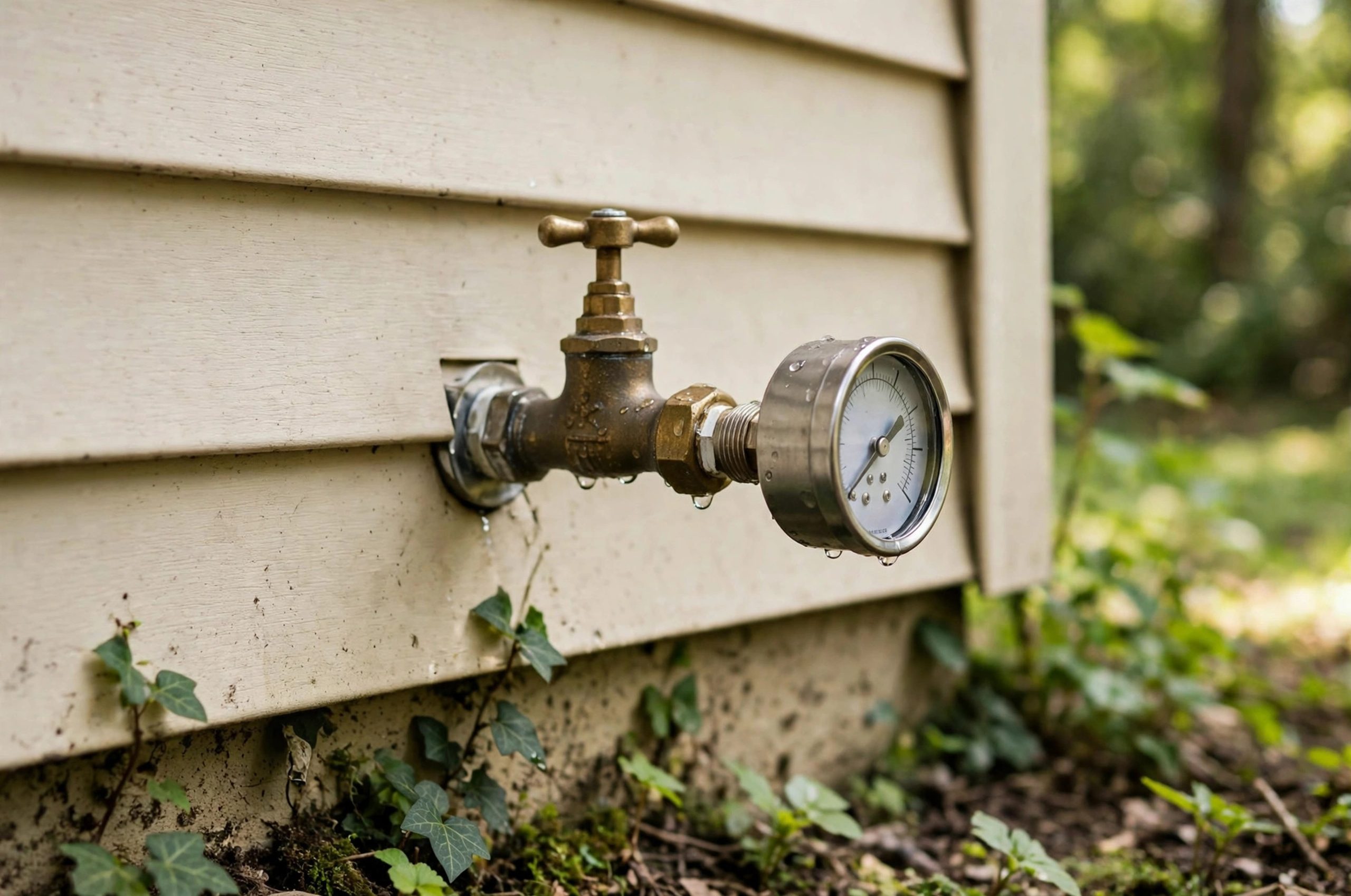
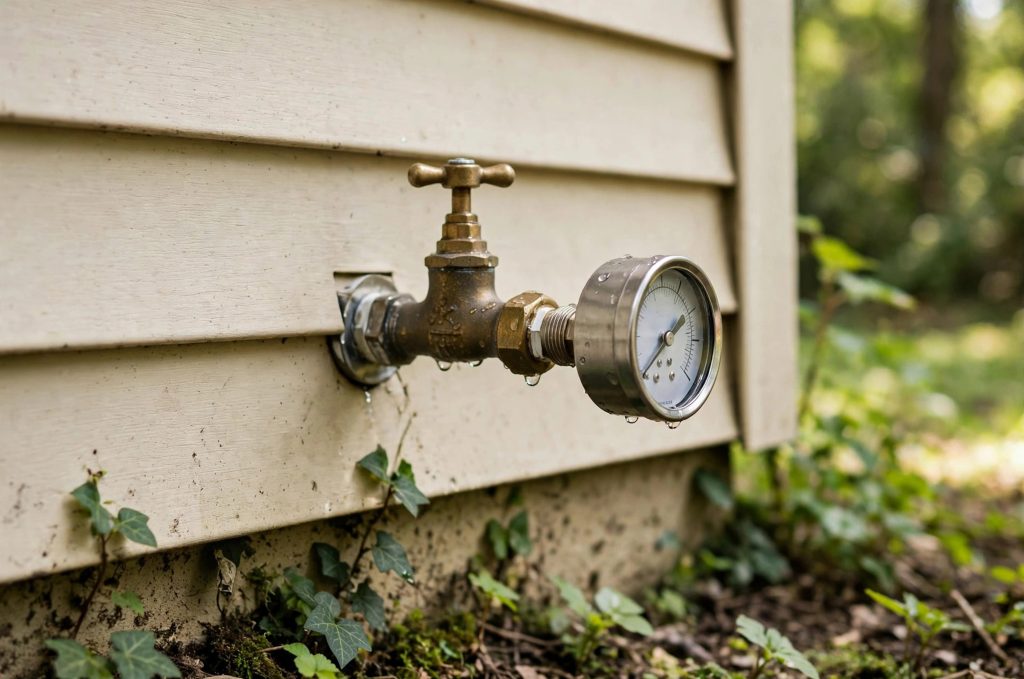
Buy a simple screw-on pressure gauge at any hardware store. They cost little and thread right onto an outdoor hose bib or a laundry faucet. With all fixtures off, open the faucet fully and read the gauge.
Most homes should read between 40 and 60 psi. Above 80 psi is too high and hard on pipes and fixtures. Below 40 psi at the main means the whole house is starting from a weak position, and the upstairs suffers most. Write down the number. You will compare it against upstairs readings later.
If the main pressure is low, look at the pressure-reducing valve near where the water enters the house. This bell-shaped valve sets the house pressure. It can drift out of adjustment as it ages, and a failing one causes pressure to drop or swing. Adjusting it is a matter of loosening a lock nut and turning the adjustment bolt a quarter turn at a time, then rechecking with the gauge. Journeyman HQ notes that most of these valves ship preset near 50 psi and adjust easily [5]. If adjustment does nothing, the valve may need replacement, which is plumber work.
Open Every Valve All the Way
The key to water pressure drop upstairs is choosing the right approach for your space and budget.
With a little planning, water pressure drop upstairs can fit even a busy schedule.
Walk the system and check every valve. The main shutoff, the water meter valve, and the small shutoff valves under each upstairs sink and behind each toilet should all be fully open. A valve that is even slightly closed restricts flow to everything past it.
This happens more often than people think. A valve gets bumped during cleaning. A previous owner left one half-closed after a repair. A toilet shutoff that is not fully open starves just that toilet. Check them all, and turn each one fully open. Robinson Plumbing lists partially closed valves among the first checks for upstairs pressure complaints [2].
Clean the Fixtures
With a little planning, water pressure drop upstairs can fit even a busy schedule.
Before you start, it helps to understand how water pressure drop upstairs works in real homes.
Before you blame the pipes, blame the faucet. Aerators and showerheads clog with mineral scale and sediment, especially in hard-water areas. A clogged aerator mimics low pressure perfectly. The fix takes two minutes.
Unscrew the aerator from the faucet tip. Rinse out the screen and pick out the grit. Soak it in vinegar if scale is heavy. Do the same for the showerhead: unscrew it, clear the inlet screen, and soak it in vinegar to dissolve buildup. If the showerhead is old and scaled beyond cleaning, a new shower head for well water or any quality replacement restores flow fast. Splash Plumbing's upstairs pressure guide starts with the showerhead and flow restrictors for exactly this reason [3].
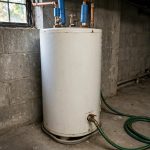
Test both hot and cold separately. If only the hot side is weak upstairs, the restriction is in the hot water line or the water heater, not the main supply. Sediment in the water heater outlet is a common cause. Flushing the tank is routine maintenance that restores hot-side flow.
The key to water pressure drop upstairs is to take it one step at a time.
Look for Hidden Restrictions in the Pipes
Before you start, it helps to understand how water pressure drop upstairs works in real homes.
A good plan for water pressure drop upstairs saves time, money, and frustration.
If the fixtures are clean and the valves are open, the pipes themselves may be the restriction. Older galvanized steel pipes corrode from the inside. The corrosion narrows the pipe year by year, and the upstairs, with its longer pipe runs, feels it first. You might also see discolored water or a metallic taste, which are classic signs of pipe corrosion.
Undersized pipes cause the same symptom. A long run of half-inch pipe feeding an upstairs bathroom loses more pressure to friction than a three-quarter-inch run. Every elbow and fitting adds a little more resistance. In older homes, the combination of small pipes and decades of buildup can cut upstairs flow dramatically.
There is no cheap fix for corroded or undersized pipe. The lasting answer is replacing the affected runs with copper or PEX, ideally upsized. It is real plumbing work, but it permanently restores pressure. A plumber can tell you which runs are the bottleneck, often with a camera inspection.
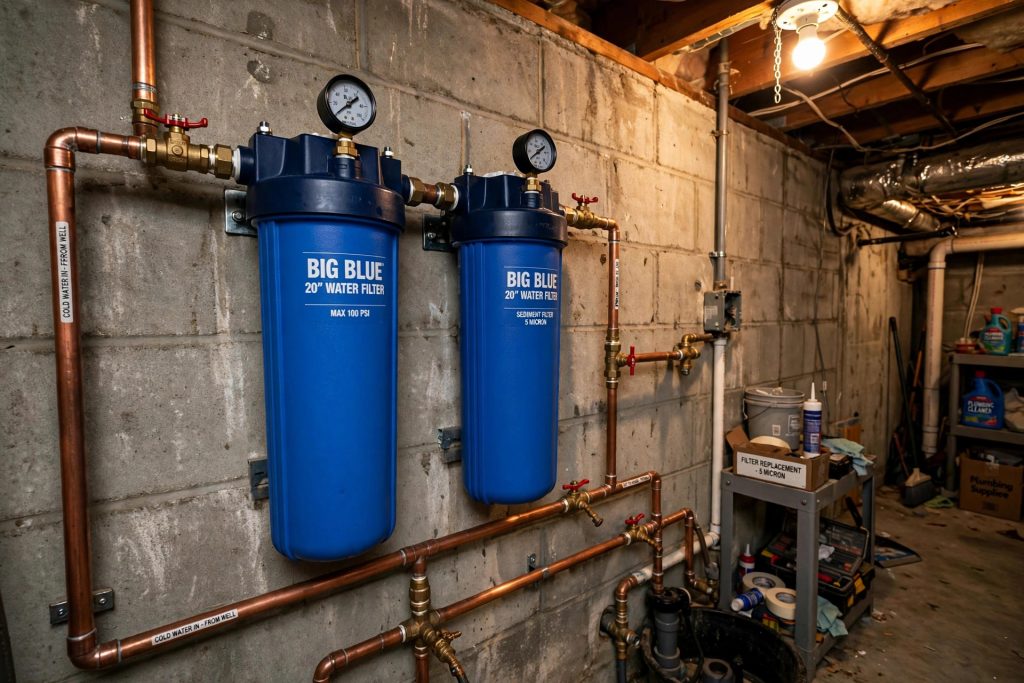
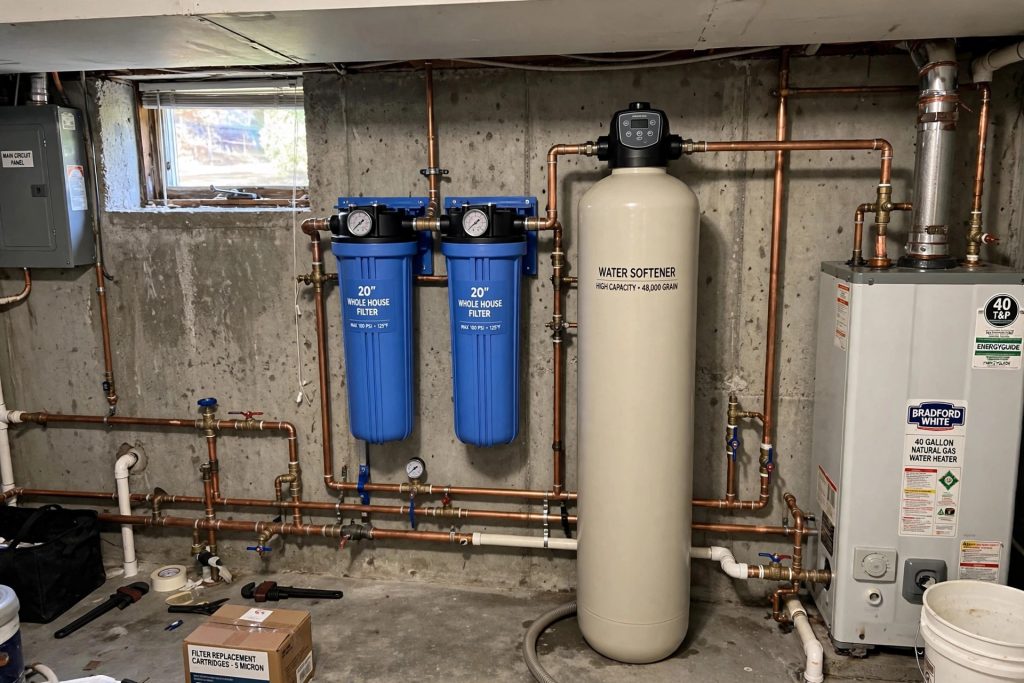
Mineral scale from hard water accelerates all of this. A whole house water filter system catches sediment before it enters the pipes, and addressing water softener installation cost pays off when scale is a house-wide problem.
Check for Leaks
A good plan for water pressure drop upstairs saves time, money, and frustration.
For most people, water pressure drop upstairs comes down to a few smart choices.
A hidden leak steals pressure before the water reaches the fixtures. It does not take much. A leak inside a wall or under a slab diverts flow and drops pressure downstream. Signs include an unexplained jump in the water bill, damp spots, the sound of running water when everything is off, or a warm spot on the floor over a hot water leak.
Check the water meter. With all fixtures off, watch the meter for a few minutes. If it moves, water is going somewhere it should not. Finding the leak may need a professional with listening equipment or a thermal camera. Fix the leak and the pressure comes back.
Consider Demand and Timing
For most people, water pressure drop upstairs comes down to a few smart choices.
Sometimes upstairs pressure is fine until someone runs the dishwasher or flushes a downstairs toilet. Then it collapses. That means the system is running near its capacity. The supply lines are shared, and when a big demand opens downstairs, the upstairs gets what is left.
If this only happens during simultaneous use, staggering use is the free fix. Do not run the shower while the washing machine fills. For a permanent answer, a plumber can evaluate whether the main line or key branches are undersized for the home's demand. In some cases a pressure booster pump, installed on the main line, lifts the whole house to a strong, steady pressure. Booster pumps are a bigger investment, but they solve problems that no adjustment can.
Diagnose It Like a Pro
If you are new to water pressure drop upstairs, start with the simplest option and build from there.
Work through this checklist in order:
1. Measure pressure at the hose bib. This is your baseline. 2. Measure at an upstairs faucet. A gauge threads onto most laundry and utility faucets. Compare the numbers. A drop much bigger than the elevation math suggests means restrictions. 3. Open all valves fully. Main, meter, and fixture shutoffs. 4. Clean aerators and showerheads. Test hot and cold separately. 5. Check the pressure-reducing valve. Adjust if the baseline is low. 6. Look for leaks. Watch the meter with everything off. 7. Note when it happens. All the time means supply or pipes. Only during other use means capacity.
Most upstairs pressure problems are solved by step five. The deeper steps tell you whether you are looking at a plumber visit.
When to Call a Plumber
When it comes to water pressure drop upstairs, getting the details right makes all the difference.
Call a professional when the pressure-reducing valve will not adjust, when you suspect corroded or undersized pipes, when the meter shows a hidden leak, or when the pressure drop is sudden and severe. Sudden whole-house or whole-floor drops can mean a failing valve or a broken main line, and those need prompt attention. A plumber can also size and install a booster pump if the diagnosis points that way.
Upstairs pressure loss is frustrating, but it is rarely mysterious. Measure, open, clean, and adjust. Recover the pressure that restrictions are stealing, and gravity's small cut is all you will ever notice. Keep this guide handy the next time water pressure drop upstairs comes up.
References
SC Well Service. (n.d.). Low water pressure on second floor: Causes and solutions. https://scwellservice.com/blog/low-water-pressure-second-floor.html
Robinson Plumbing. (n.d.). Upstairs water pressure low causes explained. https://www.robinsonplumbing.com/upstairs-water-pressure-low
Splash Plumbing. (n.d.). How to repair low water pressure in second-floor bathrooms quickly and easily. https://www.splashplumbing.com/how-to-repair-low-water-pressure-in-second-floor-bathrooms/
Roofmaster Construction. (n.d.). How to fix low water pressure in upstairs shower only. https://roofmasterconstruction.com/roofing-repairs/how-to-fix-low-water-pressure-in-upstairs-shower-only/
Journeyman HQ. (n.d.). What is a pressure reducing valve and what is it used for? https://www.journeymanhq.com/2108/pressure-reducing-valve-product-guide/
The Great Plumbing Co. (n.d.). How to adjust your water pressure regulator. https://www.thegreatplumbingco.com/blog/how-to-adjust-your-water-pressure-regulator-step-by-step-guide/
East Texas Leak Locators. (n.d.). Can low water pressure mean a pipe leak in your home? https://www.easttexasleaklocators.com/can-low-water-pressure-mean-a-pipe-leak-in-your-home/
Oliver Heating & Cooling. (n.d.). What causes low water pressure throughout the house? https://www.oliverheatcool.com/what-causes-low-water-pressure-throughout-the-house/
Was this guide helpful?

About My Garden US
The My Garden US editorial team writes practical, in-depth home and garden guides for American homeowners — tested advice, no fluff.
You May Also Like
Best High Efficiency Toilet Reviews 2026
April 24, 2026 19 views
Burst Pipe Repair Cost Near Me: 2026 Prices and What to Expect
April 27, 2026 19 views
Catalytic Carbon vs Activated Carbon Filter: Which One Fits Your Home
September 20, 2026 17 views