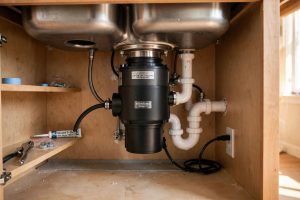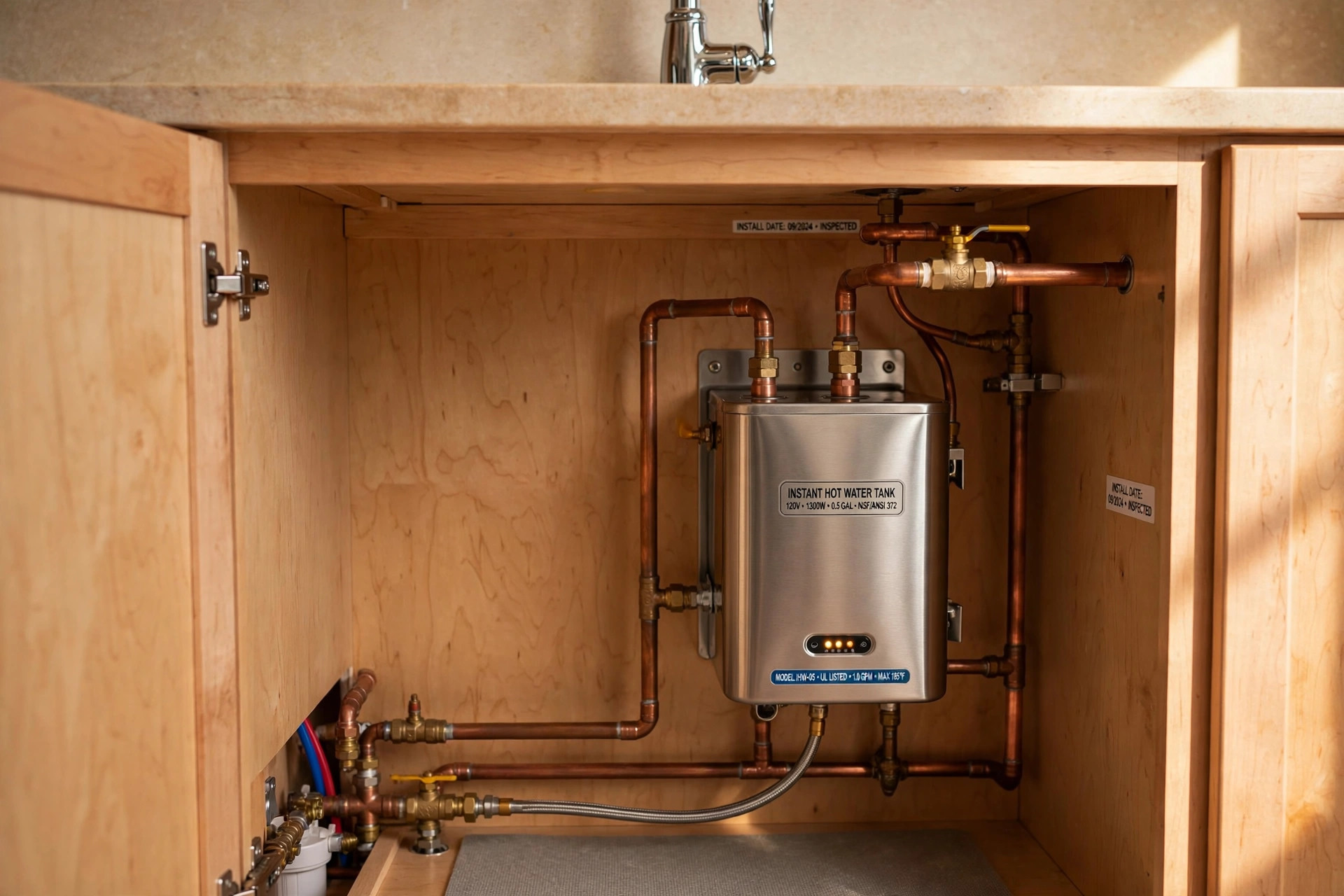

Every American kitchen runs on hot water. You use it for tea, coffee, cooking, and cleaning. You also wait for it. The tap runs cold for ten or twenty seconds first. That wait wastes time and water. An instant hot water tank ends the wait. It sits under your sink and holds a small reserve of near-boiling water. Turn the special tap and hot water comes out at once. This guide on the best instant hot water tank reviews USA buyers read will help you pick the right unit for your home.
Why an Instant Hot Water Tank Matters
Time matters in a busy home. A family of four can wait hours per year for tap water to warm up. Those minutes add up. An instant hot water tank gives you water at about 190 degrees Fahrenheit the moment you open the faucet. Tea, soup, and baby bottles become faster to make.
Water savings matter too. The average faucet flows at two gallons per minute. Twenty seconds of waiting wastes more than half a gallon each time. Over a year, that is hundreds of gallons down the drain. A small tank under the sink keeps that waste from happening.
Energy use stays small. These tanks hold two to five quarts of water. They use a modest electric heater to keep it hot. Most models use about 750 watts at peak and far less in standby. Reviewers often note that the extra cost on the power bill is only a few dollars a month.
What to Look for When You Shop: Best Instant Hot Water Tank Reviews Usa
Tank Size
Most under-sink tanks hold between two and five quarts. A two-quart tank suits a single person or a couple. A five-quart tank suits a large family or a home office where many cups are poured. Check the reviews for how fast each size recovers after a full draw. Larger tanks recover more slowly unless the heater is stronger.
Temperature Control
Good tanks let you set the temperature on a dial. Settings usually run from 140 to 190 degrees Fahrenheit. A dial on the front of the unit is simple to use. Some premium models offer digital controls. Reviewers in the USA often test how close the real output temperature is to the dial setting.
Heater Power
Look for the wattage rating. Common ratings are 750 and 1300 watts. Higher wattage heats the reserve faster. It also draws more power during heating cycles. Most homes already have a standard 120-volt outlet under the sink. Match the wattage to your circuit so you do not trip a breaker.
Faucet Quality
The tank ships with a special faucet or taps into your existing one. Solid brass faucets last longer than plastic ones. Check the finish options so the faucet matches your kitchen. Reviews often praise smooth handles and drip-free spouts. A dripping faucet wastes the savings the tank creates.
Safety Features
A good unit has an anti-scald feature. It also has a thermal cutoff that stops heating if the tank runs dry. Look for a tank made of stainless steel inside. Stainless steel resists rust and keeps the water tasting clean. Lead-free brass fittings matter for drinking water safety. The U.S. Environmental Protection Agency publishes guidance on safe drinking water at home.
Warranty and Support
Most tanks carry a one to three year warranty. Strong brands answer the phone when you call with a question. Reviews in the USA often mention how easy it was to reach customer service. Keep your receipt and register the product after you buy it.
Types and Options
Under-Sink Tank With Dedicated Faucet
This is the classic setup. A small stainless tank mounts on the cabinet wall under your kitchen sink. It connects to the cold water line. A dedicated faucet goes through its own hole in the sink or countertop. You get a separate handle for instant hot water. This design keeps the hot tank fully separate from your main tap.
Tank With Vent Faucet
A vented faucet releases steam as the water heats. It prevents pressure buildup in the tank. Vented models run quietly and last a long time. The faucet must be matched to the tank brand. You cannot mix a vented tank with a non-vented faucet. Check the model numbers before you buy.
Whole-House Point-of-Use Heaters
Some homes want hot water fast at every sink. Point-of-use electric heaters mount at each faucet. They have no storage tank at all. They heat water as it flows. They need strong electrical circuits and cost more to run. They suit large homes where the main water heater sits far from the taps.
Countertop Hot Water Dispensers
A countertop unit plugs in and sits on the counter. It holds a small reservoir that you fill by hand or connect to a line. It is cheaper than an under-sink tank. It also takes up counter space. It suits apartments and offices where you cannot change the plumbing. Compare these with our guide to instant hot water dispensers for small spaces.
Combined Systems
Some brands sell a tank that also feeds a filtered water tap. One system gives you hot and filtered cold water. It saves space under the sink. It costs more up front. Reviews often praise the clean look of a single faucet with two handles.
How Reviews Rate the Top Models
Shoppers in the USA rate instant hot water tanks on a few clear points. Heat-up speed comes first. A good tank reaches full temperature in about fifteen minutes from cold. Recovery time comes next. After you draw the full tank, a good unit reheats in about ten minutes.
Water taste is another common test. Stainless steel tanks score well. Some reviewers report a faint plastic taste in the first days of use. Flushing the tank a few times usually removes it. Faucet feel matters as well. A smooth, solid handle earns praise. A stiff handle earns complaints.
Noise level gets less attention but still counts. Most tanks run nearly silent. Some models click when the thermostat switches. The This Old House website offers practical plumbing guides that help buyers compare these details. The Family Handyman site also publishes step-by-step installation advice for DIY homeowners.
Long-term reviews tell the most useful story. Units that still work well after three to five years earn the highest marks. Reviewers often mention scale buildup as the main enemy. Hard water leaves mineral deposits inside the tank. A water softener or regular flushing helps the tank last longer.
Cost and Price Guide
Purchase Price
A basic under-sink instant hot water tank costs between 150 and 250 dollars in the USA. Mid-range models with better faucets and stainless tanks cost 250 to 400 dollars. Premium models with digital controls and filtration cost 400 to 600 dollars. Countertop dispensers cost less, usually 60 to 150 dollars. Price lists at The Home Depot and Lowes give a good picture of the current market.
Installation Cost
A handy homeowner can install a tank in one to two hours. You need basic plumbing skills and a drill. A licensed plumber charges 150 to 300 dollars for the same job. If your sink lacks a spare hole for the dedicated faucet, drilling one adds cost. If no outlet exists under the sink, an electrician must add one. That can add 200 to 400 dollars.
Operating Cost
The tank draws power only when reheating. Most units use about 60 to 90 kilowatt-hours per year. At average USA electric rates, that is roughly 8 to 15 dollars per year. Water savings offset part of this cost. Homes with very long waits for hot water save the most.
Replacement Parts
Faucets, filters, and thermostats wear out first. A replacement faucet costs 80 to 180 dollars. Filter cartridges for combined systems cost 30 to 60 dollars and need changing every six months. Check parts prices before you buy the tank. Cheap tanks with costly parts can cost more over time.
Total Cost of Ownership
Add purchase price, installation, yearly power, and parts over five years. A mid-range tank often totals 600 to 900 dollars over five years. That works out to about 10 to 15 dollars per month for instant hot water. Many families find that a fair trade.
Care and Upkeep
Flushing the Tank
Drain and flush the tank twice a year. Turn off the power first. Let the tank cool. Open the drain valve and let the water out. Refill and drain again to clear loose scale. This simple step adds years to the tank life.
Descaling
In hard water areas, scale builds up fast. Mix a mild food-safe descaling solution with water. Let it sit in the tank for one hour. Flush well before you drink from the tap again. Some brands sell their own descaler. Plain white vinegar also works in many cases.
Filter Changes
If your system has a water filter, change it on schedule. Old filters slow the flow and can harbor bacteria. Write the change date on the filter with a marker. Set a phone reminder for the next change.
Faucet Care
Clean the faucet aerator every few months. Unscrew it and rinse out grit. Check under the sink for drips once a month. A small leak can rot a cabinet floor in a few weeks. Tighten fittings by hand first, then a quarter turn with a wrench.
Winter Precautions
In cold climates, tanks in unheated spaces can freeze. Keep the cabinet doors open on very cold nights so warm air reaches the pipes. A tank that freezes can crack and leak. The repair cost far exceeds the cost of a little extra heat.
Safety Tips
Burn Prevention
Water at 190 degrees can scald skin in seconds. Teach children to treat the instant hot tap with care. Some families set the tank to 170 degrees instead of 190. The lower setting still makes tea and still cuts scald risk. Consider a faucet with a spring-loaded safety handle that stops accidental opening.
Electrical Safety
The tank plugs into a standard outlet. Keep the outlet dry at all times. Do not use an extension cord. A ground fault circuit interrupter outlet adds protection in wet areas. If the plug feels hot, unplug the unit and call an electrician.
Water Quality
Use cold water from your main supply to feed the tank. Hot water from the main line can carry more dissolved lead from old pipes. If your home has old plumbing, test your water first. The Moen and Delta Faucet sites explain how modern fixtures reduce lead exposure. Kohler also publishes fixture safety guidance.
Pressure Relief
Vented tanks release steam through the faucet. Never block the vent path. Never connect a non-vented faucet to a vented tank. Read the manual that ships with your unit. Follow the pressure relief instructions exactly.
When to Call a Professional
Call a plumber if you see water pooling under the cabinet. Call an electrician if the breaker trips each time the tank heats. Call the manufacturer if the tank overheats or smells burnt. Do not open the tank housing yourself. The heating element stores enough heat to burn you even after you unplug it.
FAQ
How long does an instant hot water tank last?
Most tanks last eight to twelve years with basic care. Stainless steel tanks last longer than glass-lined ones. Hard water shortens the life. Regular flushing adds years. Reviews often report tanks still running strong after a decade.
Can I install it myself?
Yes, if you have basic plumbing skills. The job needs a wrench, a drill, and about ninety minutes. You must connect the cold water line and mount the faucet. If you need a new electrical outlet under the sink, hire an electrician. When in doubt, hire a plumber. A bad install costs more than the labor you save.
Does it replace my water heater?
No. An instant hot water tank only feeds one tap. Your main water heater still handles baths, laundry, and dishwashers. Some homeowners with large families also read our review of the best tankless water heater for a family of 5 when they want faster hot water through the whole house.
How much electricity does it use?
Very little. Most units use 750 to 1300 watts while heating, but they heat in short bursts. Yearly use runs 60 to 90 kilowatt-hours. That costs roughly 8 to 15 dollars per year at average rates. The U.S. Department of Energy publishes tips on cutting home hot water energy use.
Is the water safe to drink?
Yes, if the unit is certified and installed well. Look for lead-free brass fittings and a stainless steel tank. Feed it with cold water from your main line. Change filters on time. If you use well water, test it first. Aquasana and other filtration makers explain how pre-filters protect small tanks.
What is the difference between a tank and a tankless unit?
A tank holds a few quarts of hot water ready to pour. A tankless unit heats water as it flows with no storage. Tanks cost less and install with ease. Tankless units give endless hot water but need bigger circuits. For a single kitchen tap, a tank is the simpler choice. Independent testing sites such as Consumer Reports compare both styles in detail.
A Short Final Word
An instant hot water tank is a small upgrade with a big daily payoff. You stop waiting at the sink. You waste less water. The cost stays modest. Read the best instant hot water tank reviews USA buyers write before you choose a brand. Pick a size that fits your household. Install it with care or hire a pro. Keep up with flushing and filter changes. Your tank will serve you well for many years. If your project grows into bigger plumbing work, our guide to water heater expansion tank installation cost can help you plan the next step. Home improvement guides at The Spruce offer more ideas for the kitchen and beyond.
References
Aquasana. (n.d.). Water filtration systems. https://www.aquasana.com Consumer Reports. (n.d.). Product reviews and ratings. https://www.consumerreports.org Delta Faucet. (n.d.). Kitchen and bathroom faucets. https://www.deltafaucet.com Family Handyman. (n.d.). DIY home repair and maintenance. https://www.familyhandyman.com Kohler. (n.d.). Bathroom and kitchen fixtures. https://www.kohler.com Lowe’s. (n.d.). Home improvement products. https://www.lowes.com Moen. (n.d.). Faucets and plumbing fixtures. https://www.moen.com The Home Depot. (n.d.). Home improvement products. https://www.homedepot.com The Spruce. (n.d.). Home and garden advice. https://www.thespruce.com This Old House. (n.d.). Home renovation guidance. https://www.thisoldhouse.com U.S. Department of Energy. (n.d.). Energy efficiency and renewable energy. https://www.energy.gov U.S. Environmental Protection Agency. (n.d.). Protecting human health and the environment. https://www.epa.gov
Was this guide helpful?

About Sarah Mitchell
The My Garden US editorial team writes practical, in-depth home and garden guides for American homeowners — tested advice, no fluff.
You May Also Like
Upflush Toilet System Reviews for Basement Bathrooms
July 17, 2026 0 views
Kitchen Sink Basket Strainer Reviews USA: A Plain Buyer Guide
February 22, 2026 0 views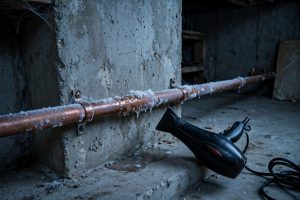
How to Thaw Frozen Pipes Safely: A USA Guide
February 1, 2026 0 views