
What Is a Water Heater Expansion Tank?
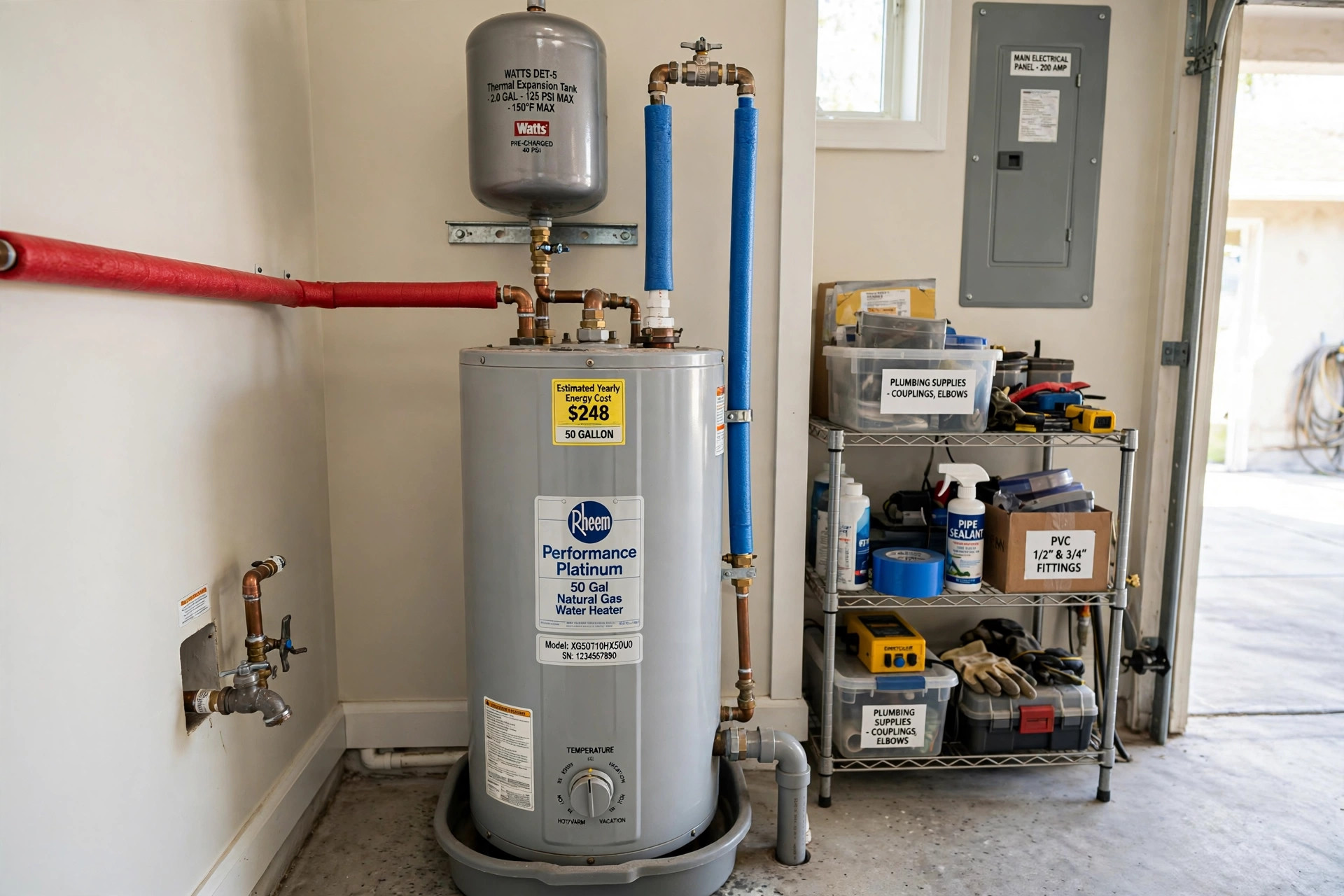
Water heater expansion tank installation cost is a question many homeowners ask when they replace a water heater. The answer matters. An expansion tank is a small steel tank that hangs on the cold water line near your water heater. It is about the size of a football.
When water heats, it expands. In older homes, the extra pressure could flow back into the city water main. Many cities now use check valves. A check valve stops water from flowing back. With nowhere to go, the pressure builds inside your plumbing. This is called thermal expansion.
An expansion tank gives the extra water a safe place to go. Inside the tank there is a rubber bladder. Air sits on one side of the bladder. Water sits on the other side. When pressure rises, water pushes into the tank. The air cushion absorbs the pressure. When pressure falls, the water returns to the pipes.
Many local codes now require an expansion tank with every new water heater. If you skip it, you may fail your plumbing inspection. Worse, high pressure can wear out your water heater, faucets, and valves. A small tank can save you from a large repair bill.
Why It Matters: Water Heater Expansion Tank Installation Cost
Pressure is the silent enemy of home plumbing. Normal home water pressure runs between 40 and 80 pounds per square inch. That is the safe range. When a water heater runs, pressure in a closed system can spike well above 100 psi. You cannot see it happening. You may not notice it for months.
Over time, high pressure damages the rubber washers in faucets. It shortens the life of the water heater itself. It can make the temperature and pressure relief valve drip. A relief valve that drips is a warning sign. It tells you that pressure has nowhere to go.
Water heater expansion tank installation cost is small when compared to the damage it prevents. A new water heater can cost over a thousand dollars. A burst pipe can cost far more. A dry wall, a ruined floor, and mold growth often follow a pipe failure. The expansion tank is cheap insurance.
Many homeowners learn about the tank only when the plumber mentions it. They wonder if it is really needed. In most American cities with backflow prevention, it is required by code. Your plumber is not selling you something you do not need. The tank is part of a proper, safe water heater setup.
Types and Sizes of Expansion Tanks
Expansion tanks come in two main sizes for home use. The most common is the 2-gallon tank. It fits most homes with a 40 to 50 gallon water heater. Larger homes with a 75 gallon heater may need a 4.5-gallon tank. Tankless water heaters do not need expansion tanks at all.
The tanks are made of steel with an epoxy coating inside. The coating resists rust. The bladder inside is made of butyl rubber. Butyl rubber holds up well against hot water and pressure. Good tanks last five to ten years. Cheaper tanks may fail sooner.
Pressure rating matters too. Most home expansion tanks are rated for 150 psi. That is enough for normal home use. Some models are rated higher for homes with very high incoming pressure. If your home pressure is above 80 psi, you may also need a pressure reducing valve. Pressure reducing valves and other plumbing supplies are easy to compare at the Home Depot.
Brands make little difference for a tank this simple. What matters is the right size, the right rating, and a working air charge. The air charge is the pressure of the air inside the tank before water enters. It must match your home water pressure. More on that below.
What to Look For When You Buy
Size and Capacity
Match the tank to your water heater size. A 40 or 50 gallon heater needs a 2-gallon tank in most cases. A 75 gallon heater needs the 4.5-gallon size. When in doubt, ask your plumber. A tank that is too small will not absorb enough pressure. A tank that is too large is a waste of money and space.
Pre-Charge Setting
Every tank comes with a factory air charge, often 40 psi. You must adjust it to match your home water pressure. A simple tire gauge works for the check. A bicycle pump works for the adjustment. This step is small but vital. Family Handyman has clear how-to guides for common plumbing jobs that show the process in detail.
Certifications
Look for tanks listed to IAPMO or ASSE standards. The label on the tank will say so. These marks show the tank has passed safety testing. Avoid tanks with no marks and no brand name. They cost less, but they fail more often.
Connection Size
Most home tanks use a 3/4-inch male connection. That matches standard water heater plumbing. Make sure the tank you buy matches your pipes. An adapter costs only a few dollars, but it is one more part to buy.
Water Heater Expansion Tank Installation Cost: The Full Picture
Water heater expansion tank installation cost breaks down into parts and labor. Here is what to expect in most American markets.
The tank itself costs between 40 and 80 dollars at a retail store. Big box stores carry the common 2-gallon size. The 4.5-gallon size costs a bit more, often 60 to 100 dollars. Online prices run about the same. Lowe’s stocks common plumbing repair parts in most locations.
Fittings and pipe cost another 15 to 30 dollars. You may need a brass tee, a short length of pipe, pipe thread tape, and solder or push-fit connectors. If you hire a plumber, these parts are usually part of the job price.
Labor is the largest part of the cost. A plumber typically charges 150 to 300 dollars for the job alone. The work takes less than one hour when the water heater is already open for replacement. If the tank is added to an existing water heater, the plumber must drain pressure first. That adds a little time.
When the tank is installed at the same time as a new water heater, the added cost is often lower. Many plumbers charge 100 to 200 dollars extra for the tank during a heater replacement. The total water heater expansion tank installation cost in that case runs about 150 to 280 dollars for parts and labor together.
If you add the tank to an old heater as a separate visit, expect 200 to 400 dollars all in. Prices run higher in large cities. They run lower in small towns. Always get two or three quotes. The quotes will be close if the job is simple.
DIY Cost
A handy homeowner can do this job. The tank and parts cost 60 to 110 dollars total. You need basic plumbing tools: a pipe wrench, Teflon tape, a tire gauge, and a bicycle pump. If you must sweat copper pipe, you need a torch and solder as well.
DIY saves the labor charge. But it takes your time. And you must follow the same steps a plumber follows. A wrong pressure setting or a leaky joint can cause trouble. If your code requires a permit for water heater work, check that first. Some cities require a licensed plumber for any water heater work.
How the Installation Works
The job follows a clear order. First, the plumber shuts off water to the heater. Then the power or gas to the heater is turned off. The plumber opens a hot water faucet to release pressure. The system must be cool and free of pressure before work begins.
Next, the plumber checks the home water pressure with a gauge. This takes a few minutes. The gauge screws onto a hose bib. The reading tells the plumber what to set the tank air charge to. Moen offers water pressure guidance for homeowners on its support pages.
Then the tank air charge is set with a pump and checked with a gauge. The tank is mounted on the cold water line above or beside the water heater. The tank can hang in any position, but most plumbers mount it vertically with the connection at the bottom. Support straps hold heavy tanks in place.
A tee fitting goes into the cold water line. The tank threads into the tee. Pipe thread tape or pipe dope seals the threads. The plumber then turns the water back on slowly. Every joint is checked for leaks. The pressure relief valve is tested. The job is done.
The whole process is simple for a trained plumber. For a first-time DIY worker, it may take two to three hours. Take your time. Leaks show up slowly. Check the joints again after one day.
Care and Upkeep
An expansion tank is not a part you install and forget. It needs a small amount of care. Once a year, tap the tank with your knuckle. The top half should sound hollow. The bottom half should sound solid. That means air is on top and water is on the bottom. That is correct.
If the whole tank sounds solid, the bladder has failed. The tank is waterlogged. It no longer absorbs pressure. Replace it. A failed tank is no better than no tank at all.
Check the air charge once a year too. Shut off the water and drain the tank first. Then check the air pressure with a tire gauge. Pump it back up if it has fallen. This takes ten minutes. Kohler’s home plumbing resources explain basic maintenance in plain terms.
Watch for rust or drips at the tank seams. Steel tanks can rust from the outside in damp basements. A rusty tank should be replaced before it leaks. Most tanks last five to ten years. Write the install date on the tank with a marker. That way you know its age.
When you replace the water heater, replace the expansion tank too. The tank is cheap. Starting fresh keeps your system safe. Old tanks often fail soon after a new heater goes in.
Safety
Water and pressure demand respect. Always shut off the water before you start. Turn off the heater too. Gas and electricity near water are a bad mix. Let the tank cool before you touch the pipes. Hot water can burn.
Never cap or plug the temperature and pressure relief valve on the water heater. That valve is a safety device. If pressure builds too high, the valve opens and releases water. A plugged valve can lead to a burst tank. That is rare, but it is very dangerous.
Set the tank air charge to match your home pressure, never higher than the tank rating. Overcharging the tank can damage the bladder. Follow the steps in order. Do not rush.
If you smell gas or see water pouring from a joint, stop. Call a plumber. A small leak you cannot stop is a job for a professional. There is no shame in calling for help. Water damage costs more than a service call.
Related Water Safety Reading
Water quality matters as much as pressure in many homes. If your home runs on a well, a well water testing kit can tell you what is in your water. Clean, safe water protects your family and your plumbing alike.
Frequently Asked Questions
Do I really need an expansion tank?
In most cases, yes. If your home has a check valve or pressure regulator on the main line, your plumbing is a closed system. Thermal expansion has nowhere to go. Most local codes require an expansion tank with a new water heater. Check with your city or your plumber.
What is the average water heater expansion tank installation cost?
Parts and labor together usually run 150 to 400 dollars. The price depends on your area and whether the tank goes in with a new heater or on its own. During a heater replacement, the added cost is often 150 to 280 dollars. As a stand-alone job, expect 200 to 400 dollars.
Can I install an expansion tank myself?
Yes, if you have basic plumbing skills. The parts cost 60 to 110 dollars. You need to shut off water and power, set the air charge, and seal the joints well. Some cities require a permit or a licensed plumber for water heater work. Check local rules first.
How long does an expansion tank last?
Most last five to ten years. The rubber bladder wears out over time. Annual checks help you catch failure early. Replace the tank when it sounds fully solid or shows rust.
What size tank do I need?
A 40 or 50 gallon water heater needs a 2-gallon tank in most homes. A 75 gallon heater needs a 4.5-gallon tank. Your plumber can confirm the right size for your system.
What happens if I skip the tank?
Pressure will spike each time the heater runs. Over time, this wears out faucets, valves, and the heater itself. The relief valve may drip. In the worst case, a pipe or fitting can burst. The repair cost will far exceed the water heater expansion tank installation cost.
A Short Final Word
Water heater expansion tank installation cost is one of the smaller lines on a plumbing bill. It protects a much larger investment. The tank is simple. The job is quick. The safety payoff lasts for years.
Get the right size. Set the air charge to match your home pressure. Check the tank once a year. When you replace your water heater, replace the tank as well. These small habits keep your plumbing safe and your costs low.
If your plumber suggests the tank, say yes. If your code requires it, follow the code. A few hundred dollars today can prevent thousands of dollars in water damage tomorrow. For more on home water systems, see the EPA’s guidance on drinking water and home plumbing. Planning a larger project? Our guides on water heater pan installation costs and interior french drain system costs can help you budget for related work.
Buying guides are also published by This Old House and Delta Faucet.
References
Delta Faucet. (n.d.). Kitchen and bathroom faucets. https://www.deltafaucet.com Family Handyman. (n.d.). DIY home repair and maintenance. https://www.familyhandyman.com Kohler. (n.d.). Bathroom and kitchen fixtures. https://www.kohler.com Lowe’s. (n.d.). Home improvement products. https://www.lowes.com Moen. (n.d.). Faucets and plumbing fixtures. https://www.moen.com The Home Depot. (n.d.). Home improvement products. https://www.homedepot.com This Old House. (n.d.). Home renovation guidance. https://www.thisoldhouse.com U.S. Environmental Protection Agency. (n.d.). Protecting human health and the environment. https://www.epa.gov
Was this guide helpful?

About James Carter
The My Garden US editorial team writes practical, in-depth home and garden guides for American homeowners — tested advice, no fluff.
You May Also Like
How to Unclog Garbage Disposal Safely: A USA Homeowner Guide
June 28, 2026 0 views
Permeate Pump for RO System Reviews USA: A Clear Buyer Guide
June 11, 2026 0 views
Sewer Line Replacement Cost Per Foot USA: What Homeowners Pay in 2026
April 23, 2026 0 views