
A spilled cup of coffee can ruin the look of a room in seconds. This top rated carpet stain remover kits buying guide will help you choose a kit that cleans well, is safe for your family, and fits your budget. You do not need a professional machine for most spills. A good kit and a little effort will take care of most common stains.
Why a Good Stain Remover Kit Matters
Carpet stains grow worse with time. A fresh spill sits on top of the fibers. An old spill sinks deep into the backing. If you wait too long, the stain may become a permanent mark. A stain remover kit lets you act fast. It keeps common cleaning tools and sprays in one place. You do not have to hunt through the cupboard when a spill happens.
Kits also save money. Professional cleaning costs much more than a kit. A single visit from a cleaning company can cost as much as ten kits. For homes with children or pets, spills happen often. A kit pays for itself after the first few cleanings. Many readers also compare kits with larger options such as eco friendly carpet deep cleaning machines for sale before they decide how much gear they need.
What to Look for When You Buy: Top Rated Carpet Stain Remover Kits Buying Guide
Not all kits work the same. Read the label before you buy. These are the points that matter most.
Stain Types Covered
The best kits treat many stain types. Look for one that names food, drink, grease, ink, and pet stains on the label. Coffee and wine are the most common drink stains in a home. Grease from cooking can reach the carpet near the kitchen. Pet stains need special care because they leave odor as well as color.
A kit that only treats one kind of stain is less useful. A family home meets many kinds of spills. One kit that covers many stains is the better buy.
Ingredients and Formula
Check what is in the bottle. Many top rated kits use oxygen-based cleaners. These cleaners lift stains without harsh bleach. They are kinder to carpet fibers and to color. Enzyme-based formulas are also common. Enzymes break down protein stains such as milk, egg, blood, and pet waste.
Avoid kits with strong solvents if you have wool carpet. Solvents can harm natural fibers. Read the full ingredient list on the package. If the label hides the formula, treat that as a warning sign.
Tools Included
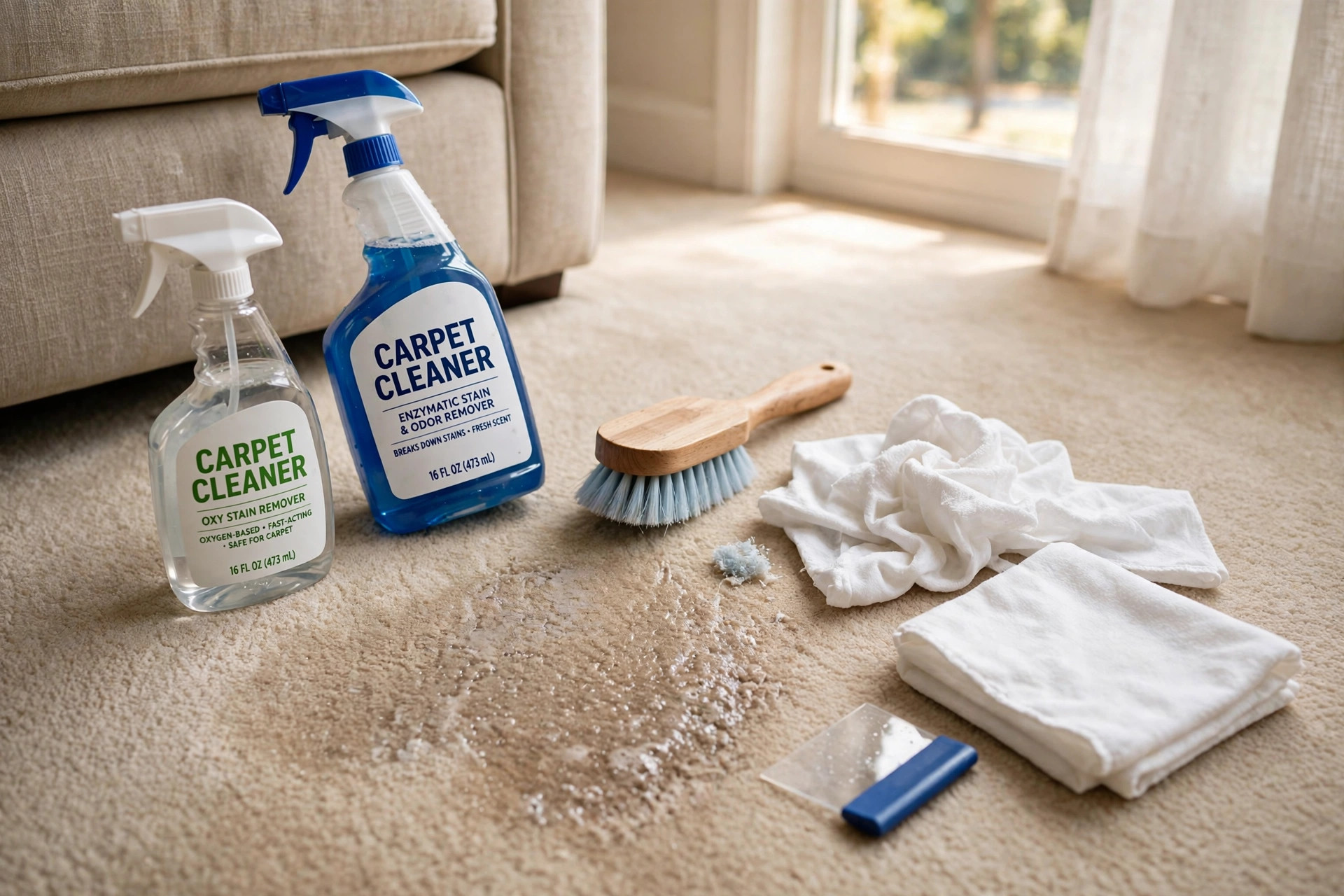
A kit is more than spray bottles. Good kits include a soft brush for working the cleaner into fibers. Some include a scrub pad, absorbent cloths, and a plastic scraper for dried spills. A scraper helps you lift dried food or mud before you spray. A brush helps the cleaner reach deep into the pile.
Kits with a small hand-held sprayer let you mist the cleaner evenly. This avoids soaking the carpet. Too much liquid can reach the padding below. Wet padding can grow mold. Even coverage matters.
Carpet Compatibility
Check that the kit suits your carpet type. Most kits are made for synthetic carpets such as nylon and polyester. Wool and silk carpets need gentle, low-moisture formulas. Always test a new product in a hidden corner first. Put a small drop on the carpet behind a sofa. Wait a day. If the color holds, the product is safe to use.
Product guides at places like The Spruce often note which formulas suit wool and which suit synthetic fibers, and it is worth reading those notes before you buy.
Ease of Use
Simple steps win. The best kits give clear steps on the label. Spray, wait, blot, rinse. If a kit needs many steps, people skip them. Skipped steps lead to poor results. Look for a kit a child could follow. Clear pictures on the package help too.
Types of Carpet Stain Remover Kits
Kits come in several styles. Each style suits a different home.
Spray and Blot Kits
These are the most common. They include one or two spray bottles and cloths. You spray the stain, let it sit, and blot it up. They work well for fresh spills. They are the cheapest option. Most homes need nothing more.
Brush-In Kits
These kits add a soft brush or a battery-powered scrub brush. The brush works the cleaner into the fibers. They clean set-in stains better than spray-only kits. They cost a little more. They are a good pick for older stains.
Enzyme and Pet Stain Kits
Pet owners should look for these. They use enzyme cleaners that digest odor-causing matter. They often include a black-light flashlight. The light shows dried urine spots you cannot see. This lets you treat the real source of the smell, not just the stain you see.
Foam and Powder Kits
Foam kits spray a foam that lifts dirt to the surface. You vacuum the foam away when it dries. Powder kits work the same way with a dry powder. They use very little water. Low moisture is good for wool carpets and for rooms that dry slowly.
Testing organizations such as Consumer Reports publish side-by-side tests of spray, foam, and enzyme cleaners, which can help you compare styles before you spend.
How to Use a Kit the Right Way
Good tools still need the right method. Follow these steps for best results.
First, act fast. Blot the spill with a clean cloth. Press down. Do not rub. Rubbing pushes the stain deeper and spreads it wider. Lift the cloth and use a clean part. Repeat until no more liquid comes up.
Second, scrape dried matter. Use the scraper from the kit. Lift crumbs, mud, or dried food from the carpet surface. Vacuum the loose bits away.
Third, test the cleaner. Spray a small amount in a hidden spot. Wait fifteen minutes. Check for color change. If all is well, treat the stain.
Fourth, apply the cleaner. Spray from the outside of the stain toward the center. This keeps the stain from spreading. Use enough to dampen the fibers. Do not soak the carpet.
Fifth, wait. Give the cleaner time to work. Most labels say five to ten minutes. Set a timer. Do not let it dry on the carpet.
Sixth, blot and rinse. Blot with a damp cloth. Lift the stain. Then blot with a dry cloth. Repeat until the cloth shows no color. Finish by placing a dry towel on the spot and pressing it down.
Guidance from Family Handyman and Bob Vila follows the same blot-first method, and both stress that quick action matters more than any brand name.
Cost and Price: What You Should Expect
Most carpet stain remover kits cost between ten and forty dollars. Small spray kits sit at the low end. Kits with brushes, enzyme sprays, and black-light tools sit at the high end. Bulk or refill bottles lower the cost per use.
A kit is far cheaper than professional help. A pro cleaning room costs fifty to one hundred dollars. Readers weighing a kit against a service visit may want to read a carpet cleaning service companies cost guide usa to see the price gap clearly.
Price is not the only measure. A cheap kit that fails costs more in the end. You may buy a second kit. You may pay a pro anyway. A mid-priced kit from a known brand often gives the best value. Look at the cost per use. A twenty-dollar kit that treats fifty stains costs forty cents per stain. That is excellent value.
Care and Upkeep of Your Kit
Store the kit in a cool, dry place. Heat can break down enzyme cleaners. Cold can split spray bottles. Keep the kit where you can reach it fast. Many people store it under the kitchen sink or in a hall closet.
Check expiry dates once a year. Old cleaners lose power. Replace any bottle past its date. Wash the brushes after each use. Rinse them in warm water. Let them dry fully before you put them back. A dirty brush can spread old stains to a new spill.
Keep cloths clean. Wash used cloths before you store them. A stained cloth can add color to a fresh spill. Many kits include white cloths so you can see the stain lifting out of the carpet.
The team at Good Housekeeping advises replacing cleaning cloths often, since a worn cloth blots less and can redeposit dirt.
Safety Notes for Home Use
Stain removers are chemicals. Treat them with care. Keep all bottles away from children and pets. Store them on a high shelf or in a locked cabinet. Never move a cleaner into a food container. A clear bottle can look like water.
Ventilate the room while you work. Open a window or run a fan. Some cleaners give off fumes. If the smell is strong, wear a rubber glove pair. Gloves protect your skin from dryness and irritation.
People with asthma should read labels with care. Fragrance-free formulas are safer for sensitive lungs. The EPA publishes guidance on safer cleaning products for homes, and its lists can help you pick a formula with fewer harsh chemicals.
Rinse well after cleaning. Cleaner left in the carpet can attract new dirt. It can also irritate bare feet and pet paws. Blot with plain water after the stain is gone. Press a dry towel down until the spot feels almost dry.
For homes with small children, check cord and bottle safety too. The This Old House home care guides remind parents to keep all cleaning supplies out of reach, and that advice applies to stain kits as well.
FAQ
How fast should I treat a new spill?
Treat it right away. Blot within the first minute if you can. The longer a spill sits, the deeper it sinks. A stain treated in five minutes is far easier to remove than one treated the next day.
Will these kits work on old, set-in stains?
Often yes, but old stains need more effort. Use a brush-in kit. Let the cleaner sit the full time on the label. You may need two or three rounds. Very old stains may only fade, not vanish.
Are stain remover kits safe for pets?
Most are safe once dry. Keep pets out of the room while you clean. Rinse the spot well. Let it dry fully before pets walk on it. Read the label for any pet warnings. Enzyme kits made for pet stains are the safest choice for pet homes.
Can I use a kit on wool carpet?
Only if the label says it is safe for wool. Wool needs gentle, low-moisture cleaners. Harsh chemicals can shrink or fade wool. Test in a hidden spot first. When in doubt, call the carpet maker for advice.
Do I need a machine too?
Not for most spills. A kit handles spot cleaning. Machines are for whole-room deep cleaning. If you want to compare, read about reliable carpet stain remover kits with free shipping for spot needs and machine guides for full-room needs. Many homes do well with a kit alone.
How do I remove the smell, not just the stain?
Use an enzyme cleaner. Enzymes break down the matter that causes odor. Spray enough to reach the padding. Cover the spot with plastic wrap overnight to keep it damp. Damp conditions let enzymes work longer. Blot dry in the morning.
Final Word
A top rated carpet stain remover kit is one of the most useful buys for any home with carpet. Pick a kit that covers many stain types. Check the ingredients. Make sure it suits your carpet. Learn the blot-first method. Store the kit where you can grab it fast. With the right kit and the right steps, most spills will leave no trace.
For more background, see Target.
References
Bob Vila. (n.d.). Home improvement advice. https://www.bobvila.com Consumer Reports. (n.d.). Product reviews and ratings. https://www.consumerreports.org Family Handyman. (n.d.). DIY home repair and maintenance. https://www.familyhandyman.com Good Housekeeping. (n.d.). Product reviews and home advice. https://www.goodhousekeeping.com Target. (n.d.). Retail store. https://www.target.com The Spruce. (n.d.). Home and garden advice. https://www.thespruce.com This Old House. (n.d.). Home renovation guidance. https://www.thisoldhouse.com U.S. Environmental Protection Agency. (n.d.). Protecting human health and the environment. https://www.epa.gov
Was this guide helpful?

About Sarah Mitchell
The My Garden US editorial team writes practical, in-depth home and garden guides for American homeowners — tested advice, no fluff.
You May Also Like

Best Pet Odor Eliminator Sprays for Florida Homes
May 2, 2026 0 views
Powerful Move Out Cleaning Services Near Me: A Complete Guide
April 21, 2026 0 views
Cordless Stick Vacuums Price Comparison USA: A Practical Guide for American Homes
March 26, 2026 0 views