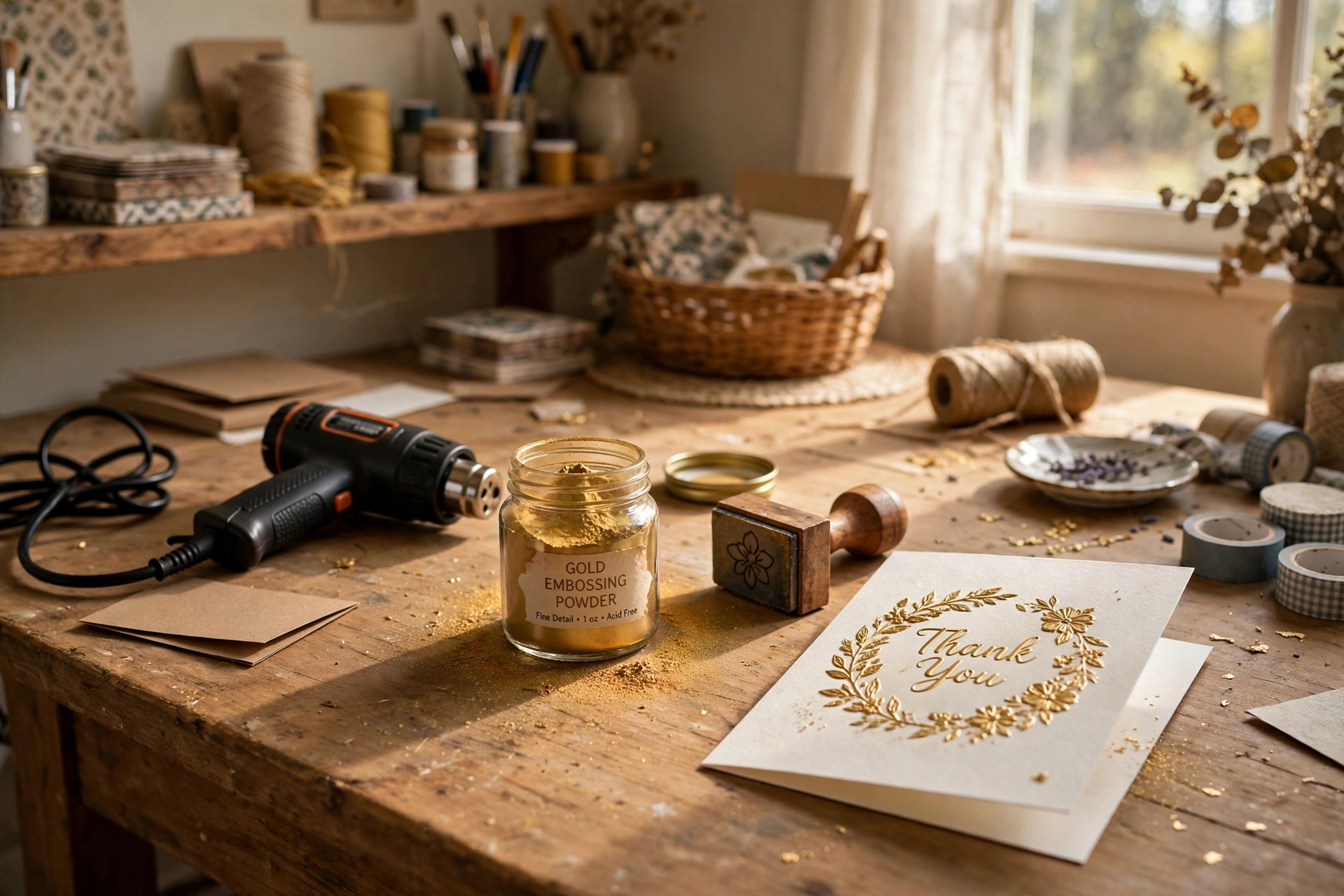
Finding the best heat gun for embossing and crafts is easier than it first looks. A heat gun is a small hand tool that blows hot air. Crafters use it to melt embossing powder, dry paint, and shrink plastic. It looks a little like a hair dryer. It is much hotter than a hair dryer, and it is made for a different kind of work. This guide explains what the tool does, how to pick one, what it costs, and how to use it without harm. It is written for beginners and for card makers who want steady results.
Why the Right Heat Gun Matters
Embossing is a simple craft. You stamp a design with slow-drying ink. You pour embossing powder over the ink. You shake off the extra powder. Then you melt what is left with hot air. The powder turns into a smooth, raised, shiny surface. The result looks fine and neat. It gives cards, tags, and scrapbook pages a rich feel.
The heat gun is the step that decides the finish. Weak heat leaves the powder grainy. Too much heat burns the paper. A good craft heat gun gives even, steady heat. It melts the powder in seconds. The finish comes out smooth and bright. A poor tool gives hot spots. It scorches the edges of the card. It may also take so long that your hand tires.
A hair dryer is not a safe swap. A hair dryer blows a wide, cool stream. It can take a minute or more to melt powder. It can also blow the powder off the card before it melts. A heat gun sends a tight stream of much hotter air. It melts powder in ten to twenty seconds. If you make cards often, the right tool saves time and paper. That is why crafters who look for the best heat gun for embossing and crafts usually ask about heat settings first, and price second.
What to Look for in a Craft Heat Gun: Best Heat Gun for Embossing and Crafts
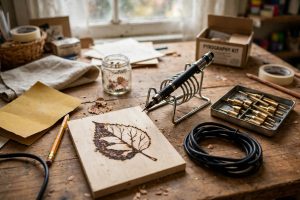
Heat guns come in many sizes. Some are made for paint stripping and plumbing. Those are far too strong for paper. Craft heat guns are small and light. They often look like a stubby pen with a fat nozzle. When you shop, check the points below.
Heat Settings
Most craft heat guns have one or two heat settings. A single low setting is often enough for embossing. It is simple. You switch it on and work. A two-speed model gives you a low setting for paper and a higher setting for other tasks, such as shrink plastic or drying thick paint. Two speeds cost a little more. They are useful if you do many kinds of crafts.
Do not buy a large workshop heat gun for embossing. Those tools can reach very high heat. They are hard to control on a small card. They can warp paper in seconds. A craft model is gentler. It is made for close, careful work.
Size and Nozzle Shape
The best heat gun for embossing and crafts feels light in the hand. You may hold it for a minute at a time, many times in a row. A light tool tires your hand less. A short barrel helps too. It lets you aim the hot air with care.
Look at the nozzle. A narrow or cone-shaped nozzle aims the air at one spot. That is good for small stamps and letters. Some kits include a flat spreader nozzle. That nozzle covers a wide line. It suits larger shapes. A few models come with a reflector shield. That shield bends hot air back toward the work. It helps when you shrink plastic tubing or wrap.
Cord Length and Comfort
A longer cord gives you room to work around a craft table. Short cords pull and tug. They get in the way. Some newer models run on battery power. A battery model is free of cords. It is handy at craft fairs and classes. But a battery runs out. It may also lose power as it drains. A plug-in model runs as long as you need. For home use, a plug-in model is usually the safer pick.
Grip comfort matters as well. A rubber grip stays steady in the hand. A tool with a stand or a fold-out base can sit on the table while it cools. That is safer than laying a hot tool on its side.
Types of Heat Guns for Craft Work
Crafters meet four common types. Each has a place.
Mini craft heat guns are the most popular choice for embossing. They are short and light. They heat fast. They are made for paper, stamps, and powder. Most card makers start here. They are also the least costly.
Dual-speed craft guns add a higher setting. You can emboss at low speed. You can shrink plastic or dry paint at the high speed. They are a little bigger than mini guns. They cost a little more.
Cordless heat guns run on rechargeable batteries. They are light and free to move. They suit travel and classes. Their heat may dip as the battery drains. They are best as a second tool, not a first.
Full-size heat guns belong to workshops. They strip paint and thaw pipes. They are too hot and too heavy for paper crafts. Some crafters keep one for heavy jobs like melting candle wax. But for the best heat gun for embossing and crafts, stay with the small craft sizes.
When you browse craft shops such as Michaels or JOANN, you will see the mini models in the stamping aisle. Art supply shops like Blick often carry them too. Home stores such as Home Depot and Lowe’s stock them near the small tools. Large online sellers like Walmart and Amazon list many brands side by side.
Cost and Price
Craft heat guns are not costly tools. A simple mini model often sells for a modest price. It may cost less than a large bottle of embossing powder and a few stamp sets. Two-speed models cost a little more. Cordless models cost more still, and you may need a spare battery.
Do not judge by price alone. A cheap tool with no stand can be a risk. A well-made mini gun from a known brand may last for years. Read the box. Check the wattage. Most craft models run between 300 and 500 watts. That is enough for embossing. It is far below the power of a workshop gun.
Think about what you will do with the tool. If you only emboss cards, a basic mini gun is enough. If you also dry paint, melt wax seals, or shrink wrap, a two-speed model is worth the small extra cost. If you teach classes, a second cordless gun may earn its price in ease.
How to Use a Heat Gun for Embossing
The steps are simple. Take your time on the first few cards. You will learn the feel of the heat.
1. Stamp your design. Press your stamp into slow-drying ink. Press it firmly on the card. A clear print gives a clean result. 2. Pour the powder. Tip embossing powder over the wet ink. Cover the whole design. Tap the card on its edge to shake off the loose powder. Put the extra powder back in its jar. 3. Warm the gun. Switch the heat gun on. Let it run for a few seconds. Hold it a few inches above the card. Keep it moving in small circles. 4. Watch the powder melt. The powder will first look dull. Then it will turn glossy and smooth. This takes ten to twenty seconds with a good craft gun. Do not rush. Do not hold the heat in one spot. 5. Let it cool. Switch the gun off. Set it on its stand. Let the card rest for a minute. The raised design is hard and smooth when cool.
A common mistake is holding the gun too close. Hot air held still will scorch the paper. Keep the gun moving. Keep a steady distance. Another mistake is working in a draft. A fan or an open window can cool the powder before it melts. Close the window or move away from the vent.
If you also enjoy paper crafts beyond stamping, you may like a diy-terrarium-kit-for-succulents-and-plants for your shelf, or a best-beginner-sewing-machine-for-home-crafts for fabric projects. For quick fixes on cloth, a best-fabric-glue-for-patches-and-repairs keeps things tidy without heat.
Care and Upkeep
A heat gun needs little care. But a few habits will make it last.
Keep the air intake clean. The back of the gun has vents. Dust can clog them. Wipe them with a dry cloth now and then. Do not poke tools into the vents.
Let the gun cool before you put it away. A hot nozzle can melt a plastic bin or burn a shelf. Many models have a built-in stand. Use it. Set the gun on a heat-proof surface while it cools.
Store the gun in a dry place. Do not leave it in a damp garage. Damp air can harm the wiring. Wrap the cord loosely. A tight wrap can break the wires inside.
Check the cord now and then. If the cord is cracked or the plug is loose, stop using the tool. A damaged cord is a fire risk. It is not worth a repair. Replace the gun.
Safety
Heat guns are safe when used with care. They are risky when used in a rush. Keep these rules in mind.
– Never touch the nozzle. It stays hot for many minutes after you switch the tool off. Treat it like a hot iron. – Keep it away from children and pets. Set up a clear work zone. Put the gun down only on its stand. – Work on a heat-proof surface. A ceramic tile or a silicone mat works well. Do not emboss on a plastic tablecloth. – Do not use it near water. Do not use it in a damp room. Water and electric heat tools are a bad mix. – Unplug when done. Do not leave a heat gun plugged in. Do not leave a cooling gun where it can roll. – Watch for smoke. A little smell from new powder is normal. Smoke from the paper means the gun is too close. Pull back and keep it moving.
If you want more guidance, repair and home sites such as Family Handyman and This Old House explain safe heat tool habits in plain terms. Bob Vila also covers small-tool safety for home crafters.
Frequently Asked Questions
Can I use a hair dryer instead of a heat gun for embossing? You can try, but the result is often poor. A hair dryer blows wide and cool. It may blow the powder away before it melts. It takes much longer. A small craft heat gun is the right tool for the job.
How hot does a craft heat gun get? Most craft models reach a few hundred degrees. That is hot enough to melt embossing powder in seconds. It is far cooler than a workshop heat gun. Still, the nozzle can burn skin. Handle it with care.
Is a two-speed heat gun worth it? It is worth it if you do more than embossing. The high speed dries paint faster. It shrinks plastic well. If you only emboss cards, a single-speed mini gun is enough and costs less.
Why is my embossing powder not melting? Three causes are common. The gun may be too far from the card. Move it a little closer and keep it moving. The powder may be old or damp. Try a fresh jar. Or the room may be cold or drafty. Move away from fans and open windows.
Can a heat gun damage my stamps or ink pads? It can if you aim the heat at them. Heat warps rubber and dries out ink pads. Keep the gun pointed at the card only. Store stamps and pads away from the work zone.
How long should a craft heat gun last? A well-made mini gun can last for years of weekly use. Keep the vents clean. Let it cool on its stand. Unplug it after each session. Cheap models with thin cords may fail sooner.
A Final Word
The best heat gun for embossing and crafts is the one that fits your hand, your table, and your budget. For most card makers, a simple mini craft gun is all they need. It heats fast. It aims with care. It costs little. If you craft in many ways, a two-speed model adds room to grow. Buy from a shop you trust. Follow the safety rules. And enjoy the small pleasure of watching dull powder turn to glass-smooth shine.
References
Amazon. (n.d.). Online shopping. https://www.amazon.com Blick Art Materials. (n.d.). Art and craft supplies. https://www.dickblick.com Bob Vila. (n.d.). Home improvement advice. https://www.bobvila.com Family Handyman. (n.d.). DIY home repair and maintenance. https://www.familyhandyman.com JOANN. (n.d.). Fabric and craft supplies. https://www.joann.com Lowe’s. (n.d.). Home improvement products. https://www.lowes.com Michaels. (n.d.). Arts and crafts supplies. https://www.michaels.com The Home Depot. (n.d.). Home improvement products. https://www.homedepot.com This Old House. (n.d.). Home renovation guidance. https://www.thisoldhouse.com Walmart. (n.d.). Everyday low prices. https://www.walmart.com
Was this guide helpful?

About Sarah Mitchell
The My Garden US editorial team writes practical, in-depth home and garden guides for American homeowners — tested advice, no fluff.