
A sewer camera inspection cost near me is one of the most common questions homeowners ask when drains start to act up. The short answer is that most homeowners pay between $100 and $300 for a standard inspection of the main sewer line. The exact price depends on your area, the length of the line, and whether you order the inspection alone or with another service.
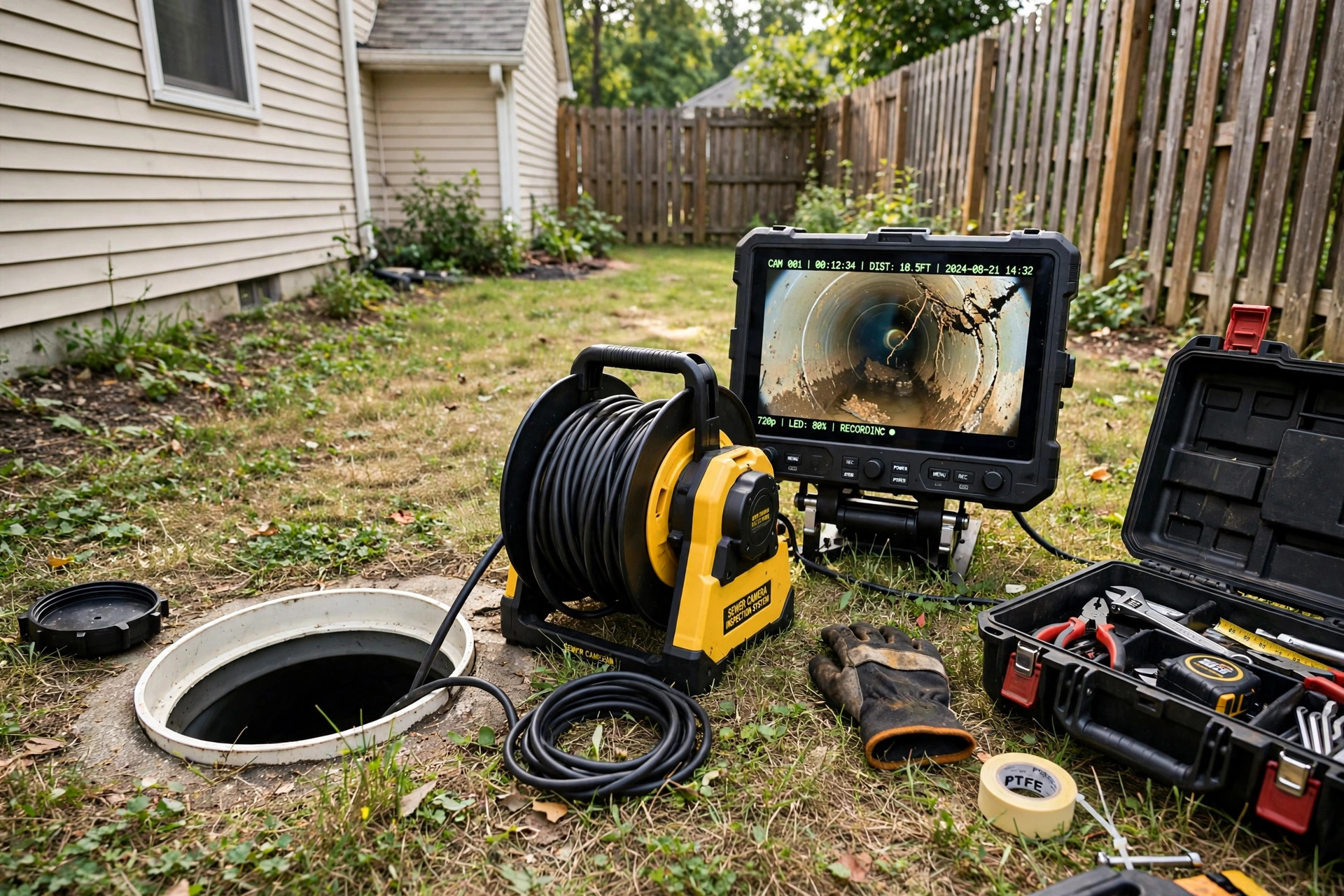
A sewer camera inspection is a simple idea. A plumber feeds a small waterproof camera on a flexible cable into your sewer line. The camera sends live video to a monitor above ground. You and the plumber watch the inside of the pipe in real time. The video shows cracks, breaks, root growth, grease buildup, and collapsed sections. Many cameras also carry a locator beacon that marks the exact spot of a problem in your yard.
Why a Sewer Camera Inspection Matters
Most of your sewer line is buried. You cannot see it. Without a camera, a plumber must guess where the trouble is. Guessing often leads to digging up the wrong spot. A camera removes the guesswork.
A camera inspection finds the true cause of a drain problem. Slow drains can come from many sources: tree roots, broken pipe joints, sagging sections, and heavy grease. Each problem needs a different fix. Roots may need cutting. A sagging pipe may need replacement. The camera shows which one you have.
The inspection also protects you before a big repair. A sewer line replacement can cost thousands of dollars. A camera inspection, which costs a fraction of that, confirms the work is truly needed and shows where to dig. Some homeowners skip the inspection to save money and then pay far more for an unnecessary repair.
Home buyers use camera inspections too. Many buyers order one before closing on an older home. A cracked or root-filled sewer line is an expensive surprise. A $200 inspection can save $8,000 or more on a bad purchase.
What to Look For When You Choose a Provider: Sewer Camera Inspection Cost near Me
Not every plumber owns camera equipment. The job needs a special reel, a camera head, a monitor, and a locating receiver. Ask whether the company does inspections in-house or calls a subcontractor. An in-house crew often costs less and answers questions faster.
Check what the quoted price includes. A good quote lists the length of line inspected, a digital copy of the video, a written report, and a location mark if a problem is found. Some low quotes cover only the camera feed with no recording. You want the recording. It lets you get a second opinion later without paying for another inspection.
Read recent reviews. Look for reviews that mention sewer or drain work, not just faucet repairs. Guides on trusted sites such as This Old House and Family Handyman show how experienced a firm is with real drain jobs. Local word of mouth matters too. Ask a neighbor who had drain work done.
Confirm the tech will show you the live feed. A honest provider invites you to watch. If a company says you cannot see the screen or will not share the recording, find another company.
Types of Sewer Camera Inspections
Plumbers offer a few levels of inspection. The basic inspection covers the main sewer line from the house cleanout to the street or septic tank. This is what most homeowners need. It takes 30 to 60 minutes.
A full lateral inspection goes further. The tech checks every branch line, including kitchen and laundry drains, in addition to the main line. It is useful for larger homes or homes with repeat clogs in different rooms, but it takes longer and costs more.
A post-repair inspection verifies that a fix was done right. After a contractor replaces or lines a section of pipe, the camera confirms the new section is smooth and connected. Many contractors include this check in the repair price.
What the Sewer Camera Inspection Cost Covers
A standard inspection fee covers the tech’s time on site, the camera equipment, and the video. Most visits run 30 to 60 minutes. The tech opens the cleanout, runs the camera to the end of the line, and reviews the footage with you.
A cleanout is the access pipe that leads into your sewer line. Most homes have one outside, near the foundation, with a round or square cap. If your home has no cleanout, the tech must pull a toilet or open another access point. This adds labor and cost. Ask about this when you book.
The report is part of the value. A written report lists the pipe material, the total length checked, and each defect with its distance from the start. It may grade the line as good, fair, or poor. Some companies also mark problem spots in the yard with paint or flags.
Location marking is often included, but not always. The camera head sends a signal. A hand-held receiver above ground picks it up. The tech can then mark the exact spot and depth of a break or root mass. This service saves digging. If it is not in the base price, ask for the add-on fee before the visit.
Many companies bundle the inspection with cleaning. A common bundle pairs the camera inspection with drain cleaning cost per line near me work. Another common bundle pairs it with hydro jetting cost for sewer line usa service for lines with heavy grease. Bundles often cost less than booking each service alone.
What Drives the Price Up or Down
Line length is the biggest factor. A 50-foot line to the street costs less to inspect than a 150-foot line to a far septic field. More cable run means more time on site.
Access matters too. An easy outdoor cleanout keeps the price low. A buried or missing cleanout adds work. So does a finished basement with no access points. The tech may need to remove a toilet, which adds 20 to 40 minutes of labor.
Your region changes the price. Big cities and high-cost states charge more. Rural areas often charge less, but you may pay a trip fee if the company drives far. When you search for sewer camera inspection cost near me, call two or three local firms. Local rates vary more than most people expect.
Emergency service costs extra. A night or weekend visit for a backed-up sewer can add $100 or more to the bill. If the problem can wait until morning, it usually should.
Bundling lowers the per-service cost. Many firms discount the inspection when you also order cleaning. Some firms waive the inspection fee entirely if you hire them for the repair. Ask about this. A “free inspection with repair” deal is common and fair, but read the fine print so you know the repair quote is not inflated.
Pipe condition can add cost as well. A line full of sludge may need a quick flush before the camera can see anything. The cleaning adds a fee. A collapsed line may stop the camera short. The tech can still report what was seen, but you may need a second visit after a repair opens the line.
How the Visit Works Step by Step
The tech arrives and asks about your drain problems. Be specific. Note which fixtures back up, when it started, and what you have tried. These details help the tech know where to look.
Next, the tech finds the cleanout and sets up the reel. The camera cable is stiff enough to push but flexible enough to turn corners. The tech feeds it slowly while watching the monitor. You can watch too. The camera moves down the line, showing pipe walls, joints, and any blockages. The tech calls out what appears: roots, cracks, standing water, or a clean line. The video records the whole run.
If a defect appears, the tech marks it. The locating receiver finds the signal from the camera head. The tech marks the ground above the defect and notes the depth. This map guides any future digging.
After the run, the tech reviews the footage with you. Ask to see each defect twice. Ask how serious it is. A few small roots are normal in older lines. A separated joint or a large break is not.
You receive the video file and the written report. Save both. They are useful for second opinions, insurance claims, and the future sale of the home.
Care and Upkeep After the Inspection
A clean inspection does not mean you can ignore the line. The first rule is to keep grease out of drains. Grease hardens inside pipes and catches debris. Wipe pans with a paper towel before washing. This one habit prevents most kitchen-line clogs.
Be careful what goes down the toilet. Only human waste and toilet paper should enter. Wipes labeled “flushable” do not break down fast enough. They are a leading cause of clogs. Feminine products, cotton balls, and dental floss also belong in the trash.
Watch your trees. Tree roots seek the water inside sewer pipes. They enter through tiny cracks and joints. If large trees stand near your line, consider a root treatment every year or two. A plumber can apply a foaming root killer through the cleanout. This is far cheaper than a root-damaged repair.
Schedule repeat inspections on a sensible cycle. For a healthy line, every three to five years is enough. For an older clay or cast-iron line, every one to two years is wiser. Catching a small crack early lets you plan a repair instead of facing an emergency.
If the inspection found clogged main sewer line signs for homeowners, act on the report soon. Gurgling toilets, slow tubs, and sewage smells are warning signs. Small problems grow. A root mass that fills half the pipe this year may block it fully next year.
Retailers such as Home Depot and Lowe’s carry a wide range of filtration and softening units for homeowners who want to protect their plumbing from hard-water scale.
Safety and Practical Cautions
Never open a sewer cleanout yourself if sewage is backing up. Raw sewage carries bacteria and viruses. Let the tech handle the cap. If waste is rising in tubs or floor drains, stop using water and call for help right away.
Do not rent a camera and run it yourself unless you know the risks. Store-bought inspection cameras are fine for short sink drains. A full sewer line is different. The cable can kink, break, or get stuck. A stuck cable can turn a $200 service call into a $1,000 retrieval job.
The U.S. Environmental Protection Agency notes that failing septic systems and damaged sewer lines can pollute groundwater and nearby streams. You can read more about household wastewater care at the EPA.
Keep children and pets away from the work area. The tech may open a cleanout with standing sewage. The yard marks and paint used for locating are also best left alone until the job is done.
Get everything in writing. A verbal “your line looks fine” is worth little later. The written report and the video file are your proof. If you sell the home, the buyer will want to see them. If you dispute a repair quote, a second plumber will want to see them too.
Frequently Asked Questions
How much does a sewer camera inspection cost near me? Most homeowners pay $100 to $300 for a basic inspection of the main line. The price varies by region, line length, and access. Bundled services and emergency calls change the total. Call two or three local firms for exact quotes.
How long does the inspection take? A standard main-line inspection takes 30 to 60 minutes. Full lateral inspections of every branch take longer, often 90 minutes or more. A line that needs pre-cleaning adds time.
Will the plumber dig up my yard? No. The inspection itself needs no digging. The camera goes in through the cleanout. Digging only happens later, if a repair is needed, and the camera marks the exact spot to dig.
Can a camera see through standing water or sludge? Partly. The camera can pass through water, but heavy sludge blocks the view. The tech may need to flush or clean the line first. This adds a fee but gives a clear picture.
Do I need an inspection if my drains work fine? It is still wise for older homes. Clay, cast-iron, and Orangeburg pipes fail with age. An inspection every few years catches trouble early. Buyers of older homes should always order one before closing.
What pipe problems can the camera find? The camera finds root intrusion, cracks, breaks, separated joints, sags, grease buildup, scale, and collapsed sections. It also shows the pipe material and the line’s total length. The locator marks each defect’s position in the yard.
A Short Final Word
A sewer camera inspection is one of the best values in home plumbing. For the price of a nice dinner out, you get a clear look inside a pipe you cannot otherwise see. The video ends guessing. It shows what is wrong, where it is, and how bad it is.
For more on fixtures and water systems that feed into your drains, browse the product guides at Moen, Delta Faucet, Kohler, and Aquasana. Book the inspection before the next backup, keep the video file, and give your sewer line the same care you give the rest of the house.
References
Aquasana. (n.d.). Water filtration systems. https://www.aquasana.com Delta Faucet. (n.d.). Kitchen and bathroom faucets. https://www.deltafaucet.com Family Handyman. (n.d.). DIY home repair and maintenance. https://www.familyhandyman.com Kohler. (n.d.). Bathroom and kitchen fixtures. https://www.kohler.com Lowe’s. (n.d.). Home improvement products. https://www.lowes.com Moen. (n.d.). Faucets and plumbing fixtures. https://www.moen.com The Home Depot. (n.d.). Home improvement products. https://www.homedepot.com This Old House. (n.d.). Home renovation guidance. https://www.thisoldhouse.com U.S. Environmental Protection Agency. (n.d.). Protecting human health and the environment. https://www.epa.gov
Was this guide helpful?

About Robert Taylor
The My Garden US editorial team writes practical, in-depth home and garden guides for American homeowners — tested advice, no fluff.
You May Also Like
Water Softener Installation Cost Near Me: What Homeowners Pay
September 24, 2026 0 views
Water Softener vs Conditioner: A Full Comparison for American Homes
February 20, 2026 0 views
Best Pump for Basement Bathroom Additions: A Plain Guide for Homeowners
August 12, 2026 0 views