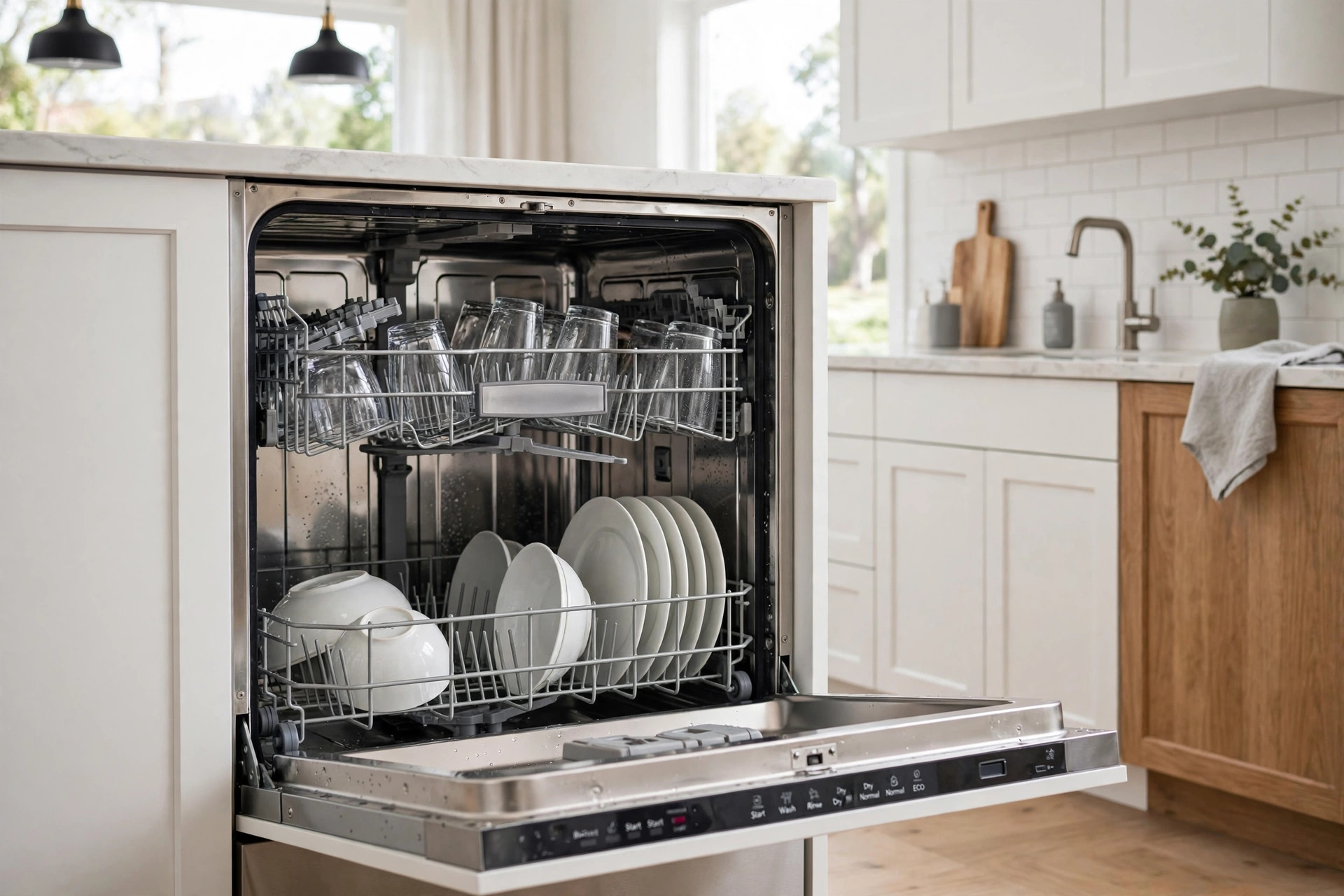

Why Hard Water Makes Dishwashing So Difficult
Hard water contains high levels of calcium and magnesium. These minerals stay behind when water dries. They leave white film on glasses, spots on plates, and crust on the inside of the machine. Over time they can clog spray arms and shorten the life of a dishwasher.
Millions of American homes have hard water. The U.S. Environmental Protection Agency offers general guidance on household water quality. A standard dishwasher may wash dishes clean, but it cannot stop mineral deposits. That is why the best dishwasher for hard water reviews USA often highlight models built to fight mineral buildup.
Reviews matter here. Manufacturers use strong words in their brochures. Real owners describe what happens after six months, a year, or two years of daily use. Their reports tell you which machines keep working and which ones slow down.
What Hard Water Does to a Dishwasher: Best Dishwasher for Hard Water Reviews Usa
Mineral scale forms a hard crust on heating elements. A crusty element must work harder to heat water. Energy use rises. Wash quality falls.
Spray arm holes are small. Scale narrows them or blocks them. Water jets grow weak. Dishes come out dirty on the top rack.
The tub interior can turn chalky. Racks may corrode faster where the coating chips. The drain and filter collect grit that wears parts down. Hard water can also make detergent work less well, so owners use more soap than they should.
These problems do not appear in week one. They build slowly. The best dishwasher for hard water reviews USA buyers often post updates after many months, and those updates are the most useful part of any review.
How to Choose the Best Dishwasher for Hard Water
Water Softening Built In
Some dishwashers have a built-in water softener. A small tank holds salt. The salt exchanges sodium for calcium and magnesium. This is the same idea as a whole house water softener, but sized for the machine. Owners in hard water areas rate these models highly in reviews.
If a machine lacks a softener, you can still get good results with the right settings and products. A softener is a strong plus, not a hard rule.
Stainless Steel Tub
A stainless tub resists stains better than a plastic tub. It also keeps heat in, which helps dishes dry. Many top review picks for hard water have stainless tubs. Retailers such as The Home Depot let buyers filter by tub material.
Soil Sensor and Hard Food Disposer
A soil sensor checks how dirty the water is and adjusts the cycle. A hard food disposer grinds small bits so they wash away instead of sticking to the filter. Both features cut down on the grit that mixes with mineral scale.
High Temperature and Sanitizing Cycles
Hot water dissolves minerals better. A sanitizing rinse that reaches about 155 degrees Fahrenheit can reduce film. Look for a clearly labeled high temp or sanitize option.
Filtration Design
Some machines have a removable filter that needs hand cleaning. Others have a self-cleaning filter. With hard water, a self-cleaning or grinder system can mean less maintenance. Check reviews to see how often owners must clean the filter.
Adjustable Rinse Aid Dispenser
Rinse aid helps water sheet off dishes so it dries without spots. A dispenser with several settings lets you raise the dose in hard water areas. Many reviewers say rinse aid matters as much as the machine itself.
Types of Dishwashers for Hard Water Homes
Built-In Standard Models
The full-size built-in is the most common type. Most hard water reviews cover these machines. They fit under the counter and hold a full load. Models with softeners or strong sanitizing cycles score best.
Portable and Countertop Models
Portable dishwashers roll to the sink and connect to the faucet. They suit renters. Hard water affects them the same way, but the small size makes manual descaling easier. Countertop models are smaller still and best for one or two people.
Drawer Dishwashers
Drawer models let you run small loads more often. Smaller loads mean less sitting water and less scale per load. They cost more, but some owners in hard water areas prefer them.
Dishwashers With Dedicated Hard Water Cycles
A few makers now sell cycles labeled for hard water or heavy soil. These use more heat and more rinses. Reviewers report cleaner glassware with these settings, at the cost of longer cycles and higher energy use.
Features That Fight Mineral Buildup
Glass Protection and Soft Water Adjustments
Some high end models sense water hardness and adjust the program. Glass protection settings lower the risk of etching, a cloudy damage that hard water makes worse. Reviews often praise these smart features after a year of use. Lowering the wash temperature slightly on delicate cycles can also protect older glassware that has already seen years of hard water exposure.
Specialized Wash Zones
Bottle jets and extra spray zones hit the spots where film collects. They do not remove scale by themselves, but they help rinse aid reach every surface.
Delay Start
Running the dishwasher at night lets dishes dry fully before the door opens. Full drying cuts spot formation. A quiet machine matters here, since it runs while the house sleeps. Quiet operation is a common point of praise in the best dishwasher for hard water reviews USA posts.
Detergent Choice and Dosing
Powder and pod detergents behave differently in hard water. Pods carry a fixed dose, which can be too much for soft water and too little for hard water. Powder lets you adjust the amount to match your water test results. Many reviewers in hard water areas prefer powder for this reason. Enzyme based detergents also help, since enzymes break down food soils that minerals would otherwise trap against the dish surface.
Pre-Rinse Habits
Modern dishwashers are built to clean dirty dishes. Heavy pre-rinsing wastes water and can confuse the soil sensor. Scrape off large scraps, but leave light soil in place so the sensor picks a strong enough cycle. Reviewers note that this habit pairs well with hard water settings.
What Real Reviews Say
Patterns repeat across hundreds of owner reviews. Stainless tubs earn trust. Built-in softeners earn loyalty. Machines that need filter scrubbing every week earn complaints.
Reviewers also warn about glass etching. No dishwasher can fix water that is extremely hard. Several reviewers learned that a home water test changed everything. Testing kits are sold at stores like Lowe’s, and a test takes only minutes.
Another common note: the best results come from a system, not a single product. The top-rated owners pair a good machine with rinse aid, the right detergent dose, and regular descaling. Those who expect the machine to do everything alone often feel let down.
For broader guidance on household plumbing upgrades, This Old House publishes practical walkthroughs. Family Handyman also covers maintenance tasks in plain language.
Cost and Price of Hard Water Dishwashers
Budget models run from about 400 to 600 dollars. They clean well but usually lack softeners and advanced sensors. In very hard water they need more maintenance.
Mid-range machines cost about 600 to 1,000 dollars. This is where most review favorites sit. Stainless tubs, soil sensors, and sanitize cycles are common here. A few models add small softeners.
Premium models run 1,000 to 1,800 dollars or more. They may include built-in softeners, water hardness sensing, and very quiet operation. For homes with hard well water, the extra cost can pay back in fewer repairs and longer machine life.
Installation adds 100 to 300 dollars if you hire a plumber. Retailers such as Lowe’s list delivery and haul-away fees at checkout, so check those costs too. Factor in the long-term cost of rinse aid, descaling products, and possibly higher detergent use.
Pairing a dishwasher with a salt free water softener system upstream is another option. Whole home softening protects every fixture at once. Compare that cost against replacing appliances early.
Care and Upkeep in Hard Water Areas
Monthly Cleaning Cycle
Run an empty cycle with a cup of white vinegar on the top rack, or use a commercial dishwasher cleaner. Once a month is enough for most homes. Homes with very hard water may need it every two weeks.
Clean the Filter
Pull the filter and rinse it under hot water. Use a soft brush on stuck grit. Owners who skip this step see wash quality drop within weeks.
Wipe the Door Seal
Minerals collect in the rubber gasket. Wipe it with a damp cloth monthly. A crusty seal can leak.
Check Spray Arms
Twist off the spray arms now and then. Clear blocked holes with a toothpick. Weak jets are often the first sign of scale.
Refill Salt and Rinse Aid
If your machine has a softener tank, keep it filled with the correct salt. Keep the rinse aid dispenser full. These two small tasks do more than most people expect.
Descale on a Schedule
White vinegar works for light scale. Citric acid powder works for heavier buildup. Run the cleaner through an empty hot cycle. Never mix cleaners, and follow the product label.
Dealing With Hard Water Stains Elsewhere
Dishwashers are only part of the story. The same minerals that film your glasses also stain sinks, tubs, and faucets. Fixture makers publish care guides for their own products. Moen and Kohler both offer cleaning advice for faucets, and Delta covers finishes and hard water care as well. A shower filter for hard water can help in the bathroom too. If hard water stains on fixtures keep coming back, testing your water is the logical next step.
Safety Notes
Always unplug power or switch off the breaker before reaching inside the machine for repairs. Keep descaling products away from children and pets. Wear gloves when handling citric acid or strong cleaners. Never pour bleach into a dishwasher that has stainless parts unless the maker allows it. Rinse well after any cleaning cycle before washing dishes again.
Frequently Asked Questions
Do I need a special dishwasher for hard water?
Not always. Many standard machines do fine with rinse aid and regular descaling. But in areas with very hard water, a model with a built-in softener or hardness sensing earns better long-term reviews.
Will a water softener fix my dishwasher problems?
A whole home softener removes the minerals before they reach the machine. This protects the dishwasher and every other fixture. It is the most complete fix, though it costs more up front.
Why are my glasses still cloudy after washing?
Cloudiness has two causes: mineral film and glass etching. Film wipes off with vinegar. Etching is permanent damage to the glass surface. Hard water speeds etching. If vinegar does not clear the cloud, the glass is likely etched.
How often should I descale my dishwasher?
Once a month suits most homes. Test your water hardness first. Above 10 grains per gallon, clean every two weeks. Below 7 grains, monthly or even less often may be enough.
Is rinse aid really necessary?
In hard water areas, yes. Rinse aid lowers the surface tension of water so it sheets off instead of beading. Beads leave spots. Sheets dry clean. Most reviewers call it essential.
Can vinegar damage my dishwasher?
White vinegar is safe in normal cleaning doses. Do not overuse it. Do not use vinegar on rubber seals every day, since acid can wear rubber over time. Monthly use is fine for most machines.
A Short Final Word
The best dishwasher for hard water reviews USA all point to the same lesson. No machine beats mineral scale by itself. The winners pair smart features with simple habits: rinse aid, regular cleaning, and honest water testing. Read owner reviews written after a year of use. Those reviews tell the truth about how a machine ages. Pick a model with a stainless tub, strong heat, and good filtration, keep up with maintenance, and your dishes can stay clear even when your water runs hard.
References
Aquasana. (n.d.). Water filtration systems. https://www.aquasana.com Delta Faucet. (n.d.). Kitchen and bathroom faucets. https://www.deltafaucet.com Family Handyman. (n.d.). DIY home repair and maintenance. https://www.familyhandyman.com Kohler. (n.d.). Bathroom and kitchen fixtures. https://www.kohler.com Lowe’s. (n.d.). Home improvement products. https://www.lowes.com Moen. (n.d.). Faucets and plumbing fixtures. https://www.moen.com The Home Depot. (n.d.). Home improvement products. https://www.homedepot.com This Old House. (n.d.). Home renovation guidance. https://www.thisoldhouse.com U.S. Environmental Protection Agency. (n.d.). Protecting human health and the environment. https://www.epa.gov
Was this guide helpful?

About Jennifer Lee
The My Garden US editorial team writes practical, in-depth home and garden guides for American homeowners — tested advice, no fluff.
You May Also Like
Best Basement Dehumidifier With Pump USA: A Plain Guide for Dry, Healthy Basements
September 7, 2026 0 views
Sewer Camera Inspection Cost Near Me: A Plain Guide for Homeowners
August 15, 2026 0 views
RO System Waste Water Ratio Explained USA
January 9, 2026 0 views