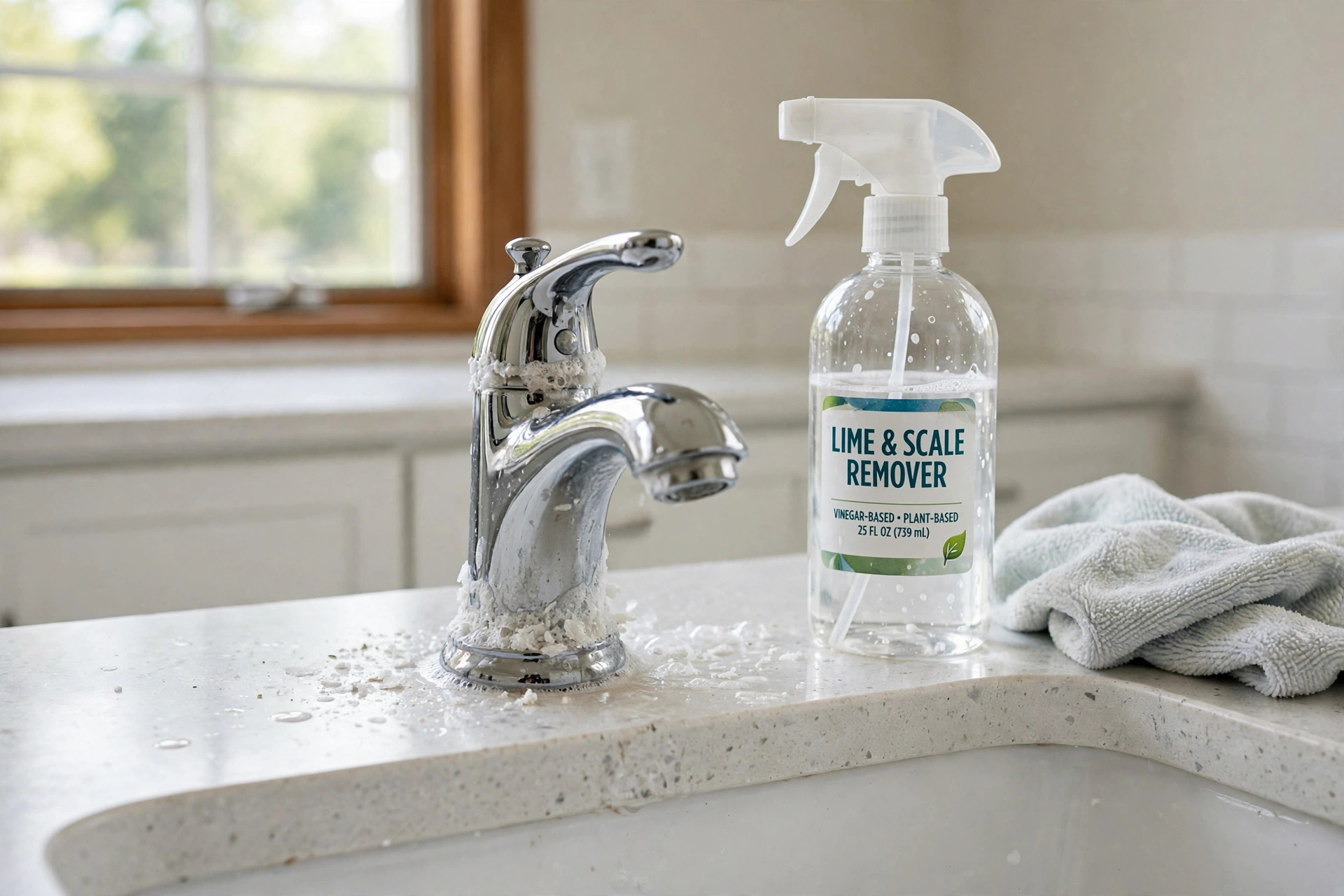

Hard water stains on fixtures solutions USA homeowners trust begin with one plain fact. Hard water is water that carries high levels of dissolved minerals. The two main minerals are calcium and magnesium. When the water dries on a faucet, a showerhead, or a toilet handle, these minerals stay behind. They form white spots, chalky films, and crusty rings. The spots look small at first. Given time, they grow thick and hard. This guide explains why these stains form, how to remove them, and how to keep them from coming back.
Why Hard Water Stains Matter
Stains are more than a cosmetic problem. They tell you something about your water. More than half of the homes in the United States have hard water. Some regions have very hard water. Arizona, Texas, Florida, Indiana, and New Mexico rank high on the list. Homes that use well water face the problem most often. But city water can be hard too.
Mineral buildup hurts fixtures in three ways. First, it clogs the small holes in showerheads and aerators. The water pressure drops. The spray turns weak and uneven. Second, it eats away at the finish on faucets and handles. Chrome, nickel, and brass finishes can dull or pit when scale sits on them for months. Third, the crust gives germs a place to hide. A rough surface is harder to wipe clean than a smooth one.
There is also a cost angle. Hard water scale builds up inside pipes and water heaters. Heating elements must work harder. Energy bills rise. Appliances wear out sooner. Removing stains from fixtures is the small job. Fixing the water itself is the larger job. Both jobs pay off.
How Hard Water Stains Form: Hard Water Stains on Fixtures Solutions Usa
Water picks up minerals as it moves through rock and soil. Limestone and chalk give water a heavy load of calcium carbonate. This is a natural process. It is not a sign of pollution. Water with 120 milligrams of calcium carbonate per liter is called hard. Water above 180 milligrams per liter is called very hard. These levels come from the U.S. Geological Survey.
When hard water lands on a faucet and dries, the water turns to vapor. The minerals do not turn to vapor. They stay on the surface. Each new wetting adds a fresh layer. The layers bond to each other. Heat makes the problem worse. That is why stains appear fastest on hot-water faucets, showerheads, and the rims of tubs.
You can spot the signs early. Look for white or gray spots on chrome. Look for a cloudy film on glass shower doors. Look for orange or brown rings in toilet bowls. The orange and brown colors come from iron in the water. The white and gray colors come from calcium and magnesium. All of these are mineral stains, and all of them respond to the same basic methods.
What to Look for When Choosing a Solution
Before you scrub, read the fixture. Different finishes react to different cleaners. Chrome is the most common finish. It handles mild acids well. Nickel and oil-rubbed bronze are softer. Harsh acids can strip their color. Marble and stone counters can be ruined by strong acids too. If cleaner drips from the faucet onto the counter, it can leave an etch mark.
Look at the product label for words like “limescale remover” or “hard water stain remover.” Avoid products with bleach. Bleach kills germs but does not dissolve mineral scale. In fact, bleach can set iron stains and make them darker. Avoid abrasive powders and steel wool. They scratch the finish. Once a finish is scratched, the scratches fill with minerals and the stain returns faster.
For whole-house fixes, look at water softeners and filters. A water softener swaps calcium and magnesium ions for sodium ions. Reviews of the best countertop water filter show options for drinking water, though countertop filters do not soften whole-house water. For whole-house protection you need a softener or a salt-free conditioner. Check the size of your home and the hardness of your water before you buy.
Types of Solutions for Hard Water Stains
Vinegar and Other Home Remedies
White distilled vinegar is the most common home remedy. Its acid content is about five percent. That is strong enough to dissolve fresh mineral scale but mild enough to spare most finishes. Soak a paper towel in vinegar and wrap it around the faucet for thirty minutes. For a showerhead, fill a plastic bag with vinegar and tie it over the head for one hour. Then wipe and rinse with plain water.
Lemon juice works in the same way. Cut a lemon in half and rub it on the stain. The citric acid dissolves the scale. Baking soda makes a gentle paste with water. Spread the paste on the stain and scrub with a soft cloth. Baking soda is a mild abrasive. It helps where vinegar alone falls short.
These remedies are cheap and safe. They work best on light stains. They fail on thick, old crust. They also fail on iron stains. Iron needs a product made for rust.
Store-Bought Limescale Removers
When vinegar is not enough, store-bought removers take over. The best ones contain sulfamic acid, phosphoric acid, or hydrochloric acid in safe dilutions. They foam on contact. The foam keeps the acid on the surface longer. Spray, wait the time shown on the label, scrub lightly with a soft brush, and rinse well.
Read the warnings. Many of these products harm marble, granite, and natural stone. Many harm colored grout. Test on a small hidden spot first. Open a window while you work. Rinse with plenty of water. Keep the product away from children and pets. Plumbing systems need care at every level, from the water heater to the faucet, as the pros at Family Handyman often show in their repair guides.
Water Softeners and Conditioners
The permanent fix is to treat the water. A salt-based water softener removes the minerals before they reach the fixtures. It needs a resin tank, a brine tank, and a drain. It uses salt pellets. It needs refills a few times a year. It adds a small amount of sodium to the water.
Salt-free conditioners work differently. They change the crystal shape of the minerals so they do not stick to surfaces. They do not remove the minerals. The water still tests hard. But fixtures stay cleaner. These units need less upkeep. They use no salt and no drain.
Magnetic and electronic descalers also exist. They clip onto the main water line. Studies on their results are mixed. Some homeowners report good results. Others report none. Buy from a seller with a strong return policy if you try one.
Professional Cleaning and Replacement
Very old stains may not come off at all. When scale has grown for years, it fuses with the finish. No safe cleaner will lift it. In that case, a plumber can replace the fixture. A new faucet costs from eighty to four hundred dollars in most American stores. The labor adds one to two hours of work.
For best soaking tub for small bathroom shoppers, new tub fillers often come with finishes that resist scale. Spot-resistant finishes are worth the small extra cost in hard-water regions. A professional water test can tell you the exact hardness level. Many local water companies offer free or low-cost tests.
Cost and Price Guide
Home remedies cost almost nothing. A gallon of white vinegar costs about four dollars in 2026. A bag of lemons costs about five dollars. Baking soda costs about one dollar a box. One bottle treats many fixtures.
Store-bought limescale removers cost six to fifteen dollars per bottle. One bottle handles a whole bathroom two or three times. Gel formulas cost a bit more than sprays. They cling to vertical surfaces and work better on shower walls.
Water softeners are the big purchase. A whole-house salt-based unit costs from four hundred to two thousand five hundred dollars for the equipment. Professional installation adds three hundred to one thousand dollars. Salt pellets cost five to eight dollars per forty-pound bag. A family of four uses one to two bags per month.
Salt-free conditioners cost from three hundred to one thousand five hundred dollars. They need almost no upkeep. Cartridge filters for drinking water cost thirty to two hundred dollars, and countertop filter comparisons show wide price gaps between basic carbon filters and multi-stage units.
Professional cleaning of a whole bathroom runs from one hundred fifty to four hundred dollars. Fixture replacement runs from one hundred fifty to six hundred dollars per fixture with labor. Compare these costs to a water softener. The softener often pays for itself within two to three years in a very hard water home.
Care and Upkeep for Stain-Free Fixtures
Prevention beats scrubbing. Wipe fixtures dry after use. This is the single most useful habit. A quick wipe with a dry cloth keeps minerals from bonding. It takes ten seconds. It works in any home.
Apply a thin coat of car wax or a silicone-based protectant to chrome fixtures once a month. The wax forms a barrier. Water beads up and runs off. Minerals cannot grip the surface. Do not use wax on brushed nickel. Check the finish maker’s guide first.
Clean on a schedule. A light vinegar wipe once a week stops stains before they grow. Do a deeper clean once a month. Check aerators every three months. Unscrew the aerator at the tip of the faucet. Rinse out the grit. Soak it in vinegar. Screw it back on. Check the showerhead the same way.
If you own a water softener, keep it running. Check the salt level once a month. Clean the brine tank once a year. Test your water once a year. Hardness can change with the seasons. For thermal expansion tank for water heater shoppers, the same rule holds: soft water helps heaters last longer.
Glass shower doors need special care. Use a squeegee after every shower. Spray the glass with a mix of equal parts vinegar and water once a week. Dry with a soft cloth. This keeps the glass clear and avoids the cloudy film that hard water leaves.
Safety Notes
Acids can burn skin and eyes. Wear rubber gloves when you use any acid cleaner. Wear eye protection when you spray overhead. Keep the room aired. Never mix an acid cleaner with bleach. The mix can release toxic gas.
Strong acids can damage septic systems in large amounts. If your home uses a septic tank, use mild products and rinse well. Small amounts are fine. Large, repeated doses are not.
Keep all cleaners in their original bottles. Keep them out of reach of children. Read the first-aid steps on the label before you start. If cleaner gets in the eyes, rinse with water for fifteen minutes and call a doctor.
For water softeners, follow the maker’s salt schedule. Too little salt lets hard water through. Too much salt wastes money. If someone in the home is on a low-sodium diet, talk to a doctor about the softener. A reverse osmosis unit at the kitchen tap can provide low-sodium drinking water.
Frequently Asked Questions
Are hard water stains harmful to health?
No. Calcium and magnesium are natural minerals. They are the same minerals found in many foods. The stains are a nuisance, not a health risk. The U.S. Environmental Protection Agency notes that hard water is safe to drink. If your water has odd colors or smells, test it. Iron, sulfur, and bacteria are separate issues.
Will vinegar damage my faucet finish?
Plain white vinegar is safe on chrome and stainless steel for short soaks. It can harm natural stone, marble, and some oil-rubbed bronze finishes. Always test on a hidden spot first. Do not leave vinegar on any fixture overnight. Thirty to sixty minutes is enough for most jobs.
How often should I clean to prevent stains?
Wipe fixtures dry daily if you can. Do a light vinegar cleaning once a week. Do a full deep clean once a month. In very hard water areas, increase the schedule. Homes with water softeners can clean less often. Check your water hardness to set the right pace.
Can I remove stains from a toilet bowl with the same products?
Yes, with care. Turn off the water valve behind the toilet. Flush once to lower the water level. Apply the cleaner to the stain above the water line. Scrub with a toilet brush. Turn the water back on and flush. Never use bleach and acid together. For brown iron rings, use a rust remover made for toilets.
Do water softeners remove all mineral stains?
Softeners stop new stains from forming. They do not remove old stains. Clean the fixtures first. Then install the softener. The fixtures will stay clean from that day forward. Salt-free conditioners give the same prevention with less upkeep.
Is professional help worth the cost?
For one or two stained faucets, do it yourself. For a whole house with heavy scale, call a plumber. A plumber can test the water, clean the system, and quote a softener in one visit. If fixtures are pitted and worn, replacement beats cleaning. New fixtures with spot-resistant finishes save work for years.
A Short Final Word
Hard water stains are a common American household problem. They are not dangerous. They are not permanent. Simple tools handle most cases. Vinegar and patience remove fresh stains. Store-bought removers handle tough ones. A water softener stops the cycle for good. Pick the method that fits your stains and your budget. Wipe fixtures dry, clean on a schedule, and test your water once a year. These small habits keep faucets bright and pipes clear for the life of the home.
For more background, see Kohler, Aquasana, and This Old House. For more background, see Moen, The Home Depot, and Lowe’s.
References
Aquasana. (n.d.). Water filtration systems. https://www.aquasana.com Family Handyman. (n.d.). DIY home repair and maintenance. https://www.familyhandyman.com Kohler. (n.d.). Bathroom and kitchen fixtures. https://www.kohler.com Lowe’s. (n.d.). Home improvement products. https://www.lowes.com Moen. (n.d.). Faucets and plumbing fixtures. https://www.moen.com The Home Depot. (n.d.). Home improvement products. https://www.homedepot.com This Old House. (n.d.). Home renovation guidance. https://www.thisoldhouse.com U.S. Environmental Protection Agency. (n.d.). Protecting human health and the environment. https://www.epa.gov
Was this guide helpful?

About Lisa Anderson
The My Garden US editorial team writes practical, in-depth home and garden guides for American homeowners — tested advice, no fluff.
You May Also Like

Best Garbage Disposal for Septic System Homes in the USA
June 29, 2026 0 views
Low Well Water Pressure Solutions for Homes
February 24, 2026 0 views
Reverse Osmosis System Under Sink Reviews USA: What American Buyers Report
February 7, 2026 0 views