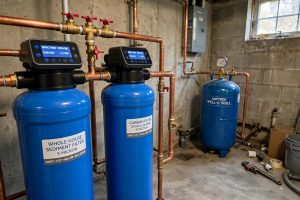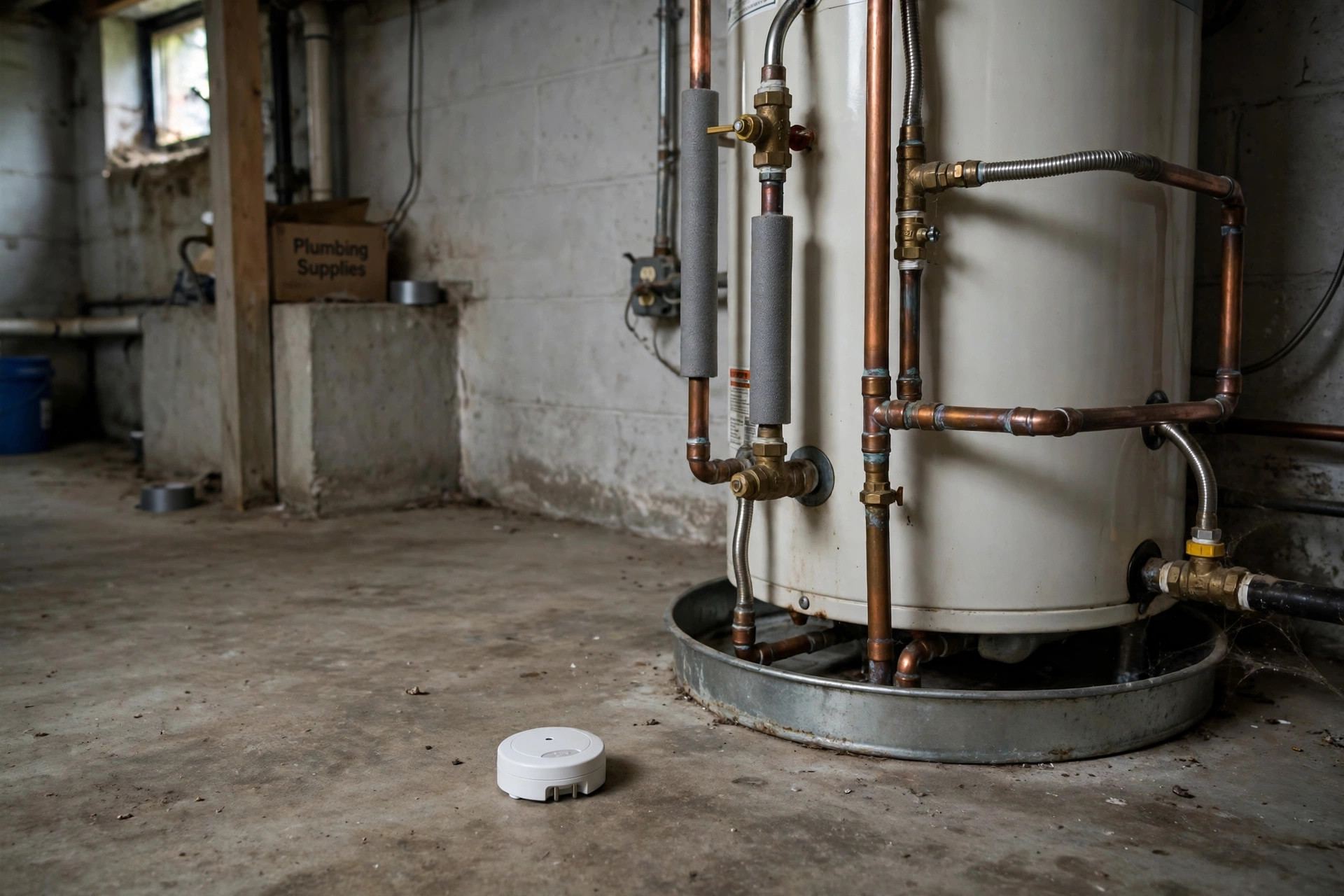

A water heater can fail without warning. One day it heats water as usual. The next day a slow drip from a valve or a rusted tank can ruin floors, walls, and stored goods. The best water leak detector for water heater usa homeowners can buy is a small device that catches these leaks early. It sits near the base of the heater and sounds an alarm or sends a phone alert the moment water touches its sensor. This guide explains what these detectors do, how to pick one, what they cost, and how to keep one working for years.
Why a Water Leak Detector Matters Near a Water Heater
Most water heaters sit in a basement, garage, utility closet, or laundry room. These are rooms people do not enter every day. A slow leak can run for weeks before anyone notices. By then the damage can reach thousands of dollars. Insurance records show that water damage is one of the most common claims filed by American homeowners.
A leak detector acts as an early warning. It does not stop the leak. It tells you the leak exists while it is still small. Some models only beep. Others send a message to your phone through a home network. The most advanced ones can trigger a smart shutoff valve that turns off the water supply on its own. Pairing a detector with a smart water shutoff valve reviews 2026 usa setup gives a full defense: the sensor finds the leak, and the valve stops the flow.
Water heaters fail in common ways. The tank can rust from the inside and split. The pressure relief valve can drip. The drain valve can loosen. Pipes at the top can sweat or leak at the joints. A good detector placed in the right spot catches water from any of these sources before it spreads.
What happens when a heater fails unnoticed
A typical tank holds 40 to 50 gallons. If the tank bursts, all that water spreads across the floor in minutes. Even a slow drip of one cup per day can rot a wood floor over a season. A detector costs far less than the repair of a damaged floor. That simple math is why many plumbers now suggest a detector with every new heater install.
How a Water Leak Detector Works: Best Water Leak Detector for Water Heater Usa
The design is simple. A small sensor rests on the floor. When water bridges two metal contacts on the sensor, the circuit closes. That closed circuit triggers the alarm. Battery powered models beep loudly. Smart models add a wireless signal to a hub or router.
Basic alarm models
The simplest detectors are puck-shaped pucks with two metal feet. They run on a 9-volt or button battery. When water touches the feet, a loud alarm sounds. They cost little and need no phone or internet. Their weakness is that no one hears the alarm if no one is home.
Wi-Fi smart detectors
Smart detectors connect to a home Wi-Fi network. When they sense water, they send an alert to an app on your phone. Many also send email or text alerts. Some brands offer a hub that links several sensors in one home. These work well for second homes and rentals because they alert you even when you are far away.
Detectors with automatic shutoff
The most complete systems pair a leak sensor with an automatic water shut off valve cost installed option. The valve sits on the main water line. When the sensor detects water, it tells the valve to close. This stops the flow in seconds. It is the strongest protection available, but it costs more and needs a plumber to install the valve.
Cable-style sensors
Some detectors use a long cable as the sensor. The cable lies around the base of the heater. Water touching any point along the cable triggers the alarm. This design covers the full circle of a tank, which is useful for heaters in open rooms.
What to Look For When You Choose One
Shoppers face many models. The points below separate good detectors from poor ones.
Sensor type and coverage area
A point sensor detects water at one small spot. A cable sensor covers a line. For a water heater, a cable or a large-footprint puck works best because leaks can start anywhere around the tank. If you use point sensors, place two or three around the base: one near the drain valve, one near the pressure relief valve outlet, and one at the low point of the floor.
Alert method
Decide how you want to learn about a leak. A loud local alarm is enough if someone is usually home. A phone alert is better for frequent travelers. The best smart models give both. Check the decibel rating of the local alarm. A rating above 85 decibels can be heard through a closed door.
Battery life and power options
Battery life ranges from one year to five years depending on the model and battery type. Some smart detectors use two AA batteries and last about two years. Look for a model with a low-battery warning. A detector with a dead battery protects nothing. Plug-in models exist but need an outlet near the heater and lose function in a power outage.
Wireless range and connectivity
Smart detectors need a stable Wi-Fi signal at the heater location. Basements and garages often have weak signals. Test the signal strength with your phone at the heater before you buy. Some brands use a hub that speaks to sensors over a low-power radio, which reaches farther than Wi-Fi. That design suits large homes.
Durability and build quality
The detector will sit on a damp floor for years. A sealed case resists corrosion. Metal probe contacts outlast plain pads. Read the rated temperature range. A garage in a northern state can drop below freezing, and cheap electronics can fail in the cold.
Extra features worth having
Temperature and humidity sensing is a useful bonus. A sudden drop in temperature near a heater can mean a pilot light went out. High humidity can hint at a slow hidden leak. Freeze warnings help in cold climates. Tamper alerts help in rental units. A mute button on the device lets you silence a false alarm while you mop up a spill.
For readers who also want protection in lower rooms, see our guide to best water leak sensors for basement usa for models suited to whole-floor coverage.
Types of Water Leak Detectors Compared
Standalone battery alarms
Price range: about 10 to 30 dollars. No app, no hub. Best for: a heater near living space where someone will hear the beep. Limit: silent when the house is empty.
Wi-Fi smart sensors
Price range: about 35 to 80 dollars per sensor. Some brands sell three-packs at a discount. Best for: homeowners who travel or own rental property. They push alerts to a phone and many support voice assistants. Limit: they depend on home Wi-Fi and batteries.
Whole-home systems with shutoff
Price range: 150 to 700 dollars for the valve and controller, plus plumber fees of 150 to 500 dollars. Sensor pucks add 30 to 60 dollars each. Best for: maximum protection and peace of mind. Limit: higher upfront cost and professional install for the valve.
Cable sensors
Price range: 40 to 100 dollars. Best for: wrapping the full base of a large tank heater or covering a whole utility room floor. Limit: the cable must stay flat on the floor to work well.
Cost and Price: What American Homeowners Pay
Prices in the United States vary by brand and features. The table below gives honest ranges as of recent retail data.
– Basic puck alarm: 10 to 30 dollars – Single Wi-Fi smart sensor: 35 to 80 dollars – Multi-pack of three smart sensors: 80 to 180 dollars – Cable sensor kit: 40 to 100 dollars – Smart valve plus two sensors: 200 to 500 dollars – Professional valve install: 150 to 500 dollars
A basic setup with two smart sensors costs under 150 dollars. That is a small price next to the average water damage claim, which runs into several thousand dollars. Home insurance firms in some states offer small premium discounts for homes with leak detection and shutoff systems. Ask your agent.
Trusted retailers such as Home Depot and Lowe’s carry a wide range of detectors, and plumbing brands like Moen and Kohler sell smart water monitoring products with phone apps.
How to Install and Place Your Detector
Placement decides how fast the detector warns you. Water flows to the lowest point. Find that point near your heater and put the sensor there.
Step by step placement
1. Turn your attention to the floor around the heater. Look for the low spot where water would gather. 2. If your heater sits in a drain pan, place the sensor inside the pan near its edge. A pan is a shallow metal or plastic tray under the tank. 3. If there is no pan, place the sensor on the floor next to the tank, near the drain valve at the bottom front. 4. Add a second sensor near the pressure relief valve pipe outlet if it runs down to the floor. 5. For smart models, follow the app to join the sensor to your Wi-Fi. Test it with a damp paper towel before you trust it.
Tips for best results
– Keep the sensor contacts clean. Dust and lint can block the metal feet. – Do not place the sensor where a mop or laundry water splashes often. False alarms teach people to ignore the device. – If the heater is in a garage, shield the sensor from rain blown under the door. – Write the battery change date on the sensor with a marker so you remember.
Advice from home repair guides at This Old House and Family Handyman stresses the same point: test the detector every six months, just as you test smoke alarms.
Care and Upkeep
A leak detector asks little of you, but it needs regular attention.
Battery checks
Replace batteries on schedule, not after the low-battery chirp. Mark the date on a home maintenance calendar. Lithium batteries last longer than alkaline in cold garages.
Sensor tests
Every six months, touch a wet cloth to the sensor contacts. The alarm or phone alert should trigger within seconds. If it does not, clean the contacts with a dry cloth and test again. If it still fails, replace the unit.
App and firmware updates
Smart detectors get firmware updates through their apps. Install them. Updates fix bugs and improve battery life. Keep the app installed on at least one phone even if you mute its notifications at night.
Water quality and the heater itself
A detector warns of leaks, but good heater care lowers the chance of a leak. Flush sediment from the tank once a year. Test the pressure relief valve yearly. Check the anode rod every few years. The EPA publishes water efficiency guidance, and water treatment brands like Aquasana offer resources on home water quality that affects tank life.
Safety Notes
A leak detector improves safety, but it is not a substitute for safe heater practices.
– Never ignore a triggered alarm. Turn off the water supply and call a plumber if you are unsure of the source. – If the alarm triggers and you smell gas near a gas heater, leave the home and call the gas company. Do not touch electrical switches. – Do not place a detector inside the burner compartment of a gas heater. The sensor belongs on the floor outside the unit. – Keep batteries out of reach of children and pets. – A smart detector does not replace the temperature and pressure relief valve. That valve is a safety device built into the heater. It must stay in working order. – If your detector ties into an automatic valve, learn how to open the valve by hand. You may need water during a false trigger.
Frequently Asked Questions
How many leak detectors do I need for one water heater?
Two is a good number for most homes: one inside or beside the drain pan and one near the pressure relief valve outlet. A third sensor at the room doorway helps if the floor slopes away from the heater.
Do water leak detectors work on all types of water heaters?
Yes. They work with tank gas heaters, tank electric heaters, tankless units, and heat pump water heaters. They detect water on the floor no matter which appliance leaks.
Will a detector false alarm from humidity?
A well-made detector will not. The sensor needs actual water contact to trigger. Condensation dripping from cold pipes in summer can cause a real trigger, though, so place sensors away from sweating pipes.
Can I install a smart shutoff valve myself?
Some valve models clamp onto the existing shutoff handle and need no plumbing work. Full in-line valves need a plumber to cut the pipe. If you are not sure, hire a plumber. A wrong install can cause the very leak you want to prevent.
How long do these detectors last?
The electronics typically last five to ten years. Batteries need replacement every one to three years. Replace any unit that fails its twice-yearly test, even if it looks fine.
Do leak detectors lower home insurance costs?
Some insurers offer discounts for monitored leak detection, especially systems with automatic shutoff. The discount varies by state and carrier. Call your agent and ask what proof they need.
A Short Final Word
The best water leak detector for water heater usa buyers is the one that fits the home: a loud puck for a heater near the living room, a Wi-Fi sensor for a traveler, a full shutoff system for a homeowner who wants the strongest guard. Any of them beats no warning at all. A small device on the floor can save a floor, a wall, and a season of repair bills. Buy one, place it well, test it twice a year, and change its batteries on time.
References
Aquasana. (n.d.). Water filtration systems. https://www.aquasana.com Family Handyman. (n.d.). DIY home repair and maintenance. https://www.familyhandyman.com Kohler. (n.d.). Bathroom and kitchen fixtures. https://www.kohler.com Lowe’s. (n.d.). Home improvement products. https://www.lowes.com Moen. (n.d.). Faucets and plumbing fixtures. https://www.moen.com The Home Depot. (n.d.). Home improvement products. https://www.homedepot.com This Old House. (n.d.). Home renovation guidance. https://www.thisoldhouse.com U.S. Environmental Protection Agency. (n.d.). Protecting human health and the environment. https://www.epa.gov
Was this guide helpful?

About David Wilson
The My Garden US editorial team writes practical, in-depth home and garden guides for American homeowners — tested advice, no fluff.
You May Also Like

Best Septic Tank Treatment Reviews USA
June 29, 2026 0 views
Gravity Water Filter for Emergency Reviews USA
March 30, 2026 0 views
Best Workstation Kitchen Sink Reviews 2026: A Plain Guide to Buying Right
January 13, 2026 0 views