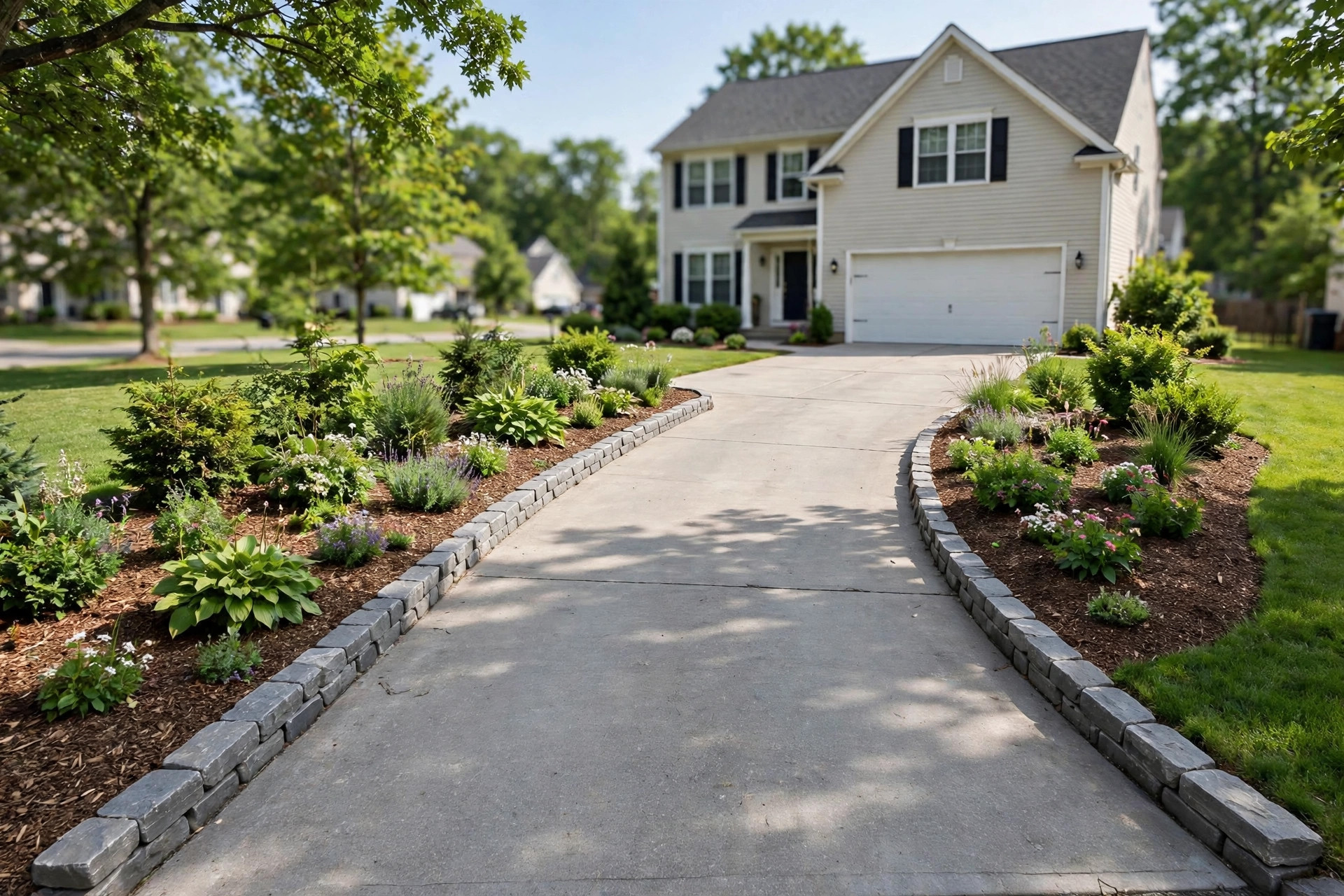

The driveway is one of the first things people see when they visit a home. A plain slab of concrete or asphalt does its job, but it rarely looks special. That is where driveway edging ideas for curb appeal come in. A simple border along the sides of the drive can change the whole face of the property. It draws a clean line between the paving and the lawn. It keeps mulch and gravel from spilling out. It makes the house look cared for from the street.
Curb appeal matters for more than pride. Real estate agents often say that the first view of a house shapes what a buyer thinks of everything inside. A tidy edge around the driveway is a small job with a large effect. Most projects take a weekend or less. Many cost less than a few hundred dollars. This guide covers the best driveway edging ideas for curb appeal, from classic brick to living plant borders, and shows how to pick the right one for your home.
Why Driveway Edging Matters
The edge of a driveway is a working line. It separates two worlds: the hard paved surface and the soft ground around it. Without a clear edge, grass creeps onto the concrete. Mulch washes onto the drive during rain. Weeds find every crack along the border. An edge holds everything in place.
There is also the question of looks. A driveway without edging can appear unfinished, as if the builder stopped halfway. A border gives it a frame, the way a frame sets off a picture. The eye follows the line from the street to the garage. A straight, clean border makes the whole front yard look larger and better planned.
Edging also protects the driveway itself. Paver edges keep individual bricks from shifting outward. A firm border along an asphalt drive slows the crumbling that starts at the edge. Over time, that means fewer repairs.
Finally, edging adds value when a house is sold. Appraisers and agents look for signs of care. A neat drive suggests the owner kept up the roof, the gutters, and the rest. Small details add up.
What to Look for When You Choose Edging: Driveway Edging Ideas for Curb Appeal
Before you buy stone or brick, think about a few points. Each one changes which material fits best.
Match the House
The edge should suit the style of the home. A brick colonial looks right with brick edging in a matching color. A ranch house with a wooded lot can take a rough fieldstone border. Modern homes with flat lines pair well with steel or dark aluminum edging. Walk to the curb and look at your house. The right border feels like it belongs.
Think About the Ground
Soil type matters. In soft, sandy soil, loose bricks can sink over time unless they sit on a packed base of gravel. On slopes, water runs fast, so the edge must be firm enough to hold back soil and mulch. In regions with hard freezes, pick a material that can stand the freeze and thaw cycle. Concrete and natural stone handle this well.
Plan the Width and Height
Most driveway edges are six to twelve inches wide. That is enough to read as a border without taking over the yard. The edge should sit level with the drive or a little higher. If it rises more than an inch above the paving, car doors may scrape it. Keep the top of the border nearly flat with the driveway surface.
Count the Cost
Prices vary widely. Plastic or metal strips cost little but give a plain look. Brick and stone cost more and last longer. Plan your budget first, then look at options inside it. A section on cost and price later in this guide gives real numbers.
Types of Driveway Edging
Brick Edging
Brick is a classic choice. It has a warm color and a human scale that suits most homes. You can set bricks flat in a row, or stand them on end in a soldier course for a taller look. Used brick, sometimes called reclaimed brick, gives an old-world feel at a fair price.
Lay brick on a two-inch bed of packed sand or crushed stone. Set each piece tight against the next. Sweep fine sand into the joints to lock them in place. A brick edge installed this way can last twenty years or more.
Natural Stone Edging
Fieldstone, flagstone, and cut granite give a rugged look. No two stones are alike, so the border has a natural, relaxed feel. Stone works well with cottage gardens and homes near woods.
Stone edging is heavy work. Each piece must be set by hand and leveled. Dig a shallow trench, add a gravel base, and press the stones into place. For a neat line, pick stones of similar size. For a rustic look, mix sizes on purpose.
Concrete Curbing
Concrete curbing is poured in place with a special machine. A crew forms a smooth, unbroken edge that follows any curve. You can color it and stamp a pattern into it, such as brick or slate. It lasts for decades and needs little care.
This is not a do-it-yourself job for most people. A local contractor brings the machine and finishes the work in a few hours. Prices run higher than loose stone, but the result is clean and permanent.
Metal and Steel Edging
Steel edging comes in long strips that pin into the ground. It is almost invisible once installed, which suits modern designs. Aluminum is lighter and will not rust. Both hold soil back well on curves.
The strip sits just below the surface. You see only a thin dark line. This makes it a good choice when you want the plants and paving to be the stars. One warning: the top edge can be sharp before it settles. Work with gloves.
Wood Timber Edging
Landscape timbers give a warm, rustic border. They suit cabins, ranches, and farm-style homes. Timbers stack to any height, so they work on slopes too. Buy pressure-treated wood rated for ground contact.
Wood rots in time. Even treated timbers last about ten to fifteen years in wet soil. Set them on a gravel base and keep mulch pulled back so water does not sit against the wood. Some owners stain the timber to match the house trim.
Living Plant Borders
A row of low plants makes a soft, green edge. Good choices include liriope, dwarf mondo grass, boxwood, and lavender. Plants cost little to start and grow fuller each year. They also add color and scent that stone cannot give.
The trade is care. Plants need water, feeding, and trimming. Roots can creep onto the drive if you skip the pruning. For a neater line, bury a simple metal strip behind the plants to keep roots in place. Many owners combine edging flower beds with stone ideas for the beds near the drive with a plant row along the driveway itself, so the yard feels tied together.
Gravel and Rock Borders
A band of crushed gravel or river rock along the drive gives a crisp edge with almost no work. The stones drain fast and keep weeds down. River rock in soft earth tones looks best near the house.
Lay landscape fabric under the rock to stop weeds. Spread the rock three inches deep. Plan on raking it level once a year. If you like this look, a cheap landscape rock delivery near me search can find bulk suppliers that bring a load right to your street.
Cost and Price Guide
Costs depend on the material, the length of the drive, and whether you hire help. A typical two-car driveway has about 120 feet of edge on both sides. Here are rough numbers for that length.
– Plastic edging: 80 to 150 dollars, easy to install yourself. – Metal or steel strips: 150 to 400 dollars, a weekend job. – Landscape timbers: 200 to 500 dollars, simple tools needed. – Brick, set by hand: 400 to 1,200 dollars if you do it yourself; 1,500 to 3,500 dollars with a mason. – Natural stone: 600 to 2,000 dollars for the stone alone; labor adds about the same again. – Poured concrete curbing: 1,500 to 3,000 dollars by a contractor. – Living plant border: 150 to 600 dollars for plants and soil, plus ongoing care.
Get two or three quotes from local crews before you hire. For brick and stone work, ask to see a past job. A well-set edge should look straight today and ten years from now.
Homeowners who add a brick apron or a new border often refresh the entry too. If your walk is tired, check what a paver walkway installation cost near me guide says before you call a contractor, so you know a fair price.
How to Install a Simple Stone Edge
You can set a stone or brick edge in a weekend with basic tools. Here is the method.
1. Mark the line. Lay a garden hose along the drive to plan curves. Mark the line with spray paint or string. 2. Dig the trench. Cut a trench four inches deep and one inch wider than the stone. Keep the depth even. 3. Add the base. Pour two inches of crushed gravel or coarse sand. Pack it firm with a hand tamper. 4. Set the stones. Place each piece on the base. Tap it down with a rubber mallet. Check the top with a level or a straight board. 5. Lock it in. Fill the gaps with coarse sand. Sweep the surface clean and water it lightly so the sand settles. 6. Backfill. Push soil against the back of the edge and tamp it down. This keeps the border from leaning.
Wear gloves and eye protection. Lift with your legs. A hundred feet of stone weighs more than you think, so work in short sessions.
For power tools and heavy yard machines, brands such as Toro and John Deere publish guides on soil prep and site grading that help before you start digging.
Care and Upkeep
An edge needs little care, but a little care keeps it sharp.
– Spring: Walk the whole border. Reset any stones that frost has pushed up. Pull early weeds from the joints. – Summer: Trim grass along the edge each time you mow. Cut plants back before they flop onto the drive. – Fall: Clear leaves before they rot against the border. Refill sand in brick joints where it has washed out. – Winter: Do not pile plowed snow on a plant border. Mark the edge with small stakes so the plow does not strike it.
Wash stone and brick once a year with a garden hose. Skip the pressure washer on mortar joints; the blast can loosen them. Seal brick edging every few years if your region sees road salt.
Safety
Good edging is safe edging. Keep these points in mind.
– Keep the border level with the drive so no one trips. A raised lip near the walk can catch a shoe. – Do not use loose river rock where it can roll onto the drive. Small stones under a tire can send a car sliding. – Choose plants with no thorns near the drive edge. Roses and barberry do not belong where car doors open. – Add light if the drive is dark at night. Solar path lights along the edge help guests find the way. – Call the utility marking service before you dig. Buried lines often run near the driveway.
FAQ
What is the cheapest driveway edging for curb appeal?
Plastic edging strips cost the least and go in fast. For a better look at a still-low price, use gravel or a row of cheap concrete pavers. Both give a clean line for under two hundred dollars on a normal drive.
How deep should driveway edging be?
Dig four to six inches deep for stone or brick. The base takes two inches of gravel, and the material sits in the rest. This depth keeps frost from heaving the border in cold states.
Can I edge a driveway that meets the street?
Yes, but check local rules first. Some towns own the strip of grass by the road and limit what you may build there. Keep the edge low near the sidewalk so drivers can see children and pets.
Does edging really raise home value?
No single feature sets a price, but a neat front yard helps a sale. Agents report that strong curb appeal can add a few percent to an offer. Edging is one part of that first picture.
What plants work best as a living edge?
Liriope and dwarf mondo grass take heat and need little water. Boxwood holds a formal shape with one trim a year. Lavender adds scent and color but needs full sun and dry soil. Pick plants rated for your zone.
How do I keep grass from growing over the edge?
Mow with the deck wheel riding on the border, and edge the lawn with a half-moon edger each spring. A strip of metal edging buried behind the plants blocks the roots for years.
A Short Final Word
Driveway edging ideas for curb appeal do not have to be grand. A single row of brick, a line of river rock, or a neat row of green plants can change how a house meets the street. Pick a material that suits your home, set it with care, and keep it tidy through the seasons. The drive will look finished, the yard will look larger, and guests will feel the welcome before they reach the door.
References
Toro. (n.d.). Lawn mowers and yard equipment. https://www.toro.com John Deere. (n.d.). Agricultural and lawn equipment. https://www.deere.com
Was this guide helpful?

About Robert Taylor
The My Garden US editorial team writes practical, in-depth home and garden guides for American homeowners — tested advice, no fluff.
You May Also Like
Affordable Artificial Grass Installation Near Me: A Homeowner Guide
May 1, 2026 0 views
Lawnmower Battery Replacement Near Me: A Complete Guide for Homeowners
June 26, 2026 0 views
Robot Lawn Mower for Half Acre Yards: What to Know Before You Buy
September 10, 2026 0 views