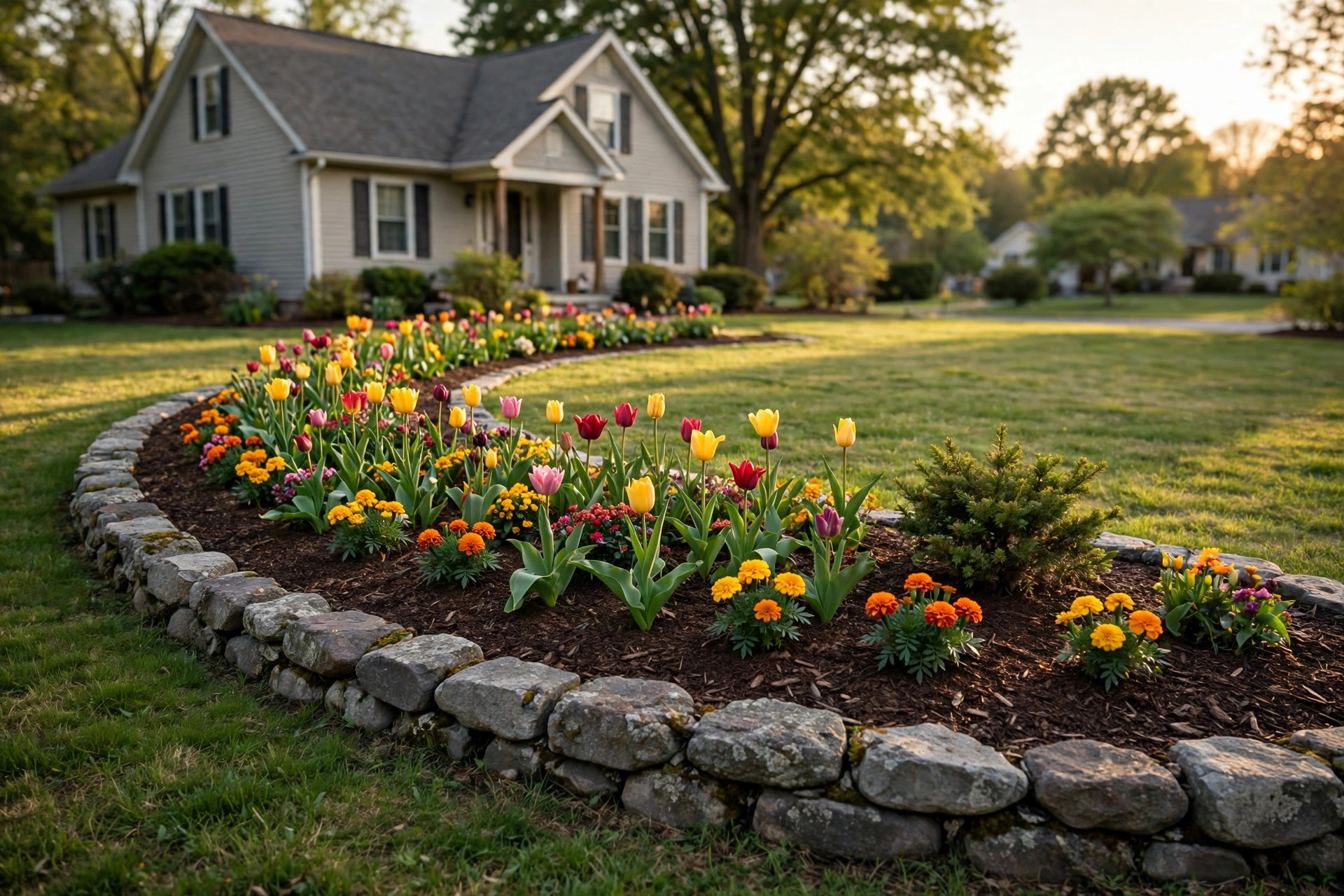

Edging flower beds with stone ideas is one of the simplest ways to make a yard look cared for. A row of stones along a bed tells the eye where the garden ends and the lawn begins. It keeps mulch in place. It stops grass from creeping into the flowers. And it does all this without paint, plastic, or anything that looks out of place in a garden.
Yet beds still look rough. The edges crumble. The grass slips in. The answer is often not more plants. It is a good border. Stone gives that border a solid, natural feel that lasts for years.
This guide walks through the best ideas for edging flower beds with stone. It covers why it matters, how to choose the right stone, the main types and options, what it costs, how to keep it in good shape, and basic safety. It closes with answers to common questions.
Why Stone Edging Matters
A flower bed without a border is like a room without baseboards. It can still work, but something looks missing. Stone edging draws a clear line. That line does several jobs at once.
First, it holds mulch back. Rain and wind push mulch out of beds and onto the lawn. A low stone wall keeps most of it where it belongs. That saves money, since mulch must be spread less often. If you plan to bring in fresh mulch, read this guide to the best mulch for flower beds bulk delivery before you order.
Second, it slows down grass. Many lawn grasses spread through runners that creep under the soil. A stone border set deep enough cuts off those runners.
Third, it protects the mower. When the mower wheel can ride along a flat stone edge, trimming is faster. There is no need to reach for the string trimmer as often. Equipment makers such as Toro and John Deere publish free guides on trimming and edging lawns. A mower wheel can bump against a high stone, so it helps to set the stones low enough for the wheels to pass, or wide enough to trim beside.
Fourth, it raises the value of the home. Real estate agents say curb appeal is the first thing buyers judge. Stone edging is a small job that changes how the whole front yard looks. It gives the same lift as a fresh coat of paint, at a much lower cost.
Finally, it is easy on the eyes. Stone is old and plain. It does not fade or crack the way plastic edging does.
How to Choose the Right Stone: Edging Flower Beds with Stone Ideas
Not every stone suits every bed. Pick with care, and the border will last. The points below will help.
Start with size. For a simple low border, stones four to eight inches long work well. They are easy to lift and easy to line up. Larger rocks, eight to twelve inches across, make a bolder edge. Very large boulders are heavy and hard to move. They suit wide beds where a strong look is wanted.
Think about color. Stone comes in gray, tan, red, brown, and near black. Gray and tan go with almost any house color. Red stone warms up a dull bed. Dark stone makes light-colored flowers stand out. A safe rule is to match the stone to something already on the home, such as the brick, the siding, or the walkway.
Check the shape. Flat stones stack well. Round stones suit a loose, natural line. Cut stones, with square edges, give a formal look. A mix can work if the colors match, but most home owners get the best result by keeping one shape.
Look at the surface. Rough stone grips the soil and stays put. Smooth river rock rolls and shifts. If you want a stack that stands two or three stones high, pick flat, rough stone.
Plan the line before you buy. Use a garden hose to lay out the shape of the bed on the ground. Walk around it. Look at it from the street. Curves look soft and natural. Straight lines look neat and modern. A hose lets you test the shape without digging.
Measure the run. Walk the hose line with a tape measure or a wheel. Stone is often sold by the ton or by the pallet. A rough guide: a single row of four-inch stones needs about three stones per foot. Write down the length of your border so the stone yard can help you order the right amount.
Types and Options for Stone Edging
There are many ways to edge a bed with stone. The six below cover most yards.
Single Row Border
This is the simplest idea. Dig a shallow trench, four inches deep, along the bed line. Set stones in the trench so they stand two to three inches above the soil. Pack soil against the back of the stones. This gives a clean edge in one afternoon. It suits small beds and first-time do-it-yourselfers.
Stacked Wall Edge
For a bed on a slope, or where a taller border is wanted, stack flat stones two or three high. Dig a flat base first. Set the first row of stones level. Add the second row with the joints offset, like brickwork. Keep the stack below twelve inches if you skip mortar. A low stacked wall holds back soil and looks sturdy.
River Rock Border
Rounded river rock, three to six inches across, gives a soft border. Lay a strip of landscape fabric first. Then place the rocks in two loose rows. River rock suits beds around trees and along paths. It is cheap and fast to lay. It does shift over time, so plan to straighten it now and then.
Cut Stone Blocks
Many home centers sell cut stone blocks made for edging. They are uniform in size, often four by twelve inches. They fit together fast. They give a crisp line that looks much like a small retaining wall. This is the best pick for a formal front yard.
Flagstone Slices
Thin slices of flagstone, set on edge, make a handsome border. Bury each piece two-thirds deep. Line them up like a row of books on a shelf. The result is neat but still natural. This works best with flagstone two to three inches thick.
Boulder Edge
Large boulders, ten to twenty inches across, make a bold statement. Dig a shallow pocket for each one. Set them so they touch or nearly touch. Backfill with soil. Boulders suit wide beds and yards with a rustic style. They are heavy, so many home owners have them placed by a crew.
What It Costs
Cost depends on the stone, the length of the border, and whether you hire help. The ranges below are for 2026 prices in most parts of the United States.
Natural fieldstone, sold by the pallet or ton, runs about three to six dollars per foot for a single row border. A fifty-foot bed might cost 150 to 300 dollars in stone. Many stone yards charge a delivery fee of 50 to 100 dollars.
River rock costs two to four dollars per foot. It is often sold in bags at home centers, which is fine for short runs. For long borders, buy in bulk from a landscape supply yard.
Cut stone edging blocks cost four to eight dollars per foot. They come in bundles, and the price per block is usually two to four dollars. Home centers sell them year-round. For price comparisons on edging blocks and garden tools, Consumer Reports tests many home and garden products each year.
Hiring a crew to build the border adds labor. Expect 8 to 15 dollars per foot for a single row, and 20 to 40 dollars per foot for a stacked wall, stone included. Simple borders are very doable for a home owner. A stacked wall on a slope is worth pricing out with a pro.
Do not forget the base materials. Landscape fabric, crushed gravel for the base, and sand for leveling add 30 to 60 dollars to a typical job.
Stone is not a purchase you make twice. Plastic edging lasts five to ten years. A stone border, set right, lasts for decades. Spread over its life, stone is one of the cheapest edges you can buy.
Building the Border Step by Step
The method below works for most stone edging. Read it through once before you start.
Mark the line. Lay a garden hose or a rope where the border will go. Stand back and look. Adjust until the shape pleases you.
Cut the trench. Use a flat spade to cut a trench along the line. Make it about as wide as your stones and four inches deep. For a stacked wall, make the trench six inches deep.
Add a base. Pour two inches of crushed gravel into the trench. Tamp it flat with a hand tamper or the flat end of a spade. This base keeps the stones from sinking.
Lay the stones. Set each stone in the trench. Keep the tops at an even height. Step back often to check the line. For a stacked wall, level each stone and offset the joints.
Backfill and pack. Push soil against the back of the stones. Water it lightly and press it firm. This locks the border in place.
Finish the bed. Spread fresh mulch inside the bed. Keep the mulch a few inches below the top of the stones. If the lawn needs other work, such as a fall renewal, see this guide to overseeding lawn in fall step by step.
Care and Upkeep
Stone edging asks for little care, but a small amount each year keeps it looking new.
Walk the border in spring. Winter frost can lift stones. Push shifted stones back into place and pack soil around them. This takes ten minutes on most yards.
Pull weeds that grow between stones. Weeds seed in the gaps. Pull them when they are small. A thin layer of mulch against the back of the stones helps keep weeds down.
Rinse the stones once a year. A garden hose washes off dirt and green algae. For stubborn spots, a stiff brush and plain water will do.
Check the line after heavy rain. Water can wash soil from behind the border. Add soil or mulch where it is needed. If one spot always washes out, consider a deeper trench or a small drain line.
If your border sits beside an automatic sprinkler system, check that the heads throw water past the stones. Heads blocked by a stacked wall leave dry spots. A quick review of the system, or this look at affordable lawn sprinkler installation cost estimate, can help you plan repairs.
Safety
Stone is heavy. Take care with your back. Lift with your knees bent and the stone close to your body. Wear gloves. Rough stone cuts skin fast. Wear sturdy shoes or boots. A dropped stone on a bare foot is no small thing.
When splitting or shaping stone, wear safety glasses. Chips fly farther than you think. If you cut stone with a saw, wear a dust mask and work outdoors. Stone dust is bad for the lungs. For gas-powered cutters, Briggs & Stratton offers upkeep guides that keep small engines starting easy each spring.
Keep children and pets away from stacked walls over a foot high until the wall is finished and stable. A stacked wall is strong, but a child climbing on it can tip a stone.
Check local rules before you dig. Some towns ask that you call before digging, even for a shallow trench. There may be buried lines for gas, cable, or sprinkler wire. A quick call is free and saves a bad surprise.
Frequently Asked Questions
How deep should stone edging be set?
Set a single row four inches deep, with two to three inches showing above the soil. A stacked wall needs a six-inch trench with a gravel base. Deeper is better on soft or sandy soil.
What is the cheapest stone for edging flower beds?
River rock and fieldstone are usually the cheapest, at two to four dollars per foot in bulk. Check local stone yards first. They often sell seconds or odd lots at a discount.
Will stone edging stop grass from growing into the bed?
It helps a great deal but it is not perfect. A border set four inches deep cuts off most grass runners. Some grasses spread by seed, which blows over any border. Pull those by hand.
Can I edge a curved bed with stone?
Yes. Curves are easy with small stones, river rock, or cut blocks made for curves. Lay a hose on the ground first to test the shape. Avoid tight turns, which make the stones look crowded.
How do I keep the stones from sinking?
Dig a level trench and add two inches of tamped gravel as a base. This spreads the weight and drains water. Soft soil may need a deeper base.
Do I need landscape fabric under stone edging?
It helps under river rock and boulder borders, where weeds grow through the gaps. Under a single tight row, packed soil is usually enough. Use fabric where weeds have been a problem before.
A Short Final Word
Edging flower beds with stone ideas need not be grand. A simple row of fieldstone, set with care, can change how a yard feels. Start with one bed. Learn how the stones sit. Then move on to the next. In a few weekends you will have borders that look right, last for years, and make the flowers shine. Good gardens are built this way: one honest job at a time.
References
Toro. (n.d.). Lawn care equipment and garden tools. https://www.toro.com Deere. (n.d.). Lawn and garden equipment. https://www.deere.com Briggs & Stratton. (n.d.). Engines and outdoor power equipment. https://www.briggsandstratton.com Consumer Reports. (n.d.). Product reviews and ratings. https://www.consumerreports.org
Was this guide helpful?

About James Carter
The My Garden US editorial team writes practical, in-depth home and garden guides for American homeowners — tested advice, no fluff.
You May Also Like
Leaf Vacuum for Large Yards Buying Guide
July 22, 2026 0 views
Buffalo Grass Seed for Texas Lawns: A Practical Guide for Hot, Dry Summers
January 31, 2026 0 views
How to Level Bumpy Lawn With Topsoil: A Plain Guide for Homeowners
September 9, 2026 0 views