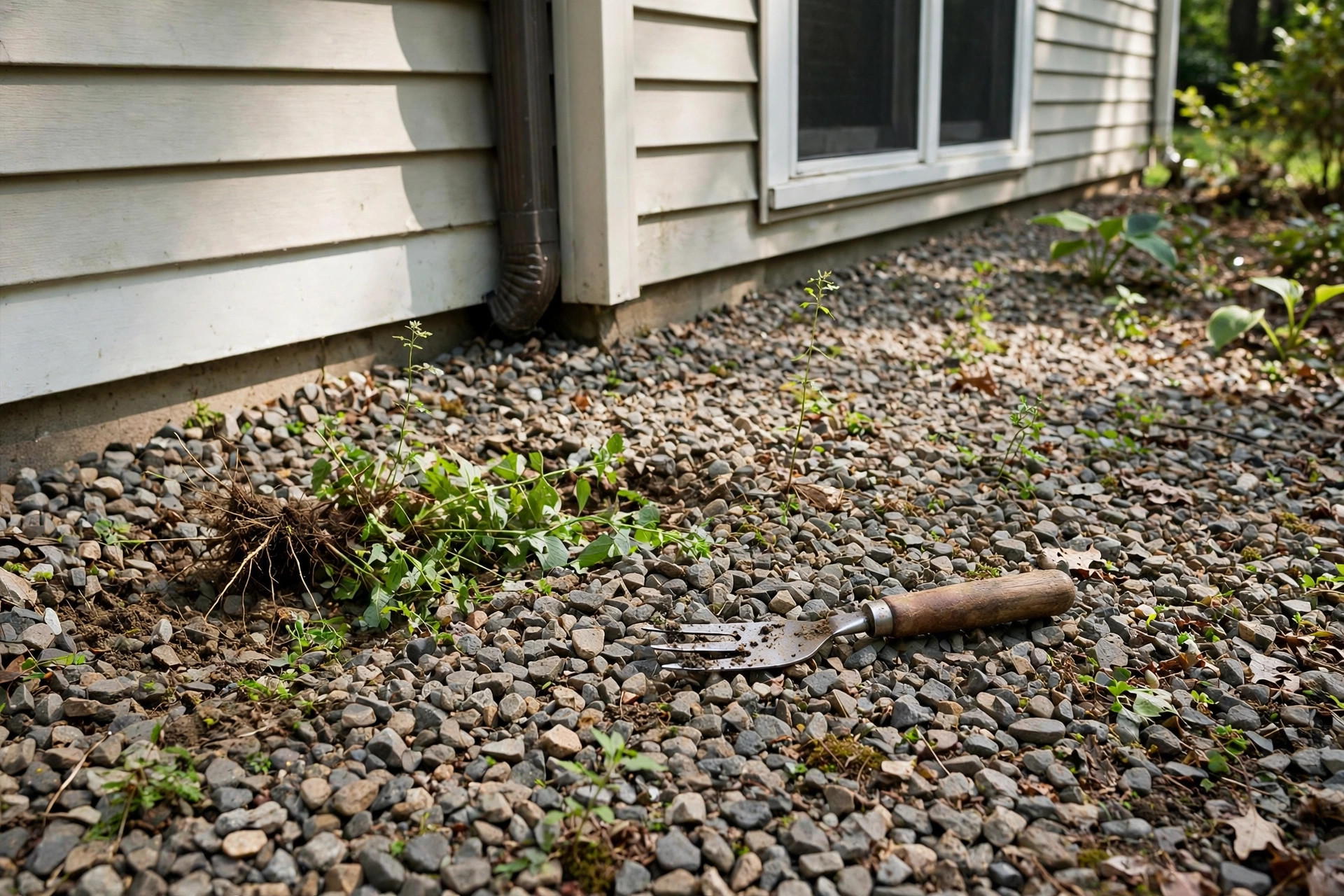

Learning how to kill weeds in rock beds is a skill every homeowner can master. Rock beds look neat when they are clean. Stones do not need mowing or watering. But weeds soon spoil the look. Small green shoots push up between the stones. They make the whole yard look untidy.
The good news is simple. You can kill weeds in rock beds with several safe and proven methods. Some use only your hands. Some use common items from the kitchen. Some use garden tools or weed killers from the store.
Why Weeds in Rock Beds Matter
Weeds in rock beds are more than an eyesore. They can cause real harm to your yard. Their roots push deep into the soil under the stones. Strong roots can lift small stones and shift the bed. Once weeds set seed, they spread fast. A few weeds this month can turn into hundreds next month.
Weeds also steal water and food from the plants you want to keep. If your rock bed holds small shrubs or flowers, weeds will fight them for every drop. They grow faster than most garden plants. In time they can shade out young plants and kill them.
There is a safety point too. Tall weeds can hide the edge of a path, and guests may trip. Dry weeds near a grill or a fire pit can catch fire. Keeping rock beds clean is a matter of safety as well as beauty.
Finally, clean rock beds protect your home. Weeds near the foundation hold moisture against the wall. Damp soil invites pests like ants and termites. A clean stone bed helps water drain away from the house. It also lets you see cracks in the foundation early.
How to Choose the Right Weed Control Method: How to Kill Weeds in Rock Beds
There is no single best way to kill weeds in rock beds. The right method depends on the weeds, the stones, and your comfort level. Study your bed for a few minutes before you start.
Match the Method to the Weed
First, look at what kind of weed you have. Small annual weeds have thin roots. They pull out with ease. A quick spray of vinegar will kill them. Large weeds with thick roots need more work. Dandelions and thistles grow a deep taproot. You must remove the whole root, or the plant will grow back. Creeping weeds with runners often need repeated treatment.
Check how many weeds you have. A few scattered weeds are best pulled by hand. A bed full of weeds may call for a weed killer or a flame weeder.
Match the Method to the Stone
The kind of stone in your bed also matters. Smooth river rock is easy to move. You can push it aside to dig out roots. Crushed gravel locks together. It is harder to dig through. Small pea gravel can be raked, which makes cleanup fast. Large flat stones make fine footing for your knees while you pull weeds by hand.
If you plan to buy new tools for the job, check independent product reviews first. A good review can save you from buying a tool that breaks in one season. And if your bed sits on landscape fabric, be careful with sharp tools and flame weeders. Fabric can tear or melt. That defeats its purpose.
Types of Weed Removal Methods
You can group the ways to kill weeds in rock beds into five main types. Each has strengths and weak points. Many homeowners use two or three together for the best results.
Hand-Pulling and Digging
Hand-pulling is the oldest method and still one of the best. It works well for small beds and scattered weeds. The key is to pull the whole root. Water the bed the day before you pull. Wet soil lets roots slide out whole. Grip the weed at its base, low near the soil. Pull slow and steady. Do not yank.
A hand weeder or a small trowel helps with deep roots. Drop pulled weeds into a bucket, not on the bed. Weeds left on the bed can drop seeds and start new plants.
Hand-pulling takes time, but it is free and safe. It harms no other plants. It works well around shrubs. A stand-up weeder lets you work without bending, which is a smart buy if you have a bad back.
Natural and Home Remedies
Many homeowners prefer natural weed control. These methods use simple items and cost very little. They are good for small weeds and for beds near pets and children.
Boiling water is one of the simplest weed killers. Heat a kettle and pour the water slowly onto the weed. The weed wilts within hours. This method works best on small weeds and on weeds in cracks. Be careful where you pour. Boiling water kills any plant it touches.
White vinegar is another common remedy. Household vinegar contains about five percent acid. Spray it straight onto the weed leaves on a dry sunny day. Most small weeds die in a day or two. Stronger garden vinegar, sold at garden centers, contains twenty percent acid. It works faster but can burn skin. Wear gloves and eye protection when you use it.
Salt is an old weed killer, but it must be used with care. Salt stays in the soil and can stop new plants from growing for months. It can also harm nearby shrubs. Use salt only where you never plan to grow plants. Keep it well away from lawns and garden beds.
Chemical Herbicides
Store-bought herbicides kill weeds fast. They come in two main types. Contact herbicides kill only the parts they touch. Systemic herbicides travel down into the roots. They are best for deep-rooted weeds like dandelions.
Non-selective herbicides kill every plant they touch. They suit rock beds with no wanted plants. Selective herbicides kill only certain weeds. Read the label before you buy.
Spray on a calm day with no wind. Follow the mixing rates on the label. More is not better. Keep pets and children off the bed until the spray is dry. A pre-emergent weed killer schedule can also help you time your spring treatment right.
If you have pets, look for pet-safe weed killers made for home use. Always store herbicides out of the reach of children.
Heat and Flame Tools
Flame weeders burn weeds with a burst of hot air or a small flame. They run on propane or butane. Pass the tool over the weed for a few seconds. The weed dies over the next few days. You do not need to burn the plant to ash.
Flame weeders work well on gravel and crushed stone. They leave no residue in the soil. Makers of outdoor power equipment and small engines from Briggs & Stratton offer yard tools that pair well with this kind of work. But flame tools must be used with care. Keep the flame away from dry mulch, wooden edging, and landscape fabric. Never use a flame weeder on a windy day. Keep a hose or a bucket of water close at hand.
Weed Barrier Fabric
Landscape fabric sits under the stones and blocks weeds from below. Good fabric lets water pass through but blocks sunlight. Without light, most weed seeds cannot grow. Fabric is best installed when you first build the bed. Lay it over the soil, cut holes for plants, and cover it with three to four inches of stone.
Old fabric can still help. If your bed has no fabric, you can add it. Rake the stones aside. Pull all weeds. Lay the fabric flat and pin it down. Then rake the stones back over it. Overlap the edges by at least six inches so weeds cannot push through the seams.
Fabric is not perfect. Weed seeds can land on top of the stones. They grow in the thin layer of dust and dirt between stones. You must still clean the bed and remove those weeds. Buy a thick, woven fabric made for weed control. It will last for many years.
Cost and Price of Each Method
Killing weeds in rock beds does not have to cost much. Hand-pulling costs nothing but your time. A good hand weeder costs about five to ten dollars. A stand-up weeder costs thirty to fifty dollars. These tools last for years.
Natural remedies are very cheap. A gallon of white vinegar costs a few dollars. Boiling water costs only the price of the heat. Garden-strength vinegar costs about fifteen to twenty dollars a gallon.
Chemical herbicides cost ten to forty dollars for a bottle that treats a large bed. Ready-to-use spray bottles cost more per ounce than concentrate. Concentrate mixed in your own sprayer saves money if you treat weeds often. A pre-emergent product, which stops weed seeds from sprouting, costs about twenty to thirty dollars for a bag that covers a good-size yard.
Flame weeders cost forty to eighty dollars, plus the cost of propane. A small propane canister costs about five dollars.
Landscape fabric costs about fifty cents to one dollar per square foot. A roll for a typical bed costs thirty to sixty dollars. Hiring a yard service to clean a rock bed costs fifty to two hundred dollars per visit, depending on the size of the bed and your area.
Care and Upkeep: Keeping Rock Beds Weed-Free
Killing weeds is only half the job. Keeping them from coming back is the other half. A steady upkeep plan saves you hours of hard work later.
Prevention Steps
Start by keeping the bed clean. Fallen leaves and dirt give weed seeds a place to grow. Rake or blow the bed clean each month. Pull new weeds while they are small. A weed pulled this week takes seconds. The same weed next month may take minutes.
Keep a thick layer of stone. Three to four inches of stone blocks sunlight from the soil below. Add fresh stone where the layer looks thin. Check the edges of the bed. Weeds often start where the bed meets the lawn. You can cut a clean edge with a spade each spring.
For thick weeds along the edges, a good string trimmer can cut them down fast before they set seed. Trimming does not kill the roots, but it stops seeds from spreading.
Seasonal Schedule
In spring, walk the bed each week and pull young weeds. Apply a pre-emergent product if you use one. In summer, water only the plants you want to keep. In fall, clean the bed well and remove fallen leaves. In winter, plan big changes, such as adding fabric or new edging.
Check the fabric every year or two. Lift a small patch of stone and look at the fabric. If it is torn or thin, replace that section.
Safety Rules for Rock Bed Weed Control
Wear gloves when you pull weeds. Some weeds have thorns or sharp edges. Gloves also protect your hands from blisters. Wear closed shoes, not sandals. Kneel on a foam pad to protect your knees.
When you use any spray, wear long sleeves and eye protection. Read the label of every product you buy. Wash your hands when you finish.
Store all weed killers in their original bottles. Keep them in a locked shed or a high shelf, far from children and pets. Never pour leftover product down a drain or into a stream. Follow the label for safe disposal.
If you use a flame weeder, check the local fire rules first. Some towns ban open flames in dry months. Work on a calm day. Keep water near you. Never leave a hot tool where children can reach it.
Watch the sun too. Wear a hat and drink water. Take breaks in the shade. A clean rock bed is not worth a heat illness.
Frequently Asked Questions
How often should I treat my rock bed for weeds? Walk the bed once a week in spring and summer. Pull small weeds by hand each time. Treat the whole bed with your chosen method once or twice per season.
Will vinegar kill large weeds in rock beds? Household vinegar kills small weeds well. Large weeds with deep roots often grow back. Pull the root by hand first, then spray vinegar on any regrowth.
Can weeds grow through landscape fabric? Good woven fabric blocks most weeds from below. But seeds can land on top of the stones and grow in dust and dirt. Clean the bed often and repair torn fabric to keep it working.
Is it safe to use weed killer in rock beds near a vegetable garden? Use great care near food plants. Non-selective herbicides can harm vegetables. Better yet, use hand-pulling or boiling water near the vegetable garden. Never let spray drift onto food crops.
How deep should the stone layer be to stop weeds? Three to four inches is the standard depth. This layer blocks most sunlight from the soil. Add fresh stone each year or two to keep the depth right, since stones settle over time.
Should I hire a pro or do it myself? Most homeowners can handle rock bed weeds on their own. Hire a pro if the bed is very large, if the weeds are severe, or if you want fabric installed under existing stone.
Final Word
A clean rock bed is within reach for any homeowner. Start with hand-pulling and simple care. Add natural sprays or a weed killer when the job is large. Put down good fabric and keep the stone deep. Walk the bed each week and pull weeds while they are small. With steady, simple work, your rock beds will stay neat and clean all year long.
References
Toro. (n.d.). Lawn care and garden equipment. https://www.toro.com
Briggs & Stratton. (n.d.). Outdoor power equipment. https://www.briggsandstratton.com
Consumer Reports. (n.d.). Product reviews and ratings. https://www.consumerreports.org
Was this guide helpful?

About James Carter
The My Garden US editorial team writes practical, in-depth home and garden guides for American homeowners — tested advice, no fluff.
You May Also Like
The Lawn Mower Oil Change Kit for Homeowners: What It Is and How to Use It
June 12, 2026 0 views
The Best Irrigation Controller with Rain Sensor for American Lawns
June 26, 2026 0 views
Deer Resistant Landscaping Plants for Suburbs
February 20, 2026 0 views