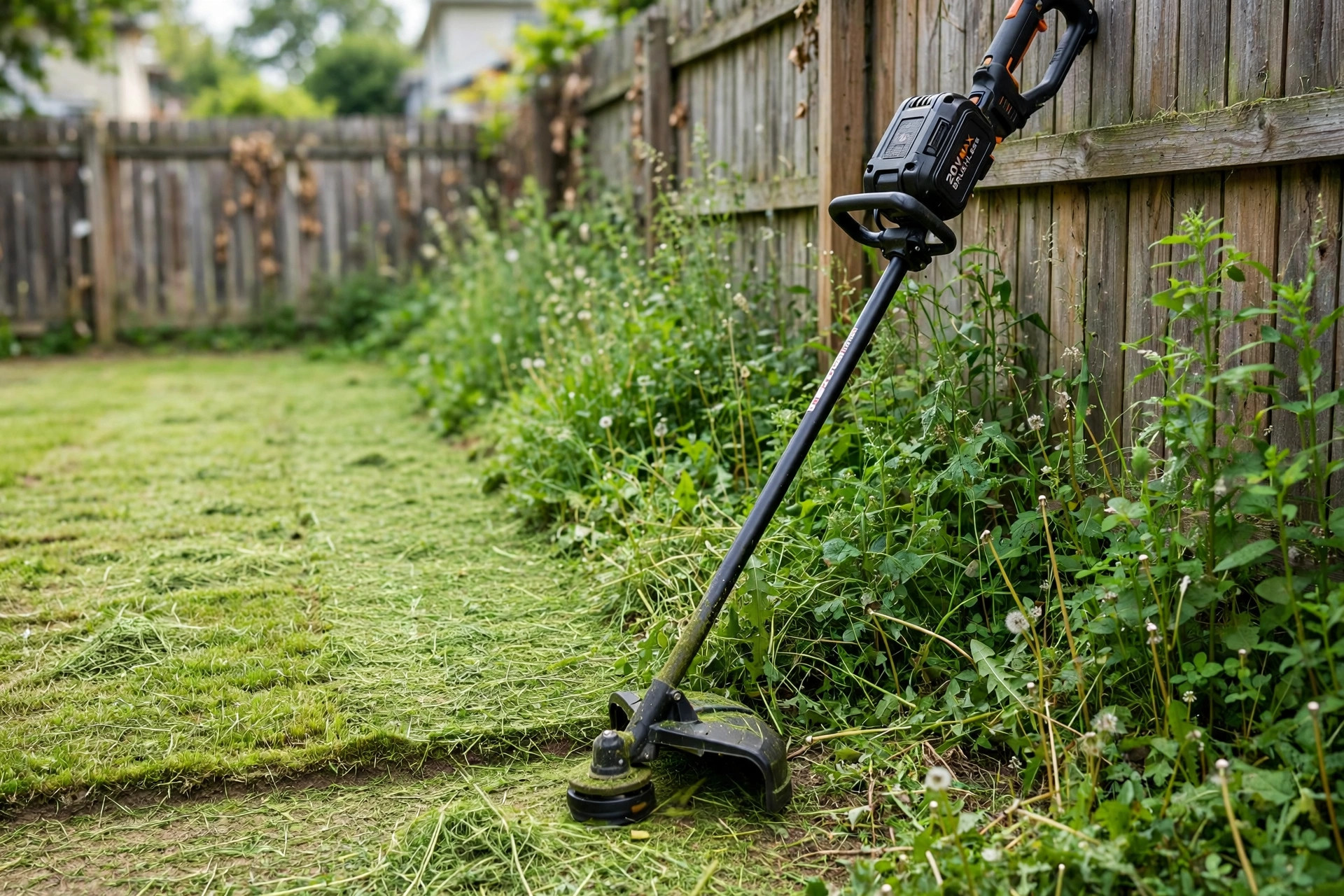

Thick weeds can take over a yard in a matter of weeks. They grow along fence lines, around trees, and in ditch banks where a mower cannot reach. A weak trimmer will bog down, stall, or snap its line in heavy growth. That is why so many homeowners search for a top rated string trimmer for thick weeds before they buy. The right tool cuts through tall grass, brush, and stubborn stalks with far less effort, and it lasts for years with basic care.
Why a Good String Trimmer Matters
A lawn mower handles the open ground, but every yard has rough spots. Tall weeds grow faster than grass, and they often have thick, woody stems. A cheap or underpowered trimmer struggles in this kind of growth. The engine or motor strains, the line breaks again and again, and the job takes twice as long as it should.
Thick Weeds Are Different
Light trimming is easy work. A low power tool can handle short grass along a walkway. Thick weeds are another matter. Plants like crabgrass, thistle, and wild blackberry send up tough stems that resist a light line. A top rated string trimmer for thick weeds has the torque to cut these stems without slowing down. It also takes a heavier line or even a brush blade for the worst patches.
What “Top Rated” Really Means
Ratings come from test labs and from real users. Test labs run tools through controlled cuts, measuring power, battery life, and noise. Homeowners add the other half of the story: comfort, line feed quality, and how the tool holds up after two or three seasons. When a trimmer earns high marks from both groups, it is safe to trust. Reading Consumer Reports test results is a solid place to start, since their lab work covers cutting power and durability in a fair way.
What to Look For When You Choose: Top Rated String Trimmer for Thick Weeds
Buying the best string trimmer for heavy weeds is easier when you know which features matter. Focus on the points below, and you will avoid the most common mistakes.
Power and Engine Size
Power is the first thing to check. For gas models, look at engine size, measured in cubic centimeters (cc). A 25 cc engine or larger handles thick weeds well. For battery models, voltage matters. Trimmers with 40 volts or more give the extra punch needed for dense growth. Lower power tools are fine for light edging, but they are a poor match for thick weeds. Brands like ECHO build their reputation on strong engines that hold speed under load, which is worth keeping in mind when you compare models.
Line Feed System
The line is what does the cutting, so the feed system matters a great deal. Bump feed heads release more line when you tap the head on the ground. Automatic feed heads release line on their own. Fixed heads require you to stop and reload by hand. For thick weeds, a fast and reliable feed system saves time, because heavy growth wears down line faster. Also check which line sizes the head accepts. Heavier line, around 0.095 inches or more, cuts thick weeds better than thin line.
Cutting Swath
The cutting swath is the width of the path the tool clears in one pass. A wider swath means fewer passes, which means faster work. Trimmers built for thick growth often have a 15 to 17 inch swath. A wider swath takes a little more skill to control, but it pays off in overgrown areas.
Weight and Balance
Thick weeds call for longer work sessions, so weight matters. A tool that is well balanced will feel lighter than its true weight. Shoulder straps help a great deal on larger yards. Before you buy, hold the trimmer if you can. A Home Depot store display lets you test the grip and balance in person, which is more useful than any photo.
Fuel Type and Convenience
Gas trimmers give the most raw power, but they need fuel mixing, oil checks, and pull starts. Cordless battery trimmers are quieter and start with a button, though you must plan around battery charge time. Corded electric models are cheap and light, but the cord limits where you can work. Each choice has a clear trade, which brings us to the types of trimmers on the market.
Types of String Trimmers
There are four main types of string trimmers, and each suits a different kind of yard. If you want a gas powered string trimmer for weeds, for example, you will look at a different shelf than someone who wants a quiet cordless string trimmer for tall brush.
Gas String Trimmers
Gas models are the classic choice for hard work. A two cycle or four cycle engine delivers strong, steady power, and a gas trimmer will run as long as you have fuel. They are the best pick for large properties with heavy growth. The cost is noise, exhaust, and upkeep. You will mix oil and gas, change the air filter, and replace the spark plug now and then. Briggs & Stratton engines appear on many quality gas tools, and their service guides are a useful reference for engine care.
Cordless Battery String Trimmers
Battery trimmers have improved a great deal in recent years. High voltage systems now rival gas tools for cutting thick weeds, and they start with one push of a button. They are quiet, clean, and easy to store. The main limit is run time. For a big yard, buy a second battery or choose a model with a long lasting pack. Greenworks and RYOBI both make strong battery platforms, and their battery lines often work across many tools, which lowers the cost of adding a second pack.
Corded Electric String Trimmers
Corded models plug into an outlet and run without pause. They are light, cheap, and simple to maintain. The catch is the cord itself, which limits your range and can be a hazard in thick growth. They suit small yards with light to moderate weeds. For thick, widespread growth, a corded model is rarely the best answer.
Brush Cutters and Attachment Systems
For the worst patches, a brush cutter with a metal blade can be the right tool. Many top trimmers also accept an attachment system that swaps the trimmer head for a brush cutter blade or an edger. This is worth a look if your yard has both thick weeds and neat edges to keep. A guide on fence line trimmer for steep slopes shows how the right head and attachment choice can tame rough ground where mowers cannot go.
Cost and Price
A top rated string trimmer for thick weeds costs more than a basic model, but the difference is money well spent. Light duty electric trimmers start around 40 to 70 dollars. Mid range cordless models with strong batteries run from 130 to 250 dollars. Quality gas trimmers usually cost between 200 and 400 dollars, and professional grade brush cutters can go higher.
Do not judge price alone. A cheap tool that snaps line every ten minutes and stalls in heavy weeds costs you time and frustration. Read current pricing on The Spruce, which reviews trimmers by price band and explains what each band buys you. Also factor in long term costs: gas and oil for gas models, replacement batteries for cordless models, and line refills for all of them. A well made tool often costs less over five years because it needs fewer repairs.
If budget is tight, look for seasonal sales. Late fall and early spring bring many deals on lawn tools. A cordless edger vs gas edger comparison guide can also help you decide which power type fits your budget, since the same gas versus battery math applies to edgers and trimmers alike.
Care and Upkeep
Even the best trimmer needs care to stay sharp. A few simple habits will keep a top rated string trimmer for thick weeds running strong for many seasons.
First, keep the line fresh. Old line turns brittle and breaks more often. Store spare line out of direct sun, and reload the head before it runs empty. Second, clean the cutting head after each use. Wrapped weeds around the head cause drag and extra wear. Third, check the air filter on gas models once a month during the cutting season. A clogged filter chokes the engine. Fourth, store fuel properly. Old gas goes stale in a few months, and stale gas is a leading cause of hard starts. Deere offers clear engine storage guides that apply to many gas trimmers, even outside their own brand.
For battery models, care is simpler. Keep batteries at room temperature, charge them after use, and never leave them on the charger for days at a time. Wipe down the shaft and head to remove sap and dirt. Scotts lawn guides pair tool care with weed control advice, which is a useful combination, since a well fed lawn leaves less room for the weeds your trimmer must fight.
Safety
String trimmers are powerful tools, and thick weeds hide rocks, sticks, and wire. Safety gear is not optional. Always wear eye protection, long pants, and closed shoes. Gloves protect your hands from vibration and sharp stems. Ear protection is wise with gas models, which run loud.
Before you start, walk the area and pick up stones, bottles, and hidden debris. A spinning line can throw small objects with real force. Keep children and pets well away from the work area. Hold the trimmer with both hands and keep the head low, at a steady angle. Never cut above waist height, and never work on a ladder with a trimmer.
Know where the power lines and buried cables lie. If you are unsure, call your local utility marking service before trimming near the road or along buried lines. For steep or rough ground, research like battery powered hedge trimmer reviews 2026 pays off too, since modern battery tools include safety guards and anti-vibration features worth comparing.
Frequently Asked Questions
How much power do I need for thick weeds?
For gas models, 25 cc or more is a good target. For battery models, look for 40 volts or higher. Lower power tools will cut light grass, but thick weeds will stall them. When in doubt, choose more power, since an underpowered tool wears out faster from being overworked.
Is a battery trimmer strong enough for thick weeds?
Yes, in most cases. High voltage cordless models now cut thick weeds nearly as well as gas tools. The limit is run time, not power. Keep a spare battery charged if your yard is large. LawnStarter has guides on matching tool power to yard size that help you size a battery system correctly.
What line size is best for thick weeds?
Line around 0.095 inches or heavier works best for thick weeds. Some heavy duty heads accept 0.105 inch line or even brush blades. Thicker line cuts tougher stems, but it also feeds slower and costs more, so match the line to the growth you face most often.
How often should I replace the trimmer line?
There is no fixed schedule. Replace the line when it wears short or breaks often. In thick weeds, you may reload every few sessions. Check the head before each use, and keep spare line on hand so a mid job refill does not stop your work.
Gas or battery: which is better for a large yard?
For a large yard with heavy growth, gas still has an edge in run time, since you can refuel in seconds. Battery tools have closed the power gap, but you may need two or three batteries for a big job. Weigh the cost of extra batteries against the convenience of quiet, clean battery power.
Can a string trimmer clear brush, not just weeds?
A heavy duty string trimmer with a brush blade attachment can cut light brush and saplings. Check that your model accepts a metal blade before you try. For dense woody growth, a dedicated brush cutter is the safer and stronger choice.
A Final Word
Thick weeds are no match for the right tool. A top rated string trimmer for thick weeds gives you the power, line system, and comfort to clear rough ground without a fight. Take time to compare power, weight, and fuel type, keep up with basic care, and always work with proper safety gear. Your yard will look better, and the job will feel far easier than it used to.
References
Deere & Company. (n.d.). Lawn and garden equipment. https://www.deere.com ECHO Incorporated. (n.d.). Outdoor power equipment. https://www.echo-usa.com Greenworks Tools. (n.d.). Battery powered outdoor equipment. https://www.greenworkstools.com The Scotts Company. (n.d.). Lawn care products. https://www.scotts.com LawnStarter. (n.d.). Lawn care services and guides. https://www.lawnstarter.com The Spruce. (n.d.). Home and garden advice. https://www.thespruce.com The Home Depot. (n.d.). Home improvement products. https://www.homedepot.com Consumer Reports. (n.d.). Product ratings and reviews. https://www.consumerreports.org RYOBI. (n.d.). Power tools and outdoor equipment. https://www.ryobitools.com Briggs & Stratton. (n.d.). Small engines and outdoor power. https://www.briggsandstratton.com
Was this guide helpful?

About Jennifer Lee
The My Garden US editorial team writes practical, in-depth home and garden guides for American homeowners — tested advice, no fluff.
You May Also Like
Retractable Garden Hose Reel Reviews USA: What Real Users Say Before You Buy
July 7, 2026 0 views
How to Build Raised Garden Bed Cheap: A Plain Guide
August 2, 2026 0 views
Sprinkler Head Replacement Cost Estimate USA: What to Expect
August 11, 2026 0 views