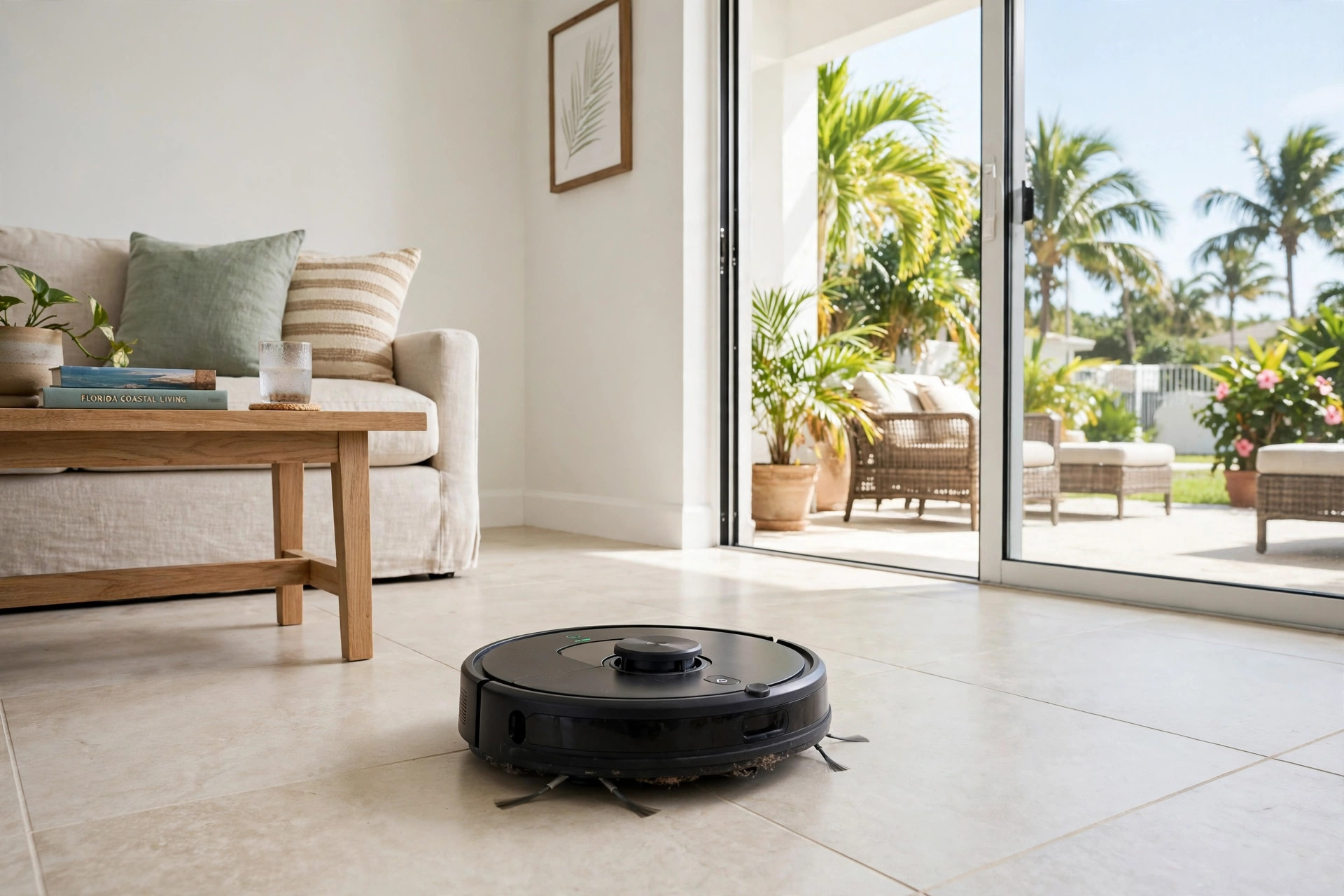

When you plan to buy robot vacuum cleaners online in Florida, you take on a task that is simple in theory and full of choices in practice. Dozens of models crowd the market. Prices range from under one hundred dollars to well over one thousand. Features that sound clear in an advertisement can mean very little in a real living room. This guide walks through the whole process in plain terms, so you can shop with confidence and end up with a machine that truly suits your home.
Florida adds its own conditions to the job. Sand tracks in from the beach and the driveway. Tile floors are common, since they stay cool in the heat. Humidity brings its own kind of dust. Pets shed year round. A robot vacuum that works well in a carpeted house in a dry state may fall short here. Shopping online gives you the widest selection and often the best price, but it also removes the chance to see the machine up close before you pay. Careful research fills that gap.
Why It Matters
A robot vacuum earns its place by doing work you would rather not do. Floors in Florida collect grit faster than many owners expect. Fine sand works its way into corners, under furniture, and along baseboards. It scratches hard floors over time if left alone. A small robot that runs daily can pick up this grit before it does harm. That keeps tile looking bright and reduces how often you need a deep clean.
Time is the other reason. A full time worker, a parent, or an older resident may not wish to push a heavy upright vacuum across a large house each week. A robot runs on its own schedule while you are at work or out of the house. You return to floors that are already clean.
There is also the matter of the Florida climate. The state sees pollen in spring, mold spores in summer, and dust all year. Many robot vacuums now carry filters that trap fine particles. Running one often can cut the amount of loose dust floating through the house, a point also covered in the EPA guidance on indoor air quality. This does not replace an air filter or good ventilation, but it helps the whole home feel fresher.
How to Choose the Right Model: Buy Robot Vacuum Cleaners Online in Florida
Match the machine to your floors
Start with your floors, since they decide what the machine must do. Many Florida homes have large areas of tile or vinyl plank. These hard floors are easy for robot vacuums, since the machine only needs to sweep up loose grit and mop lightly. If your home also has area rugs or wall to wall carpet in the bedrooms, look for a model with strong suction and a brush roll that adjusts its height. Some low priced models stall on thick carpet, so check reviews for carpet performance if that matters to you.
For homes that are all tile, a model with a mopping pad is worth a look. Many robots now vacuum and mop in one pass. This suits Florida well, since tile shows footprints and water spots. Make sure the water tank is easy to fill and that the mop pads wash well. If you have dark grout, keep in mind that no robot mop replaces a real scrub, but daily passes keep the film from building up.
Navigation and mapping
Older robot vacuums bounced around rooms at random, bumping into chairs until they found their way. Newer models use lasers or cameras to map the home and clean in neat rows. A mapped clean is faster, misses fewer spots, and lets you send the robot to a single room from your phone. Laser navigation works in the dark, which is useful for night runs, while camera models may need some light.
Mapping also brings no-go zones.
Battery, bin, and self-emptying docks
Most robot vacuums run for 60 to 120 minutes on one charge. That covers about 1,000 to 2,000 square feet, depending on the floor. Larger homes should look for a model that returns to its dock, charges, and resumes where it stopped. Without this feature, big houses get only half a clean per run.
Self-emptying docks have become common. The dock sucks dirt from the robot into a large bag that you change every month or two. This is a real help for allergy sufferers and for pet owners, since you handle the dust less often. It also lets the robot clean for weeks without you touching it. The dock costs more up front, and the bags are an ongoing expense, so weigh the comfort against the price.
Types and Options to Consider
The market breaks into a few rough groups. Budget models, often under two hundred dollars, handle hard floors in small apartments. They usually navigate at random and have small bins. They are a fair first step if you want to try the idea without a big spend.
Mid-range models, from about two hundred to five hundred dollars, bring mapping, room selection, and stronger suction. For most Florida homes, this is the sweet spot. You get a machine that cleans in orderly rows, holds its map from run to run, and copes with mixed floors.
High-end models add self-emptying docks, mop pads that wash themselves, and cameras that spot pet waste or stray socks. These are made for large homes, many pets, or owners who want the least hands-on care. Prices run five hundred to over one thousand dollars. Reviews at Consumer Reports can help you see whether the extra cost buys real gains for your floor type.
Pet-focused models deserve their own mention. Florida shelters place many dogs and cats, and pet hair is a constant battle. A pet model has a brush roll that resists tangles, a larger bin, and a filter that catches dander. If you share your home with two or more animals, choose one of these over a basic model. For broader cleaning gear advice, readers often compare wet dry shop vacuums reviews and buying guide before deciding on a full kit.
Cost and Price in Florida
Price is the first thing most shoppers look at, and online prices swing with the season. Black Friday, the winter holidays, and back-to-school weeks in late summer bring deep discounts. Models that list at four hundred dollars often sell for two hundred fifty during a sale. Patience pays.
Beyond the sticker price, count the ongoing costs. Replacement filters run ten to thirty dollars a set and need changing every few months. Brush rolls wear out about once a year. Self-emptying docks need bags, which cost fifteen to thirty dollars for a pack of three or four. Mop pads wear and must be replaced or washed often. Over three years, these costs can add fifty to one hundred dollars a year to a mid-range machine.
Shipping to Florida is usually free on major sites, but check the seller before you pay. Florida shoppers order from national retailers and from the brands themselves. Sales tax applies to online orders delivered in the state, and some sellers show it only at checkout. Also check the warranty. A one year warranty is standard, but the fine print may require you to ship the machine back at your own cost. Buying from a seller with a Florida return address or a local store for in-person returns can save trouble. Good overview pieces at Good Housekeeping often list current street prices alongside test results.
For tile heavy Florida homes, some owners pair a robot with a dedicated mop. A quick look at steam mops for tile floors price comparison usa shows how the prices of the two tools compare, and many owners find the pair covers what neither does alone.
Shopping Online: What to Check Before You Click Buy
The benefit of online shopping is choice and price. The risk is buying blind. Use these checks to lower the risk.
First, read reviews from real owners, not just the product page stars. Sort by the most critical reviews to see what goes wrong. Common complaints for robot vacuums include poor mapping in odd-shaped rooms, short battery life, and apps that lose the map. If many reviewers in Florida mention that sand clogs the brush, take note.
Second, confirm the model number. Brands sell look-alike models with slightly different codes, and the cheaper code may lack a key feature. Compare the feature list on the brand site, such as iRobot or Roborock, with what the seller lists.
Third, look at the seller rating and return policy. A thirty day return window with free return shipping is the standard you should want. Some marketplace sellers charge restocking fees or make you pay return postage on a bulky dock. That can turn a bad buy into an expensive lesson.
Fourth, watch for bundles. Holiday bundles may add extra mop pads, filters, or a second side brush at no extra cost. These small items add up, so a bundle can beat a bare machine even when the base price looks the same.
Care and Upkeep
A robot vacuum is low care, not no care. Empty the bin after each run if you do not have a self-emptying dock. In Florida, fine sand fills a bin fast, and an overfull bin cuts suction sharply. Once a week, pull hair from the brush roll and wipe the cliff sensors under the machine with a dry cloth. Dust on these sensors makes the robot shy of stairs or dark rugs.
Wash or replace the filter on schedule. A clogged filter blows fine dust back into the room, which defeats the purpose. If your model mops, wash the pads after each use so they do not sour in the humidity. Let them dry fully before the next run.
Keep the dock area clear. The robot needs about two feet of open space on each side of the dock and four feet in front to park cleanly. Tuck away cords and small rugs with tassels, since both can trap a robot mid-run. A surge protector on the dock outlet is cheap insurance during lightning season, and after heavy storms do not run the robot over wet floors.
Safety
Robot vacuums are safe machines, but a few rules keep them that way. Keep small objects, pet toys, and phone cords off the floor before a run. A swallowed cord can burn out a motor or, in rare cases, overheat. Never let the robot run over spilled liquids unless the model is rated for wet pickup, which most are not.
Pet safety deserves care. Some models have cameras that can see pet waste and steer around it. Cheaper models lack this and will smear a mess across the house. If your pet has accidents, schedule runs when you can check first, or buy a model with object recognition.
Battery safety is simple. Use only the charger and dock that came with the machine. Do not charge a damaged robot. If the battery swells or the machine smells hot, stop using it and contact the maker. Advice on home safety gear in general appears often at Bob Vila.
Frequently Asked Questions
Do robot vacuums work well on Florida tile floors? Yes. Tile is one of the easiest surfaces for a robot vacuum. The machine picks up sand, grit, and pet hair with little effort. Models with a mopping function add a light damp pass that keeps tile looking fresh between deep cleans.
How much should I expect to pay? A good mid-range model for a Florida home costs two hundred to five hundred dollars. Budget models run under two hundred but lack mapping. High-end models with self-emptying docks run five hundred to over one thousand dollars. Watch holiday sales for the best prices.
Is buying online better than buying in a store? Online gives you more models, lower prices, and full owner reviews. Stores let you see the size and build quality in person.
How long do robot vacuums last? Three to five years is typical with normal care. Batteries are the first part to fade, often after two years of daily use. Replacing the battery is cheaper than buying a new machine, so check that spare batteries are sold for your model.
Do they work in homes with pets? Yes, and they are popular with pet owners for good reason. Choose a pet-focused model with a tangle-free brush and a strong filter. Run it daily to keep hair from building up. Empty the bin often, since pet hair fills it fast. Dyson, known for strong suction, publishes useful comparisons at Dyson if you want to see how cordless and robot options stack up.
What about the humidity and sand? Sand is the main challenge. Empty the bin after each run and clean the brush weekly so grit does not grind the parts. Store mop pads dry to stop mildew. A surge protector on the dock guards against storm season spikes. For homes with mostly hard floors, a quiet hardwood floor buffer for sale can be a good partner tool for periodic polishing.
A Final Word
To buy robot vacuum cleaners online in Florida is to trade a little research time for years of cleaner floors. Pick the machine for your floors, not for the flashiest feature list. Read the critical reviews. Buy from a seller with a fair return policy.
If you want broader test data before you decide, independent labs at Consumer Reports publish measured suction and navigation scores, and efficiency ratings appear at Energy Star. For how-to guides and repair tips, The Spruce keeps a deep library of cleaning articles.
References
Bob Vila. (n.d.). Home improvement advice. https://www.bobvila.com Consumer Reports. (n.d.). Product reviews and ratings. https://www.consumerreports.org Dyson. (n.d.). Vacuum cleaners and home technology. https://www.dyson.com ENERGY STAR. (n.d.). Energy efficient products. https://www.energystar.gov Good Housekeeping. (n.d.). Product reviews and home advice. https://www.goodhousekeeping.com iRobot. (n.d.). Robot vacuums and mops. https://www.irobot.com Roborock. (n.d.). Robot vacuum cleaners. https://www.roborock.com The Spruce. (n.d.). Home and garden advice. https://www.thespruce.com U.S. Environmental Protection Agency. (n.d.). Protecting human health and the environment. https://www.epa.gov
Was this guide helpful?

About James Carter
The My Garden US editorial team writes practical, in-depth home and garden guides for American homeowners — tested advice, no fluff.
You May Also Like
Top Rated Air Duct Cleaning Services Reviews: A Homeowner Guide
October 3, 2026 0 views
Commercial Grade Chimney Cleaning Brushes Buying Guide
August 31, 2026 0 views
Top Rated Cordless Electric Scrubbers for Texas Homes: A Simple Buying Guide
January 20, 2026 0 views