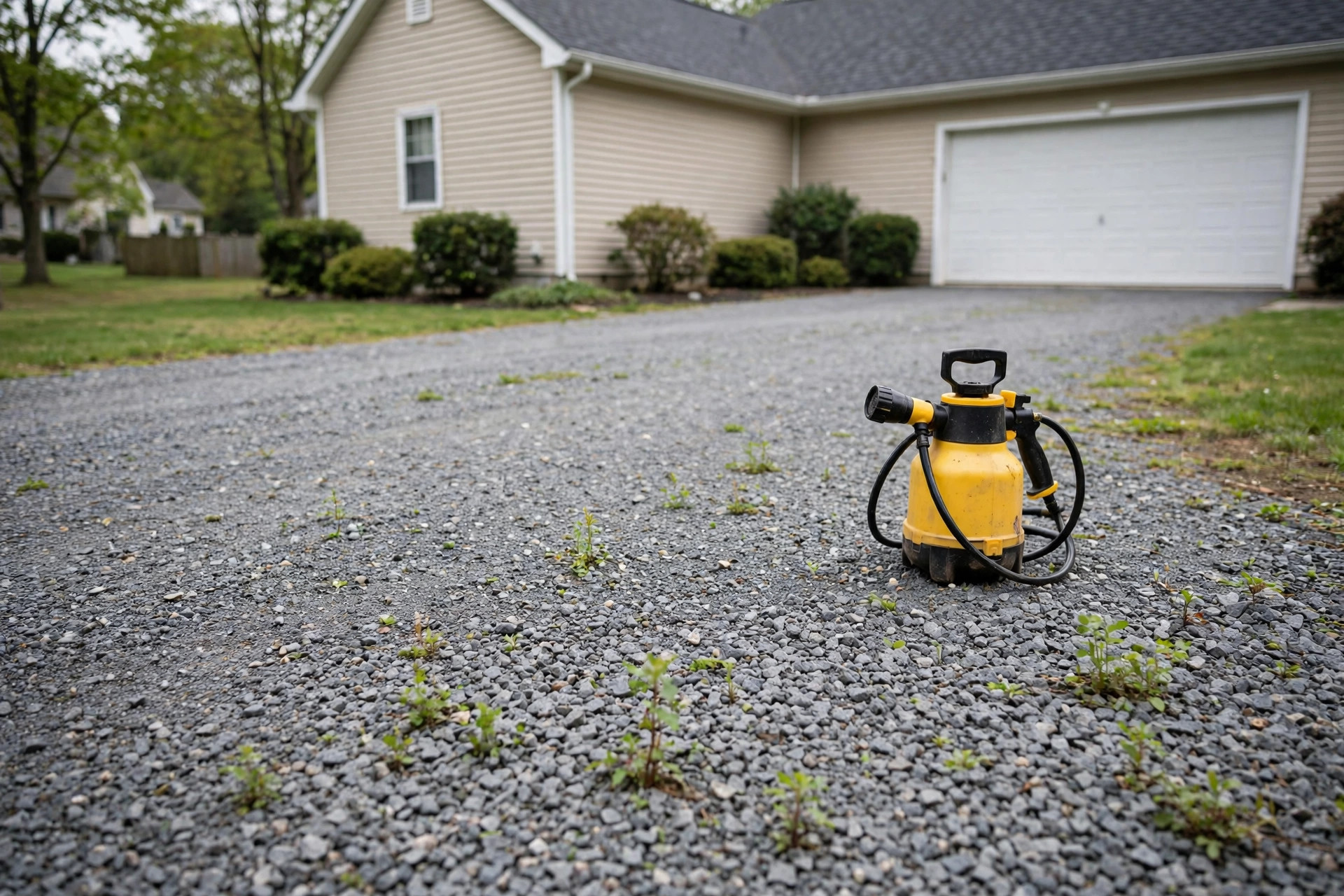

Gravel driveways look warm and natural. They fit farm houses, ranch homes, and modern homes alike. But gravel has one weak point. Weeds love it. The stones hold heat and moisture. Dust and seeds settle between the rocks. Before long, green shoots push up through the drive. The best weed killer for gravel driveways can stop this problem and keep the surface clean.
A gravel drive is not like a lawn. You cannot mow the weeds down and hope for the best. The roots sit deep between stones. You must kill the whole plant, root and all. This guide will show you the types of weed killers, how to choose one, what they cost, and how to use them in a safe way.
Why It Matters
Weeds in a gravel driveway are more than an eyesore. They loosen the gravel. Roots push stones apart. This makes ruts and low spots. Cars then drag gravel into the street or the yard. Over time, a weedy drive needs new gravel much sooner. That costs money.
Weeds also hold water on the surface. A drive that stays wet breaks down faster. In winter, trapped water freezes and lifts the stones. The result is a rough, uneven drive each spring.
There is a safety point too. Tall weeds hide the edge of the drive. Drivers may roll off the stones without knowing it. Short, clean gravel gives better traction for tires. A well kept drive is simply safer for your family and your guests.
How Weed Killers Work on Gravel: Best Weed Killer for Gravel Driveways
Most weed killers fall into two groups. Selective products kill weeds but spare grass. Non-selective products kill any plant they touch. On a gravel driveway, you want non-selective products. There is no grass to save. You want every weed gone.
There are also pre-emergent and post-emergent types. Pre-emergent products stop weed seeds from sprouting. You spread them before weeds appear, usually in early spring. Post-emergent products kill weeds that are already growing. Many home owners use both. They put down a pre-emergent in spring and spray a post-emergent when weeds pop up later.
For more on timing, read our pre emergent weed killer application timing guide before you buy.
Types of Weed Killer for Gravel Driveways
1. Glyphosate-Based Systemic Killers
These are the most common driveway weed killers. They soak into the leaves and move down to the roots. The whole plant dies in one to two weeks. They work on almost all weed types, including deep rooted ones like dandelions and thistle. One spray often lasts the full season on gravel.
The trade-off is that they kill everything they touch. Keep the spray off flower beds and lawn edges. Many brands add a marker dye so you can see where you sprayed.
2. Natural and Vinegar-Based Killers
These use strong vinegar, salt, or plant oils. They burn the tops of weeds fast. You may see weeds turn brown in a day. But they often miss the roots. Tough weeds grow back in a few weeks. They work best on young weeds in hot sun.
Natural products appeal to home owners who want fewer chemicals near pets and children. If pets use the driveway, you may want to read our pet safe lawn weed killer reviews for more options.
3. Pre-Emergent Granules
These small granules sit between the gravel stones. They form a barrier that stops seeds from sprouting. You spread them with a hand spreader or a push spreader in early spring. They do not kill weeds that are already up. Pair them with a spray for best results.
4. Salt and Homemade Mixes
Some old books suggest rock salt or salt water for gravel drives. Salt does kill weeds. But it also harms the soil on each side of the drive. Runoff can kill nearby plants and grass. Salt can also corrode car parts and concrete edges. Most experts now advise against heavy salt use.
5. Landscape Fabric Under New Gravel
If you plan to add fresh gravel, lay landscape fabric first. The fabric blocks weeds from below while water still drains through. It will not stop seeds that land on top of the gravel. But it cuts weed numbers by a large share. Pair fabric with an annual spray and your drive will stay clean for years.
What to Look for When You Choose
Kill power. Check the label for the weeds you have. Crabgrass, clover, and dandelions need a true systemic killer. Light annual weeds die with almost any spray.
Speed. Some sprays show results in hours. Systemic types take a week or two. Fast burn-down looks good, but slow systemic types give longer control.
Rain resistance. Gravel drains fast, so a rain-proof formula matters. Look for products that set within one to two hours. This keeps the chemical on the leaves, not in the ground water.
Pet and child safety. Read the label for re-entry times. Most sprays are safe once dry. If dogs walk on the drive each day, pick a product with a short dry time.
Concentrate or ready-to-use. Concentrates cost less per gallon. You mix them in a pump sprayer. Ready-to-use bottles cost more but save time. For a long driveway, a concentrate is the better buy.
Longevity. Some products promise up to a year of control. On gravel, six months is a fair hope. Heavy rain shortens the life of any treatment.
Product tests from Consumer Reports can help you compare brands side by side before you spend.
Cost and Price
Prices run from about two dollars to ten dollars per treatment unit, based on current United States listings. A small ready-to-use spray bottle costs the least up front. A gallon of concentrate costs more but treats a large drive many times over.
Think in cost per year, not cost per bottle. A concentrate that costs thirty dollars may cover a two car driveway for two full seasons. That is fifteen dollars a year. A natural spray at twelve dollars a bottle may need four bottles a year. That is forty eight dollars a year.
A pump sprayer is a one time buy of twenty to forty dollars. Granular spreaders cost about the same. These tools last for years.
How to Apply Weed Killer on Gravel
Work on a calm, dry day. Wind blows spray onto plants you want to keep. Morning is best. The sun then helps the product work.
1. Pull the tallest weeds by hand first. A top rated string trimmer for thick weeds can cut heavy growth down to size before you spray. 2. Mix the concentrate as the label directs. Do not guess at the dose. More is not better. It wastes money and harms the soil. 3. Spray the leaves until they are wet but not dripping. Hit the center of each weed. 4. Keep people and pets off the drive until the spray dries. The label will give the time, often one to two hours. 5. Wait two weeks. Then pull or rake out the dead weeds. Dead roots come out of gravel with ease. 6. Spread pre-emergent granules after the clean-up for longer control.
Do not spray right before rain. Most products need at least an hour of dry time. Check the sky before you start.
Care and Upkeep Through the Year
One spray will not keep a driveway clean for ever. Seeds blow in all year. A simple yearly plan works best.
Spring. Rake the gravel smooth. Pull winter weeds. Spread pre-emergent granules. Spray any weeds that are already up.
Summer. Walk the drive once a month. Spray new weeds while they are small. Young weeds die with less product. Hot days help sprays work fast, so spray in the morning and let the sun do the rest.
Fall. Do a final spray before cold weather. Pull dead plants. Top up thin spots with fresh gravel. A thick layer of gravel, three to four inches deep, blocks light and stops many weeds on its own. Fall is also a good time to fix ruts and re-grade the drive before winter rains.
Winter. Leave the drive alone. Do not spray in freezing weather. Most products stop working below fifty degrees.
Raking matters more than people think. A quick rake each month moves gravel over bare spots. Bare soil between stones is where seeds take hold.
Safety Tips
Read the full label before you open the bottle. The label is the law. It tells you the right dose, the right gear, and the wait time.
Wear gloves and long sleeves. Wear closed shoes. A simple dust mask helps when you mix powders. Wash your hands after you finish.
Keep the spray away from wells, ponds, and storm drains. Gravel drains fast. What you spray can move down with rain. Stay at least twenty five feet from water when you spray.
Store weed killer in its first bottle, locked away from children and pets. Never pour leftovers down a drain. Your town may take old garden chemicals on set days.
If you run mowers or trimmers near the drive, check maker guides for safe use. Toro and John Deere both post safety tips for home yard tools.
Common Mistakes to Avoid
Spraying on a windy day. Drift kills flower beds. Wait for calm air.
Using too much product. A heavy dose does not work faster. It raises cost and risk. Follow the label.
Spraying just before rain. Rain washes the product off the leaves. You lose the treatment and pollute runoff. Always check the forecast for a dry six hour window.
Skipping the pre-emergent step. Killing grown weeds is only half the job. Stopping seeds is the other half. A spring pre-emergent cuts summer spraying in half.
Expecting one treatment to last for ever. Gravel drives need care each year. Plan for it. Put spring and summer spray days on your calendar the way you plan oil changes for the car.
FAQ
How often should I spray my gravel driveway? Most home owners spray two to three times a year. Once in spring and once in mid summer covers most drives. Add a fall touch up if weeds return.
Will weed killer harm my gravel? No. Weed killers do not break down stone. They may stain light gravel for a short time. The stain washes off with rain.
Is it safe for dogs to walk on a treated driveway? Once the spray dries, most products are safe. This is often one to two hours. Check the label. If you worry, pick a pet friendly formula.
Can I use weed killer near my vegetable garden? Keep a wide buffer. Do not spray on windy days. Drift can harm food plants. Some home owners lay a tarp as a shield when they spray near beds.
Do I need to pull weeds after spraying? It helps. Dead weeds look bad and their seeds may still drop. Rake them out two weeks after spraying.
What is the cheapest way to keep a gravel drive weed free? A thick gravel layer, a spring pre-emergent, and one or two sprays a year. This simple plan costs less than constant spot treatments.
A Short Final Word
A gravel driveway asks for steady care, not hard work. Pick a weed killer that fits your weeds, your budget, and your household. Spray with care. Rake now and then. Keep the gravel deep. Do these simple things and your drive will stay clean and neat from spring to fall. The best weed killer for gravel driveways is the one you use on time, each year, without fail.
References
Consumer Reports. (n.d.). Product reviews and ratings. https://www.consumerreports.org Deere & Company. (n.d.). Lawn and garden equipment. https://www.deere.com Toro. (n.d.). Lawn care and landscaping equipment. https://www.toro.com
Was this guide helpful?

About Jennifer Lee
The My Garden US editorial team writes practical, in-depth home and garden guides for American homeowners — tested advice, no fluff.
You May Also Like
Red Mulch vs Brown Mulch: Which Better for Your Garden Beds?
June 4, 2026 0 views
Best Broadcast Spreader for Large Lawns: A Buyer’s Guide
February 22, 2026 0 views
Small Yard Landscaping Ideas on Budget
January 15, 2026 0 views