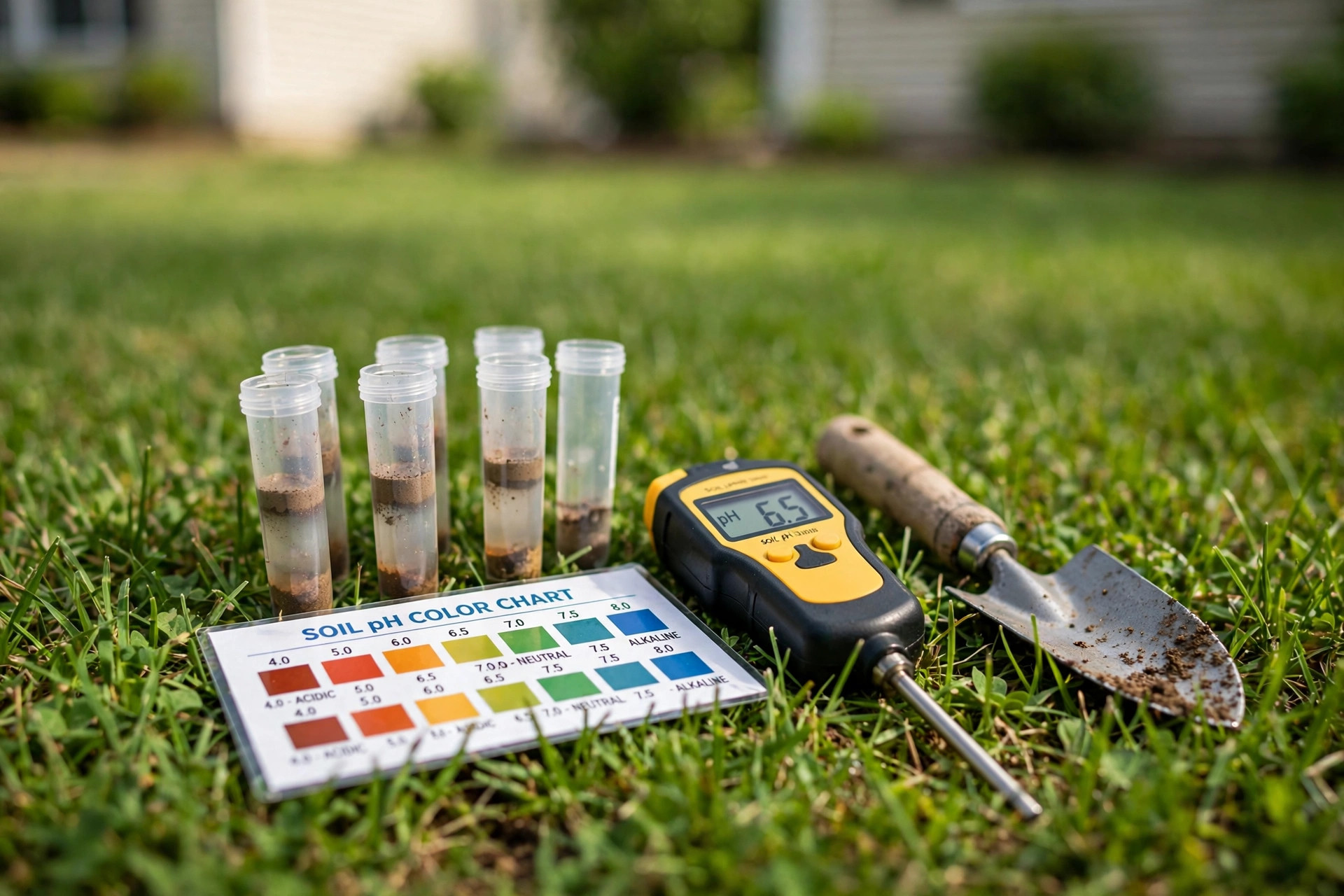
Many home owners spread fertilizer on their lawn and see little change. The grass stays thin. Bare spots remain. New seed fails to take hold. The cause is often not a lack of food. It is the soil itself. Grass grows best when soil pH sits in a narrow band, roughly between 6.0 and 7.0. When the soil drifts too far toward acid or alkali, roots cannot take up the nutrients that are already present. This is why lawn soil ph test kit reviews matter to the average yard keeper. A small test can save a season of wasted effort and money. It tells you what the soil needs before you buy a single bag of anything.
The pH scale runs from 0 to 14. A reading of 7 is neutral. Numbers below 7 mean the soil is acidic. Numbers above 7 mean it is alkaline. Most American lawns lean acidic, especially in regions with heavy rainfall. Rain washes calcium and magnesium out of the soil. Pine needles and certain mulches add to the effect over time. Soil that reads 5.5 or lower will hold grass back, no matter how much nitrogen you apply. On the other side, soil above 7.5 is rare but can occur near new concrete or limestone foundations. The fix in each case is simple, but you must know the starting number first.
Why Testing Your Soil pH Matters
Testing is cheap insurance. A bag of lime or sulfur costs far less than a season of fertilizer that goes to waste. When pH is wrong, nutrients lock up in the soil. Phosphorus, potassium, and iron become hard for roots to absorb. Grass turns pale or patchy. Weeds move in, because many weed species tolerate poor soil better than turf grass does. Moss is a common sign of acidic soil in shady areas. A quick test tells you whether these problems have a soil cause.
Testing also protects you from overcorrecting. Lime is slow and safe in the right dose, but too much raises pH more than you want. Sulfur and other acidifiers work faster and can swing the soil too far the other way. Blind application is guesswork. A test kit turns the guess into a plan. That is the plain value behind every good review of these products.
How Soil pH Test Kits Work: Lawn Soil Ph Test Kit Reviews
All kits measure the same thing, but they do it in different ways. Each type has strengths and weak points. The best choice depends on your budget, your patience, and how precise you need the answer to be.
Paper Strip and Color Capsule Kits
The simplest kits use a chemical dye. You mix a soil sample with water, add a capsule or a few drops of solution, and watch the liquid change color. You then match the color to a printed chart. The chart shows the pH in rough steps, often in half points or full points. These kits cost only a few dollars. They give an answer in minutes. They are the best fit for a home owner who wants a quick yes-or-no check.
The trade-off is precision. Color charts are hard to read in poor light. Two people may read the same sample differently. The kits also wear out. The chemicals lose strength after a season or two on the shelf. Still, for a first look at your soil, they are honest tools.
Probe and Digital Meter Kits
Probe meters measure pH with a metal sensor. You push the probe into moist soil and read the number on a dial or a small digital screen. The better models give readings to a tenth of a point. There is no mixing and no color matching. The test takes under a minute. Many meters also read soil moisture, which is a helpful extra.
The weak point is accuracy at low prices. Cheap probes drift. They need a firm push into damp soil to work, and dry or rocky ground gives false numbers. The sensor must stay clean. A film of soil or rust ruins the reading. With care, a mid-priced probe is a fine tool for yearly checks.
Mail-In Laboratory Kits
A lab kit comes with a small bag and a form. You take soil samples, mail them in, and wait for a written report. The lab uses calibrated instruments. The report gives pH to a fine decimal. It often includes nutrient levels and a lime recommendation for your exact grass type. This is the most accurate option by a wide margin.
The cost is higher, often fifteen to thirty dollars per sample, and you wait one to three weeks. For a home owner with a stubborn lawn problem, the wait is worth it. For a routine yearly check, it is more than most people need.
What to Look for When You Choose a Kit
A good kit starts with a clear chart or display. You should be able to read the result without squinting or guessing. For strip kits, look for a chart with printed colors that are bold and distinct. For meters, a large digital readout beats a tiny analog dial. If you have trouble telling greens from yellows, choose a meter and skip the strips.
Check how many tests the kit allows. A strip kit that does ten tests sounds fine until you learn that good sampling takes five or six cores from different spots. One test of one spot can mislead you. A kit with twenty or more tests lets you sample properly and retest after treatment. Probe meters have no per-test cost, which is their main appeal for people who test often.
Ease of use matters more than most buyers expect. Read the steps before you buy. The best kits need only soil, water, and a clean cup. Avoid kits that ask for distilled water, timers, and multiple transfers. Each extra step is a chance for error. Reviews from real buyers are useful here. Look for comments about whether the instructions were clear and whether the result was easy to read.
Durability counts for meters. A plastic probe that bends in firm soil is a waste of money. Stainless steel probes last longer. For strip kits, check the shelf life on the package. Buy only what you will use in one season.
Types of Kits Compared
Strip kits are the cheapest and fastest to learn. They suit renters and new home owners who want a quick picture. Their readings are rough, but rough is enough to catch a serious problem. If your strips read 5.0, you know lime is in your future.
Probe meters sit in the middle. They cost more up front but pay off over years of free tests. They suit the home owner who tests each spring and fall. Their readings are steadier than strips once you learn to keep the probe clean and push it into moist soil.
Lab kits are the most exact. They suit anyone fighting a long-term lawn problem or planning a large project like new sod. The written report takes the guesswork out of how much lime to apply and pairs well with a solid fertilizer plan for your region.
Many reviewers suggest a two-step method. Start with a cheap strip or probe kit. If the reading is far off, send a lab sample to confirm before you treat a large yard. This gives you speed first and certainty second.
Cost and Price
Home test kits range from about five dollars for a small strip kit to about fifty dollars for a sturdy digital probe meter. Capsule kits that test ten samples usually fall in the ten to twenty dollar range. Lab kits run fifteen to thirty dollars per sample, plus postage. County extension offices in many states offer lab testing for a small fee, sometimes under fifteen dollars, and their reports are excellent. Check your local extension service before you buy anything.
Price does not always track with quality in this market. Several low-cost strip kits earn strong reviews because they do one simple job well. At the same time, the cheapest probe meters earn the most complaints, because a bad sensor is worse than no sensor. A good rule is to buy the simplest type you will actually use. An expensive meter that sits in a drawer helps no one.
How to Take a Good Soil Sample
A kit is only as good as the sample you feed it. Take samples from several spots across the lawn, at least five for a small yard and more for a large one. Push a trowel or soil probe four inches deep and take a thin slice. Avoid spots near sidewalks, driveways, and downspouts, since these can skew the reading. Mix the cores in a clean bucket. Take your test portion from the mix.
Test when the soil is moist but not wet. Bone-dry soil gives poor readings with probes. Freshly fertilized soil can skew the result, so wait at least a month after feeding. The best times to test are early spring and early fall, before you plan any lime, seed, or feed work. Fall testing is smart because it gives you time to act before overseeding in fall.
Care and Upkeep of Your Kit
Strip and capsule kits need a cool, dry shelf. Heat and humidity shorten their life. Keep the chart dry and out of direct sun, since fading makes color matching harder. Write the date on the box when you open it and discard leftover chemicals after one season.
Probe meters need cleaning after every use. Wipe the sensor with a damp cloth and dry it before storage. Never leave a probe stuck in the ground. Store the meter in its case, out of freezing weather. Some models need a fresh battery each season. A meter that reads odd numbers in a glass of clean water is telling you it needs service or replacement.
Lab kits have no upkeep, but keep a copy of your report. Soil pH changes slowly. A report from two years ago is still a useful baseline when you compare it with a new reading.
Safety
Soil test kits are low-risk products, but a few care points apply. The dye chemicals in strip and capsule kits can stain skin and clothes. Wear gloves and work on newspaper. Keep the chemicals away from children and pets. Wash your hands after handling soil samples, since yard soil can carry bacteria.
Probe meters have a sharp tip. Push with steady pressure and keep fingers clear. Do not force a probe into rocky or frozen ground. For mail-in kits, seal the sample bag well and wash the trowel after use. None of these products are food, and none should be stored near food. If a chemical splashes in your eyes, rinse with clean water for several minutes.
Frequently Asked Questions
How often should I test my lawn soil pH?
Once a year is enough for most lawns. Test in early spring before the growing season. If you applied lime, wait six months and test again to see how the soil responded. Lawns with known pH problems may need a test each spring and fall until the numbers settle.
What pH does grass like best?
Most turf grasses do well between 6.0 and 7.0. Cool-season grasses such as fescue and bluegrass sit happiest near 6.5. Warm-season grasses such as Bermuda and zoysia accept a slightly wider range. St. Augustine grass, common in the South, prefers 6.0 to 6.5. Check seed or sod labels for your exact type.
Can I trust a five-dollar test kit?
Yes, within limits. A cheap strip kit will not give you a lab-grade number, but it will show a clear problem. If the strip reads strongly acidic, the soil is acidic. The kit is less trustworthy for fine decisions, such as choosing between two lime rates. For that, confirm with a meter or a lab test.
Why do my readings differ from spot to spot?
Soil varies across a yard. Spots near trees, gardens, and concrete differ from open lawn. That is normal. It is also why you mix several cores before testing. A single spot test can mislead you. If one area is far off from the rest, treat that area on its own.
Will lime fix my pH problem right away?
No. Pelletized lime works slowly, often taking months to change the soil fully. Apply it in fall when you can, so winter rain and snow can work it in. Retest in spring. Fast-acting products exist, but they are easy to overuse. Slow and steady wins with soil.
Do I need to test if my lawn looks fine?
Not every year, but a test every two or three years is still wise. pH drifts over time. Catching a slow drift early is easier than fixing a lawn that has gone thin. Think of it as a checkup for your yard.
A Final Word
A soil pH test kit is one of the smallest purchases a home owner can make, and one of the smartest. It takes the mystery out of a struggling lawn. It tells you whether lime, sulfur, or nothing at all is the right move. Start simple. Take good samples. Trust the reading, and act on it. Your grass will show the difference by the next season. Independent product reviews, such as those at Consumer Reports, can help you compare models before you buy, and maker guides like Toro and John Deere offer solid lawn care background for the steps that follow.
References
Consumer Reports. (n.d.). Product reviews and ratings. https://www.consumerreports.org Toro. (n.d.). Yard care equipment and guides. https://www.toro.com Deere & Company. (n.d.). Lawn care equipment and tips. https://www.deere.com
Was this guide helpful?

About Lisa Anderson
The My Garden US editorial team writes practical, in-depth home and garden guides for American homeowners — tested advice, no fluff.