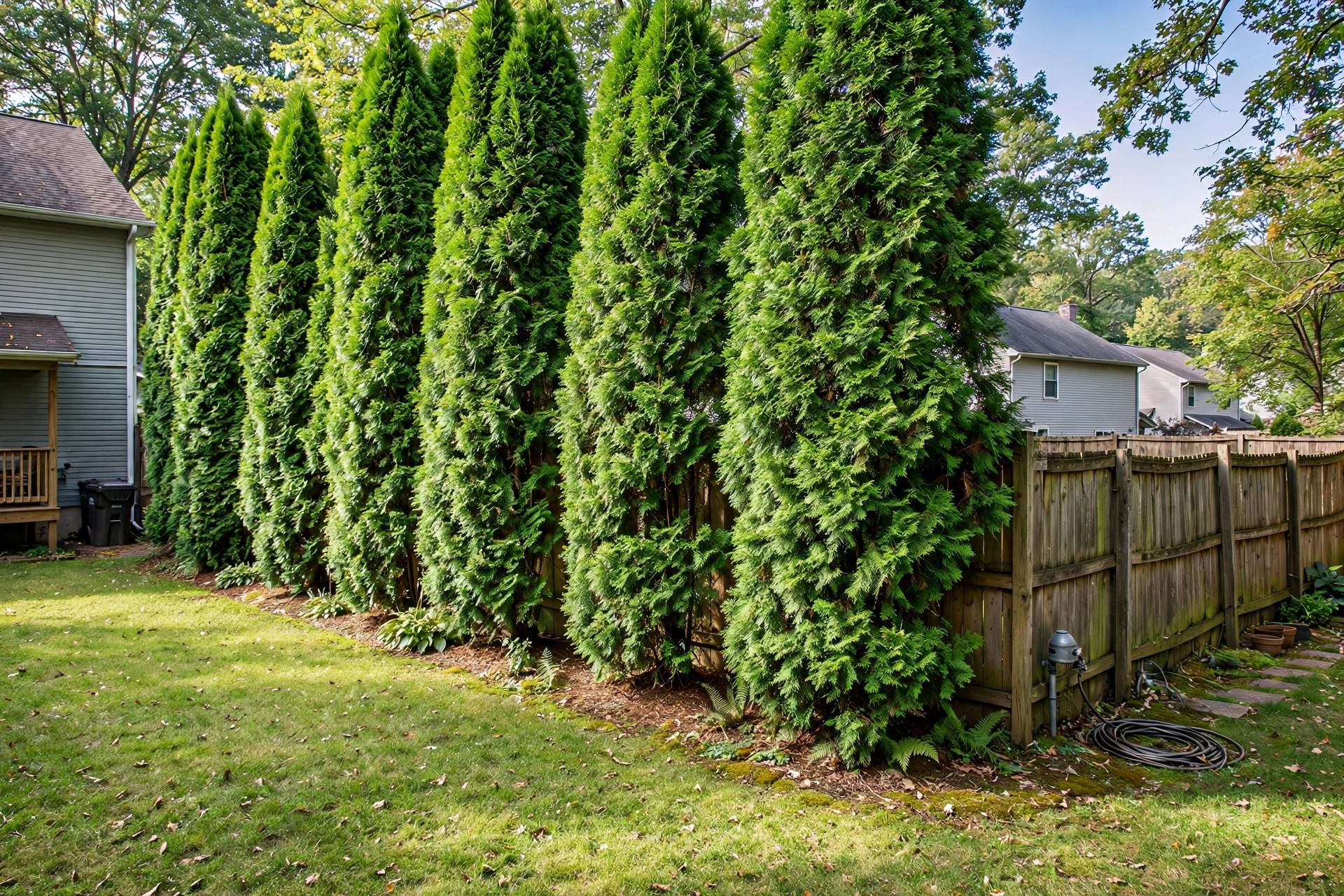

A chain link fence keeps dogs in and strangers out. It does not block a view. Many homeowners want both. Privacy hedge plants fast growing for fences give a second answer. They grow along the fence line and turn it into a living green wall. In two or three seasons, they can hide a neighbor’s yard, a busy road, or a shed.
A living fence costs less than a wood fence of the same height. It also looks softer. Green walls change with the seasons. They attract birds and give shade. This guide explains how to choose the right plants, how much they cost, and how to care for them.
Why a Living Fence Is Worth the Work
Wood fences rot. Metal fences rust. A hedge renews itself every spring. It grows taller each year and fills gaps on its own. When one plant dies, you replace one plant. You do not replace a whole panel.
A hedge also helps the whole street. Leaves slow wind and cut noise from traffic. Roots hold soil and stop erosion. Birds nest in the branches. For many families, a green screen feels calmer than a bare fence.
The main cost is time. Fast growing privacy hedge plants still need one to three years to reach full height. The wait is worth it. Once they are up, they ask little.
How to Choose Fast Growing Privacy Hedge Plants for Fences: Privacy Hedge Plants Fast Growing for Fences
Not every shrub fits every yard. The right pick depends on your climate, your soil, and how much work you want to do. Think through these points before you buy.
Know your climate zone
The United States has many climate zones. A plant that thrives in Georgia may freeze in Minnesota. Check the plant tag for its hardiness zone. Buy only plants rated for your zone.
Cold zones need tough evergreens like arborvitae or holly. Warm zones can use glossy privet or podocarpus. If your winters drop below zero, skip the tender plants. They will brown and die.
Check the mature height and width
Plant tags show the mature size. A plant that grows to 20 feet will not stop at 8 feet. Do not fight nature. Pick a shrub whose natural height matches what you want.
For a privacy screen, most people want 8 to 12 feet. Measure your fence. Then add the plant spacing. Crowding plants too close is a common mistake. They fight for light and water. Space them at about two thirds of the mature width.
Sun, soil, and water needs
Watch your fence line for a full day. Mark which parts get sun and which parts stay in shade. Many fast growing hedge plants need at least six hours of sun. Some, like yew and holly, take shade.
Dig a small hole and check the soil. Clay holds water and can rot roots. Sand drains fast and dries out. Most hedges like loam that drains well. A simple soil test kit from a garden center tells you the pH. Most screening shrubs like soil that is near neutral.
Plan your spacing and layout
A quick growing hedge plants for backyards project starts on paper. Measure the fence line first. Then note gates, pipes, and utility lines. Call your local utility office before you dig. This call is free in most states.
Mark plant centers with small stakes. Walk the line and look from the house. The stakes show how the screen will feel. Move them until the spacing looks right. Most evergreens go two to three feet apart. Fast types like Leyland cypress need four to five feet. Good layout work now saves years of crowding later.
Types of Fast Growing Privacy Hedge Plants
Garden centers sell dozens of screening plants. They fall into three main groups. Each group has its own strengths.
Evergreen privacy shrubs
Evergreen privacy shrubs keep their leaves all year. They give the best privacy in winter. The most popular choice is the Thuja Green Giant. It grows three to five feet per year. It reaches 25 to 40 feet if you let it. Shear it once a year to hold it at your fence height.
Leyland cypress grows even faster, up to four feet per year. It forms a thick wall of soft green foliage. Give it room. It spreads wide at the base.
Privet is an old favorite. It grows two to three feet per year and takes heavy shearing. Japanese holly and American holly grow slower but last for decades. They work well in cold zones.
For narrow yards, try Sky Pencil holly or upright juniper. They grow tall and thin. They fit where wide shrubs will not.
Flowering privacy shrubs
Some homeowners want flowers with their screen. Rose of Sharon grows six to eight feet per year once set. It blooms in late summer when few other shrubs do. Forsythia grows fast too, but it loses its leaves in winter.
Lilac makes a tall fragrant hedge. It needs full sun. Hydrangea paniculata grows eight to ten feet and carries big white blooms. These flowering types need a little more care than plain evergreens.
Bamboo screens
Bamboo is the fastest of all. Some types grow ten feet in a single season. But bamboo spreads by underground runners. Plant it in a strong root barrier. Clumping bamboo is safer than running bamboo. It stays where you put it.
Check local rules before you plant bamboo. Some towns ban running types. A living screen of fast growing evergreen privacy shrubs is easier for most yards, though bamboo suits a homeowner who needs cover this summer.
Cost and Price of a Privacy Hedge
A living fence costs far less than a wood fence. A wood privacy fence runs 15 to 40 dollars per foot installed. A hedge of fast growing privacy hedge plants runs far lower per foot, but the price depends on plant size and spacing.
Small starter plants cost 10 to 25 dollars each. A three gallon shrub costs 25 to 50 dollars. A seven gallon tree costs 75 to 150 dollars. Larger plants give instant cover. Smaller plants save money and catch up in a few years.
Work a sample. A 50 foot fence line needs about 17 plants spaced three feet apart. At 30 dollars each, that is about 510 dollars for plants. Add soil, mulch, and fertilizer for another 100 to 150 dollars. The total sits near 650 dollars.
You can also plant in stages. Cover the worst view this year. Add more plants next year. This spreads the cost and the work.
Planting, Care, and Upkeep
Hedges are not hard to care for. A little work in the first year pays off for decades. Follow these steps and your screen will fill in fast.
Planting day basics
Plant in spring or fall. The air is cool and the soil holds moisture. Dig each hole twice as wide as the root ball and just as deep. Set the plant so the top of the root ball sits level with the ground.
Backfill with the soil you removed. Mix in compost if your soil is poor. Water each plant deeply right away. Spread two to three inches of mulch around the base. Keep the mulch away from the trunk.
Stagger the plants if you want a thick screen fast. Two rows set three feet apart fill in quicker than one straight row.
Watering and feeding
New hedges need water. For the first year, water deeply once or twice a week. The soil should stay moist but not soggy. A slow drip hose works well along a fence line.
Feed in early spring with a balanced slow release fertilizer. Do not overfeed. Too much nitrogen makes weak growth that breaks in wind. A soil test tells you what your soil lacks.
After the first two years, most hedges need little water. Deep roots find moisture on their own. During long dry spells, give them a good soak.
Trimming and shaping
Shear formal hedges once or twice a year. The best time is late spring after new growth firms up. Cut the sides so the top is slightly narrower than the base. This shape lets light reach the lower branches.
Read reviews of battery powered hedge trimmers before you buy. A sharp trimmer makes clean cuts that heal fast. Makers of yard tools sell battery models sized for tall hedges, and gas models often run on small engines built for long cutting sessions. New plants grow beside lawns that also need mowing. Many owners keep the strip along the hedge trimmed with lawn equipment made for tight fence lines.
Let informal hedges grow natural. Just remove dead or crossing branches. Evergreen screens need less trimming than deciduous ones. If you need to cut growth along the ground, fence line trimmer work keeps the edge neat. For thicker limbs, read up on gas hedge trimmers for homeowners before tackling heavy branches.
Safety for Kids, Pets, and Property Lines
Most hedge plants are safe. A few are not. Yew berries and oleander leaves are poison. If small children or pets play near the fence, check each plant before you buy. Ask the nursery about pet safe options.
Keep hedges off the property line. Plant at least two feet inside your boundary. Fast shrubs can cross into a neighbor’s yard. Trim your side each year. Talk to your neighbor before you plant. A friendly talk now avoids a fight later.
Check fence rules in your area. Some towns limit hedge height in front yards. Backyard hedges usually have fewer rules. Corner lots may have sight rules near the street.
Wear gloves when you trim. Some leaves cause skin rash. Clean tools between cuts if you see disease. A quick wipe with rubbing alcohol stops the spread.
Frequently Asked Questions
How fast do privacy hedge plants really grow?
Fast growers add two to five feet per year. Thuja Green Giant and Leyland cypress are among the fastest. In good soil with water, they can reach eight feet in two years. Slow evergreens like holly add one foot per year. The tag gives a range. Good care hits the high end.
Can I plant a hedge in front of an old fence?
Yes. Plant two to three feet in front of the fence. The fence then works as a back support. Do not plant against the fence. You need room to trim and to let air move. Air flow stops disease.
Will a hedge block all noise from the road?
It helps but it does not silence a road. Dense evergreens cut high sounds and soften low sounds. A hedge works best with a fence behind it. Together they cut more noise than either one alone. Do not expect a soundproof wall.
What is the fastest privacy hedge for a backyard?
For most zones, Leyland cypress or Thuja Green Giant. They grow three to five feet per year and keep their leaves all winter. In warm zones, clumping bamboo grows even faster. Pick based on your climate and how much trimming you will do.
How do I make my hedge grow faster?
Give new plants deep water, good mulch, and spring fertilizer. Do not plant too deep. Keep grass away from the base. Grass steals water and food. A clean mulch ring lets young roots grow fast. Be patient. The first year builds roots. The second year builds height.
Do privacy hedges attract pests?
Any thick plant can host insects. Watch for bagworms on arborvitae and scale on holly. A strong spray of water knocks off small pests. Keep the base free of fallen leaves. Clean beds get fewer problems. Healthy plants fight off most trouble on their own.
A Short Final Word
A fence of wood or metal works from day one. A hedge works for a lifetime. Privacy hedge plants fast growing for fences ask for a few seasons of patience. In return they give green cover, lower noise, and a yard that feels private.
Start with the right plant for your zone. Space it well. Water it the first year. Trim it each spring. The work is simple. The result lasts for decades. Your fence line will look better every year.
References
Toro. (n.d.). Yard tools and lawn equipment. https://www.toro.com Deere & Company. (n.d.). Lawn and garden equipment. https://www.deere.com Briggs & Stratton. (n.d.). Small engines for outdoor power equipment. https://www.briggsandstratton.com
Was this guide helpful?

About Sarah Mitchell
The My Garden US editorial team writes practical, in-depth home and garden guides for American homeowners — tested advice, no fluff.
You May Also Like
How to Kill Nutsedge in Lawns: A Plain Guide for Homeowners
January 20, 2026 0 views
Smart Sprinkler Timer Rebates for California Homes: A Plain Guide
August 3, 2026 0 views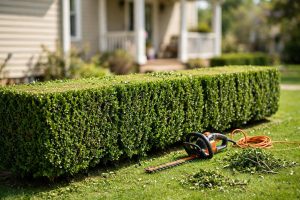
How to Trim Hedges With an Electric Trimmer: A Plain Guide
July 15, 2026 0 views