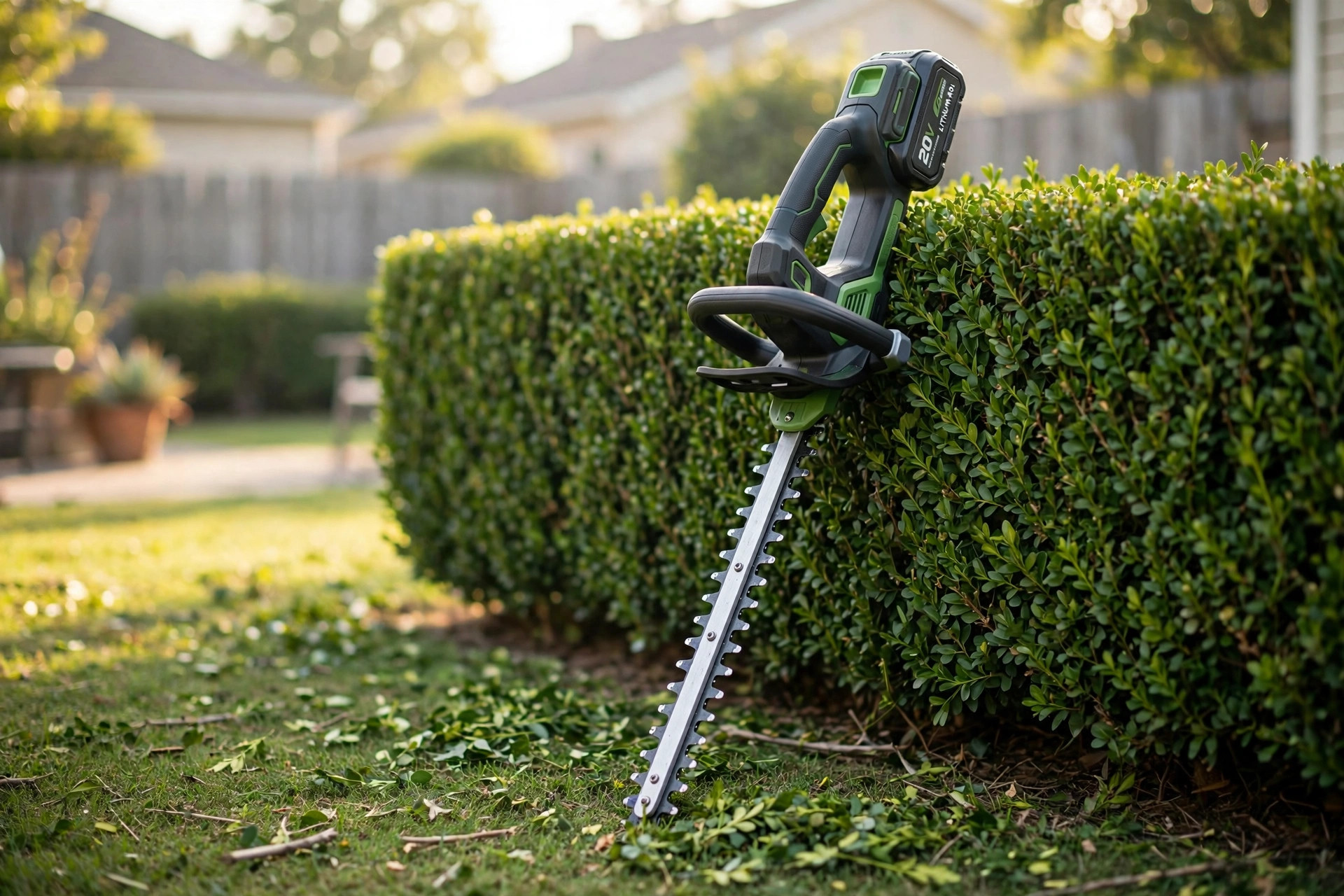

A hedge is the frame around a home. When it grows wild, the whole yard looks tired. When it is cut clean, the house looks cared for.
This is why battery powered hedge trimmer reviews 2026 draw so much interest from American homeowners. The tool has moved from a novelty to a serious choice. Gas trimmers once ruled this work. They were loud and heavy. They needed fuel mixed with oil at the right ratio. Corded electric trimmers solved the fuel problem but tied the user to a cord that always caught on a branch. Battery models remove both troubles.
Modern lithium-ion packs now drive blades through tough growth. The better models run long enough to finish a full hedge row on one charge. They start with a button press. They weigh less than gas units. This article explains what matters when you shop: power, blade size, battery run time, comfort, and price. It gives facts, not sales talk.
Why Battery Power Took Over
Ten years ago a battery trimmer was a light tool for light work. That has changed. Battery cells hold more energy now. Motors waste less of it. The result is a tool that cuts as well as a small gas trimmer for most home jobs.
Homeowners notice three gains. The first is quiet. A battery trimmer makes a hum, not a roar. You can work early in the morning without trouble from neighbors. The second is clean air. No exhaust blows in your face. The third is simple care. There is no fuel to mix, no carburetor to clog, no spark plug to change.
The limits matter too. A battery is a fixed tank of energy. When it runs out, you wait for the charger or swap in a second pack. Heavy, overgrown hedges still favor gas power in some cases. But for the shaped hedges most homes have, battery tools do the job well.
What to Look for When You Buy: Battery Powered Hedge Trimmer Reviews 2026
Battery System and Run Time
Look at the battery before the tool. Most brands build a system of tools that share one battery. A 40-volt or 56-volt pack suits most hedges. Higher voltage often means more cutting force and longer run time, but it also adds weight.
Check the amp-hour rating. A 4.0 amp-hour pack stores twice the energy of a 2.0 amp-hour pack at the same voltage. Real run time depends on how hard the motor works. Light trimming of boxwood may give an hour. Thick privet may drain the same pack in twenty minutes.
Buyers who own other tools from the same brand should pick a trimmer that uses the same battery. This saves money and means a spare pack is always close. Reviews at independent testing groups often measure run time under real load, and those numbers are more useful than the number on the box.
Blade Length and Cut Capacity
Hedge trimmer blades run from 18 to 26 inches on most home models. A longer blade covers more hedge in each pass, which speeds the work. It also adds weight and makes tight corners harder.
Cut capacity is the widest branch the blade can handle. Home trimmers usually cut branches up to three-quarters of an inch thick. Anything thicker needs loppers or a saw. Forcing the trimmer through thick wood dulls the blades and strains the motor.
Dual-action blades move both edges in opposite directions. This cuts smoother and shakes less than single-action designs. Almost every quality model now uses dual action. Serrated teeth grip branches so they do not slip out of the cut.
Weight and Comfort
You will hold this tool at arm’s length for long stretches. Weight matters more than it seems. Most battery trimmers weigh between 6 and 10 pounds with the battery fitted. Try the balance too. A tool that is nose-heavy tires the arms fast.
Look for a wraparound front handle. It lets you hold the trimmer from several angles, which helps when you cut the top and the sides of a hedge. A rotating rear handle is a fine extra on better models. Vibration control helps on long jobs. Gloves with padding add comfort on any model.
Types and Options
Standard Double-Action Models
The standard trimmer is a straight tool with a long blade. It suits hedges up to chest height. Most homeowners need nothing more. Prices range from about 80 to 200 dollars for the tool, with batteries and chargers adding to the cost if you do not already own them.
These models work well for boxwood, privet, holly, and yew. They cut clean lines on formal hedges. Many brands sell the tool alone and in kits. The kit with a battery and charger usually costs less than buying the parts apart.
Pole and Extended-Reach Models
Tall hedges call for a pole trimmer. The cutting head sits at the end of a shaft that may stretch to 8 or 10 feet. You keep your feet on the ground and reach the top of the hedge safely.
Pole models cut slower than standard ones because the head is smaller and the shaft flexes a little. They still beat a ladder for safety. Some systems use one power head with swap tools, so the same motor drives a trimmer head and other yard tools. If you already think about other cordless yard tools, a shared system is worth a look.
Brushless Motor Models
Brushless motors use electronics instead of brushes to drive the rotor. They run cooler, last longer, and give more power from the same battery. Most mid-range and high-end trimmers now use them.
The price is higher. For a homeowner who trims twice a year, a brushed motor may be enough. For large yards or frequent work, brushless pays back in longer run time and longer tool life. Tool makers like RYOBI and Greenworks both offer brushless options in their battery lines.
Cost and Price
A basic battery trimmer kit starts near 100 dollars. Mid-range kits with a 40-volt battery run 150 to 250 dollars. High-end kits with large batteries and long blades reach 300 dollars and more.
Look past the sticker price. Count the cost of extra batteries if your hedges are large. A second pack costs 60 to 150 dollars by brand and size. Some buyers save by choosing a trimmer from the same battery family as their mower or blower.
Over five years, battery tools often cost less to run than gas tools. There is no fuel to buy and no engine service. The battery itself wears out in time, often after three to five years, and that replacement is the main long-term cost. Retailers such as The Home Depot list kit prices side by side, which makes comparison easy.
Care and Upkeep
Blades do most of the work, so keep them sharp and clean. Sap builds up on the teeth and slows the cut. Wipe the blades with a cloth dampened in soapy water after each use. A light spray of tool oil keeps the teeth moving free.
Sharpen the blades once or twice a season with a flat file, following the factory angle. Remove the battery first. Wear gloves. The teeth are sharp even when they feel dull against wood.
Store the battery indoors. Heat and deep cold shorten its life. Charge it to about half full for winter storage. Check the vents on the motor housing and blow out dust. Plant care guides from Scotts and Pennington remind growers that clean cuts heal faster, so sharp blades also help the hedge.
Safety
A hedge trimmer is a saw with many teeth. Treat it with respect. Wear eye protection, gloves, and long sleeves. Keep both hands on the handles while the blades move.
Clear the work area first. Look for wire, string, and hidden stakes in the hedge. Keep children and pets well away. Cut in daylight or good light. Never reach under the blade to clear a jam while the battery is in the tool. Remove the pack first, then clear the blockage.
Ladders and trimmers mix poorly. If you cannot reach a branch from the ground, use a pole trimmer instead of climbing. Guides at LawnStarter and The Spruce both stress this point for home users.
What Owners Praise and What They Fault
Reviews for 2026 show clear patterns. Owners praise three things most often. The first is the lack of noise. Many writers say they trim at seven in the morning with no complaint from the street. The second is the easy start. One button replaces the pull cord ritual. The third is light weight. Owners with small frames report less arm ache than with gas models.
Complaints repeat as well. The most common is short run time on thick growth. A pack that lasts an hour on boxwood may last twenty minutes on old privet. Buyers advise a second battery as a matter of course. The next complaint is blade clogging in wet wood. Several reviewers note that cutting after rain gums the teeth with sap. Wiping the blades mid job solves it.
A third complaint concerns cheap chargers. Some kits ship with slow chargers that need three hours for a full pack. Fast chargers cost more but refill a pack in under an hour. Owners who trim large hedges call the fast charger worth the price.
Fit and finish draw mixed notes. Handles get praise for soft grips. Blade covers get faulted when they fit loose. A loose cover can fall off in the shed and leave sharp teeth bare. Owners suggest a bungee cord as a simple fix.
Brand loyalty runs strong in the reviews. Writers who own a full line of one brand rarely switch. They cite shared batteries as the main reason. This matches our advice above. Pick the trimmer inside the battery family you already trust, and you will likely stay happy.
Price satisfaction is high at the mid range. Owners who paid 150 to 220 dollars report the best value. They got enough power and run time without waste. Budget buyers near 100 dollars are mostly pleased but wish for longer blades. High end buyers above 300 dollars praise the power but admit it exceeds their needs.
Frequently Asked Questions
How long does the battery last? Run time depends on the pack and the work. Light shaping may give 45 to 60 minutes. Heavy cutting in thick growth may give 20 to 30 minutes. Carry a second pack for big jobs.
Can a battery trimmer cut thick branches? Most home models cut branches up to three-quarters of an inch. For thicker limbs, use loppers or a pruning saw first, then shape with the trimmer. Our notes on cordless saws cover that step.
Are battery trimmers as strong as gas trimmers? For shaped hedges and yearly growth, yes. For neglected hedges with woody stems, gas still has an edge. First clear the worst growth with heavier tools, like a string trimmer for thick weeds, then keep it neat with the hedge trimmer.
Do all brands’ batteries fit all tools? No. Each brand uses its own battery shape and voltage system. Stay inside one brand family to share packs between tools.
What maintenance does the battery need? Little. Keep it cool, dry, and out of full sun. Do not store it fully dead or fully charged for months. Follow the maker’s guide for best life.
When is the best time to trim hedges? Late spring and early fall suit most shrubs. Avoid trimming in extreme heat or when birds may nest in the hedge. Equipment makers such as Toro and ECHO publish seasonal yard guides worth a look.
A Final Word
Battery hedge trimmers have earned their place in the shed. They are quiet, clean, and strong enough for the hedges most homes grow. Pick a trusted battery system, match the blade to your hedges, and buy the run time your yard needs. The right tool turns a long chore into a short, pleasant job.
References
Consumer Reports. (n.d.). Product reviews and ratings. https://www.consumerreports.org ECHO USA. (n.d.). Outdoor power equipment. https://www.echo-usa.com Greenworks Tools. (n.d.). Battery powered outdoor equipment. https://www.greenworkstools.com LawnStarter. (n.d.). Lawn care guides and services. https://www.lawnstarter.com Pennington. (n.d.). Lawn and garden products. https://www.pennington.com RYOBI Tools. (n.d.). Power tools and outdoor products. https://www.ryobitools.com Scotts. (n.d.). Lawn care products and advice. https://www.scotts.com The Home Depot. (n.d.). Home improvement products. https://www.homedepot.com The Spruce. (n.d.). Home and garden guides. https://www.thespruce.com Toro. (n.d.). Yard care equipment. https://www.toro.com
Was this guide helpful?

About James Carter
The My Garden US editorial team writes practical, in-depth home and garden guides for American homeowners — tested advice, no fluff.
You May Also Like

The Lawn Mower Oil Change Kit for Homeowners: What It Is and How to Use It
June 12, 2026 0 views
Best Battery Leaf Blower for Patios: A Complete Buying Guide
June 11, 2026 0 views
Lawn Aeration vs Dethatching: Which One Comes First?
June 29, 2026 0 views