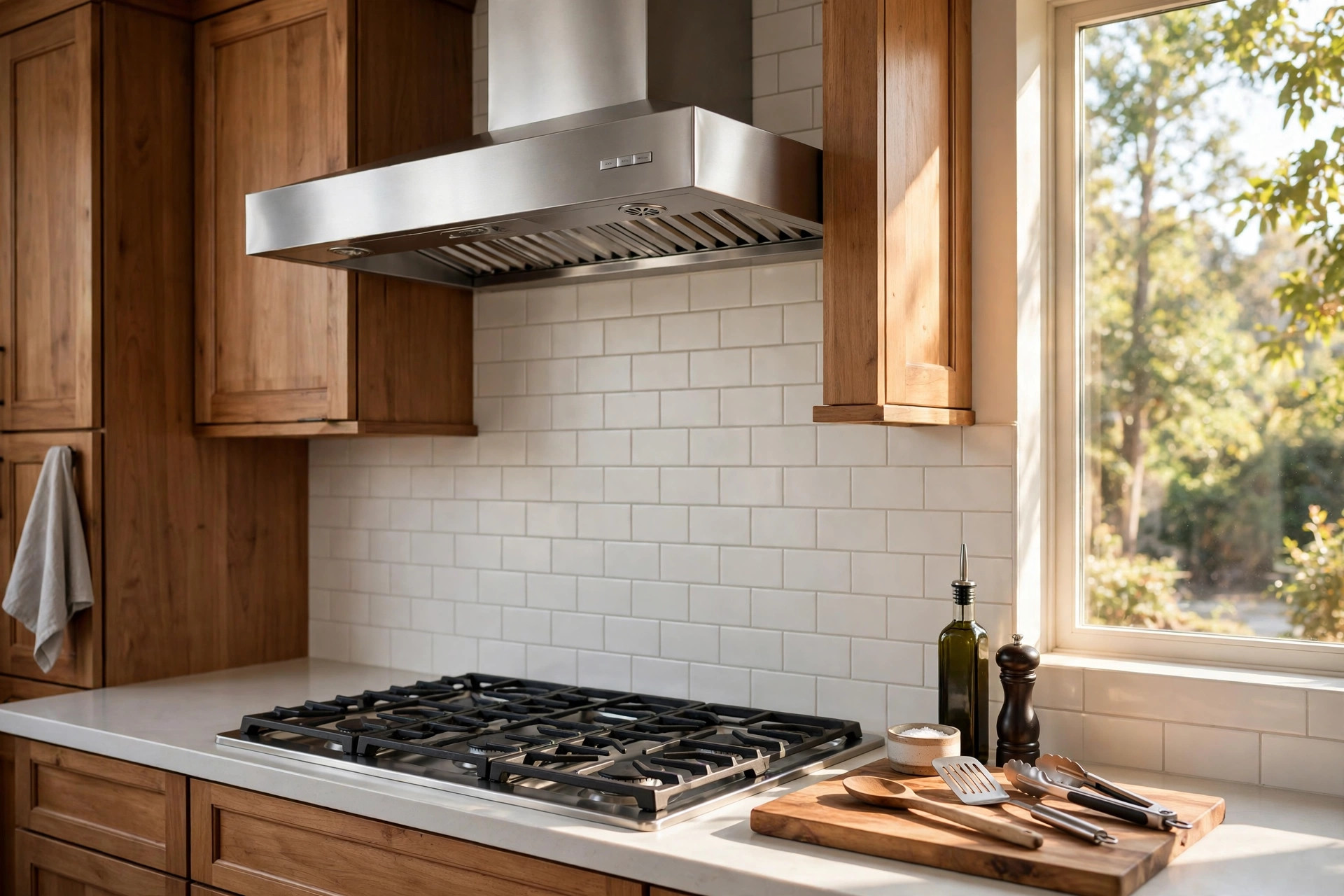

A stainless range hood is one of the most useful tools in an American kitchen. It pulls smoke, steam, and cooking smells out of the air. It keeps grease from settling on cabinets and walls. And it does all of this while looking sharp above the range. When shoppers type stainless range hoods deals near me into a search box, they want two things at once: a fair price and a hood they can trust for years. This guide explains how to get both. It covers what these hoods do, how to judge quality, what the common types cost, where local deals really come from, and how to keep a hood running well long after the sale.
Why a Stainless Range Hood Matters
Cooking fills the air with more than good smells. Frying, searing, and grilling send out fine grease particles, steam, and smoke. Without a vent, that grease lands on cabinet doors, tile grout, and light fixtures. Over time it leaves a sticky film that is hard to clean. A range hood moves that air out of the kitchen before the grease can settle.
Stainless steel is the most common choice for a reason. The metal resists heat and moisture. It does not chip or peel like painted finishes can. It wipes clean with a damp cloth and a little dish soap. It also matches most ranges, dishwashers, and refrigerators, so the kitchen looks planned and calm rather than patched together.
There is a health side to this too. Gas ranges release small amounts of combustion byproducts when they burn. A hood that vents to the outside removes much of that from the room. Families who cook often notice less lingering odor and less haze in the kitchen air. The quiet hum of a fan is a small price for that comfort.
What to Look For When You Shop: Stainless Range Hoods Deals near Me
Not every hood is built the same. A few key details separate a good value from a poor one.
Airflow power
Hoods are rated in cubic feet per minute, or CFM. This number tells you how much air the fan can move. A small electric range needs less power than a large gas cooktop. A common rule is about 100 CFM for every 10,000 BTUs of cooktop heat. For most home ranges, 300 to 600 CFM is plenty. More power is not always better. An oversized fan can be loud and can waste energy.
Ducted or ductless
A ducted hood sends air outside through a duct. This is the better option. It truly removes smoke and moisture from the home. A ductless hood passes air through a filter and blows it back into the room. It catches some grease and odor but leaves moisture behind. If your kitchen already has a duct, use it. If not, ask a contractor what adding one would cost before you buy.
Noise level
Fans are rated in sones. A quiet hood runs at about 1 to 3 sones on low speed, roughly the level of a soft conversation. Some bargain models roar at high speed. If your kitchen opens to a living room, noise matters. Check the sone rating before you fall in love with a price tag.
Filter type
Baffle filters are the workhorse choice. They are metal channels that trap grease and can go in the dishwasher. Mesh filters are lighter and cheaper but clog faster. Charcoal filters are for ductless models and must be replaced, not washed. Dishwasher-safe baffle filters save money and effort over the years.
Size and fit
The hood should be at least as wide as the cooking surface. A 30-inch range pairs with a 30-inch hood. A 36-inch range needs a 36-inch hood. Mounting height matters too. Most makers suggest 24 to 30 inches above the cooktop. Too high and the hood cannot catch the smoke. Too low and it gets in the way of tall pots.
Finish and build
Look for welded seams and a solid feel. Thin sheet metal can dent during install and can rattle at high fan speed. Brushed stainless hides fingerprints better than a mirror shine. Some models have a special coating that resists smudges. Touch the display model in the store if you can. Weight and stiffness tell you a lot.
Types of Stainless Range Hoods
Shoppers who search for stainless range hoods deals near me will meet four main styles. Each suits a different kitchen.
Under-cabinet hoods
These mount beneath the cabinets above the range. They are the most common and often the least costly. A good under-cabinet model with solid airflow sells for modest money. If your cabinets are already in place, this type installs with the least fuss.
Wall-mount chimney hoods
These attach to the wall and rise to the ceiling like a chimney. They suit ranges that sit against a wall with no cabinets above. They cost more than under-cabinet models because of the extra metalwork. But they make a strong visual statement and often move more air.
Island hoods
These hang from the ceiling over a kitchen island. They need ceiling support and a duct run through the ceiling. They are the priciest of the common types. Island kitchens gain a true centerpiece, and the 360-degree design catches smoke from every side.
Insert liners
These hide inside a custom wood hood or cabinet. Only the controls and filters show. They are popular in classic and farmhouse kitchens. Prices vary widely with power and size. A well-chosen insert pairs old-world looks with modern function.
Cost and Price: Finding Deals Near You
A stainless range hood can cost anywhere from under one hundred dollars to well over two thousand. Most homeowners land between 200 and 800 dollars for a solid unit. The search for stainless range hoods deals near me works best when you know where discounts actually come from.
Big-box stores and local showrooms
Large home improvement stores carry many models in stock. They run weekend sales, holiday events, and clearance on floor models. Local appliance dealers may match or beat those prices, especially if you buy the hood with a range. Ask the dealer about open-box units. These are returns or display pieces sold at a steep discount with the warranty intact.
Scratch-and-dent sections
A tiny dent on the side of a hood that faces the wall means nothing in daily use. Scratch-and-dent outlets sell such units for 30 to 60 percent less. Inspect the unit before you buy. Check that the fan runs, the lights work, and all parts are in the box.
Holiday and seasonal sales
Major sales cluster around Memorial Day, Labor Day, Black Friday, and the Fourth of July. Appliance makers also clear old models in late summer when new lines arrive. If you can wait a few weeks, patience often pays.
Online prices versus local prices
Online sellers sometimes beat local prices, and you can read full spec sheets at your own pace. You can start with a stainless range hoods buying guide usa to compare features before you hunt prices. Local stores let you touch the metal and hear the fan. A smart approach is to research online and buy local when the price is close. Local shops often include delivery and help with install.
Comparing real prices
A “deal” is only a deal if the starting price was honest. Some sellers raise the list price before a sale. Check the price of the same model at two or three places. Read the specs, not just the headline. A 400-CFM hood with dishwasher-safe filters at 350 dollars beats a 200-CFM hood at 250 dollars in real value. For a wider view of the market, browse stainless range hoods for sale usa listings alongside local flyers.
Installation costs
Budget for install as well as the unit. A simple swap of an under-cabinet hood can cost 100 to 250 dollars in labor. A new duct run through a wall or roof can add 300 to 600 dollars or more. Get the install quote before you buy the hood. A cheap hood with a costly install is no bargain.
Retail experts at Home Depot and Lowe’s publish buying guides that walk through these price points. Product testers at Consumer Reports rate hoods for airflow, noise, and ease of cleaning, which helps you judge whether a low price is worth it. Hands-on project advice from Bob Vila covers what installers charge in different regions.
Care and Upkeep
A stainless range hood asks for little, but it needs regular care. Grease builds up in the filters first. Wash metal filters in hot soapy water every month, or run them through the dishwasher. Clogged filters choke airflow and make the fan work harder.
Wipe the steel shell with a soft cloth and mild soap. Always wipe with the grain of the brushed finish. Harsh scrubbers scratch the surface. A dab of mineral oil on a cloth gives the steel a soft shine and helps resist fingerprints.
Check the duct once a year. Birds and insects can nest in outside vents. A blocked duct traps moisture and can be a fire risk. Make sure the outside flap opens freely and closes when the fan is off.
Replace light bulbs with the type the maker lists. Many new hoods use LED lamps that last for years. If your hood is ductless, change the charcoal filter on the schedule in the manual. A spent filter does nothing but block air.
Safety
A range hood deals with heat, grease, and electricity. Respect all three. Turn off the breaker before you clean inside the unit or change parts. Keep the filters clean, because grease-soaked filters near an open flame are a known fire hazard.
Mount the hood at the height the maker states. A hood hung too low can overheat. Keep a working smoke detector in or near the kitchen. Never leave frying food alone, hood or no hood.
If the hood vents through the roof or wall, seal the duct joints with metal tape. Leaks send grease into wall cavities, where it is hard to reach. When in doubt, hire a licensed installer. The fee is small next to the cost of a kitchen fire.
Government and safety guidance on kitchen ventilation appears on Energy Star, which lists efficient models and explains how proper venting cuts indoor pollutants. Appliance makers such as Whirlpool and GE Appliances publish install manuals with exact clearances for their models. For German-engineered quiet fans, Bosch Home shows how low-sone designs work. Renovation detail from This Old House and project walkthroughs on The Spruce show safe duct runs in real homes.
Frequently Asked Questions
How much should I pay for a stainless range hood?
For a standard 30-inch under-cabinet model, expect 150 to 500 dollars for a good unit. Chimney and island styles run 400 to 1,500 dollars or more. Add 100 to 600 dollars for install depending on the duct work. Shoppers hunting stainless range hoods deals near me often find the best values in open-box and clearance stock.
Is a ductless hood worth buying?
It is a fair choice when no duct exists and adding one is too costly. It traps grease and some odor. But it cannot match a ducted hood for removing moisture and smoke. If you do heavy frying, plan for a ducted model.
What size hood do I need?
Match the hood width to the cooktop width: 30 inches for a 30-inch range, 36 for a 36-inch range. For an island, go one size wider if you can, since smoke escapes from all sides. Check CFM against your cooktop’s heat output.
How loud will the fan be?
Look for the sone rating. Under 4 sones on high is decent. Under 2 sones is quiet. Big bargain fans can hit 7 sones or more, which sounds like a loud vacuum. If noise bothers you, spend a little more for a quieter motor.
Can I install a range hood myself?
A simple replacement of an under-cabinet hood is within reach for a handy homeowner with basic wiring skills. New duct runs, roof cuts, and electrical changes are jobs for a pro. Always turn off the power first, and follow the maker’s clearance numbers exactly.
Where can I find deals online as well as nearby?
Combine both. Use local store flyers and dealer quotes, then check stainless range hoods usa online deals for price comparison. Seasonal sales and floor-model clearances are where the real savings hide.
A Short Final Word
A stainless range hood is a quiet workhorse. It protects your cabinets, clears the air, and finishes the look of the kitchen. The search for stainless range hoods deals near me rewards the careful shopper. Learn the key specs, compare honest prices, check open-box stock, and budget for install. Buy the hood that fits your range, your duct, and your cooking style. Then keep the filters clean and the duct clear. Do that, and the hood will serve you well for a decade or more.
References
Bob Vila. (n.d.). Home improvement advice. https://www.bobvila.com Bosch. (n.d.). Home appliances. https://www.bosch-home.com Consumer Reports. (n.d.). Product reviews and ratings. https://www.consumerreports.org ENERGY STAR. (n.d.). Energy efficient products. https://www.energystar.gov GE Appliances. (n.d.). Kitchen and home appliances. https://www.geappliances.com Lowe’s. (n.d.). Home improvement products. https://www.lowes.com The Home Depot. (n.d.). Home improvement products. https://www.homedepot.com The Spruce. (n.d.). Home and garden advice. https://www.thespruce.com This Old House. (n.d.). Home renovation guidance. https://www.thisoldhouse.com Whirlpool. (n.d.). Home appliances. https://www.whirlpool.com
Was this guide helpful?

About Emily Rodriguez
The My Garden US editorial team writes practical, in-depth home and garden guides for American homeowners — tested advice, no fluff.
You May Also Like

A Practical Guide to Kitchen Island Hanging Lights in the USA
February 24, 2026 0 views
Kitchen Island Hanging Lights: How to Find the Best Deals Near You
February 20, 2026 0 views
Dual Fuel Ranges Reviews Buying Guide USA: How to Choose the Right Range for Your Kitchen
September 1, 2026 0 views