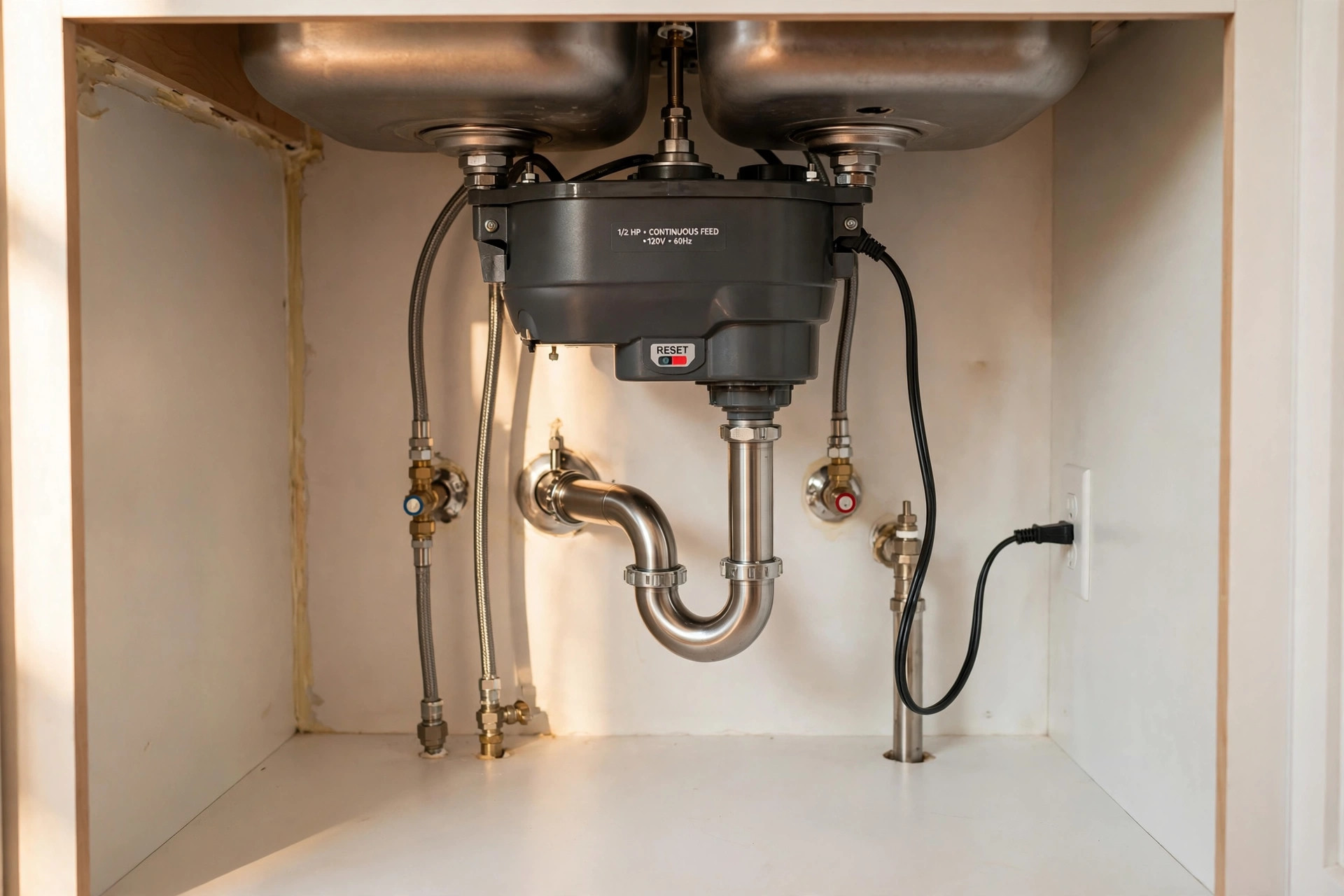

Kitchen scraps pile up fast. A working garbage disposal clears them in seconds. That is why many home owners search for garbage disposal installation usa online deals before they call a plumber. Buying the unit online can save real money. Planning the install ahead of time saves even more. This guide walks through the whole job in plain terms: what a disposal does, which type fits your home, what the work costs, how to keep the unit safe, and how to get a fair deal online.
Why a Garbage Disposal Matters
A garbage disposal sits under the sink. It grinds food waste into fine bits. Water then washes the bits down the drain. The whole process takes a few seconds.
The main benefit is simple. Less food goes in the trash. Trash smells less. Bags are lighter. The kitchen stays cleaner.
A disposal also helps the drain. Small food bits flow away with water. Large chunks often cause clogs. When food is ground fine, pipes stay clearer.
Many older homes lack a unit. The sink may drain slowly. The trash may fill too fast. Adding a disposal solves both problems at once. It is one of the most useful small upgrades a kitchen can get.
Online deals make this upgrade cheap. Prices for basic units start low. Even top models cost far less than a big appliance. When you catch a sale, the unit and the install together can fit a modest budget. A quiet unit that runs smooth is also a fine touch during a home showing.
What to Look For When You Shop: Garbage Disposal Installation Usa Online Deals
Not all disposals are alike. A few facts matter more than the rest.
First, check the motor size. It is rated in horsepower. A one-third horsepower unit suits a light user. A household that cooks daily should choose one-half horsepower or more. Bigger motors grind tougher scraps. They also jam less often.
Second, check the grinding chamber. Stainless steel parts last longer than plain steel. Rust is the main enemy of a disposal. A steel chamber and steel blades hold up for years.
Third, check the noise level. Cheap units are loud. Better models add sound insulation. A quiet unit makes the kitchen more pleasant. This matters in open floor plans.
Fourth, check the feed type. A continuous feed unit runs while you add food. It has a simple wall switch. A batch feed unit only runs when the stopper is in place. Batch feed costs more but is safer for homes with small children.
Fifth, check the warranty. Good makers stand behind their units. A warranty of five years or more shows confidence. Keep the receipt and the model number in a safe place.
Finally, read real buyer reviews. Owners report how a unit behaves after months of use. Look for notes about jams, leaks, and noise. A steady stream of honest reviews tells you more than any ad.
Types and Options
Disposals come in two main types.
Continuous feed units are the most common. You flip a switch. You push food in. Water runs the whole time. When done, you flip the switch off. They are simple and quick. Most kitchens use this type.
Batch feed units work in loads. You place food inside. You close the stopper. The unit starts only when the stopper locks. This design keeps hands away from moving parts. Families with young children often prefer it.
Motors come in several sizes:
– One-third horsepower: fine for a single person or light use. – One-half horsepower: a solid middle choice for most families. – Three-quarter horsepower: handles bones and fibrous food with ease. – One horsepower: built for heavy daily cooking and large households.
Septic-safe models exist for homes on septic systems. These add a special enzyme mix that helps break food down. If your home has a septic tank, choose one of these and follow the maker’s care notes.
When you shop for garbage disposal installation usa online deals, you will also see combo deals. Some sellers bundle the unit with a new sink flange, cord kit, or air switch. An air switch lets you turn the unit on with a button on the sink rim instead of a wall switch. It is a nice touch during a remodel.
Some buyers also look at under sink filters to pair cleaner water with a cleaner kitchen. Others browse pot filler faucets when they plan a wider kitchen update. A disposal fits well into a bigger plan that includes kitchen pantry cabinets and new storage.
Cost and Price: What the Job Really Costs
Prices vary by unit size and by labor rates. Here is a plain breakdown.
A basic one-third horsepower disposal sells for a modest price. Mid-range one-half horsepower units cost more. High-end one horsepower models with sound insulation cost the most. Holiday sales and online deals often cut these prices by a fifth or more.
Installation labor is the other half of the bill. A simple swap of an old unit for a new one takes a plumber under an hour. The charge is modest in most towns. A first-time install costs more. The plumber must add wiring, a switch, and drain fittings. That work can take two to three hours.
Some home owners do the job themselves. The unit comes with clear steps. A person who is handy with basic tools can finish in an afternoon. This saves the labor charge entirely. But there are limits. If the job needs new wiring, most codes require a licensed electrician. Do not guess with electricity.
Online deals change the math. A unit bought online at a discount leaves more room for labor. Some online sellers offer install service at checkout. The price is fixed up front. That removes surprises.
Watch for hidden costs. You may need a new sink flange. You may need a cord kit. You may need a dishwasher hookup kit. These small parts add up. Check the box contents before you buy. Read the parts list on the product page.
Shipping is usually free on larger orders. Big boxes ship at no charge from many sellers. Small parts may carry a small fee. Order everything at once to save on shipping.
A smart buyer gets three quotes for labor. Call three local plumbers. Ask each for a flat price for the install. Then add the online price of the unit. The lowest total wins.
How Installation Works, Step by Step
A standard install follows a clear order. Knowing the steps helps you judge a quote and spot sloppy work.
First the old unit comes out. Power is shut off at the breaker. The drain pipes are loosened. The mounting ring turns and the old unit drops free.
Next the sink flange goes in. Plumber’s putty seals it to the sink hole. The mounting assembly locks from below. This joint must be tight. A loose flange leaks.
Then the new unit hangs on the mount. A twist locks it in place. The drain pipe and the dishwasher hose connect to the side ports. Clamps hold each joint. Wiring comes next: many units need a cord kit that plugs into a switched outlet under the sink. If the home has a hardwired box instead, an electrician makes the connection.
Last comes the test. Power goes back on. Water runs. The switch flips. The unit should run smooth with no shake. Every joint is checked for drips. A dry paper towel under each joint catches any leak.
The whole job is neat and quick when done right.
Care and Upkeep
A disposal is easy to keep. A few habits make it last for years.
Always run cold water during use. Cold water keeps fats solid so they grind fine and wash away. Hot water melts fat, which can later harden in the pipes.
Feed food in small amounts. Let the unit grind each bit before you add more. Do not stuff the chamber full. Patience prevents jams.
Keep the water running after the grinding stops, ten to fifteen seconds, to flush the ground bits down the line.
Grind small ice cubes now and then. The hard cubes knock bits off the walls. Follow with lemon peels for a fresh smell. This is an old, simple trick that works.
Never put these in the unit: bones larger than small fish bones, grease poured in bulk, coffee grounds in large amounts, potato peels in bulk, and fibrous foods like celery stalks in long pieces. These are the main causes of jams.
If the unit jams, do not reach inside. Turn the switch off. Press the red reset button on the bottom. Many jams clear with this alone. If it stays stuck, use the hex key that came with the unit to turn the motor shaft from below.
Clean the splash guard. Food builds up under the rubber flaps. Lift each flap with a brush and scrub.
Safety First
A disposal is safe when used with care. It is still a machine with moving parts. Respect it.
Never put a hand inside the chamber. Use tongs to pull out a stuck item. Keep the switch off while you work near it.
Teach children to stay away. A batch feed model adds a layer of safety. An air switch also helps, since small hands cannot flip a wall switch by accident.
Shut off power at the breaker before any repair. The wall switch is not enough. Someone else might flip it while you work. The breaker is the true off.
Keep the area under the sink dry. Water and wiring do not mix. Wipe up leaks at once. A small drip can grow into a real hazard.
Check the cord and plug now and then. Look for cracks or heat marks. Replace a damaged cord at once.
A careful home owner has nothing to fear. The rules are few and simple.
Shopping Smart: How to Find Real Online Deals
Online prices move up and down. A little method finds the true bargains.
Start with a list of two or three models that fit your needs. Fix on size and type first. Then watch prices across sellers. A deal is only a deal against a known fair price.
Check the big home stores first. Major retailers often list exclusive online prices and seasonal discounts. Manufacturer pages show full specs and warranty terms, which help you compare models fairly. Independent test labs publish ratings and reliability notes that no ad can match.
Read the fine print on each deal. Some prices require a mail-in rebate. Some apply only to a bundle. Some end at midnight. Know the true out-the-door cost before you click buy.
Look at the seller’s return policy. A disposal is a heavy box. Returning it can be a chore. A free return policy removes the risk of buying the wrong size.
Watch for package deals with install. Some sellers quote a flat install price at checkout. Compare it against your three plumber quotes before you decide.
Time your buy. Big sales land on major holidays. End-of-year clearance moves last year’s models at deep cuts. A patient buyer often pays much less than a hurried one.
Keep an eye on energy notes too. Efficient motors use less power over the years. Government pages explain efficiency basics in plain words. A slightly dearer efficient model can pay back its price in power savings.
Do-it-yourself guides from trusted home sites walk through each install step. Long-running advice columns offer practical how-to notes and buyer checklists. Appliance makers post care guides and design ideas that help you plan the whole sink area.
Frequently Asked Questions
How long does a garbage disposal last? Most units last eight to twelve years. Good care stretches that span. Hard use and wrong foods shorten it. When repairs cost more than half a new unit, replace it.
Can I install a disposal if my sink never had one? Yes, in most cases. You need a switched outlet under the sink and room for the unit. A plumber or electrician can add what is missing.
Does a disposal work with a septic system? It can, but choose a septic-safe model. Use it lightly. Too much ground food can load the tank. Have the tank pumped on schedule. When in doubt, ask your septic service.
What size disposal do I need? A one-half horsepower unit suits most families. Small households can use one-third horsepower. Heavy cooks should step up to three-quarter or one horsepower. Bigger is better if the price gap is small.
Why does my disposal hum but not grind? It is likely jammed. Turn it off. Press the red reset button underneath. If it still hums, use the hex wrench in the bottom socket to turn the shaft free. Never reach inside.
Are online deals safe for big appliances? Yes, when you buy from known sellers. Check the return policy and the warranty. Keep the receipt until the warranty ends.
A Short Final Word
A garbage disposal is a small machine with a big daily payoff. It keeps the kitchen clean. It cuts trash. It helps drains run free. Buying the unit through garbage disposal installation usa online deals puts real savings in your pocket. Choose the right size, plan the install, and keep up simple care. Do that, and the unit will serve your kitchen well for many years.
References
Bob Vila. (n.d.). Home improvement advice. https://www.bobvila.com Bosch. (n.d.). Home appliances. https://www.bosch-home.com Consumer Reports. (n.d.). Product reviews and ratings. https://www.consumerreports.org ENERGY STAR. (n.d.). Energy efficient products. https://www.energystar.gov GE Appliances. (n.d.). Kitchen and home appliances. https://www.geappliances.com Lowe’s. (n.d.). Home improvement products. https://www.lowes.com The Home Depot. (n.d.). Home improvement products. https://www.homedepot.com This Old House. (n.d.). Home renovation guidance. https://www.thisoldhouse.com Whirlpool. (n.d.). Home appliances. https://www.whirlpool.com
Was this guide helpful?

About Robert Taylor
The My Garden US editorial team writes practical, in-depth home and garden guides for American homeowners — tested advice, no fluff.
You May Also Like

French Door Refrigerators Reviews Buying Guide USA
May 2, 2026 0 views
Kitchen Backsplash Tiles USA Online Deals: A Plain Guide to Buying Smart
April 7, 2026 0 views
Kitchen Island Hanging Lights for Florida Homes USA: A Plain Guide
March 30, 2026 0 views