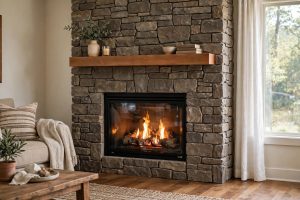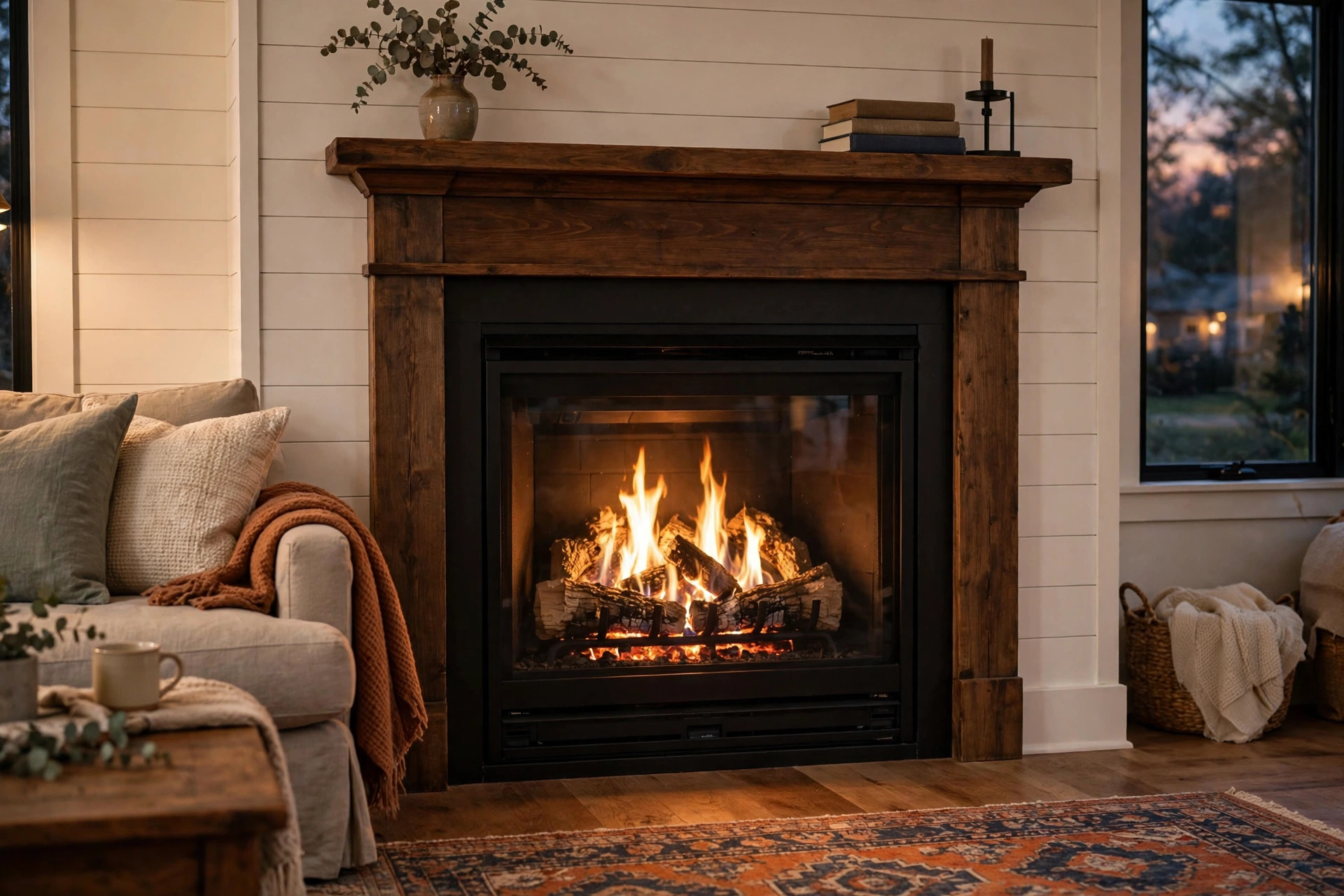

Many American homes still center on the fireplace. It draws the family together on cold evenings. It adds value to a house. But the old wood fireplace is hard work. It needs wood, cleaning, and constant care. That is why so many owners now search for the best direct vent gas fireplaces for american homes. These units give the look and warmth of a real fire with none of the mess. This guide explains how they work, what to look for, and how to choose one with care.
Why Direct Vent Gas Fireplaces Make Sense
A direct vent gas fireplace is a sealed unit. It burns natural gas or propane. It pulls fresh air from outside and sends all exhaust back outside through a sealed vent. The room air never mixes with the fire. This makes it safer and cleaner than an open fireplace.
For American homes, the appeal is simple. There is no wood to buy or stack. There is no ash to clean. You flip a switch or press a remote and the fire starts. You get steady heat that you can control. Many units heat a whole room, and some can heat a floor of a house. They also work well in new homes that are built airtight, where a wood fire would struggle for air.
Another reason is efficiency. Old masonry fireplaces lose most of their heat up the chimney. A good direct vent unit can turn more than 70 percent of its fuel into heat for the room. That means lower gas bills for the same comfort. The U.S. Department of Energy notes that sealed combustion is one of the best ways to heat with gas safely and well.
How a Direct Vent Gas Fireplace Works: Best Direct Vent Gas Fireplaces for American Homes
The heart of the unit is a sealed firebox with a glass front. Inside sits a burner shaped to look like logs, stones, or modern glass media. Fresh air comes in through the outer pipe of a double-wall vent. Exhaust leaves through the inner pipe. The vent can run straight out through a wall or up through the roof.
Because the firebox is sealed, the glass gets hot and stays hot while the unit runs. A safety screen or barrier is now standard on all units sold in the United States. It keeps hands and pets away from the hot glass. Behind the glass, most units have a fan that pushes warm air into the room. Many also have a remote, a wall switch, or a thermostat that holds the room at a set temperature.
What to Look for When You Shop
Buying the best direct vent gas fireplaces for american homes takes more than picking a pretty face. The right unit fits your room, your fuel supply, and your venting path. Here are the points that matter most.
Size and Heat Output
Heat output is measured in BTUs. A small unit may give 20,000 BTUs. A large one may give 40,000 or more. As a rule, a 30,000 BTU unit can heat about 1,000 square feet in a mild climate. Cold states need more. Measure your room and think about the whole space the unit must warm. A unit that is too small will run all day and still leave you cold. A unit that is too large will cycle on and off and feel stuffy. Sizing guides from Consumer Reports and retailers like Lowe’s can help you match BTUs to square footage.
Efficiency Ratings
Look for the steady-state efficiency or the EnerGuide rating on the label. Higher numbers mean more heat from each unit of gas. Many of the best units reach 70 to 85 percent. Some carry ENERGY STAR marks for the fan and controls. A more efficient unit costs more up front but saves money every winter. Keep the rating sheet when you shop so you can compare models side by side.
Venting Options
Check where the vent can go in your house. A rear vent goes straight out the back wall. A top vent goes up through the ceiling or roof. Some units allow both. The vent run has limits on length and turns, so check the manual before you buy. If you live in an apartment, venting rules may be strict. Readers in the West may want to read our guide to direct vent gas fireplaces for California apartments for notes on tight spaces and building codes.
Ignition and Controls
Most modern units use electronic ignition. A small pilot lights only when you call for heat. This saves gas over the old standing pilot that burned all season. Look for a good remote or wall control. The best ones include a thermostat mode, a timer, and a fan control. If you like a connected home, smart thermostat controlled gas fireplaces can tie the unit into your home system.
Glass and Safety Barriers
Since 2015, United States rules have required a safety barrier on gas fireplaces. The glass on a direct vent unit can reach several hundred degrees. A fine mesh screen or tempered barrier sits in front of the glass. It lowers the touch temperature and stops direct contact. Make sure any unit you buy includes this barrier. If you have small children, add childproof fireplace screens for an extra layer of care.
Types of Direct Vent Gas Fireplaces
Makers like Napoleon and Heatilator build direct vent units in many shapes. Each suits a different room and style.
Traditional Front Fireplace
This is the classic look. A rectangular glass front framed in wood, stone, or tile. It fits the living room of a colonial, a ranch, or a farmhouse. Log sets inside mimic a wood fire. This type is the most common and often the most affordable.
Linear and Modern Fireplace
Linear units are long and low. They stretch three to six feet wide with a ribbon of flame. They suit modern and open-plan homes. The media is often glass beads, stones, or driftwood. They make a strong focal point in a great room.
Corner Fireplace
A corner unit uses two glass sides set at an angle. It tucks into a corner and throws heat into the room from two faces. It works well in smaller rooms where wall space is short.
See-Through and Two-Sided Fireplace
These units have glass on two opposite sides. They can warm two rooms at once, such as a living room and a dining room. They need careful framing and venting, so plan them early in a remodel.
Gas Fireplace Inserts
An insert slides into an existing wood fireplace opening. It uses the old chimney space for the new vent pipes. This is a good path if you love your old mantel but hate the smoke and ash. Inserts are among the most popular upgrades in older American homes.
Cost and Price: What to Expect
Prices vary widely. A basic direct vent unit may cost between 1,500 and 2,500 dollars. Mid-range models with better efficiency and trim run 2,500 to 4,500 dollars. Large linear or custom units can pass 6,000 dollars before installation.
Installation adds to the bill. A simple swap in an existing spot may cost 1,000 to 2,000 dollars for labor and venting. A new install that needs a gas line and a vent path can cost 3,000 to 5,000 dollars or more. Get at least two written quotes from licensed installers. The Family Handyman and This Old House sites carry project breakdowns that help you see where the money goes. Running costs are modest. A unit burning at 30,000 BTUs for an evening may use about a dollar of natural gas, less in areas with cheap gas.
Installation: What Homeowners Should Know
Gas fireplace installation is not a do-it-yourself job. A licensed gas fitter must run the gas line. The vent must meet the maker’s clearances to walls, windows, and doors. Local codes may require a permit and an inspection. Check with your city before work starts.
Plan the vent path first. It sets where the unit can sit. Keep the vent away from bedrooms windows and walkways where exhaust could be a bother. Make sure the gas line is sized for the unit’s BTU rating plus your other gas appliances. A good installer will do a load check on your meter. Big-box stores such as The Home Depot list certified installers in many areas, and The Spruce offers checklists to prepare for the installer’s visit.
Care and Upkeep
A direct vent gas fireplace needs far less care than a wood one, but it still needs yearly attention. Once a year, have a trained technician inspect the unit. They will check the burner, the pilot, the glass seal, and the vent for blockages. Bird nests and leaves can block a vent cap and cause the unit to shut down.
Between visits, keep the glass clean with a cleaner made for fireplace glass. Do not use oven cleaner or harsh pads. Vacuum dust from the fan and the lower vents. Keep the area in front of the unit clear of paper, toys, and drapes. If the flame looks lazy and yellow instead of crisp and blue with yellow tips, call for service. A healthy flame is mostly blue at the base with lively yellow tips above the logs.
Safety in the Home
Safety starts with the sealed design itself. Because the firebox never opens to the room, carbon monoxide stays in the vent. Still, every home with gas appliances should have carbon monoxide detectors on each floor. Test them each fall.
Never block the vent cap outside. Keep shrubs and snow away from it. Never hang stockings or place decor on the mantel edge where heat can reach them. Teach children that the glass is hot even when the fire looks low. The barrier screen is not a shelf and not a toy. If you ever smell gas, leave the house and call your gas company from outside. The EPA also reminds homeowners that clean-burning gas heat is kinder to indoor air than open wood fires.
Frequently Asked Questions
Do direct vent gas fireplaces need a chimney?
No. They use a sealed double-wall pipe that can vent through a wall or a roof. Many homes install one with no chimney at all. An insert model can reuse an old chimney chase for the new vent pipes.
Can a direct vent fireplace heat a whole house?
It can heat a large zone, but it is not a furnace. Most units are room heaters. In a mild climate, a large unit with a good fan can carry much of a small home’s heat load. In cold climates, treat it as a supplement to your main heat.
Is natural gas or propane better?
Both burn clean in a direct vent unit. Natural gas costs less where it is available. Propane works where there is no gas line, but the fuel costs more per BTU. Make sure the unit is set up for your fuel. A conversion kit can switch some models, and a technician must do the work.
How long does a direct vent gas fireplace last?
With yearly service, a quality unit can last 15 to 25 years. The burner and firebox hold up well. Remotes, fans, and igniters may need replacement along the way. Keep the manual so you can order the right parts.
Do they work during a power outage?
Many do. Units with a standing pilot or battery backup ignition will light without house power. The fan will not run, but heat still radiates from the glass. Units with full electronic ignition need power unless they have a battery pack. Ask about this feature if outages are common where you live.
Are direct vent fireplaces safe for bedrooms?
Many models are approved for bedroom use, but codes vary by state and city. Some areas restrict gas fireplaces in sleeping rooms. Always check local rules and have the unit installed by a licensed professional.
A Final Word
The best direct vent gas fireplaces for american homes blend old comfort with new ease. They give real flame, real heat, and a calm focal point for the room, all at the touch of a button. Take time to size the unit, check the vent path, and hire a licensed installer. With yearly care, your fireplace will warm your home for decades.
References
Consumer Reports. (n.d.). Product reviews and ratings. https://www.consumerreports.org Family Handyman. (n.d.). DIY home repair and maintenance. https://www.familyhandyman.com Heatilator. (n.d.). Fireplaces and fireplace products. https://www.heatilator.com Lowe’s. (n.d.). Home improvement products. https://www.lowes.com Napoleon. (n.d.). Fireplaces, grills, and heating products. https://www.napoleon.com The Home Depot. (n.d.). Home improvement products. https://www.homedepot.com The Spruce. (n.d.). Home and garden advice. https://www.thespruce.com This Old House. (n.d.). Home renovation guidance. https://www.thisoldhouse.com U.S. Department of Energy. (n.d.). Energy efficiency and renewable energy. https://www.energy.gov U.S. Environmental Protection Agency. (n.d.). Protecting human health and the environment. https://www.epa.gov
Was this guide helpful?

About Sarah Mitchell
The My Garden US editorial team writes practical, in-depth home and garden guides for American homeowners — tested advice, no fluff.
You May Also Like

Where to Buy Marble Fireplace Surrounds in California: A Complete Guide
August 9, 2026 0 views
Luxury Fireplace Screens With Doors Buying Guide
September 21, 2026 0 views
Top Rated Ethanol Wall Fireplaces for Southern States: A Buying Guide
March 12, 2026 0 views