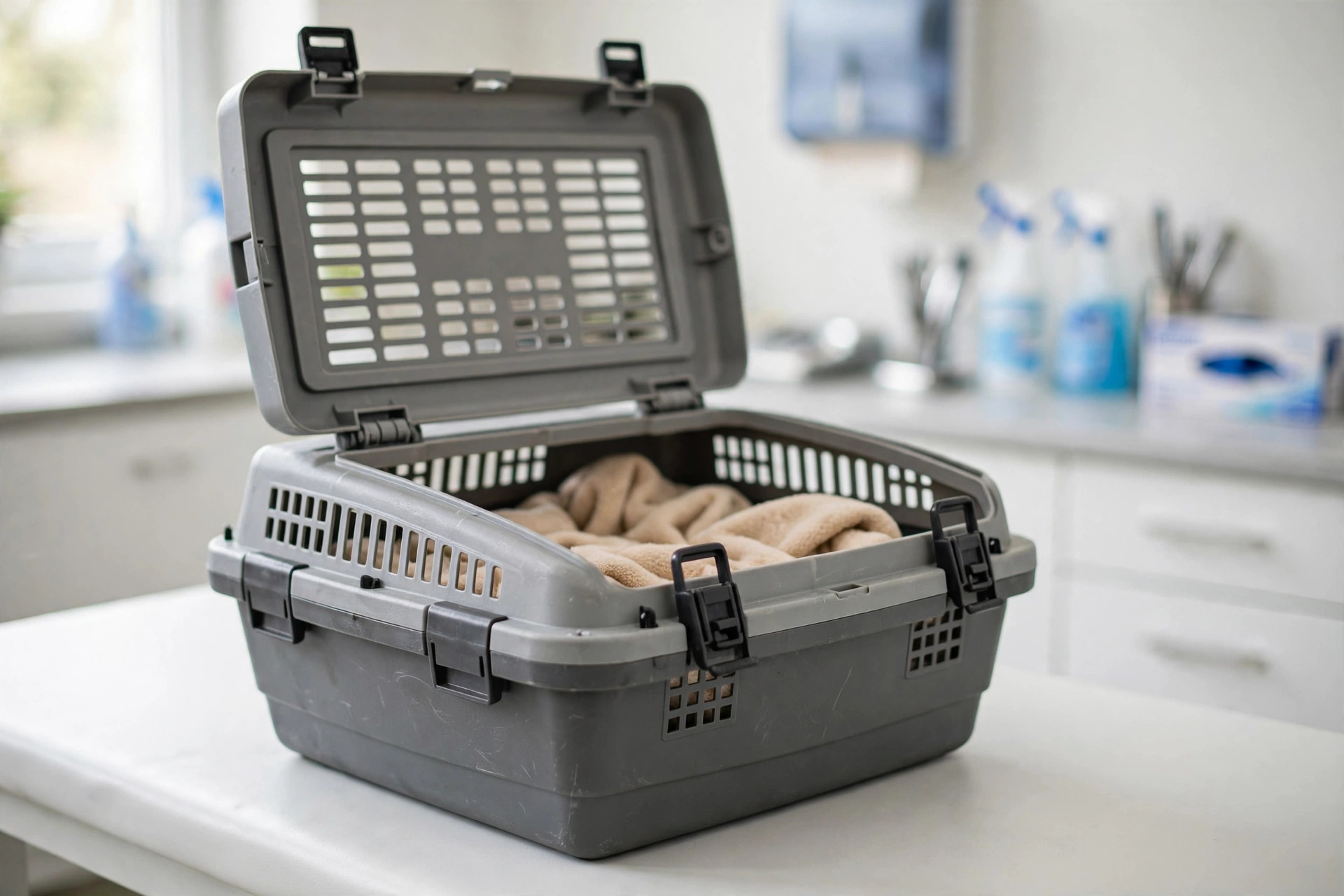

Most cat owners know the struggle well. The appointment is booked, the clinic is ten minutes away, and the cat has vanished under the bed. When you finally get her into the carrier, the real problem starts at the clinic: a nervous cat must be dragged out through a small front door while she digs in her claws. There is a better way. The best cat carrier for vet visits is almost always a top-loading model. The lid opens wide at the top, so the vet can lift the cat straight up and out with far less stress.
This guide explains why top-loading carriers are the first choice of vets and vet techs across the United States. It covers what to look for, the main types on the market, what you should expect to pay, how to clean and store your carrier, and how to keep every trip safe. It closes with answers to the most common questions owners ask.
Why a Top-Loading Carrier Matters for Vet Visits
A vet visit is a series of small stresses for a cat. The car ride shakes her world. The waiting room smells of dogs. The exam table is cold and strange. A front-loading carrier adds one more stress: to get the cat out, someone must reach deep into a dark box and pull. Cats react the way any trapped animal reacts. They brace, they scratch, and they bite. Many cats then associate the vet with that struggle and fight harder at the next visit.
A top-loading carrier changes the whole picture. The top unlatches and lifts away, and the vet can gently scoop the cat from above. Some models let the whole top shell come off, so the bottom half becomes a shallow open bed the cat can sit in during the exam. Many vets prefer to examine cats right in the bottom of the carrier this way, since the familiar plastic still smells like home. Research and field practice both agree: the less a cat is pulled and dragged, the calmer the exam.
Top-loading designs also give the owner an easier time at home. Getting a reluctant cat into a box from the top is much simpler than pushing her through a narrow front door. You can lower her in while the base sits on the floor, close the lid, and latch it in seconds. For older owners or anyone with hand pain, the motion is far kinder than wrestling a cat through a front hatch.
What to Look For When You Choose: Best Cat Carrier for Vet Visits Top Loading
Size and Weight Limit
A carrier must fit the cat, not the owner. The cat should be able to stand, turn, and lie down inside. Most adult domestic cats do well in carriers with interior space around 18 inches long, 12 inches wide, and 12 inches tall. Very large breeds such as the Maine Coon may need a bigger model. Check the maker weight rating and add a margin: if your cat weighs 12 pounds, choose a carrier rated for at least 20.
The Lid and Latches
The top lid should open wide and latch with hardware you trust. Good carriers use two or three solid latches, often with a small metal pin or a turn lock. Cheap plastic snaps can pop open in a moving car. Before you buy, look for latch designs that cannot be opened by a paw pushing from inside. Some carriers also have a small escape-proof lock on the front door, which is a welcome extra.
Ventilation and Visibility
Cats need fresh air and a way to see out. Look for vents on at least three sides: the top lid, the front, and the back or sides. Many top-loading carriers have a wire grille at the top or a clear skylight. Too much open wire can make a shy cat feel exposed, so a carrier with vents plus a small window cover or a drape you can throw over the top works well. She can see out when she wants, and you can shade her when she needs calm.
Floor, Bedding, and Clean-Up
Accidents happen. A good carrier has a smooth floor that wipes clean and no deep cracks where urine can hide. A removable mat or pad is worth the extra cost. Choose a pad that is machine washable and dries fast. Some carriers come with a soft fleece pad built in; if it is not washable, plan to buy a spare.
Sturdiness and Materials
Hard plastic carriers last the longest and hold their shape in the car. They also stack well in a closet. The plastic should feel thick, not thin and bendy. Pick up the carrier in the store or check owner reviews for reports of cracking around the latch points. Handles matter too: a single top handle is standard, but many carriers also add a shoulder strap, which helps on the long walk from the parking lot.
Security in the Car
A carrier is a seat belt for a pet. The design must hold together in a sudden stop. Look for carriers that pass independent crash-style testing or that have a stated safety standard. In the car, place the carrier on the floor behind the front seat or strap it on the back seat with the seat belt threaded through the handle. A carrier rolling loose on the seat is a danger to both cat and driver.
Types of Top-Loading Cat Carriers
Hard-Sided Top-Loaders
This is the classic vet clinic carrier. A thick plastic base with a removable top, front door, and top lid. Models in this style are the ones most vets keep in their own homes. They are simple, cheap, and nearly indestructible. The lid comes off for cleaning, and the two halves store nested inside each other. For the best cat carrier for vet visits, a hard-sided top-loader is the safest default pick.
Two-Door Hard Carriers with Top Hatch
These add a top hatch to a standard front-door carrier. You get two ways in: through the front for daily travel, through the top for vet exams. The hatch is smaller than a full lift-off lid, so the vet may still need to reach in, but it is far better than a front door alone. Owners who travel with their cat for reasons beyond vet visits, like trips in a pet stroller for small dogs and cats travel, often like this style for its flexibility.
Soft-Sided Top-Loaders
Soft carriers are light and fold flat for storage. Many have a top flap you can roll back to lift the cat out. They are fine for calm cats and short trips, but they give less protection in a crash, and a determined cat can claw through mesh. Some airlines favor soft carriers for under-seat use. For vet visits with an anxious cat, a soft carrier is second best to hard plastic.
Backpack Carriers with Top Access
A pet carrier backpack for small dogs hiking or city walks often has a top window or dome. A few designs allow top entry. These suit small, calm cats and owners who walk to the clinic. They are not the best pick for a cat who panics at the vet, because the deep tube shape makes lifting the cat out from above awkward.
Rolling Carriers
Wheeled carriers with a top hatch exist for owners who cannot carry weight. The wheels save backs and shoulders on long clinic walks. Check that the wheels lock and that the carrier stands steady when the handle is up. As with soft models, hard-wheeled carriers tend to be sturdier than soft ones.
Cost and Price
Prices vary by type, brand, and size. As a guide for 2026:
– Basic hard-sided top-loaders: 30 to 60 dollars. These are sturdy and do the job well. This is the range where most owners should shop. – Mid-range two-door and feature carriers: 60 to 110 dollars. You get better latches, thicker plastic, extra doors, and sometimes a crash-test rating. – Soft-sided top-loaders: 35 to 80 dollars. Light and foldable, but less protective. – Backpack and rolling carriers: 50 to 150 dollars. Style and convenience cost more.
Do not judge by price alone. A 35-dollar hard carrier with strong latches beats a 90-dollar soft bag with weak zippers for vet use. Read owner reviews about latch failure and escape attempts before you buy. Buying once is cheaper than buying twice.
Care and Upkeep
A carrier that smells clean gets used without a fight. After each vet visit, wipe the base with warm water and mild soap, and wash the pad. If the cat soiled the carrier, use an enzyme cleaner made for pets to break down the odor. Let it dry fully before you store it.
Do not hide the carrier in the garage and drag it out once a year. That single appearance teaches the cat that the carrier means trouble. Leave it out in a quiet corner with the top lid off, a soft blanket inside, and the occasional treat. Within a week or two, many cats start napping in it on their own. A cat who sleeps in her carrier walks into the vet calm instead of fighting at the door.
Check the latches and hinges twice a year. Plastic weakens with age and sun. If a latch cracks or a hinge goes loose, replace the carrier. A carrier that pops open in the clinic parking lot is a lost cat.
Safety Tips for Every Trip
– Practice before the appointment. Do a few short practice runs in the carrier around the house, then a five-minute drive, before the real visit. – Secure the carrier in the car. Seat belt it on the back seat or wedge it on the floor. Never let it sit loose. – Cover the carrier in the waiting room. A light towel over the top blocks the sight of dogs and lowers stress. Leave one side open for air. – Never open the carrier outside. Not in the parking lot, not at the curb. Open it only inside the clinic building or inside your home. – Check every latch before you lift. Make it a habit: lid closed, latches clicked, handle firm, every single time. – Bring a spare pad. If the cat soils the pad in the waiting room, swap it so she rides home dry. – Mind the heat. Cars heat up fast. On warm days, run the air before you load the cat, and never leave her in a parked car. – Plan for strong dogs too. If you also travel with a dog, a best no pull dog harness for strong pullers keeps the dog under control in the clinic lot while you carry the cat.
Frequently Asked Questions
Can a kitten use a top-loading carrier? Yes. Kittens fit fine in standard sizes, and the top opening makes it easy to lift a squirming kitten in and out. Choose a carrier with small vent gaps so a tiny kitten cannot squeeze through.
What size carrier does an average cat need? Most adult cats between 8 and 14 pounds do well in a carrier about 18 to 20 inches long, 12 to 13 inches wide, and 12 to 14 inches tall. The cat must be able to stand and turn around. Larger cats need larger carriers.
Are top-loading carriers airline approved? Some are, most are not. Airlines set their own under-seat size limits, and hard carriers often run too tall. If you fly, check your airline rules and look for a carrier marked as airline compliant.
How do I get a scared cat into the carrier? Set the base on the floor with the lid off. Calmly lower the cat in from above, feet first, while speaking softly. If she panics, try a towel wrap: wrap her snugly in a towel, then lower the bundle into the base and unfold the towel. Treats help for cats that are only mildly nervous.
How often should I replace a cat carrier? Inspect it yearly. Replace it when latches crack, hinges loosen, the plastic warps, or the floor no longer cleans up well. A well-kept hard carrier often lasts five to ten years.
Can two cats share one carrier? Only if both cats are small, calm, and genuinely bonded, and only for short trips. Most vets advise one carrier per cat. Shared carriers make exams harder, since the vet must separate the cats in a strange room.
A Short Final Word
The best cat carrier for vet visits top loading style wins for a simple reason: it turns the hardest part of the appointment into the easiest. The vet lifts the cat out gently from above instead of dragging her through a front door. The cat stays calmer, the exam goes faster, and the next visit starts from a better place. Choose a sturdy hard-sided model with strong latches, keep it clean, and let the cat live in it at home between visits. That one habit does more for her peace of mind than any feature on any box.
For more background, see Chewy, ASPCA, and PetMD. For more background, see American Kennel Club, The Spruce Pets, and The Home Depot. See also Petco and PetSmart for further detail.
References
American Kennel Club. (n.d.). Dog care and training resources. https://www.akc.org ASPCA. (n.d.). Pet care and animal welfare resources. https://www.aspca.org Chewy. (n.d.). Pet supplies. https://www.chewy.com Petco. (n.d.). Pet supplies and services. https://www.petco.com PetMD. (n.d.). Pet health information. https://www.petmd.com PetSmart. (n.d.). Pet supplies and services. https://www.petsmart.com The Home Depot. (n.d.). Home improvement products. https://www.homedepot.com The Spruce Pets. (n.d.). Pet care guides and product reviews. https://www.thesprucepets.com
Was this guide helpful?

About Emily Rodriguez
The My Garden US editorial team writes practical, in-depth home and garden guides for American homeowners — tested advice, no fluff.
You May Also Like

Cat Enclosure for Balcony Apartment Living in the USA
January 28, 2026 0 views
Best Dog Crate for Car Travel Crash Tested: A Plain Guide to Safe Road Trips
September 2, 2026 0 views
Indoor Rabbit Cage Large for House Bunnies: A Complete Guide
June 12, 2026 0 views