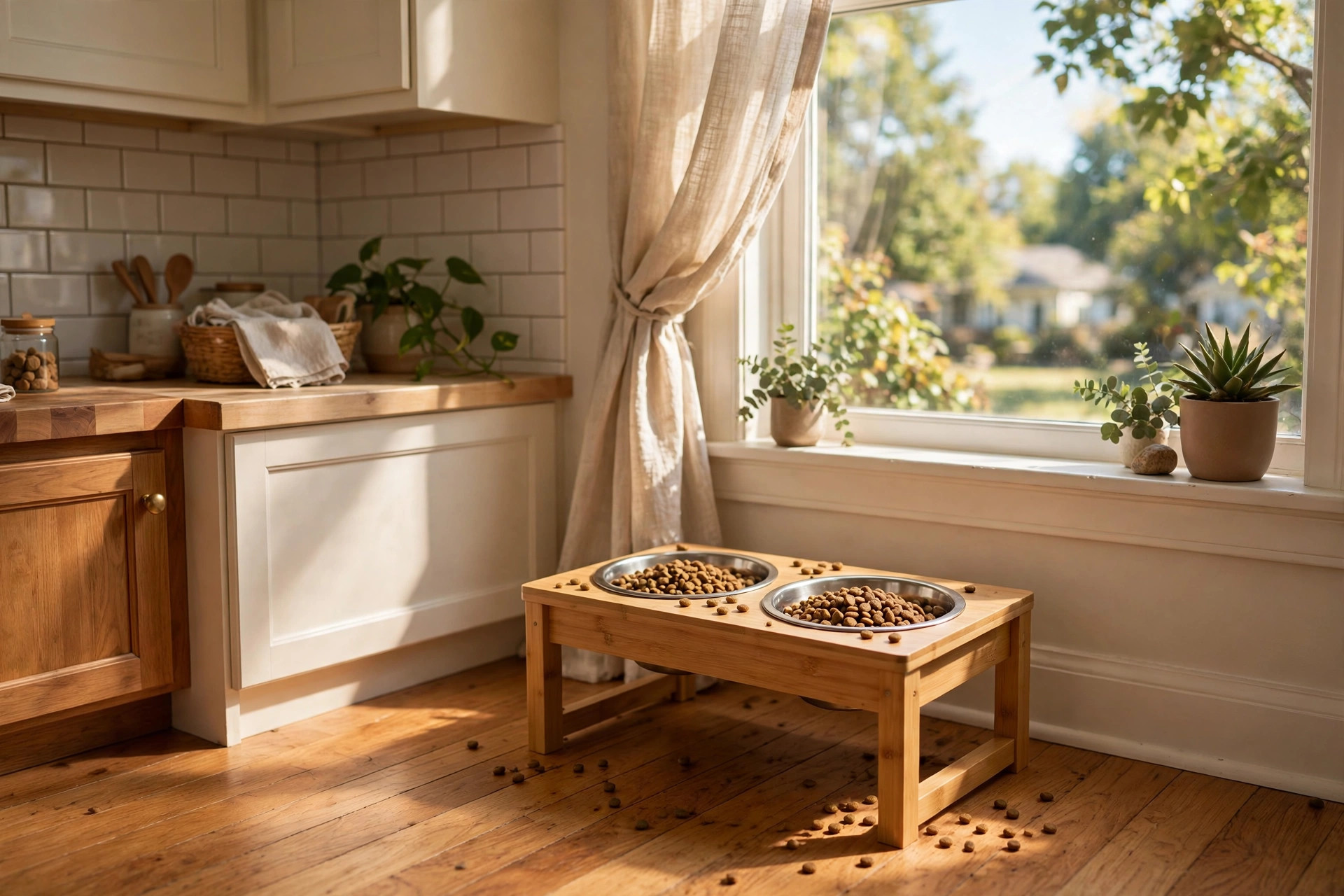

An Easier Way to Feed Your Cat
A cat that eats from a bowl on the floor must bend its neck far down with every meal. Over time this posture can cause stiffness and make feeding less pleasant. Many pet owners have turned to the best elevated cat bowl stand for neck comfort as a simple fix. The stand lifts the bowls to a natural level. The cat eats with a straighter neck. The change is small, yet the effect on daily comfort can be large.
This guide explains why a raised feeder helps, what features matter, which types exist, and how much you should expect to pay. It also covers cleaning, safety, and the most common questions from cat owners. By the end, you will know how to choose an elevated stand that suits your cat and your home.
Why an Elevated Bowl Stand Matters: Best Elevated Cat Bowl Stand for Neck Comfort
The Problem With Floor-Level Bowls
Cats are small animals with short legs. A bowl on the floor forces the cat to push its head low and crook its neck for the whole meal. Older cats feel this most. Cats with arthritis, joint trouble, or a sore back may eat less or walk away from their food. A vet may advise changes at home that reduce strain on the body. An elevated stand is one such change. It brings food up to the cat instead of forcing the cat down to the floor.
Comfort at Every Meal
A raised bowl lets the cat keep its neck closer to its natural line. Swallowing becomes smoother. Many owners report that their cats eat more calmly and finish their food with less mess. For a cat that tends to vomit after meals, some owners find that a raised bowl helps, though diet and health remain the chief causes to discuss with a vet. Information from veterinary guides at petmd.com can help owners tell the difference between a feeding habit and a health concern.
Cleaner Feeding Areas
A stand holds the bowls in place. Bowls set loose on the floor slide around. Food and water spill on the tile or the rug. With a stand, the bowls sit in fixed rings or holders. Less food ends up on the floor. The feeding corner stays tidy with less effort each day.
What to Look for When You Choose
The Right Height
Height is the first point to settle. For most adult cats, the top of the bowl should sit near the level of the lower chest. A stand between four and eight inches works for the average house cat. Large breeds may need a taller stand. Kittens need a lower one. If your cat is between sizes, choose a stand with adjustable legs or a range of heights. Watch your cat eat. The neck should stay fairly straight, not bent down like a hook.
Bowl Material
Stainless steel is the first choice for most owners. It does not hold odors. It washes clean in the dishwasher. It resists scratches where germs can hide. Ceramic bowls are also good. They are heavy and stay put. They come in many styles. Glass bowls work well too. Plastic bowls are cheap but can cause skin trouble on the chin in some cats, a point many guides at thesprucepets.com note for sensitive animals.
Stand Material
Wood stands look warm in the home. Bamboo resists water and wipes clean. Metal stands are strong and last long. Stoneware or ceramic bases are heavy and stable but can chip. Each material has merit. Match the stand to your home and to your budget.
Bowl Size and Depth
Cats dislike deep bowls. The sides press against the whiskers and cause whisker fatigue. Choose shallow, wide bowls. A cat should reach the food without pushing its face into the bowl. Two bowls in one stand, one for food and one for water, is the most common setup.
Stability
A good stand does not wobble. Cats push against bowls with their heads. A light stand slides across the floor and frightens a nervous cat. Look for a wide base, rubber feet, or enough weight to stay put. Non-slip pads under the stand help on hard floors.
Types of Elevated Cat Bowl Stands
Single and Double Stands
A single stand holds one bowl. It suits a cat that eats dry food from a dispenser and drinks from a separate fountain. A double stand holds two bowls side by side. Most owners pick a double stand so food and water sit together in one spot. If you add a best pet water fountain for multiple cats, a single stand for the food bowl may be all you need.
Adjustable Stands
Adjustable stands rise and lower on legs or a sliding frame. They suit homes with cats of different sizes. They also suit kittens that will grow. You pay more for this feature, but you buy only once.
Tilted Bowl Stands
Some stands hold the bowls at a slight angle. The tilt aims the food toward the cat. This can help cats that drop food or have trouble pushing food toward the mouth. Tilted stands are popular for flat-faced breeds that eat with more effort.
Storage Stands
A storage stand has a box or drawer under the bowls. It holds dry food, treats, or spare bowls. This is a good pick for small kitchens. You can pair it with a pet food storage container airtight large to keep kibble fresh for longer.
Anti-Vomit and Slow-Feed Inserts
Some stands come with ridges or raised patterns inside the bowl. These slow down cats that eat too fast. A cat that gulps its food and then vomits may do better with a slow-feed insert. It is not a cure for all stomach trouble, but it helps many fast eaters.
Cost and Price
Simple plastic stands cost around ten to fifteen dollars. A bamboo or wood double stand with steel bowls runs from twenty to forty dollars. Ceramic or stoneware stands cost thirty to sixty dollars. Designer stands from pet boutiques can reach eighty dollars or more. Adjustable metal stands sit in the middle range. A self cleaning litter box for busy cat owners costs far more than any feeder, so a bowl stand is a modest spend by comparison.
Price tells you about material and craft, not about how much your cat will like it. An expensive stand of the wrong height is worse than a cheap stand of the right height. Measure first. Buy for fit, then for looks.
You can shop at stores like chewy.com, petsmart.com, and petco.com, where reviews from other cat owners help you compare. Home improvement stores such as homedepot.com also carry pet feeding goods in many areas.
Care and Upkeep
Daily Cleaning
Wash the food bowl each day with hot soapy water. Food left in the bowl grows bacteria. The water bowl needs fresh water each day as well. Rinse it before you refill it. A slimy film on the water bowl is a sign that it needs a full wash.
Weekly Deep Clean
Once a week, take the stand apart if you can. Wash the bowls, the rings, and the base. Stainless steel and ceramic bowls can go in the dishwasher. Dry all parts before you put them back. Damp wood can warp or grow mold, so dry a wooden stand well after washing.
Watch for Wear
Check the stand now and then. Tighten loose screws on a wooden or metal frame. Replace cracked ceramic bowls at once. A chip in a bowl can cut a tongue. A worn rubber foot makes the stand slide, so replace feet when they lose their grip.
Fresh Water Matters
Many cats drink too little water. Low water intake links to urinary trouble in cats. Keep the water bowl clean and full. Some cats prefer moving water and drink more from a fountain. The nutrition team at hillspet.com offers plain guides on water needs for indoor cats.
Where to Place the Stand
A Quiet Corner
Cats like to eat in calm spots. Place the stand away from the washing machine, the front door, and loud speakers. A cat that feels watched or rushed may eat too fast or leave food behind. A quiet corner of the kitchen or a laundry room works well in most homes.
Away From the Litter Box
Keep food far from the litter box. Cats have a strong sense of smell. A bowl near the litter area can put a cat off its food. Most guides suggest a separate room, or at least a clear distance, between eating and toilet areas. This is a simple rule that many new owners miss.
Use a Feeding Mat
A mat under the stand catches stray kibble and water drops. It guards wood floors and rugs. Wash the mat weekly with the rest of the feeding gear. Silicone mats are easy to rinse in the sink and dry fast.
Keep It Away From High Traffic
Do not set the stand in a hallway where people step over it. A kicked bowl spills water and may frighten the cat. Pick a spot that stays still and safe through the day.
Safety
A bowl stand is a simple item, but safety still counts.
– Choose a stand that cannot tip over when the cat leans on it. A wide heavy base is best. – Keep the stand away from stairs and sharp edges. A startled cat should not fall. – Do not use stands with small loose parts that a kitten could swallow. – Check painted stands for peeling paint. Cats chew on edges now and then. – Clean the stand often. Mold and old food can make a cat sick.
The animal care library at aspca.org gives broad advice on safe home setups for pets. Breed and behavior notes at akc.org also cover safe feeding habits, and many of the same rules suit cat homes as well.
FAQ
Does an elevated bowl really help a cat with neck pain?
Many vets and owners say yes for mild strain. A raised bowl lets the neck stay closer to its normal line. For a cat with a true injury or disease, a stand is only a comfort aid. See a vet for a real diagnosis. Do not use a feeder to delay care.
What height is right for my cat?
For most adult cats, four to eight inches works well. The bowl rim should sit near the lower chest. Large breeds may need more. Kittens need less. An adjustable stand removes the guesswork.
Are elevated feeders safe for all cats?
Yes, for most cats they are safe. They do not cure illness, and they do not replace vet care. Some vets note that very fast eaters can swallow more air at any height, so pair the stand with a slow-feed bowl if speed is the issue.
Which bowl material is best?
Stainless steel ranks first for most owners. It is clean, tough, and odor free. Ceramic is a close second. Avoid plain plastic if your cat gets chin spots or skin trouble.
Can I use a dog bowl stand for my cat?
A dog stand is often too tall and too wide for a cat. Cat stands use shallow bowls that suit whiskers and small faces. Buy a stand made for cats unless the dog stand matches the right height and takes shallow bowls.
How often should I clean the stand?
Wash food bowls daily. Change water daily. Deep clean the whole stand weekly. This routine keeps bacteria down and keeps the feeding spot fresh.
A Short Final Word
The best elevated cat bowl stand for neck comfort is not the priciest one on the shelf. It is the one that fits your cat. Right height, shallow bowls, a steady base, and clean materials make the difference. Set it up, watch your cat eat, and adjust until the posture looks easy. Small comforts add up across a lifetime of meals. Your cat cannot thank you in words, but calmer meals and a cleaner corner will tell the tale.
References
American Kennel Club. (n.d.). Dog care and training resources. https://www.akc.org ASPCA. (n.d.). Pet care and animal welfare resources. https://www.aspca.org Chewy. (n.d.). Pet supplies. https://www.chewy.com Hill’s Pet Nutrition. (n.d.). Pet nutrition guides. https://www.hillspet.com Petco. (n.d.). Pet supplies and services. https://www.petco.com PetMD. (n.d.). Pet health information. https://www.petmd.com PetSmart. (n.d.). Pet supplies and services. https://www.petsmart.com The Home Depot. (n.d.). Home improvement products. https://www.homedepot.com The Spruce Pets. (n.d.). Pet care guides and product reviews. https://www.thesprucepets.com
Was this guide helpful?

About James Carter
The My Garden US editorial team writes practical, in-depth home and garden guides for American homeowners — tested advice, no fluff.
You May Also Like

Best Outdoor Dog Bed Waterproof for Patio: A Practical Guide
September 8, 2026 0 views
A Heated Water Dish for Outdoor Barn Cats: How to Keep Water Liquid All Winter
September 10, 2026 0 views
Cat Carrier With Wheels for Travel Ease: A Complete Buyer Guide
February 11, 2026 0 views