
Many cat owners work long hours and still want a clean home. A self cleaning litter box for busy cat owners offers a plain answer to that daily chore. It removes clumps on its own, seals waste away, and leaves fresh litter for the next visit. This guide explains how these boxes work, what kinds you can buy, what they cost, and how to keep one running well.
Why It Matters for a Busy Home
Cat owners who leave home early and return late know the problem well. The litter box sits all day. No one scoops it. Waste builds up and the smell spreads. A self cleaning litter box for busy cat owners changes this pattern. It cleans within minutes of each visit, so the box stays fresh even when the house is empty.
Clean litter keeps cats healthy. Cats dislike dirty boxes and may refuse to use them. When a cat refuses the box, it may use the floor or the bed instead. A box that cleans itself lowers this risk. It gives the cat a clean place every time, all day long.
It also cuts daily work. Scooping takes only a few minutes, but those minutes add up. For owners with two or three cats, the chore grows heavier. An automatic box takes over the main task. The owner only empties a waste bin once or twice a week.
Busy owners also travel. A self cleaning litter box for busy cat owners does not replace a pet sitter, but it stretches the time a cat can wait between visits. A sitter who checks in once a day will find a fresh box each time.
Multi-cat homes gain the most. Two cats can fill a plain box in a single day. Automatic models handle this load by raking after every visit. Pair one with a pet water fountain for multiple cats and the daily chores shrink to almost nothing.
How a Self Cleaning Litter Box Works: Self Cleaning Litter Box for Busy Cat Owners
Most models work on a simple cycle. The cat enters the box and does its business. A sensor waits until the cat leaves. Then a timer counts down for a few minutes. A rake or a rotating drum then moves through the litter. It pulls out the clumps and drops them into a sealed waste bin. The clean litter stays behind.
Three main designs do this work.
Rake boxes use a comb-like rake. It moves slowly across the litter bed and lifts the clumps into a tray at one end. These models are simple and easy to clean by hand when needed.
Rotating drum boxes turn like a cement mixer. A large globe holds the litter. After each use, the globe rotates. The clumps fall through a screen into a waste drawer below. The clean litter stays in the globe.
Flushing models connect to a water line and a drain. They rinse the litter box with water and dry it with warm air. These are rare and cost more, but they remove waste without bags.
All three designs need power. Most use a standard wall outlet. A few small models run on batteries, but they tend to be weaker.
Types and Options to Choose From
Rake boxes are the most common type. They work with ordinary clumping litter. They cost less than drum models. They are also easy to take apart and wash. The main drawback is the rake itself. It must be cleaned often, or waste can stick to it.
Rotating drum boxes cost more, but they handle waste with less fuss. The sealed waste drawer holds several days of clumps. The globe shape gives the cat more room to turn around. Some cats take longer to accept the drum shape, so a slow start helps.
Open-top automatic boxes suit nervous cats. They look like an ordinary tray from the outside. The rake works under a cover or inside a raised edge. Cats that dislike covered boxes may accept these first.
Litter that needs no clumping litter works with special crystal or pellet systems. The crystals soak up urine and dry out waste. A pad or tray below catches the rest. These systems need the maker’s own litter and pads, which raises the running cost.
Smart models add an app. The app tracks each visit and the cat’s weight. It sends alerts when the waste bin is full. Some apps track visits over weeks, which can show early signs of health trouble. The ASPCA notes that changes in litter box habits can signal illness, so a record of visits has real value.
What to Look for Before You Buy
Size comes first. The box should be long enough for the cat to stand, turn, and dig. Large cats need roomy models. A box that is too small will drive a cat back to the floor.
Noise matters too. The rake or drum motor wakes light sleepers. Look for models sold as quiet or low-noise, and place the box away from bedrooms.
Litter type matters as much as the box. Most automatic boxes need hard-clumping litter. Soft or dusty litter can clog the rake or slip through screens. A cat litter for odor control in clumping form is a good match for most rake and drum models.
Check the waste bin size. Small bins fill fast in multi-cat homes. Large bins hold a week of waste for one cat. Sealed bins with carbon filters cut the smell while waste waits.
Safety features are vital. Good boxes have pinch guards on the rake and sensors that stop the motor if the cat climbs back in. Weight sensors should tell the difference between a cat and a stray object.
Ease of cleaning decides long-term use. Any model with small corners and rough plastic will be hard to wash. Look for smooth surfaces and parts that lift out. Reviews on The Spruce Pets often describe how easy each model is to take apart.
Think about your home’s other pets. Dogs are drawn to litter boxes. A box with a hood or an entry flap keeps dogs out. In a home with a dog, place the box where only the cat can reach it. Guidance from PetMD on keeping litter boxes away from dogs applies here as well.
Cost and Price of Self Cleaning Litter Boxes
Prices run from about sixty dollars to well over five hundred dollars. Basic rake boxes sit at the low end. Rotating drum models with apps sit at the high end.
The box is only the first cost. Running costs add up over time. Waste bags, carbon filters, and litter all need steady refills. Some models need the maker’s own bags and litter, which cost more than store brands.
A quick look at the numbers helps. A plain tray box costs under twenty dollars. Litter for it costs about ten to fifteen dollars a month. A mid-range automatic box costs about two hundred dollars. Its bags and filters add about ten to twenty dollars a month on top of litter.
For busy owners, the trade is time against money. Two hours of scooping a month may not sound like much, but the cleaner box and the lack of smell have their own value. Homes with two cats see the value faster. Price guides at Chewy and Petco let owners compare running costs side by side.
Watch for sales. Home stores and pet shops cut prices during holiday events. A model that costs three hundred dollars in spring may cost two hundred in November. Home Depot lists many models with store reviews that show real running costs.
Care and Upkeep
A self cleaning litter box for busy cat owners is not a no-care box. It still needs weekly attention.
Empty the waste bin on schedule. Letting it fill to the top can jam the rake or stop the drum. For one cat, once a week is enough. For two cats, twice a week is better.
Wipe the rake or the inside of the drum every week. Dried waste sticks to plastic and makes the motor work harder. Warm water and mild soap do the job. Skip harsh cleaners. Strong smells can drive a cat away from the box.
Replace the litter bed often. Even the best raking leaves fine dust behind. Most makers suggest a full litter change once a month. Wash the pan with soap and water at the same time.
Change carbon filters when they wear out. Old filters stop trapping smell. The box then loses one of its main benefits.
Check the sensors now and then. Dust and litter dust can cover them. A soft cloth keeps them clear. If the box starts cycling while the cat is inside, stop using it and check the sensor and the manual.
Keep the power cord out of reach. Cats chew cords, and loose cords trip people. Run the cord along the wall with clips.
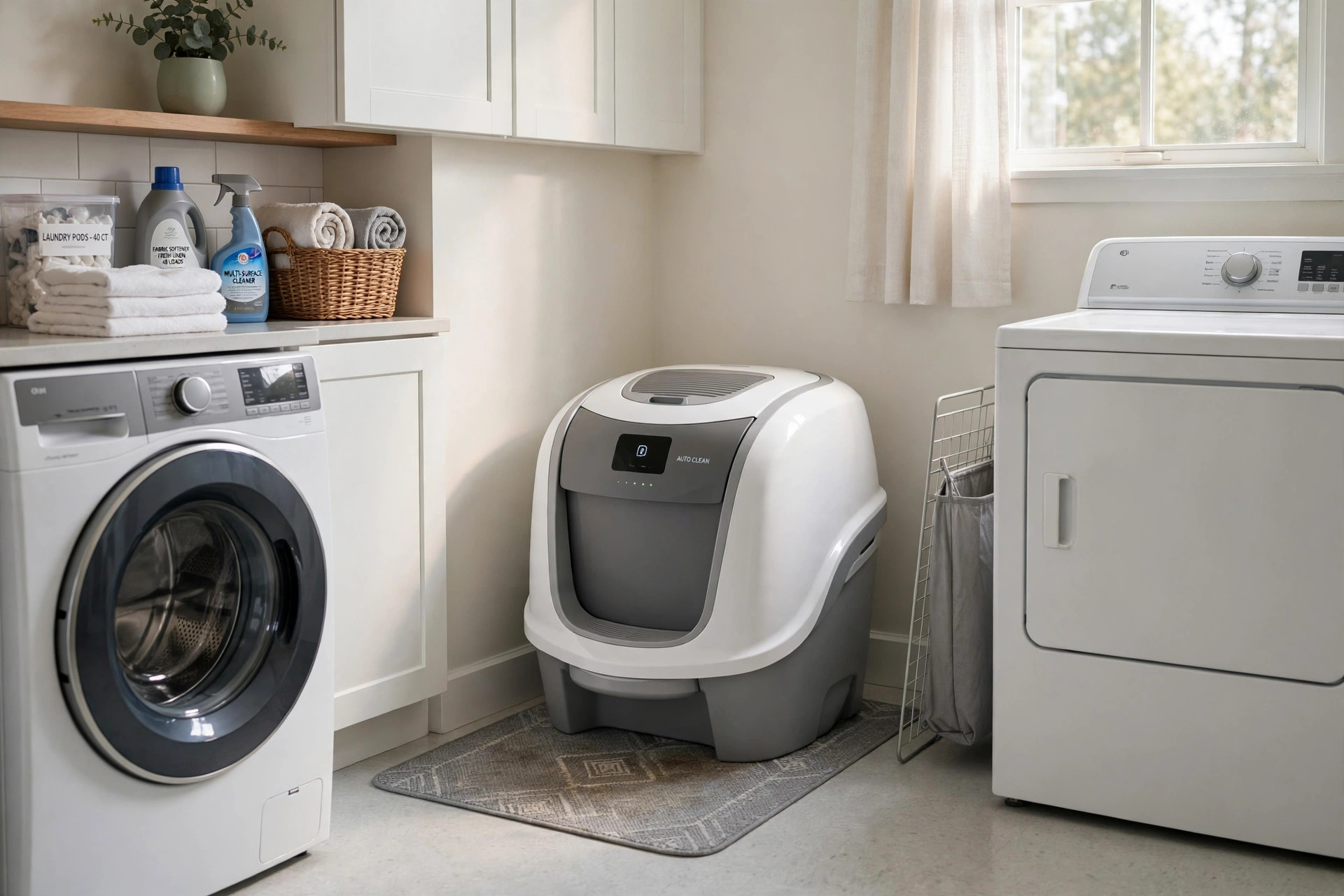
Place the box on a level floor. Rakes and drums jam on tilted floors. A washable mat under the box catches stray litter and guards the floor.
Pair the box with the right extras. A cat scratching post for large cats near the litter area gives the cat a place to stretch after each visit, and it keeps scratching away from the box itself.
Safety for Cats and Homes
Automatic boxes are safe when used right, but they deserve care.
Kittens under five pounds should not use them. A tiny kitten may not trigger the weight sensor. Wait until the kitten grows, or use a plain box first.
Sick, old, or slow cats need watching too. A cat that moves slowly may still be inside when the cycle starts. Turn off the automatic cycle and run it by hand while such a cat adjusts.
Never let children play with the box. The rake can pinch fingers. Keep the box in a room with a door that closes, or use a gate that only the cat can pass.
Electrical safety counts. Plug the box into a grounded outlet. Keep water bowls away from the motor. If the box sits in a damp laundry room, raise it slightly on a tray and check the cord often.
Litter dust is a home issue. Some litters throw up fine dust that settles on nearby surfaces. Low-dust clumping litter keeps the air cleaner. The Humane Society suggests keeping litter areas away from food and play spaces, which is easy advice to follow.
Trust test results over claims. Consumer Reports tests home products for safety and wear, and its notes on motors and sensors can guide a careful buyer.
For homes with both cats and dogs, the American Kennel Club offers plain guidance on keeping dogs away from cat litter, which protects both animals.
Frequently Asked Questions
Do cats actually use a self cleaning litter box? Most cats do. Start the box in manual mode with the power off. Let the cat use it like a plain box for a week. Then turn on the cycle. Cats that fear noise may need more time. A few cats never adjust, and those cats should keep a plain box.
How often must I empty the waste bin? For one cat, once a week is normal. For two cats, plan on twice a week. If the bin fills early, empty it early. A full bin can jam the rake or block the drum.
Can I use any litter in these boxes? No. Most automatic boxes need hard-clumping litter. Fine-grain clumping litter works best. Crystal and pellet systems need their own special litter. Check the manual before you pour in a new kind.
Do these boxes use a lot of power? No. They use a small motor for a few minutes each day. The cost is a few dollars a year. Smart models with Wi-Fi use a bit more, but the amount is still small.
Is a self cleaning litter box good for two cats? Yes, if the model is made for it. Pick a large box with a big waste bin. Empty the bin twice a week. Some owners buy two boxes for three cats, which is still less work than scooping two plain boxes daily.
What if the power goes out? The box stops cycling. The cat can still use it like a plain box. Scoop it by hand until the power returns. This is one reason to keep a scoop nearby even with an automatic box.
A Short Final Word
A self cleaning litter box for busy cat owners is a fair trade. It costs more than a plain tray, and it asks for weekly care. In return, it keeps the box clean through long workdays, cuts the daily chore, and gives cats a fresh place every time. Pick a size that fits the cat, use the right litter, and keep up with the bin. The box will do the rest.
References
American Kennel Club. (n.d.). Dog care and training resources. https://www.akc.org ASPCA. (n.d.). Pet care and animal welfare resources. https://www.aspca.org Chewy. (n.d.). Pet supplies. https://www.chewy.com Consumer Reports. (n.d.). Product reviews and ratings. https://www.consumerreports.org Petco. (n.d.). Pet supplies and services. https://www.petco.com PetMD. (n.d.). Pet health information. https://www.petmd.com The Home Depot. (n.d.). Home improvement products. https://www.homedepot.com The Humane Society of the United States. (n.d.). Animal protection and care. https://www.humanesociety.org The Spruce Pets. (n.d.). Pet care guides and product reviews. https://www.thesprucepets.com
Was this guide helpful?

About Michael Thompson
The My Garden US editorial team writes practical, in-depth home and garden guides for American homeowners — tested advice, no fluff.
You May Also Like

Best Pet Odor Eliminator for Yard and Grass: A Practical Guide
September 1, 2026 0 views
Pet Fence for Garden to Protect Flower Beds
March 5, 2026 0 views
Best Pet Odor Candle for Dog Smell Removal: A Practical Guide
June 13, 2026 0 views