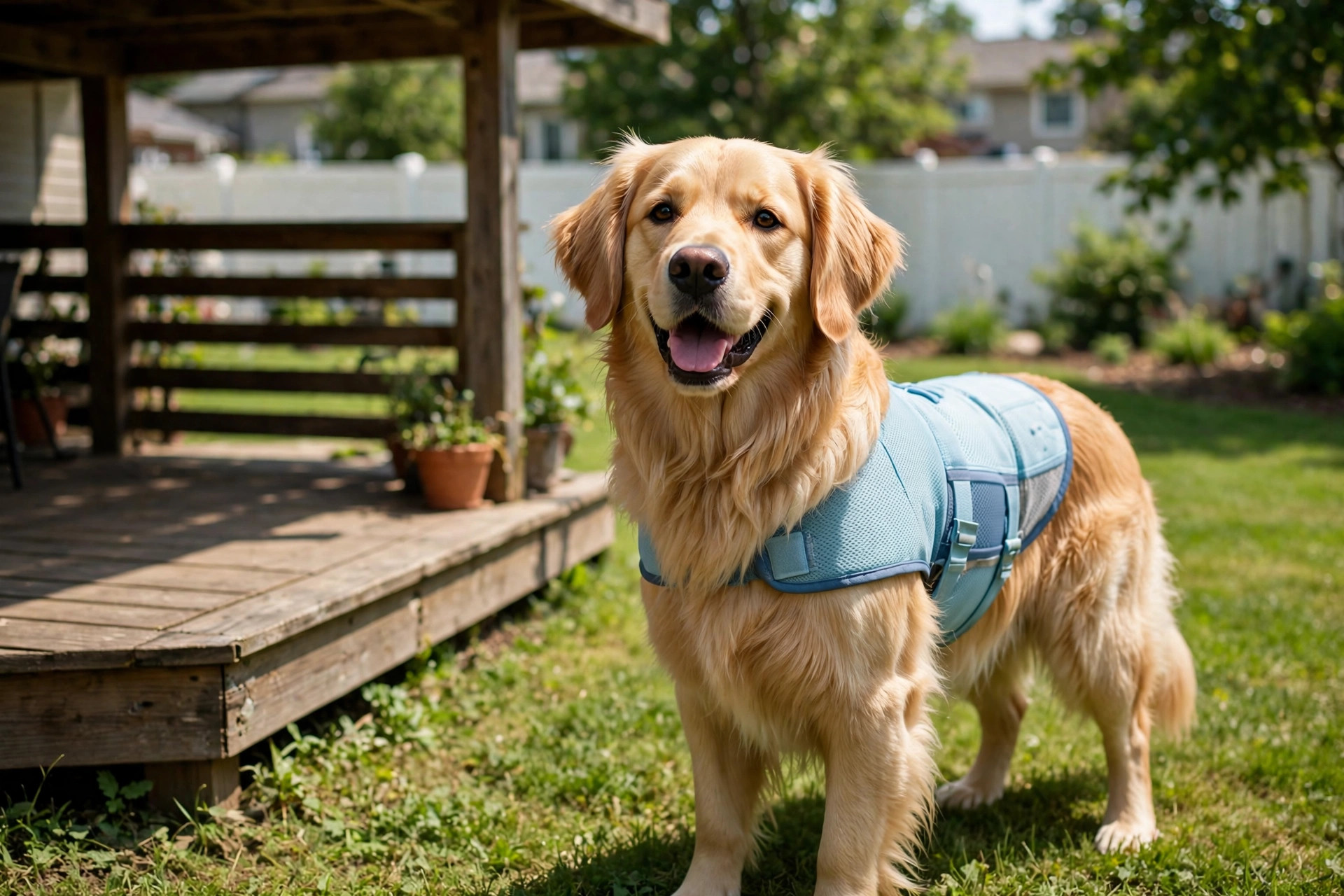

When the summer sun climbs high, a simple walk can turn risky for a dog. A dog cooling vest for summer walks heat protection is a light garment that soaks up water and releases cool air around the body of the animal. It can lower the core temperature of a dog by a few degrees and make a noon stroll far safer. Many dog owners in warm states now keep one by the leash rack all summer long.
This guide explains how these vests work, what to look for when you buy one, and how to use one the right way. You will also find honest facts about price, care, and safety. Read on before you take your dog out in the heat again.
Why Dogs Overheat on Summer Walks
Dogs do not sweat the way people do. A dog cools down mainly by panting, which moves heat out of the body through the tongue and mouth. A small amount of sweat leaves through the pads of the paws. That is all. In hot air this system can fail fast, and a thick coat traps heat close to the skin.
Some dogs face more danger than others. Dogs with short flat faces, such as bulldogs and pugs, have narrow airways and pant with less effect. Older dogs, puppies, and dogs with heart trouble tire faster in heat. Dark coats soak up more sun. Big dogs carry more mass and warm up sooner.
Hot pavement adds a second threat. Asphalt can run 40 degrees hotter than the air. At 90 degrees outside, the ground can burn paw pads in under a minute. Test the street with the back of your hand for five seconds before you walk. If it feels too hot for you, it is too hot for the dog.
Watch for early signs of trouble. Heavy panting that does not slow down, thick drool, red gums, glazed eyes, and a dog that lags or stumbles all point to heat stress. These signs mean the walk is over and the dog needs shade and water at once. Groups such as the ASPCA and the American Veterinary Medical Association warn that heatstroke can kill a dog in less than 15 minutes once it starts, so early action matters more than anything else.
What to Look for in a Dog Cooling Vest: Dog Cooling Vest for Summer Walks Heat
A cooling vest is a simple tool, but the details matter. The wrong vest can chafe, slip, or trap heat instead of easing it. Use this checklist when you shop.
First, look at coverage. A good vest covers the chest, back, and rib cage, where blood flows near the surface. Vests that cover only the back give less cooling than full wraps.
Second, check the material. Most vests use a soft mesh fabric that holds water and lets air pass through. The best fabrics pull heat away from the coat as water evaporates. Avoid plastic-lined vests that block air, since they can hold heat against the body.
Third, think about weight. A soaked vest should still feel light. Heavy vests strain the neck and shoulders on long walks. Light models dry faster and keep the dog moving with ease.
Fourth, look for adjustable straps. Dogs come in odd shapes, and a fixed size rarely fits well. Wide straps with hook-and-loop closures let you tune the fit around the neck, chest, and waist. Reflective trim is a bonus for evening walks, when light fades but heat lingers.
Fifth, make sure the vest works with a leash. Some vests have a slot or ring for a harness clip. If you walk your dog with a harness, try a no pull harness for strong pullers style pairing so the vest and harness do not fight each other. Many owners pair a vest with the best no pull dog harness for strong pullers to keep both comfort and control on hot walks.
Types of Cooling Vests for Dogs
Three main types of cooling vests sit on store shelves. Each works in a different way, and each suits a different kind of dog and climate.
Evaporative Cooling Vests
These are the most common and the most affordable. You soak the vest in cool water, wring it out, and put it on the dog. As the water evaporates, it draws heat from the coat. The effect lasts one to three hours, based on heat and humidity. In dry desert air they work very well. In humid coastal air they work less well, since damp air slows evaporation.
Pros: cheap, light, simple, no parts to freeze. Cons: need re-soaking on long outings, weaker in high humidity.
Phase-Change Cooling Vests
These vests hold flat packs filled with a special wax-like material. You chill the packs in cool water or the fridge, then slip them into pockets on the vest. The packs hold a steady cool temperature, often around 58 degrees, for two to four hours. They keep cooling even when the air is humid.
Pros: steady cooling, works in humidity, no dripping water. Cons: heavier than evaporative vests, packs need chilling before each walk, higher price.
Gel and Ice-Pack Vests
Some vests use gel packs or standard ice packs in large pockets. They give the strongest chill of all three types but add real weight. They suit short trips and dogs that run extremely hot, such as thick-coated breeds in deep summer. Always place a fabric layer between ice and skin to avoid cold burns.
Pros: strongest cooling, good for short hot outings. Cons: heavy, can feel bulky, cooling fades fast once packs melt.
How to Choose the Right Size and Fit
A cooling vest only works when it sits close to the coat. Air gaps break the cooling path. Yet a vest that is too tight will rub the skin raw and slow blood flow. Fit is the step most buyers rush, and it is the step that matters most.
Measure your dog before you order. Run a soft tape around the widest part of the chest, just behind the front legs. Measure the neck where the collar sits. Measure the back from the base of the neck to the base of the tail. Write down all three numbers. Compare them to the size chart of the exact brand you plan to buy, because sizes differ from maker to maker.
When the vest arrives, try it on indoors. You should be able to slide two fingers under each strap. Watch the dog move. The vest should stay in place at a trot without shifting to one side. Check the leg openings for rubbing. Let the dog wear it dry around the house for ten minutes first, so the new feel does not add stress on the first hot walk.
For deep-chested breeds such as greyhounds, look for long-cut styles. For barrel-chested breeds such as bulldogs, pick vests with wide chest panels. Small dogs chill faster, so avoid heavy phase-change models for toy breeds. Retailers like Petco and PetSmart list detailed size charts and allow easy returns, which helps when you shop between sizes.
Cost and Price
Cooling vests fit most budgets. Simple evaporative vests run from about 15 to 35 dollars. Mid-range models with better fabric and reflective trim run from 35 to 60 dollars. Phase-change vests with chill packs cost 50 to 90 dollars. Ice-pack vests sit near the top of the range, often 40 to 80 dollars, since the packs are the main cost.
Price follows brand and build. Big pet brands charge more for tested fabrics and clean stitching. No-name imports cost less but may shrink, fade, or lose their water-holding power after a few washes. Read reviews that mention fit and washing before you buy.
Think about running costs too. Evaporative vests need only tap water, so they cost nothing to reuse. Phase-change packs wear out after one to three seasons and may need replacing. Gel packs can crack if stored in the freezer, so follow the care label.
You can find these vests at most large pet stores and online shops. Sellers such as Chewy carry wide size ranges, and big home and garden chains like The Home Depot stock pet cooling gear in their outdoor departments each summer.
Care and Upkeep
A cooling vest is a simple garment, and simple care keeps it working for years. Rinse the vest in cool water after each use. Sweat, dust, and sunscreen from your hands all dull the fabric over time. Use mild soap only when the vest smells or looks dirty. Skip bleach and fabric softener, since both harm the cooling fibers.
Let the vest air dry flat or on a hanger. High dryer heat can warp the inner layers and melt hook-and-loop straps. Store the vest clean and fully dry in a cool drawer. Damp storage breeds mold and stale smells.
For phase-change and ice-pack models, remove the packs and store them flat. Do not bend gel packs, and do not stack heavy items on them. Check packs each spring for leaks or cracks before the heat returns. Replace damaged packs rather than risk a mess on the dog.
Inspect the vest itself once a month during the season. Look for frayed straps, worn hook-and-loop pads, and thin spots in the fabric. Small tears can be sewn by hand, but a vest that no longer holds water evenly should be retired. Sites like PetMD offer vet-reviewed guides on summer pet care that pair well with these habits.
Safety Tips for Hot Weather Walks
A vest is an aid, not a shield. It buys your dog extra comfort, but it does not make a 100-degree walk safe. Use these rules every summer.
Walk early or late. Plan walks before 9 in the morning or after 7 in the evening, when the sun sits low and pavement cools. Midday heat is the main cause of heat injury in dogs, vest or no vest.
Bring water and offer it often. Carry a collapsible bowl and a bottle of fresh water. Offer a drink every 10 to 15 minutes. Dogs in vests still lose water through panting, so do not let the cool feeling fool you.
Keep walks short in high heat. Cut the usual route in half when the temperature tops 90 degrees. Watch the dog, not the clock. If the dog seeks shade or slows down, head home.
Never leave a dog in a parked car. Cars heat to lethal levels in minutes, even with windows cracked. The Humane Society of the United States shares clear guidance on this danger each year.
Know the signs of heatstroke. Fast heavy panting, drooling, vomiting, bright red gums, confusion, and collapse are red flags. Move the dog to shade, offer cool water, wet the paws and belly with cool water, and call the vet at once. Do not use ice water on a dog in heatstroke, since it can shock the system.
After the walk, give your dog a cool rest spot. A shaded elevated dog bed for outdoor patio use lifts the dog off hot deck boards and lets air flow under the body. For wet days, a waterproof outdoor dog bed for the patio keeps the rest dry and clean. Pairing a cooling vest with a breezy rest spot is one of the simplest ways to beat summer heat.
Frequently Asked Questions
Do dog cooling vests really work?
Yes, within limits. Tests and owner reports show that a wet evaporative vest can keep the coat several degrees cooler than the air for an hour or more. Phase-change models hold a steadier chill. No vest replaces shade, water, and short walks. Think of it as one layer of a heat safety plan, not the whole plan.
How long does a cooling vest stay cool?
An evaporative vest stays cool for one to three hours, based on heat, wind, and humidity. Phase-change packs hold cool for two to four hours. Carry extra water on long outings so you can re-soak an evaporative vest when it dries out. In very humid weather, expect shorter cooling times from water-based vests.
Can my dog wear a cooling vest all day?
Short outings are best. Most vests are built for walks, hikes, and play sessions of a few hours. All-day wear can rub the skin and trap moisture under the coat. Take the vest off indoors, dry the coat, and check for red spots after each use. If the skin looks sore, give the dog a rest day.
Do short-haired dogs need a cooling vest?
Short-haired dogs still overheat, and their thin coats give less shade from the sun. Light-colored short coats reflect some sun, but dark short coats soak it up. A light evaporative vest helps any dog in strong heat. Dogs with very thin coats also gain mild sun protection from the fabric.
Can I make a cooling vest myself?
A damp bandana around the neck helps on mild days, but it covers too little area for real heat. A full vest spreads cooling over the chest and back, where it counts. The American Kennel Club and The Spruce Pets both note that fitted cooling gear beats home fixes for serious heat.
A Final Word
Summer should be a happy season for dogs, full of walks, parks, and long evenings outside. Heat takes some care, but it does not have to take the joy. A dog cooling vest for summer walks heat relief is a small buy that pays off every hot day. Pick the right type, fit it well, keep it clean, and pair it with smart habits like early walks and plenty of water. Your dog will thank you with a wagging tail all season long.
References
American Kennel Club. (n.d.). Dog care and training resources. https://www.akc.org American Veterinary Medical Association. (n.d.). Pet care resources. https://www.avma.org ASPCA. (n.d.). Pet care and animal welfare resources. https://www.aspca.org Chewy. (n.d.). Pet supplies. https://www.chewy.com Petco. (n.d.). Pet supplies and services. https://www.petco.com PetMD. (n.d.). Pet health information. https://www.petmd.com PetSmart. (n.d.). Pet supplies and services. https://www.petsmart.com The Home Depot. (n.d.). Home improvement products. https://www.homedepot.com The Humane Society of the United States. (n.d.). Animal protection and care. https://www.humanesociety.org The Spruce Pets. (n.d.). Pet care guides and product reviews. https://www.thesprucepets.com
Was this guide helpful?

About Jennifer Lee
The My Garden US editorial team writes practical, in-depth home and garden guides for American homeowners — tested advice, no fluff.
You May Also Like

Outdoor Dog House for Two Large Dogs: A Practical Guide
May 10, 2026 0 views
Finding the Best Dog Nail Grinder Quiet for Nervous Dogs
June 8, 2026 0 views
Outdoor Dog Bed Raised Cot for Camping: A Practical Guide
March 22, 2026 0 views