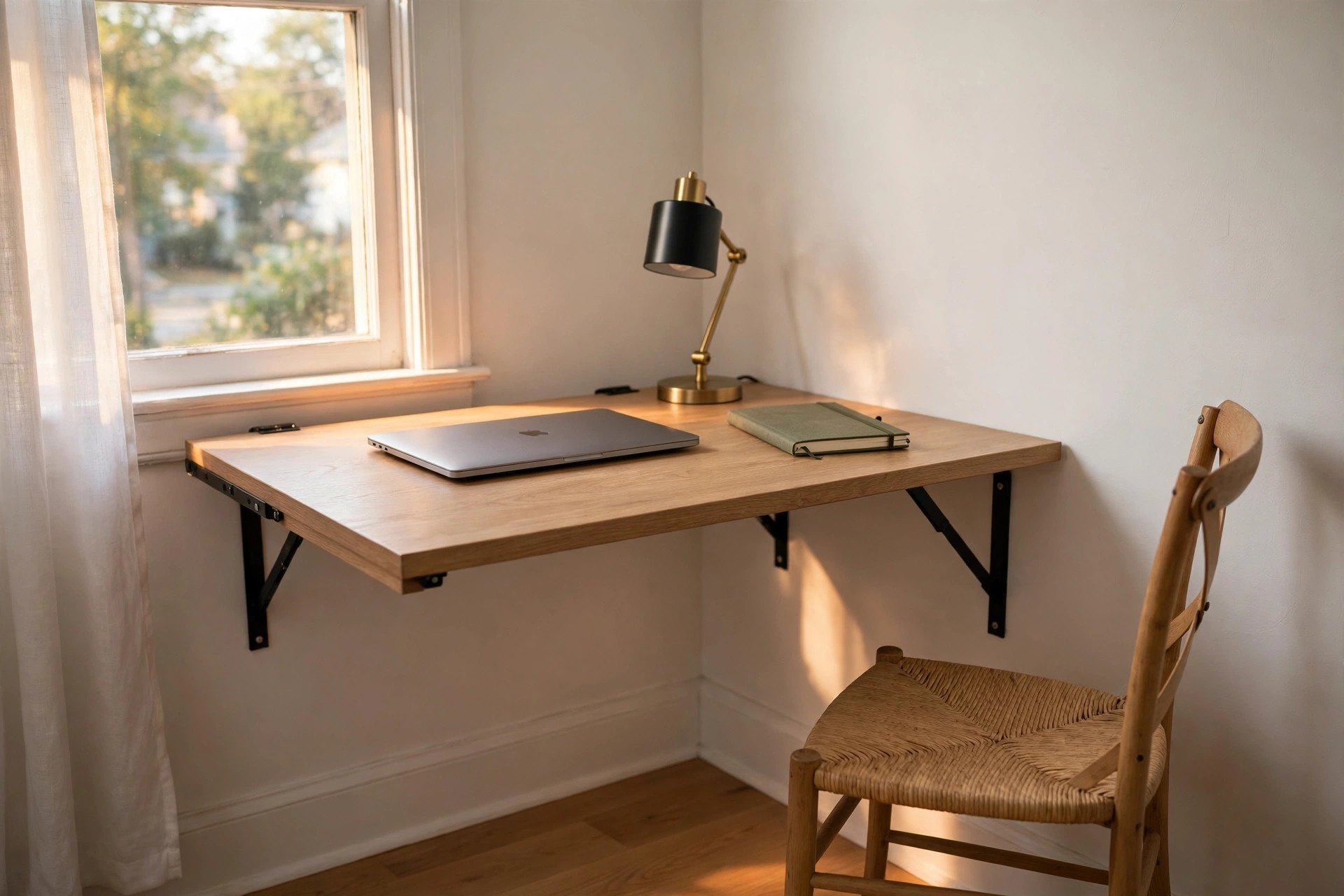

Many homes are small. Rooms are few. A kitchen table may be the only flat surface in the house. A wall mounted fold down desk for small spaces can change that. It bolts to the wall. It opens into a full work top. It folds flat when the work day is done. The floor below it stays free. This guide explains why this style of desk works so well, what to look for before you buy, which types are on the market, what they cost, how to care for them, and how to use them in safety. It also answers the questions that buyers ask most often.
Why It Matters
Floor space is the scarcest thing in a small home. A standard desk needs about eight square feet of floor, plus more room for the chair and for walking past. In a studio apartment or a small bedroom, that floor may not exist. A wall mounted fold down desk for small spaces asks for none of it. It lives on the wall, like a picture frame. When you need it, you lower the work top. When you do not, you lift it back up. The room returns to full size in five seconds.
This matters for more than comfort. A set place for work helps the mind. People who work at the kitchen table often find that work follows them into meals. A desk that folds away draws a line between work hours and rest hours. The act of folding the desk shut can be the signal that the day is done. That small ritual has real value for people who work from home.
A fold down desk also matters for shared rooms. Many small homes have one spare corner, used by two or three people. A child may use the desk for homework in the afternoon. A parent may use it for office work in the evening. Because it folds away, the corner can serve both uses without crowding the room. Small-space living guides often point to this kind of double duty furniture as the heart of a well planned small home. Makers of office furniture also publish useful ergonomic workspace guidance for people who work long hours at a desk.
What to Look For: Wall Mounted Fold Down Desk for Small Spaces
Not every fold down desk is built the same. The differences lie in size, load rating, hinge design, and the wall that will hold it.
Size When Open
Measure the space where the desk will hang. The work top should be wide enough for your needs but not so wide that it hits a door, a window, or a bed frame when it opens. A width of 30 to 36 inches suits a laptop and a lamp. Writers who spread papers will want 42 inches or more. Note the depth as well. Most fold down tops are 16 to 24 inches deep. That is enough for a laptop, though a full keyboard and a large monitor may want the deeper end of the range.
Also check the closed depth. When folded, a good unit stands three to six inches off the wall. Anything deeper than that will poke into the room and catch on clothes and elbows.
Weight Rating
Every wall desk has a weight rating. This is the most pounds the open top can carry. Cheap models may rate at 15 to 25 pounds. That holds a laptop and a cup of coffee. It will not hold a monitor arm, a printer, and a stack of books. Look for a rating of 40 pounds or more if you plan to keep a monitor on the desk. Keep in mind that the rating assumes correct mounting into studs or with the right anchors. The rating means little if the desk is fixed to weak plaster with small screws.
Hinge and Support Design
The hinge is the heart of the desk. It opens and closes thousands of times over the life of the desk. Look for steel hinges, not plastic. Two kinds of support are common. Chain or cable supports hang the front edge of the top from the back board. They are simple and strong, but the chains show when the desk is open. Folding bracket supports swing out from under the top. They hide away when closed and give a clean look, but they add weight and cost. Either design works well if it is made of solid metal.
The Wall Itself
A wall desk is only as strong as the wall behind it. Solid wood studs make the best anchor. Brick and concrete walls also hold well, with masonry anchors. Drywall alone will not hold a loaded desk unless you use proper toggle bolts into the studs. Before you buy, find your studs with a stud finder and note their spacing. Standard spacing is 16 inches in American homes. Buy a desk whose back board or mounting rail can span at least two studs.
Types and Options
Makers sell several styles of fold down desk. Each suits a different room and a different habit.
The Plain Drop-Leaf Panel
This is the simplest form. A flat top is hinged to a back board. Chains or brackets hold it level. There is no storage and no cabinet. It is light, cheap, and easy to mount. It suits people who only need a surface, such as students with a laptop or writers with a notebook. When folded, it is nearly invisible.
The Cabinet-Style Desk
This type closes into a wall cabinet with doors. Inside the cabinet are small shelves and cubbies for books, pens, and a lamp. When you open the door, it becomes the work top. This style suits living rooms and bedrooms, where an open desk would look out of place.
The Desk With Shelves Above
Some models add fixed shelves above the fold down top. The shelves hold books and office supplies while the desk is in use or folded away. Make sure the shelves sit high enough that you do not hit your head when you sit at the desk.
The Wall Mount Folding Desk for an Apartment Office
Some desks are made to look like furniture rather than office gear. They use wood veneer, rounded edges, and soft colors. A wall mounted folding desk for an apartment office of this kind blends into a living room. Guests may never guess it is a desk. These models often cost more than plain panels, but they suit people who care about how the room looks when the desk is closed.
For a slightly different approach, some buyers choose a small corner desk with drawers instead. That style keeps its footprint on the floor but makes use of a dead corner. If your corner is truly tight, though, the wall mounted fold down form is the stronger choice, since it leaves the floor fully clear. Many shops that carry wall-mounted desks show both styles side by side, which makes comparison easy.
Cost and Price
Prices vary widely. A plain drop-leaf panel of basic material may cost between 40 and 90 dollars. A cabinet-style desk with shelves and a finished wood look may cost between 150 and 400 dollars. Custom or high-end designs can pass 500 dollars.
Three things drive the price. The first is material. Solid wood costs more than particle board. The second is hardware. Steel hinges and folding brackets cost more than plastic parts and chains. The third is finish. Painted or veneered surfaces cost more than raw pressed board.
Do not judge by price alone. A 60 dollar desk with steel hinges may outlast a 150 dollar desk with plastic ones. Read the weight rating and check reviews of compact desks before you decide. Groups like Consumer Reports also publish buying guides that compare desks and hardware side by side.
Shipping is another cost to weigh. These desks are flat and wide. Some sellers charge extra for freight. Check the total delivered price, not just the sticker price, when you compare.
Care and Upkeep
A fold down desk needs little care, but a small amount of attention will keep it working for years. Wipe the work top once a week with a damp cloth. Dry it at once, since standing water can swell particle board. Keep the hinge free of dust.
Check the mounting screws once a year as well. Houses settle. Wood studs shrink a little as they age. Screws can loosen over time. If the desk wobbles when you lean on it, tighten the screws.
Keep the desk out of direct sun if you can. Sun fades the finish and dries out the wood. Keep it away from steam as well. A desk mounted near a shower or a kettle will absorb damp air, and the board may warp.
Safety
A wall desk can hurt a child or a pet if it falls. Mount it right, and this risk is very small. Follow the maker’s instructions to the letter. Use the screws and anchors that come in the box, or buy stronger ones of the same type. Mount into studs whenever you can.
Mind the closing action. A heavy top that drops fast can pinch fingers. Teach children to lower the desk slowly, with both hands. Some models have soft-close hinges that slow the fall. If yours does not, hold the top as you lower it. Buy wall anchors and mounting hardware rated for the job, and follow the maker’s instructions to the letter.
Do not overload the desk. The weight rating is a hard limit, not a suggestion. A monitor, a lamp, a laptop, and a stack of papers can add up faster than you think. Laptop and monitor reviews often list product weights, which helps you add them up. Also, do not sit on the open desk, and do not let children climb on it. It is a work surface, not a step.
Check safety guidance from public agencies when you mount any heavy object on a wall in a home with small children. Furniture tip-over is a known cause of injury, and the same anchoring rules apply to wall desks.
Frequently Asked Questions
Can I mount a fold down desk on a hollow wall?
Yes, but with care. Standard drywall is weak. You must find the studs behind it and drive the main screws into them. If the desk cannot span two studs, use heavy-duty toggle bolts for the rest of the points. A desk mounted only with small plastic anchors will pull out of the wall in time. Test the mount by pressing down hard on the open top before you trust it with your computer.
How much weight can these desks hold?
Most hold 20 to 50 pounds when mounted well. Plain panels sit at the low end. Cabinet styles with strong brackets sit at the high end. Check the rating on the box and stay below it. If you need to hold a large monitor, look for models rated at 50 pounds or more, and mount into two studs.
Are they sturdy enough for daily office work?
Yes, if you buy well. A desk with steel hinges, mounted into studs, can serve as a full-time office desk for years. Many remote workers use them every day, sometimes paired with height-adjustable desks for variety through the week. The key is the mount. A desk that is fixed well feels as solid as a desk with legs. One that is fixed poorly will wobble and pull loose.
Can I use one as a fold down wall desk for a bedroom office?
Yes. This is one of the most common uses. Mount it on a free wall in the bedroom, add a chair that tucks away, and you have an office that vanishes at bedtime. Choose a quiet finish and keep cables tidy with clips so the closed unit looks calm. A small lamp on the top or on a shelf above makes it easy to work at night without waking the room.
What tools do I need to install one?
A stud finder, a level, a drill, a screwdriver, and a tape measure are enough for most models. The box usually brings the screws and anchors. Stores like IKEA sell many folding desks with simple tool lists like this one. A second person helps, because the unit is wide and must be held level while you mark the holes. Allow an hour for the job.
Should I choose this or a floating shelf desk for a tiny bedroom office?
A floating shelf desk is fixed and always open. It costs less and holds light loads well, but it never folds away. A fold down desk gives you your wall back when you are done. If the room is truly tiny, or if the desk sits in a bedroom where you want no office in sight at night, the fold down form is the better pick. If you always need the surface, the fixed shelf is simpler and cheaper.
A Final Word
A wall mounted fold down desk for small spaces is a small thing that solves a large problem. It gives a small home a real place to work without taking floor it cannot spare. Choose a size that fits your wall, a weight rating that fits your gear, and hardware made of steel. Mount it into studs, keep it clean, and respect its limits. Do that, and the desk will serve you well for many years. Research on desk design and posture supports this plain approach: fit the desk to the body and the room, and keep it simple. For workers who need to stand part of the day, an ergonomic standing desk can pair with the same small room, used in turns with the wall desk for variety through the week.
References
Consumer Reports. (n.d.). Product reviews and ratings. https://www.consumerreports.org Herman Miller. (n.d.). Office furniture and ergonomic seating. https://www.hermanmiller.com IKEA. (n.d.). Home furnishings. https://www.ikea.com Lowe’s. (n.d.). Home improvement products. https://www.lowes.com PCMag. (n.d.). Technology product reviews. https://www.pcmag.com Steelcase. (n.d.). Office furniture and workplace research. https://www.steelcase.com The Spruce. (n.d.). Home and garden advice. https://www.thespruce.com UPLIFT Desk. (n.d.). Standing desks and ergonomic office furniture. https://www.uplift-desk.com Wayfair. (n.d.). Furniture and home goods. https://www.wayfair.com Wirecutter. (n.d.). Product reviews from The New York Times. https://www.nytimes.com/wirecutter
Was this guide helpful?

About James Carter
The My Garden US editorial team writes practical, in-depth home and garden guides for American homeowners — tested advice, no fluff.
You May Also Like
Small Desk for Bedroom Corner With Shelves: A Complete Buying Guide
February 14, 2026 0 views
Ergonomic Footrest With Massage Rollers Under Desk: A Guide for Home Workers
May 15, 2026 0 views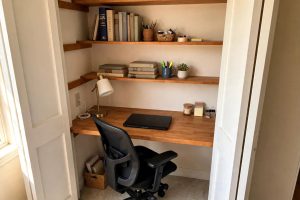
Home Office Closet to Office Conversion Kit: A Complete Guide
February 21, 2026 0 views