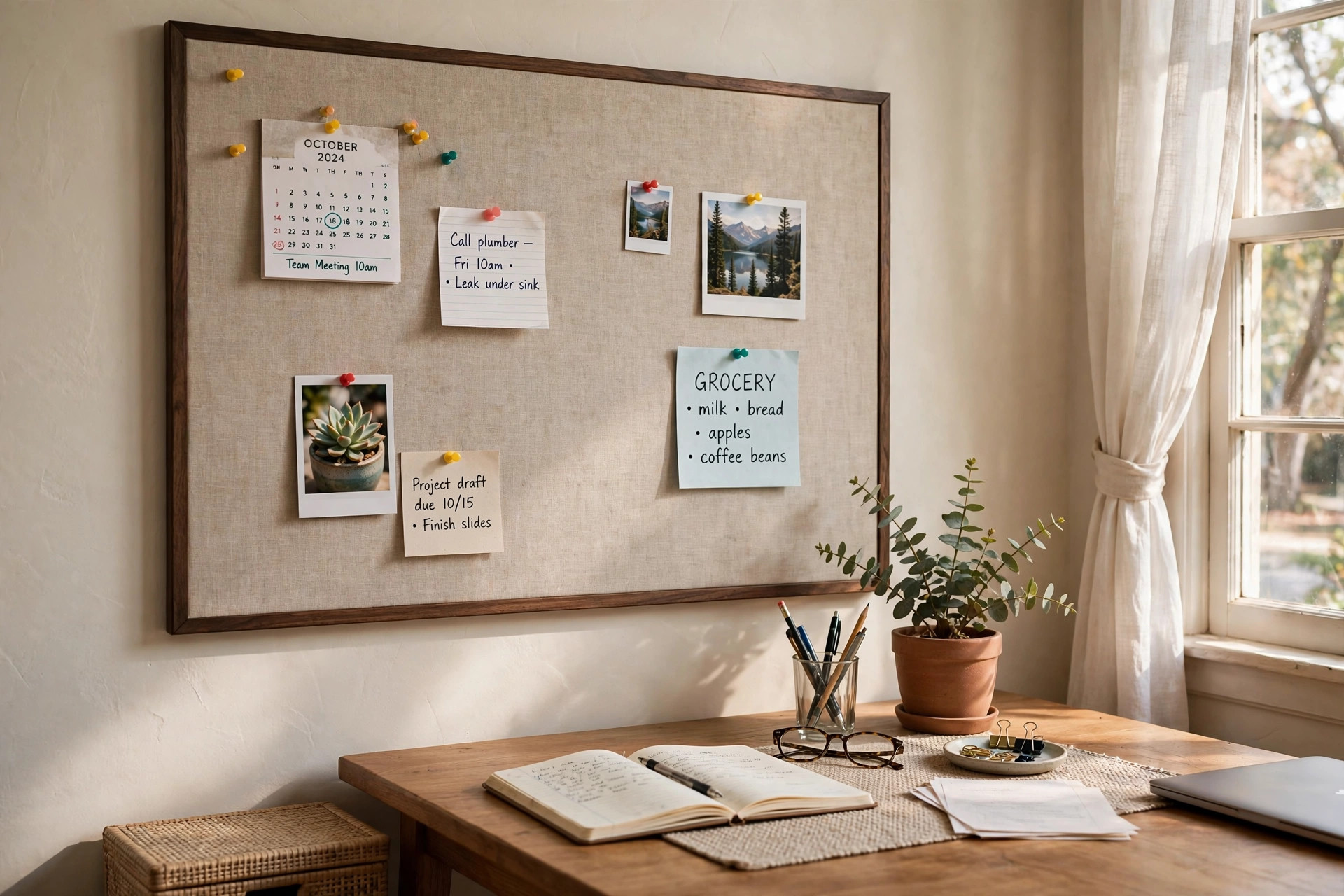

A home office bulletin board fabric covered large is one of the simplest tools a person can put on a home office wall. It is a wide board covered in cloth, and it holds pins, notes, photos, and small cards where the eye can find them fast. Many workers keep one above the desk. Deadlines, phone numbers, and ideas sit in plain view instead of buried in a drawer. The fabric gives the board a soft look that plain cork boards lack. It can match a curtain, a rug, or a chair. It also absorbs a little sound, which helps in a small room. This guide explains why such a board matters, what to check before buying one, the main types, the price range, care, safety, and answers to common questions.
Why a Large Fabric Bulletin Board Matters
It Clears the Desk
A desk covered in loose paper slows a worker down. Each stray note competes for attention. A large fabric bulletin board moves that paper to the wall. The desk surface stays open for the keyboard, the mouse, and the current task. Many office guides point out that a clear desk makes deep work easier. When notes live on the board, the worker can glance up instead of shuffling piles. This small change in habit can save real time each day. A board that is large enough matters here. A small board fills in a week. A large board can hold a full month of plans at once.
It Keeps Plans in Sight
Sticky notes on a monitor frame can block the screen. Lists in a notebook stay closed. A wall board keeps the week visible at all times. A worker can pin a calendar card, a project outline, and a client list side by side. The eye moves across them without opening a single file. Many remote workers still like paper tools for this reason. A whiteboard for planning sessions works for writing, but pinned paper holds printed items that writing cannot replace. Many home offices use both.
It Softens the Room
Home offices often look hard and flat. A desk, a monitor, and bare walls can feel cold. A fabric covered board adds texture. Cloth in linen, cotton, or a wool blend warms the wall the way a rug warms a floor. The board also damps echo in a small office with hard floors. That helps on phone calls. A large board covers enough wall area to make a real difference in both looks and sound.
What to Look for and How to Choose: Home Office Bulletin Board Fabric Covered Large
Size and “Large”
Large has no single legal meaning in this market. In practice, a board about 36 by 24 inches is the start of large. Many models run 48 by 36 inches. A board 48 by 30 inches is also common. Before buying, measure the wall space above the desk. Leave at least six inches between the desk top and the board bottom so books and monitors can sit under it. Also measure the door swing and the window trim. A board that covers a light switch is a daily annoyance. For most desks between 48 and 60 inches wide, a board two thirds as wide looks right and gives ample pin space.
Fabric Type
Linen is the classic choice. It has a natural weave that hides pin holes well. Cotton canvas is smoother and takes color better. A wool blend resists creases and looks rich, but it costs more. Light colors brighten a dark room. Dark colors hide stains but can darken a small space. Some boards use patterned fabric with ribbons that cross in a grid. These hold photos and cards without pins. Check that the fabric is stretched tight at the back. Loose fabric will sag over time.
Backing Material
Under the fabric sits the layer that holds the pins. Real cork holds pins well and heals around the hole. Fiberboard is firm and quiet. Foam core is light but wears out faster with repeated pinning. A board that is at least half an inch thick gives pins a firm seat. Thinner boards let pins wobble or fall.
Frame and Mounting
A bare fabric edge can fray over the years. A frame protects the edge and stiffens the board. Wood frames suit traditional rooms. A bulletin board with a wooden frame adds a finished look that matches many desks. Aluminum frames look modern and weigh less. Frameless boards rely on the backing panel alone and hang with clips or a cleat. Check what mounting hardware ships in the box. Large boards need two mounting points at least. A French cleat, a flat wood strip screwed to the wall with a matching strip on the board, is the safest choice for heavy models.
Types and Options
Plain Fabric Over Cork
This is the most common type. A cork sheet is covered with fabric and set in a frame. It accepts push pins and map pins with ease. Pins go in and come out without tearing the cloth. These boards suit general use: notes, calendars, photos, and lists. They are widely stocked by office suppliers. Buyers can compare sizes and fabrics at sites such as Staples or Office Depot, which carry many ready-made models.
French Memo Board with Ribbon Grid
A padded board with crossed ribbons holds items without pins. Cards and photos slide under the ribbon. The padded front looks soft and decorative. These boards are popular in home offices that double as guest rooms, since they look like wall art. They hold less weight than a cork board. They suit photos, invitations, and single sheets.
Fabric Covered Combo Board
Some makers sell a board that is half fabric and half dry-erase surface. One side pins, the other side writes. This suits small rooms where one wall panel must do two jobs. These combo boards cost more than single-surface boards. They also need the marker tray within reach, so check the height before mounting.
Bare Board for Custom Covering
A plain cork or fiberboard panel without fabric costs less. A buyer with a staple gun can cover it with any fabric from a craft store. This path gives full control of color and pattern. It takes about an hour and basic tools. Guides for fabric crafts at The Spruce and home project sites such as The Container Store show step by step methods. The savings are real, but the finish is rarely as tight as a factory board. Beginners should practice on a small board first.
Pinless Magnetic Fabric Board
A newer type hides a steel sheet under the fabric. Magnets hold notes through the cloth. No holes appear, so the fabric stays clean for years. The magnets must be strong enough to grip through the fabric and the paper. Thin fabric works best with this design. These boards cost more than cork boards. They suit workers who rearrange the board often and dislike pin holes.
Cost and Price
Prices follow size, fabric, and frame. A small fabric board under 24 inches wide may cost less than twenty dollars. A large fabric covered board, 36 by 24 inches and up, usually runs between thirty and ninety dollars. Premium models with wool fabric, hardwood frames, and French cleats can pass one hundred and twenty dollars. Custom and oversize boards, such as 48 by 36 inches in a designer fabric, can reach two hundred dollars or more.
What drives the price is simple. More cork and more fabric cost more. Hardwood frames cost more than plastic or aluminum. For a fabric board, the mid range offers the best value. A board around fifty to seventy dollars in linen over cork, with a wood frame and a cleat, serves most home offices for a decade.
Shoppers can compare prices at large home retailers. Wayfair lists hundreds of fabric boards in many sizes. IKEA offers simpler models at low prices. Office superstores run sales in late summer when students buy dorm supplies. Buying then can cut the price by a quarter.
Care and Upkeep
Fabric boards need little care, but a few habits keep them looking new.
Dust the fabric once a month with a soft brush or a vacuum with an upholstery nozzle. Work from top to bottom so dust falls to the floor, not into the weave. For light stains, blot with a damp cloth and a drop of mild soap. Do not soak the fabric. Water can reach the cork and loosen the glue. Let the spot dry fully before pinning over it.
Pin holes in linen and cotton close up on their own. To keep the fabric even, move pins to new spots from time to time rather than reusing the same hole. Remove pins that are no longer needed. A board crowded with dead notes looks messy and loses its use. For heavy items such as tool rolls and power strips, use a pegboard wall organizer instead; a fabric board is meant for paper and light cards.
Sunlight fades fabric over weeks and months. If the board hangs across from a window, choose a fabric rated for light resistance. In humid rooms, check the back of the board once a year. Cork can swell in damp air. A small gap between the board and the wall, made with bumpers, lets air move behind it.
Every year, take the board down and check the mounting hardware. Screws in drywall anchors can work loose. Tighten or replace them. This takes ten minutes and prevents a fall.
Safety
A large board is heavy. A 48 by 36 inch cork board in a wood frame can weigh fifteen to twenty pounds. Never hang such weight on a single nail or on adhesive strips alone. Use wall anchors rated for the weight, or screw into a wall stud. A stud finder costs little and removes the guesswork. If the board hangs above a desk where a person sits, solid mounting is not optional. A falling board can injure and can smash a monitor.
Keep the board away from heat. Do not mount it over a radiator or a space heater. Heat dries cork and can loosen fabric glue. Keep it clear of open flames and candles. Fabric and cork both burn. Place candles on the desk, never on a shelf above the board.
Pins have sharp points. In homes with small children, mount the board high enough that a child cannot reach the pins. Use flat headed push pins rather than long map pins, since flat heads are harder to pull out. Sweep the floor under the board now and then. Dropped pins hide in carpet and can pierce a bare foot.
Electrical safety matters too. Before drilling, check for wires behind the wall. In kitchens turned into offices, or in walls shared with bathrooms, pipes may also run behind the plaster. A cheap stud finder with wire detection helps. When in doubt, hire a handyman for the mounting.
Frequently Asked Questions
What size counts as a large bulletin board?
There is no fixed rule. Most sellers call boards 36 by 24 inches and larger “large.” A board 48 by 36 inches is often called extra large. Measure the wall first. The board should be narrower than the desk under it and leave six inches of clearance above the desk surface.
Is fabric better than plain cork for a home office?
For looks, yes. Fabric comes in many colors and textures and hides pin holes. Plain cork looks the same everywhere. For pure function, both hold pins well. A fabric covered board over a real cork base gives the best of both: the grip of cork and the finish of cloth. Many home office design articles at Architectural Digest favor fabric boards for rooms that guests may see.
Can I hang a large fabric board on drywall?
Yes, with the right anchors. A board under ten pounds can hang on two toggle bolts or heavy duty wall anchors. A board over ten pounds should reach at least one wall stud. Use a French cleat for the heaviest models. Never trust adhesive strips for a large board. They can fail in heat or humidity.
How do I stop pin holes from showing?
Choose a woven fabric such as linen or burlap. The weave closes around the pin. Move pins to fresh spots instead of reusing holes. For a board that must stay perfect, consider a magnetic fabric board that needs no pins at all. Office furniture makers such as UPLIFT Desk and workspace brands like Herman Miller discuss pin-free organization in their guides, though their focus is desks and seating.
Will a fabric board help with room echo?
Somewhat. A large cloth surface absorbs high frequency sound. It will not replace acoustic panels, but it softens the ring of a small hard room. Pair it with a rug and curtains for a bigger effect. Technology reviewers at PCMag note that soft furnishings help microphone quality on video calls, which matters to many home workers.
Can I make my own large fabric bulletin board?
Yes. Buy a cork or fiberboard panel, batting, fabric, and a staple gun. Wrap the panel like a gift and staple the fabric to the back. Total cost often runs under thirty dollars for a 36 by 24 inch board. Craft instructions from Wirecutter list the materials needed. The finish takes practice. A first attempt may wrinkle at the corners.
A Short Final Word
A home office bulletin board fabric covered large is a quiet worker. It asks for one wall, a few screws, and a set of pins. In return it gives order, color, and a calmer room. Choose a size that fits the wall, a fabric that suits the light, and a backing that holds pins well. Mount it with care. Dust it now and then. It will serve the home office for many years, holding the plans that matter where the eye can always find them.
References
Architectural Digest. (n.d.). Home design ideas. https://www.architecturaldigest.com Herman Miller. (n.d.). Office furniture and ergonomic seating. https://www.hermanmiller.com IKEA. (n.d.). Home furnishings. https://www.ikea.com Office Depot. (n.d.). Office supplies and furniture. https://www.officedepot.com PCMag. (n.d.). Technology product reviews. https://www.pcmag.com Staples. (n.d.). Office supplies and furniture. https://www.staples.com The Container Store. (n.d.). Storage and organization products. https://www.containerstore.com The Spruce. (n.d.). Home and garden advice. https://www.thespruce.com UPLIFT Desk. (n.d.). Standing desks and ergonomic office furniture. https://www.uplift-desk.com Wayfair. (n.d.). Furniture and home goods. https://www.wayfair.com Wirecutter. (n.d.). Product reviews from The New York Times. https://www.nytimes.com/wirecutter
Was this guide helpful?

About Robert Taylor
The My Garden US editorial team writes practical, in-depth home and garden guides for American homeowners — tested advice, no fluff.
You May Also Like
Adjustable Height Desk Converter for Existing Table
April 18, 2026 0 views
Adjustable Footstool for Under Desk Leg Support
May 28, 2026 0 views
Compact Treadmill Desk for Walking While Working: A Plain Guide
March 30, 2026 0 views