
---
Table of Contents
Table of Contents
You set up the perfect workroom. Then you get on your first video call and hear yourself coming back like you are shouting in a gym. Every word bounces off the bare walls, the hard floor, and the big window. Your voice sounds thin and far away, and clients notice. This article explains how to fix echo in workroom in simple terms.
Echo happens because hard surfaces reflect sound instead of absorbing it. The fix is simple in concept: add soft stuff. You do not need a recording studio budget. Most echo problems yield to rugs, curtains, and a little rearranging.
Fix Echo in Workroom: Understand what you are fighting
When it comes to fix echo in workroom, getting the details right makes all the difference.

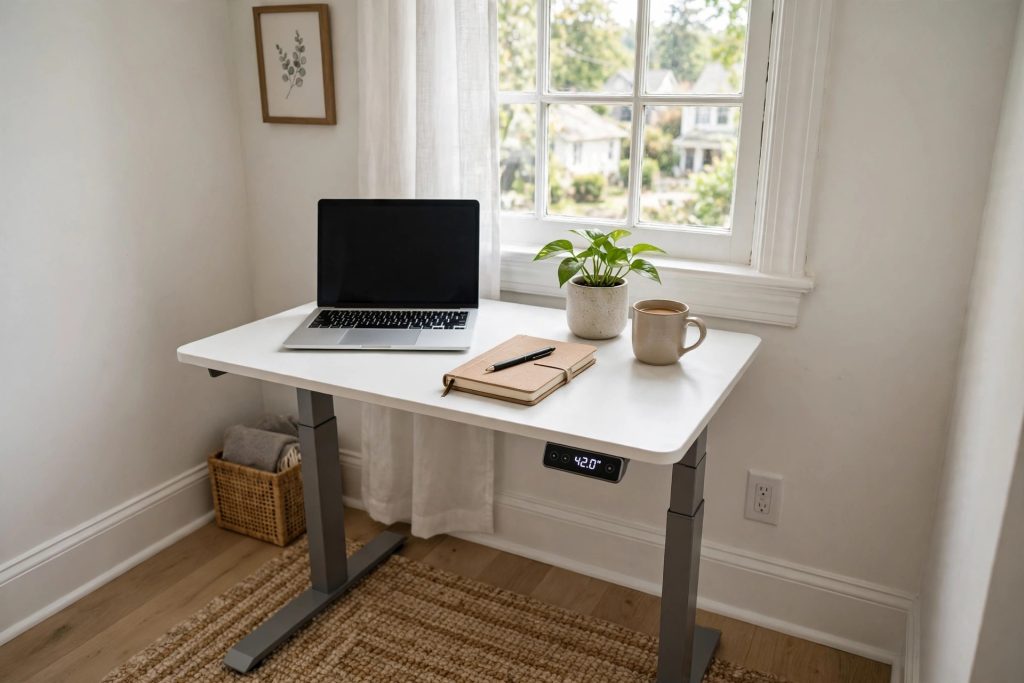
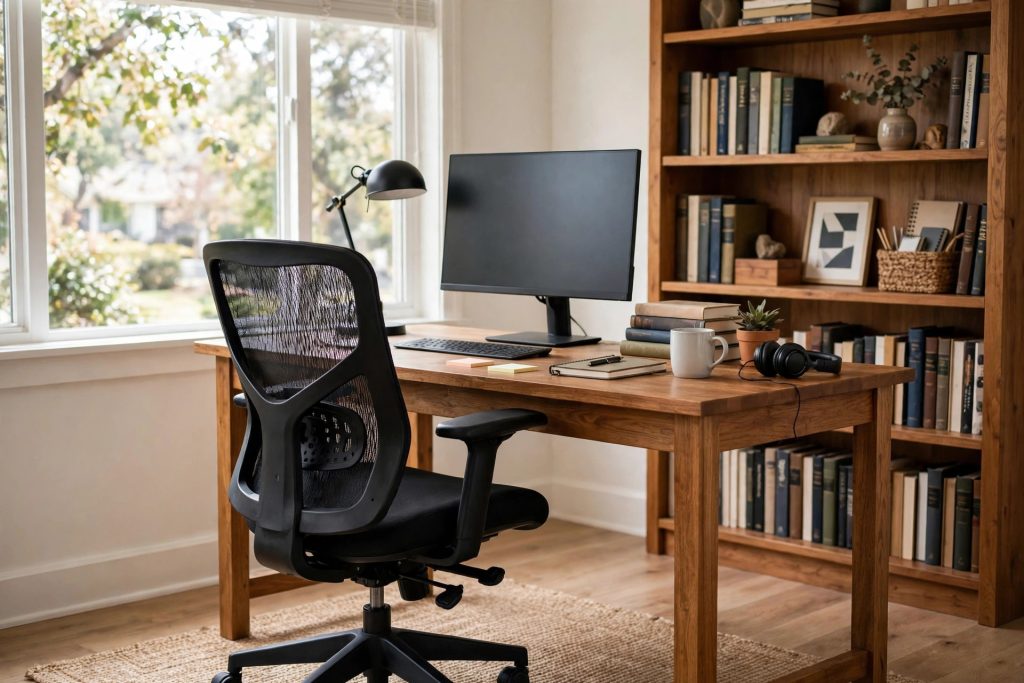
Many homeowners find that fix echo in workroom is easier than they expected once they know the basics.
Echo is reflected sound arriving late. In an empty room with drywall, glass, and hard floors, your voice bounces around several times before it dies out. That lingering tail is reverberation, and it muddies speech.
Acoustic panels absorb sound best, but ordinary soft furnishings do real work too. The Acoustic Engineering Association (AEANET) rates thick curtains at medium-high absorption and thick rugs at medium absorption, while filled bookshelves and upholstered furniture add smaller but real gains (AEANET). The lesson: you probably own half the fix already.
Aim to cover a good share of the hard surfaces. AEANET suggests starting with twenty to thirty percent of reflective surfaces and adding more until the room sounds right.
Start with the floor
Many homeowners find that fix echo in workroom is easier than they expected once they know the basics.
The key to fix echo in workroom is choosing the right approach for your space and budget.
The floor is usually the biggest hard surface in the room. A large area rug is the single highest-impact cheap fix. True Value's DIY guide puts floor covering first for exactly this reason: rugs deaden reflection and muffle the liveliness of hard-surface rooms (True Value).
Go big. A small rug under the desk helps a little. A rug that covers most of the open floor helps a lot. Add a thick rug pad underneath; the pad adds absorption the rug alone cannot provide. Apartment Therapy's echo guide recommends heavy rugs with dense pile for the best results (Apartment Therapy).
If wall-to-wall carpet is an option, it is the nuclear option for floor echo. But a nine-by-twelve rug with a pad gets you most of the way there for a fraction of the cost.
Hang heavy curtains
The key to fix echo in workroom is choosing the right approach for your space and budget.
With a little planning, fix echo in workroom can fit even a busy schedule.
Bare windows are echo mirrors. Glass reflects sound almost perfectly. Heavy curtains over the windows do double duty: they soften reflections and block outside noise.
Apartment Therapy advises choosing heavy fabrics like velvet or sturdy canvas over light sheers, and even doubling up panels for extra absorption (Apartment Therapy). True Value adds that heavy, lined curtains extending to the floor muffle sound far better than short panels (True Value).
Extend the curtain rod well past the window frame so the fabric covers wall as well as glass. When the curtains are open, you lose the benefit, so keep them drawn during calls if echo is the problem.
Fill the walls with soft things
With a little planning, fix echo in workroom can fit even a busy schedule.
Before you start, it helps to understand how fix echo in workroom works in real homes.
Every bare wall is a reflector. You do not need to cover them all. Break them up:
- Hang fabric art. Tapestries, quilts, and canvas prints absorb sound. Avoid glass-fronted frames, which reflect like windows.
- Add a bookshelf. A shelf packed with books of different depths scatters sound instead of bouncing it straight back. Nicholas Marriott's acoustics guide notes that irregular shelving with varied contents breaks up broad reflective walls (Nicholas Marriott).
- Use felt backing. Ideal Home quotes a designer trick: stick cheap felt to the back of pictures and mirrors, and even under tables and chairs, for invisible absorption (Ideal Home).
- Bring in plants. Large leafy plants scatter sound and soften corners. They will not fix echo alone, but they help.
Move your desk away from the exact center of parallel walls if you can. Center positions can emphasize flutter echo, that rapid rattling reflection between two facing surfaces.
Build cheap DIY acoustic panels
Before you start, it helps to understand how fix echo in workroom works in real homes.
A good plan for fix echo in workroom saves time, money, and frustration.
When soft furnishings are not enough, DIY acoustic panels are the best value in sound treatment. A basic panel is a wooden frame filled with mineral wool or rigid fiberglass, wrapped in breathable fabric. Weekend Builds walks through the classic build and notes that controlling reverb with homemade panels can save hundreds of dollars over commercial ones (Weekend Builds).
Key tips from the guides:
- Mind the fabric. If you can blow air through it, sound passes through to the absorber. Tight-weave or vinyl fabrics block sound and ruin the panel.
- Go thicker for better results. Two-inch panels tame brightness and flutter. Four-inch panels reach down into the vocal range. Coohom's DIY guide notes that a one-to-two-inch air gap behind the panel boosts low-mid absorption further (Coohom).
- Place them at reflection points. The side walls at ear height, the wall behind you on calls, and the ceiling above the desk matter most. You do not need to cover every wall.
- Do not overdo it. BasketScript's panel guide warns that too many panels make a room sound dead and unpleasant. Start with a few and add more only if needed (BasketScript).
Use low-VOC materials and keep fiberglass fully wrapped so fibers stay out of the air.
The key is to fix echo in workroom one step at a time.
Rearrange the furniture you have
A good plan for fix echo in workroom saves time, money, and frustration.
Before spending a dollar, rearrange. Pull the desk out from the wall a little. Angle it so you are not firing your voice straight into a flat wall. Add an upholstered chair, a floor cushion, or a fabric ottoman near the desk. Safacts' echo guide lists breaking up large flat surfaces with shelves, plants, and irregular decor among its core tactics (Safacts).
Soft seating near the microphone position matters most, because reflections near the mic color your voice on calls. A cushioned chair behind you absorbs the bounce that would otherwise return to the mic a split second late.
An adjustable height stool for standing desk breaks with a padded seat adds both comfort and a soft surface near the desk.
Treat the ceiling if echo persists
For most people, fix echo in workroom comes down to a few smart choices.
In rooms with high ceilings, the floor-to-ceiling bounce dominates. If rugs and wall treatment are not enough, look up. A couple of panels mounted on the ceiling above the desk, sometimes called a cloud, break the strongest reflection path.
You do not need a contractor. Lightweight panels hang from ceiling hooks with wire. Even a fabric wall hanging suspended a few inches below the ceiling helps. AEANET specifically recommends suspended baffles or clouds for overhead treatment in echoey rooms (AEANET).
Mask what remains
If you are new to fix echo in workroom, start with the simplest option and build from there.
Some rooms will always have a little liveliness. That is fine. A small amount of reverberation sounds natural; a dead-silent room feels strange on calls. For the last bit of polish, add steady background sound.
A home office noise machine for focus and privacy fills the gaps between words with gentle sound, which makes remaining echo far less noticeable. A quiet fan does similar work. Keep paper and office machines quiet too; a quiet paper shredder for a home office apartment keeps shredding from echoing down the hall.
On the software side, most video call apps now include noise suppression. Turn it on. It cannot fix room echo completely, but it trims the worst of it.
Seal the small gaps
When it comes to fix echo in workroom, getting the details right makes all the difference.
Echo is reflected sound inside the room, but noise leaking in makes everything worse. Weatherstripping around doors and windows is cheap and cuts both drafts and sound leakage. Ideal Home's soundproofing guide notes that sound travels easily through tiny gaps around frames and sockets, and that acoustic sealant or draft excluders are a cost-effective fix (Ideal Home).
A door sweep under the workroom door is a five-minute job that pays off on every call.
The ten-dollar test
Not sure where to start? Do the clap test. Stand at your desk and clap once, hard. Listen to the tail. A short, soft decay means the room is fine. A long metallic ringing means you need absorption. Walk around clapping near each wall to find the worst reflectors, then treat those spots first.
Most workrooms go from gymnasium to comfortable with a big rug, heavy curtains, a bookshelf, and two or three DIY panels. Total cost can stay under a couple hundred dollars, and much of it is furniture you would buy anyway. Your voice will sound closer, warmer, and clearer, and your calls will feel like conversations instead of announcements. That is all it takes to fix echo in workroom with confidence.
References
Acoustic Engineering Association (AEANET). (n.d.). How to reduce echo in a room with high ceilings? https://www.aeanet.org/how-to-reduce-echo-in-a-room-with-high-ceilings/
Apartment Therapy. (n.d.). How to reduce echo in a room: 9 clever tips. https://www.apartmenttherapy.com/how-to-reduce-echo-in-rooms-192737
BasketScript. (n.d.). Your complete guide to choosing and using acoustic panels. https://basketscript.com/en/your-complete-guide-to-choosing-and-using-acoustic-panels-2453518/?hl=en&s1=69c1107a880999ffb3b99b3d
Coohom. (n.d.). DIY acoustic wall panels: Easy guide for home soundproofing. https://www.coohom.com/article/diy-acoustic-wall-panels-easy-guide-for-home-soundproofing
Ideal Home. (n.d.). How to soundproof a room from noisy neighbours. https://www.idealhome.co.uk/diy/how-to-soundproof-a-room-from-noisy-neighbours
Nicholas Marriott. (n.d.). How to reduce echo in an open-plan living room. https://www.nicholasmarriott.au/post/open-plan-living-room-acoustics
Safacts. (n.d.). How to avoid echo in room. https://safacts.co.za/how-to-avoid-echo-in-room/
Silent Wood. (n.d.). Transform your living room with acoustic panels: An easy DIY project. https://silentwood.com/blogs/nyheter/transform-your-living-room-with-acoustic-panels-an-easy-diy-project
True Value. (n.d.). How to reduce echo in a room. https://www.truevalue.com/diy-projects/home-decor/how-to-reduce-echo-in-a-room/
Weekend Builds. (n.d.). DIY acoustic panels: 25 creative ideas for home studio. https://weekendbuilds.com/diy-acoustic-panels/
Was this guide helpful?

About My Garden US
The My Garden US editorial team writes practical, in-depth home and garden guides for American homeowners — tested advice, no fluff.
You May Also Like

The Best Printer Stand With Storage for Home Office
January 10, 2026 17 views
Ergonomic Desk Setup for Neck and Shoulder Pain: A Practical Guide
July 27, 2026 17 views
A Quiet Mechanical Keyboard for Home Office Night Work
May 16, 2026 21 views