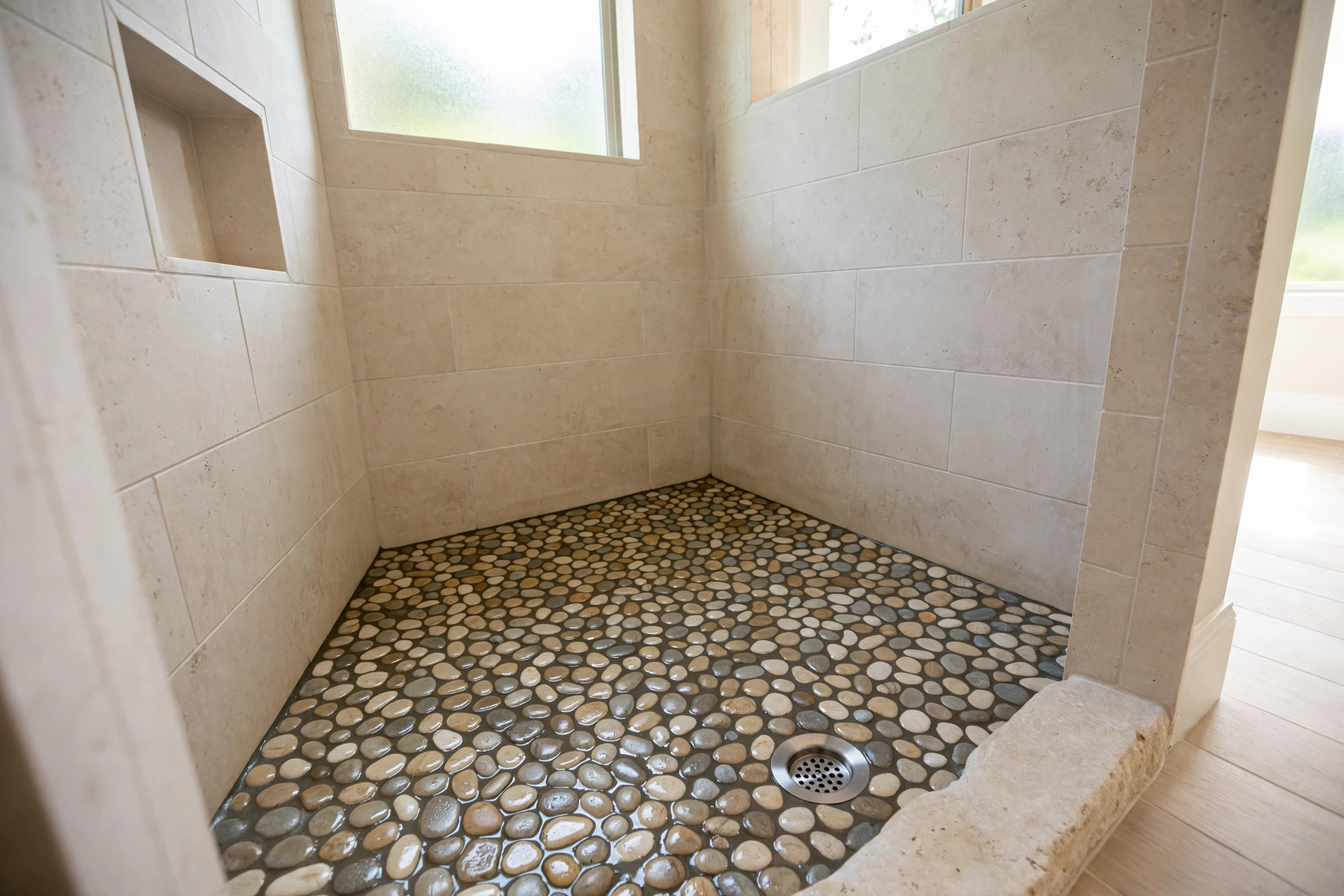

The talk about pebble shower floor pros and cons usa has grown in recent years. Homeowners see pictures of stone floors in spa bathrooms. They want the same look at home. A pebble shower floor is made of small, smooth river stones. The stones are set in sheets. A tile setter places the sheets on the shower pan. Grout fills the gaps between the stones. The result looks natural. It feels like a riverbed under the feet.
But this floor is not for every home. It has real strengths and real weak points. This guide lays them out in plain terms: why the floor matters, what to look for, the main types, the cost, care, safety, and answers to common questions.
Why the Choice of Shower Floor Matters
The shower floor takes more water than any other part of the bathroom. Water hits it every day. Soap, shampoo, and body oils wash across it. Hair and skin flakes settle on it. If the floor fails, water can reach the subfloor. That can rot wood. It can feed mold. Repairs then cost far more than the tile job did.
A shower floor must do four jobs at once. It must send water to the drain. It must give the feet a safe grip. It must resist water damage year after year. And it should look right in the room. A pebble floor can do all four. But only when it is chosen and set with care.
Pebble floors are popular for one simple reason. They bring the outdoors in. The floor looks like a stream bank. It feels warm and soft under bare feet. Many people say it turns a daily shower into a calmer moment. For buyers who are planning a Www.thisoldhouse.com, the floor is one of the first decisions.
How to Choose Pebble Tile Sheets: Pebble Shower Floor Pros and Cons Usa
Pebble tiles come in sheets, not as loose stones. The stones are glued to a mesh backing in a square, often one foot by one foot. The setter lays the sheets like regular tile. The quality of these sheets decides how well the floor turns out.
Look at the stone surface first. The best sheets use real river stones. Their tops are smooth. Their edges are worn round by water. Cheap sheets may use cut or machine-shaped stone. Those edges can feel sharp. Run your hand over a sample sheet in the store. If it feels rough or has sharp points, do not buy it.
Look at the mesh backing next. A strong mesh keeps the stones in place while the setter works. Weak mesh tears. Stones fall off. Then the setter must fix gaps by hand. That adds time and cost.
Check the sheet thickness. Sheets in one case can differ in stone height. Some stones sit high. Some sit low. A good brand keeps the stones level. An uneven sheet is hard to grout. It can also trip the foot.
Ask if the stones are sealed before grouting. Some makers seal at the factory. Others ship raw stone, which drinks in grout color and stains during the job. A Www.homedepot.com applied first stops this.
For more on picking tile in wet rooms, see these Www.lowes.com and the guide to best caulk for shower corners reviews usa.
Types of Pebble Shower Floors
Not all pebble floors are the same. The stone used changes the look, the feel, and the price. The main types sold in the United States are below.
Natural River Pebbles
These are the classic choice. The stones come in mixed tones: tan, gray, brown, and cream. Each sheet looks different. No two floors match. The stones are usually from riverbeds in Asia. They are sliced flat on the bottom and left round on top. This is the warm, natural look most people picture.
Uniform Cut Pebbles
Cut pebbles are sliced across the top so the whole sheet sits nearly level. They feel smoother underfoot. Grouting is easier because the surface is even. They cost more than natural river pebbles. They suit homes that want the stone look with a cleaner finish.
Sliced Stacked Pebbles
These are thin slices of stone stood on edge. They give a striped, wood-like pattern. They drain well because water runs down between the upright pieces. They feel bumpier on the feet. Some people love the look. Others find it too busy in a small shower.
Recycled Glass Pebbles
Glass pebbles are made for buyers who want color. They come in blues, greens, and frosted whites. They are smooth and non-porous. Soap scum wipes off them with ease. They can look cold next to warm stone walls, so test a sample in your own light before you commit.
Large Flat Stone Tiles
Some brands sell big flat slabs with a pebble pattern printed or set in resin. These are easier to clean than real stone. But they do not give the real stone feel. They are best seen as a different product, not a true pebble floor.
Homeowners who are still comparing floor types may also read this overview of the best flooring for florida homes humidity, which covers how damp climates affect tile.
The Real Pros
Let us start with the good news. A well-set pebble shower floor has clear strengths.
Natural beauty. No factory tile copies the look of real stone. Each stone has its own shade and grain. The floor looks like a work of nature. In a plain bathroom, the floor can be the whole design.
Comfort underfoot. The rounded stones massage the soles of the feet. Many owners say their morning shower feels better on stone than on cold flat tile. People with tired feet like this most.
Good slip resistance. The bumpy surface gives the feet grip. Wet pebble stone resists sliding better than a smooth glazed tile. That is a real safety gain in a wet shower. For more on safe bathroom surfaces, see This Old House.
Hides wear. Hairline chips that would show on a large tile hide among the stones. Small stains hide in the pattern too. The floor keeps its looks longer.
Design flexibility. The stones fit around curved shower bases and odd corners. Large square tiles fight with curves. Pebble sheets bend to follow them. That makes pebbles a strong pick for round or free-form showers.
Good resale story. Buyers at open houses notice a stone floor. It reads as a luxury upgrade. A Www.thespruce.com notes that natural stone features tend to photograph well and lift a bathroom listing.
The Real Cons
Now the honest weak points. You should weigh each one before you buy.
Cleaning takes more work. The gaps between the stones are deep. Soap scum settles into them. Mold can grow there in damp bathrooms. You must scrub with a brush, not just wipe. A The Home Depot and a stiff brush are part of the routine. People who want a wipe-clean shower should pick large-format tile instead.
Grout maintenance is heavy. A pebble floor has far more grout lines than a tile floor. More grout means more places for mildew. You must seal the grout at least once a year. Some owners reseal every six months. Skip this and the grout will stain dark.
Installation costs more. Setting pebble sheets takes skill and time. The setter must level uneven stones and grout deep joints. Labor runs higher than for standard tile. Bad setting shows fast: loose stones, cracked grout, or low spots that hold water.
Drainage can be poor. If the slope of the shower pan is off, water pools between the stones. Standing water feeds mold and smells. The setter must pitch the pan correctly before any stone goes down. This is the most common failure in DIY jobs.
Comfort is not for everyone. The same bumps that massage some feet hurt others. Older adults with tender feet may find the floor rough. Test a sample sheet barefoot before you commit.
Color can change. Natural stone can darken with sealers and darken more with soap and hard water. Light stones show rust stains from well water. This is not a defect. It is the nature of the material. But it surprises buyers who expected the showroom color to last forever.
For a broader look at tile options for tough rooms, this Lowe’s shows how tile type changes upkeep, and the garage floor tiles interlocking reviews usa guide covers another low-upkeep choice.
Cost and Price in the USA
Prices for a pebble shower floor vary by stone type and by region. Here are the plain ranges most American homeowners see in 2026.
Materials. Pebble sheets cost about 6 to 15 dollars per square foot. Natural river pebbles sit at the low end. Cut and uniform pebbles cost more. Glass pebbles run 10 to 20 dollars per square foot. A standard 3 by 5 foot shower needs about 15 square feet of floor, plus 10 percent extra for cuts and waste.
Labor. A skilled tile setter charges 10 to 25 dollars per square foot for pebble work. The rate rises in high-cost cities. Setting pebbles takes longer than setting large tile, so the labor share of the job is large.
Sealer and supplies. Plan 50 to 150 dollars for a quality penetrating sealer, grout, and thinset. A Www.daltile.com made for wet areas is the right choice.
Total job. Most homeowners pay 600 to 1,500 dollars for a full pebble shower floor, labor included. A large or custom shower can pass 2,000 dollars. Get three written quotes, and ask each setter how many pebble floors they have done. A Www.llflooring.com can help you check the numbers against your area.
Care and Upkeep
A pebble floor rewards steady, simple care. It punishes neglect. Follow this routine.
After each shower. Run the shower head over the floor for a few seconds to rinse soap away. Leave the bathroom fan on for twenty minutes. Airflow is the best mold fighter.
Weekly. Scrub the floor with a soft brush and a pH-neutral cleaner made for stone. Do not use bleach or vinegar every week. Both can wear down grout and sealer over time. Rinse well.
Monthly. Check the grout lines for dark spots. Treat small mildew spots with a stone-safe mildew remover. Check that the drain flows fast. Hair caught between stones can slow the drain.
Yearly. Reseal the floor with a penetrating sealer. Test first: drop a spoon of water on the floor. If it beads up, the seal holds. If it soaks in dark, reseal. This yearly step is the heart of pebble floor care. Skip it and the cons listed above grow worse. A Www.mohawkflooring.com walks through the sealing steps.
Safety Facts
Safety is where many buyers have questions. Here are the facts.
Pebble floors are more slip-resistant than smooth tile. That is a plus. But the surface is uneven. People with poor balance may find the bumps tricky. If an elderly parent uses the shower, add a grab bar and a shower seat. Do not rely on the floor alone.
Loose stones are a hazard. A stone that pops out leaves a sharp edge of thinset. Walk the floor barefoot once a month and feel for loose pieces. Reset any loose stone with stone adhesive right away.
Water temperature matters as much as the floor. Set the water heater to 120 degrees Fahrenheit. Hotter water scalds. The U.S. Consumer Product Safety Commission covers scald and slip facts for home bathrooms.
Chemical safety matters too. Stone cleaners give off fumes. Open a window or run the fan while you scrub. Keep cleaners away from children and pets. A Family Handyman is worth reading before any bathroom job.
FAQ
Are pebble shower floors hard to clean? They take more work than flat tile. Soap scum settles between the stones. You need a brush and a stone-safe cleaner each week. If you want the lowest-effort shower floor, choose large-format porcelain tile instead.
Do pebble shower floors need sealing? Yes. Seal the stone and grout before first use, then reseal about once a year. The sealer keeps water and soap from soaking into the stone. Without it, the floor stains and grows mildew faster.
Are pebble floors slippery when wet? They grip better than smooth glazed tile. The uneven stones give the feet traction. But they are not non-slip in every case. Soapy water on any floor can slide. A bath mat outside the shower and a grab bar inside add safety.
How long does a pebble shower floor last? A well-set floor lasts 15 to 25 years. The stones themselves can last longer. Grout is the weak link. It may need repair or regrouting after 10 to 15 years. Good sealing stretches that life.
Can I install a pebble shower floor myself? A skilled DIY homeowner can do it. The hard parts are the shower pan slope and the grouting. Both take practice. Most first-timers get better results by hiring a setter who has done pebble work before. A Www.shawfloors.com shows the steps if you want to study them first.
Do pebble floors work with radiant heated floors? Yes, in most cases. Stone holds heat well and feels warm underfoot. Tell your setter about the heating system before the job starts. The thinset and membrane must suit the heater brand.
Final Word
A pebble shower floor is a trade. You trade easy cleaning for natural beauty and comfort. You trade lower cost for a spa look that guests remember. For the right homeowner, the trade is worth it.
Judge by your own habits. If you will scrub weekly and reseal yearly, the floor will serve you well for decades. If you want the lowest care, pick a different tile. You now know the real pebble shower floor pros and cons usa homeowners face. Choose with open eyes.
References
Daltile. (n.d.). Ceramic and porcelain tile. https://www.daltile.com Family Handyman. (n.d.). DIY home repair and maintenance. https://www.familyhandyman.com LL Flooring. (n.d.). Hardwood, vinyl, and tile flooring. https://www.llflooring.com Lowe’s. (n.d.). Home improvement products. https://www.lowes.com Mohawk Flooring. (n.d.). Flooring products. https://www.mohawkflooring.com Shaw Floors. (n.d.). Flooring products. https://www.shawfloors.com The Home Depot. (n.d.). Home improvement products. https://www.homedepot.com The Spruce. (n.d.). Home and garden advice. https://www.thespruce.com This Old House. (n.d.). Home renovation guidance. https://www.thisoldhouse.com U.S. Consumer Product Safety Commission. (n.d.). Product safety information. https://www.cpsc.gov Www. (n.d.). Home and garden information. https://www
Was this guide helpful?

About Michael Thompson
The My Garden US editorial team writes practical, in-depth home and garden guides for American homeowners — tested advice, no fluff.
You May Also Like
Best Carpet for Stairs With Dogs USA: What to Buy and Why
July 30, 2026 0 views
Terrazzo Look Tile for Kitchen Reviews USA
September 28, 2026 0 views
Can You Install LVP Over Hardwood? A Full Guide for USA Homeowners
March 5, 2026 0 views