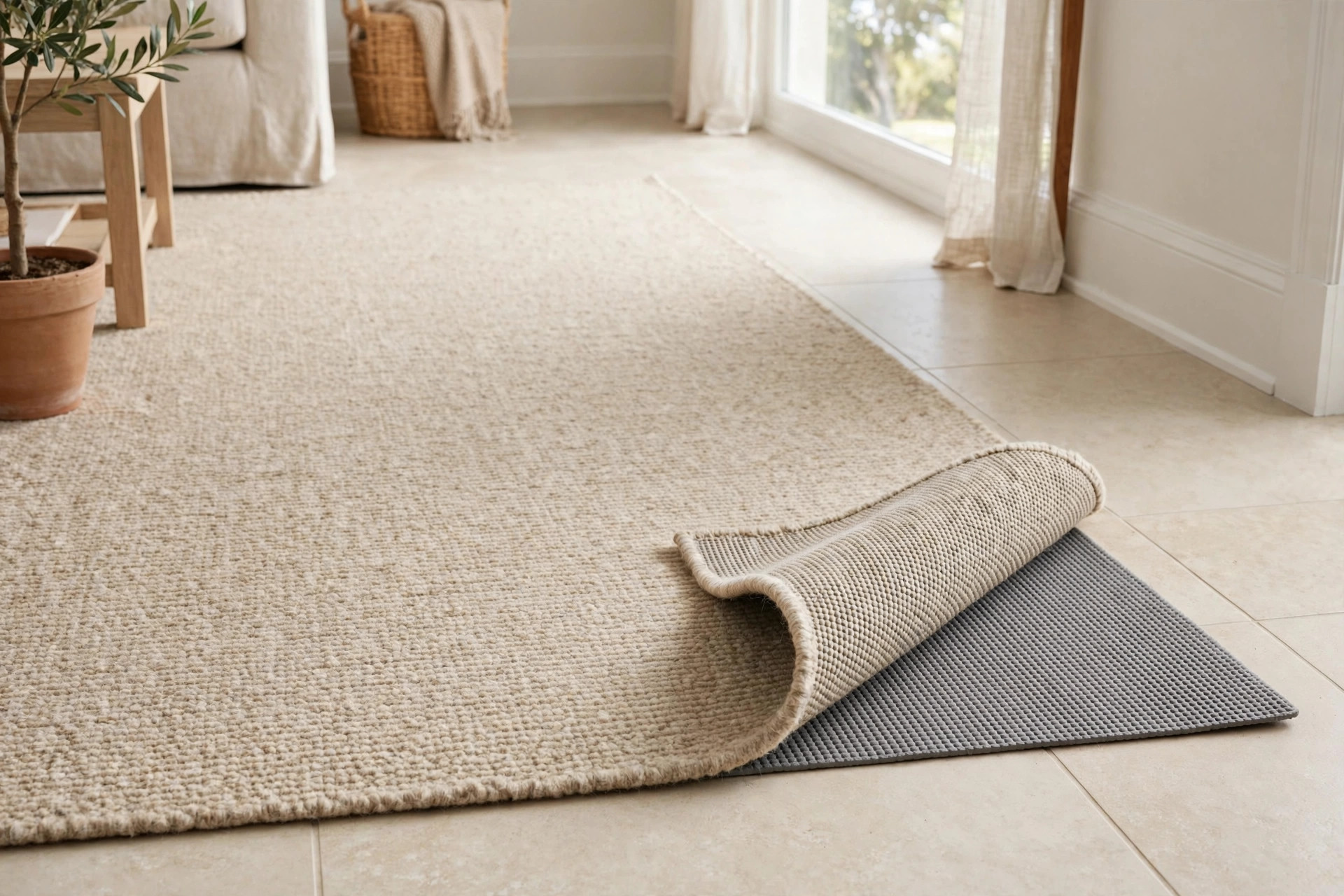

Tile floors are hard, smooth, and lovely to look at. But a rug laid on tile can slide. A chair leg can catch it. A child running through the room can send it skidding. This non slip rug pad for tile reviews usa guide explains what the best pads do, which types suit tile, what reviewers praise, and what you should pay. If you own tile floors in a kitchen, entry, or living room, a good pad is a small cost that prevents falls and keeps your floors in fine shape.
Why a Rug Pad Matters on Tile
Tile has a glazed or sealed surface. It is slick. Unlike carpet or wood, it gives a rug nothing to grab. Every step on the rug pushes it a little. Over days and weeks, the rug creeps out of place. The corners curl. The edges bunch. A visitor may trip.
A non slip rug pad solves this. It sits between the rug and the tile. One side grips the rug fibers. The other side grips the tile. The result is a rug that stays where you put it.
The pad also protects the tile. Heavy furniture legs can grind grit into the glaze and leave scratches. A pad spreads the weight and adds a soft cushion layer. Many tile experts note that a proper pad can extend the life of a rug as well, since it keeps the rug backing off the hard surface and reduces wear from foot traffic.
On tile, the right pad also makes the room quieter and warmer underfoot. Tile is cold in winter and hard on tired feet. A thick pad adds comfort without hiding the look of the floor.
What to Look for When Choosing a Pad: Non Slip Rug Pad for Tile Reviews Usa
Not every pad works well on tile. Here is what experienced reviewers check before buying.
Grip strength. The pad must hold the rug still on a smooth surface. Rubber-backed pads grip best on tile. Pure felt pads may slip on glossy tile unless they have a rubber face on one side.
Thickness. Most homes do well with pads between one eighth and one half inch thick. Thinner pads sit low under doors. Thicker pads feel soft underfoot. For tile in busy rooms, a quarter inch pad is a sound middle choice.
Material safety. Some rubber pads contain chemicals that stain tile or leave marks. Natural rubber is generally safe. Avoid pads with strong plastic smells, since the fumes can harm indoor air and may damage certain sealants. Look for labels that say safe for hard floors or tested on tile.
Size and trim. The pad should be slightly smaller than the rug, about one inch inside each edge. A pad that sticks out looks untidy and can curl. Many pads can be cut with scissors to fit odd shapes, which is a useful feature.
Cleaning. Tile rooms like kitchens see spills. A pad that can be rinsed and air dried is easier to keep fresh. Closed-cell foam pads resist moisture better than plain felt.
Breathability. Tile can trap moisture under a pad in damp rooms. Pads with small holes or open weaves let air move and reduce the chance of mold.
Stability in sun. Tile near big windows gets warm. Some pads soften in heat and lose grip. A natural rubber pad holds firm across normal indoor temperatures, from cool mornings to warm afternoons.
For background reading on floor care and materials, the guides at The Spruce explain rug pad basics in plain terms.
Types of Rug Pads for Tile Floors
Reviewers in the United States tend to favor a few main types. Each has strengths and trade-offs.
Rubber Backed Felt Pads
These are the most common choice for tile. A felt layer faces up and cushions the rug. A natural rubber layer faces down and grips the tile. They combine comfort with strong hold. Many rug pad reviews in the USA rank this type highest for tile floors. They cost more than plain rubber, but they last longer and feel better.
Plain Rubber Pads
Made from natural or synthetic rubber, these pads are thin and grip well. They work in places where door clearance is tight, such as entryways and halls. They add little cushion, so the rug feels close to the tile. They are often the least costly option.
Foam and Memory Foam Pads
Foam pads add the most softness. They feel pleasant in living rooms and bedrooms over tile. But some foam pads are less stable on smooth tile and may let the rug drift. If you choose foam, pick a dense type with a non slip surface on the bottom.
Waffle and Honeycomb Pads
These pads have a textured pattern that adds grip through contact. They are light, easy to cut, and simple to wash. On polished tile they can work well, though heavy rugs may flatten them over time.
Recycled Fiber Pads
Some pads use recycled fibers with a rubber coating. They are firm and durable. They suit large rugs that do not move much. Check that the rubber coating is natural rather than PVC based, since PVC can stick to some floor finishes.
When comparing store options, the rug pad selections at Home Depot and Lowe’s show the full range side by side, which helps buyers compare thickness and price.
Cost and Price Guide
Prices for non slip rug pads in the United States vary by size, thickness, and material. The keyword data for this topic suggests typical price points in the single digits to low tens of dollars for small pads, rising with size.
For a common 5 by 8 foot pad, plain rubber pads often run about twenty to forty dollars. Rubber backed felt pads in the same size run about forty to eighty dollars. Large 8 by 10 or 9 by 12 pads can cost eighty to one hundred fifty dollars for quality felt and rubber models.
Thicker pads cost more. Pads labeled premium or made from natural materials cost more than thin synthetic ones. Buying from flooring specialists such as LL Flooring, Shaw Floors, and Mohawk Flooring may bring prices a little higher, but the product quality is often more consistent.
Custom sizes cost extra. If your rug has an odd shape, you may pay a premium, or you can buy a standard size and trim it with scissors, which most pads allow.
Watch for sales around holiday weekends. Rug pads are a small item, and stores often discount them with rug purchases. A pad that costs sixty dollars in March may cost forty-five in November.
Care and Upkeep
A rug pad lasts longer with simple care. Follow these steps.
Vacuum the pad area. When you vacuum the rug, lift a corner now and then and vacuum dust from the pad. Grit trapped under the pad can scratch tile.
Rinse when dirty. Most rubber and foam pads can be hosed off or wiped with a damp cloth and mild soap. Let the pad dry fully before putting it back. Never leave a wet pad on tile, since trapped water can cloud the grout or loosen sealant.
Rotate the rug. Turn the rug and pad together twice a year. This spreads wear and keeps the pad from taking a set in one spot.
Check yearly. Lift the rug once a year and look at the pad. If the rubber is crumbling or the felt is flat and matted, replace it. A worn pad grips poorly and can shed bits onto the tile.
Mind the grout. Tile grout can be rough. A smooth-bottom pad can wear against high grout lines. A textured rubber bottom handles grout better and grips more evenly.
For advice on tile maintenance, the flooring articles at Dal-Tile and This Old House cover grout care and surface protection.
Safety Tips
A pad is a safety device as much as a comfort item. Keep these points in mind.
Check the label. Make sure the pad is rated safe for tile, stone, or hard floors. Some pads made for carpet use only can stain tile.
Avoid PVC on heated tile. If your tile has electric radiant heat, skip pads with PVC or plastic backings that can soften with warmth. A natural rubber pad is the safer pick. If you are comparing heat options for a tile room, see these electric radiant floor heat for tile reviews.
Secure small rugs. Small rugs by doors are the most likely to slip. Use a pad with strong grip, or choose a small rug with a built-in non slip backing.
Mind the edges. A pad that is too thick can lift rug edges and create a lip that catches a toe. Trim the pad a bit smaller than the rug so the edge slopes down.
Ventilate new pads. Some pads have a rubber smell when new. Air the pad out in a garage or on a porch for a day before placing it on the tile.
Keep kids and pets in mind. Homes with children and animals see more rug movement. A thick rubber backed felt pad holds best under play. For floor choices that stand up to animals, see these pet friendly flooring options for usa homes.
Consumer testing groups such as Consumer Reports publish independent test results that can confirm which pads grip longest.
Frequently Asked Questions
Do I really need a rug pad on tile? Yes, in most cases. Tile is smooth and hard. Without a pad, rugs slide, bunch, and wear faster. A pad costs far less than a scratched floor or a fall.
What is the best type of non slip rug pad for tile? Most reviewers favor a rubber backed felt pad. The rubber side grips the tile. The felt side cushions the rug. It offers the best mix of hold, comfort, and floor safety.
Will a rug pad stain my tile? A quality pad made for hard floors should not stain. Problems come from cheap PVC pads or pads left wet on tile for long periods. Choose natural rubber and let the pad dry fully after washing.
Can I cut a rug pad to fit? Yes. Most pads can be trimmed with ordinary scissors. Measure the rug, then cut the pad about one inch smaller on every side so it stays hidden under the rug.
How thick should a rug pad be on tile? A quarter inch suits most rooms. Choose thinner pads where doors swing low. Choose thicker pads where you want extra softness underfoot, such as bedrooms and living rooms.
How long does a rug pad last on tile? A good pad lasts five to ten years. Replace it when the rubber breaks down, the felt goes flat, or the rug starts to slide again.
A Final Word
A non slip rug pad is a simple thing, but it does real work. It keeps rugs in place on slick tile, guards the floor from scratches, and makes rooms quieter and warmer. The best choice for most tile floors is a rubber backed felt pad of moderate thickness, cut slightly smaller than the rug and rated safe for hard floors. Read the label, air out the pad before use, and check it once a year. Your tile will stay in fine condition, and your rug will stay where it belongs.
If you are rethinking the whole floor rather than just the pad, you may find these luxury vinyl plank flooring reviews 2026 helpful as you compare options.
References
Consumer Reports. (n.d.). Product reviews and ratings. https://www.consumerreports.org Daltile. (n.d.). Ceramic and porcelain tile. https://www.daltile.com LL Flooring. (n.d.). Hardwood, vinyl, and tile flooring. https://www.llflooring.com Lowe’s. (n.d.). Home improvement products. https://www.lowes.com Mohawk Flooring. (n.d.). Flooring products. https://www.mohawkflooring.com Shaw Floors. (n.d.). Flooring products. https://www.shawfloors.com The Home Depot. (n.d.). Home improvement products. https://www.homedepot.com The Spruce. (n.d.). Home and garden advice. https://www.thespruce.com This Old House. (n.d.). Home renovation guidance. https://www.thisoldhouse.com
Was this guide helpful?

About Michael Thompson
The My Garden US editorial team writes practical, in-depth home and garden guides for American homeowners — tested advice, no fluff.
You May Also Like
Polished Concrete Floors Cost Residential USA: A Plain Guide
January 14, 2026 0 views
How to Use a Paver Patio Cost Calculator for USA Homes
June 4, 2026 0 views
Subway Tile Backsplash Cost Per Square Foot: A Plain Guide to Kitchen Prices
March 3, 2026 0 views