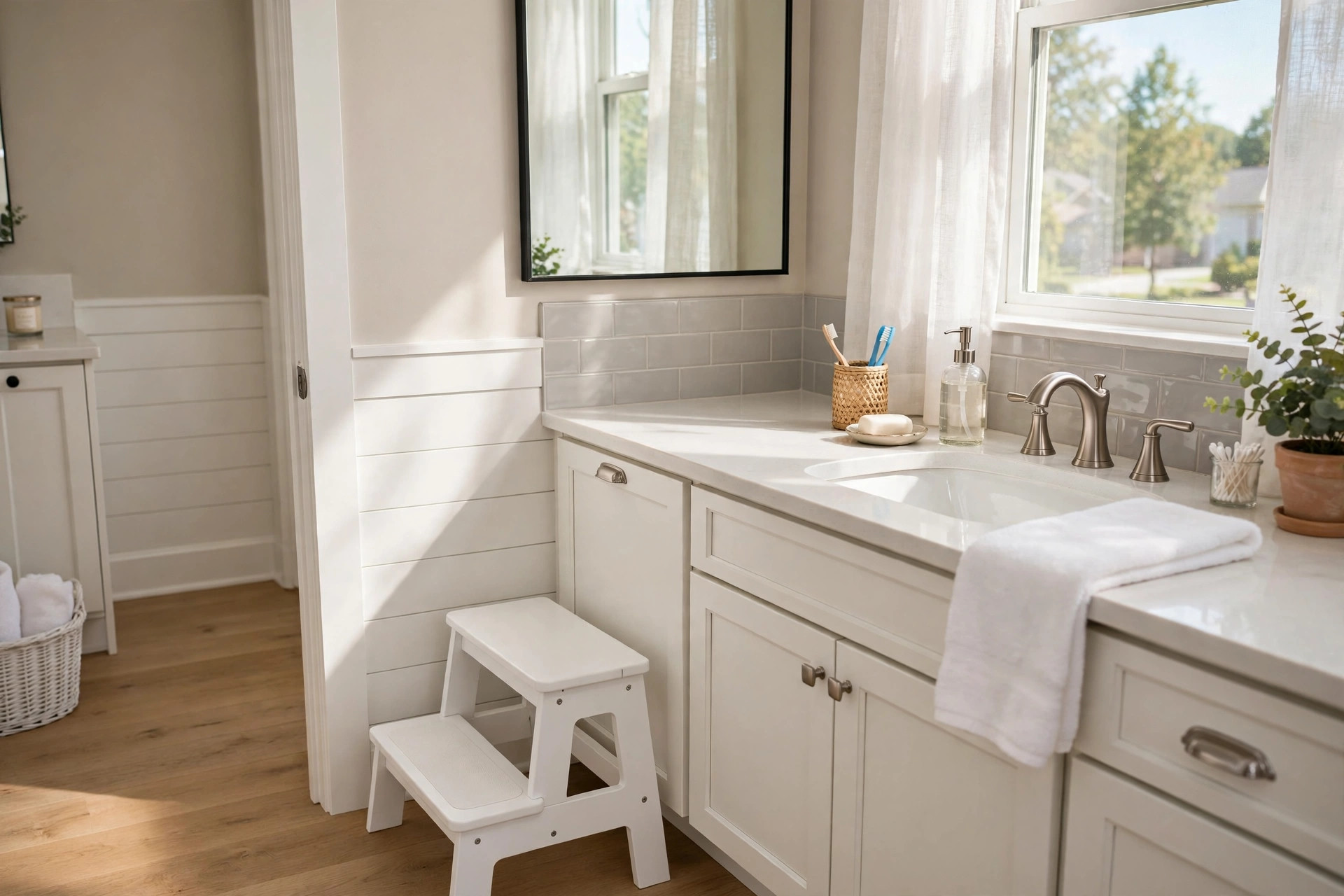

A toddler step stool for bathroom and kitchen is one of the smallest things you can buy for a young child. It is also one of the most useful. A good stool gives a child a safe way to reach the bathroom sink and the kitchen counter. It helps the child brush teeth, wash hands, and take part in simple kitchen work. This guide explains why it matters, what kinds exist, how to pick the right one, what it costs, and how to keep it safe.
Why It Matters
Toddlers grow fast. Between the ages of one and three, a child wants to do things alone. The bathroom sink and the kitchen counter sit too high for short legs. Without a stool, the child will climb. A child may climb on a closed toilet lid, a trash can, or an open drawer. Each of these can slide or tip. A fall from that height can hurt a small child.
A proper step stool solves this problem. It stays in one place. It has a wide base that does not wobble. The top has a rough surface so little feet do not slip. Many designs have side handles the child can grip while stepping up.
In the bathroom, the stool lets the child reach the faucet. Hand washing becomes a habit when the child can do it alone. Tooth brushing becomes easier too. The child can see the mirror. The child can spit into the sink. These small acts build self care skills early.
In the kitchen, the stool lets the child stand at the counter beside a parent. The child can stir batter, tear lettuce, or wash fruit in a bowl. This time at the counter is time well spent. The child learns new words for food and tools. The child feels proud of helping. Many parents find that children who help with meals eat better. A child who tore the lettuce is often glad to taste the salad.
Doctors and child care experts agree that self help skills grow step by step. A stool gives the child a safe stage for each new step. It costs little and it serves the home for years.
What to Look For When You Choose: Toddler Step Stool for Bathroom and Kitchen
Not every stool is built the same. A few simple points will help you pick a safe one.
First, look at height. Most bathroom sinks sit about thirty inches above the floor. Most kitchen counters sit about thirty six inches high. A stool with a single step of seven to nine inches suits many toddlers. A two step stool of twelve to fourteen inches suits taller counters. The child should reach the sink with the elbows bent and the back straight. If the child must stretch up on the toes, the stool is too low.
Second, look at the base. A wide base gives the stool balance. Some stools are narrow and tall. These can tip when the child leans to one side. A stool that is wider than it is tall is the safer pick. Feel it in the store or read the weight of the stool. A heavy stool moves less.
Third, look at the grip. The top step should have a rough or rubber surface. Wet feet come from the bath. Wet shoes come from the yard. A smooth plastic top gets slick when wet. A non slip top keeps the child steady. The bottom of the stool should also grip the floor. Rubber feet or a full rubber base stop the stool from sliding on tile.
Fourth, look at handles. Many stools have a back or side rail. The child can hold the rail while stepping up and down. A rail helps most for children under three. Some stools have no rail. These suit older toddlers who climb with care.
Fifth, look at weight limit. Most child stools hold fifty to one hundred pounds. A higher limit means the stool will serve the child for more years. It also means the frame is strong.
Sixth, look at materials and finish. Plastic stools are light and easy to wash. Wood stools are heavy and look nice in the home. Make sure paint or stain is free of lead and harsh fumes. The label should say the product is non toxic and made for children.
Seventh, look at size. Measure the space where the stool will live. A bathroom floor is often small. A stool that fits beside the sink and tucks under the counter saves space. Some stools fold flat. These suit small homes and flats.
Types and Options
The stores offer several kinds of step stools. Each has its good and bad points.
The single step stool is the simplest kind. It is one low platform. It works for sinks that sit low and for toddlers who need just a small boost. It is cheap and light. The drawback is that it may not reach a high kitchen counter.
The two step stool gives more height. It has two levels, like small stairs. The child climbs one step, then the next. It suits both the bathroom and the kitchen. Many two step stools have side rails. The drawback is that it takes more floor space.
The foldable step stool folds flat when not in use. It suits small bathrooms and small kitchens. Some foldable models are weak. Check the lock that holds the stool open. The lock should snap firm. The stool should not fold while the child stands on it.
The learning tower is a tall frame with a platform. The child stands inside a railing. It is the safest choice for kitchen work. The rails stop the child from falling back or to the side. It is also the largest and most costly choice. It suits families where the child spends much time at the counter.
The wooden stool with a rail looks like small furniture. Many parents like this style for a warm home. Wood is heavy, so the stool stays put. The drawback is price. A well made wooden stool costs more than a plastic one.
The potty training stool is low and small. It helps the child climb on the toilet. Some families use it as a general stool too. It is often too low for the sink. For a toddler step stool for bathroom and kitchen use, a taller stool works better.
You can find helpful buying guides for nursery and kids gear at places like IKEA and Pottery Barn Kids, where child sized furniture is shown in real room settings. For child safety rules, the U.S. Consumer Product Safety Commission gives clear advice on falls and tip over risks in the home.
Cost and Price
A toddler step stool for bathroom and kitchen is not costly. Most single step plastic stools cost between ten and twenty dollars. Two step plastic stools cost between twenty and forty dollars. Foldable models cost about the same. Wooden stools cost between forty and eighty dollars. Learning towers cost between eighty and one hundred fifty dollars.
Price is not the whole story. A cheap stool may slide on the floor. A dear stool may last through two children. Read reviews before you buy. Sites like Consumer Reports test many child products for strength and safety. Store sites such as Wayfair, Target, and Home Depot let you compare models and read notes from other parents.
Buy one stool for each room if you can. Moving one stool from bath to kitchen each day gets old fast. Two cheap plastic stools cost less than one wooden stool. Many families keep a folding stool in the bathroom and a sturdier stool in the kitchen.
Check return rules before you buy. Let the child try the stool at home. Watch the child step up and down. If the stool wobbles or the child slips, send it back. A good stool should feel firm the first time the child uses it.
Care and Upkeep
A step stool is easy to keep clean. Wipe a plastic stool with warm water and mild soap each week. Rinse it and let it dry. Check the rubber feet for wear. If the feet are smooth, the stool may slide. Some makers sell spare feet.
For a wooden stool, wipe with a damp cloth. Do not soak wood in water. Once or twice a year, check screws and bolts. Tighten any that have come loose. If the paint chips, sand the rough edge smooth so no sharp point remains.
Store the stool out of the way when guests come. Many stools fit under the sink or in a cabinet. A folding stool hangs on a hook behind the door.
Teach the child the rules of the stool. One child at a time. Both feet on the step. Hold the rail when you climb. These rules sound simple. They work when the parent says them the same way each time. Praise the child for using the stool with care. Good habits grow from small wins.
The health site HealthyChildren.org, run by the American Academy of Pediatrics, has plain guides on home safety for toddlers. The parenting site What to Expect also gives stage by stage notes on what toddlers can learn to do alone.
Safety
Safety comes first with any child product. A step stool is safe when the parent sets it up right and watches the child.
Place the stool on a flat floor. Tile and wood floors work well if the stool has rubber feet. Do not put the stool on a rug. A rug can bunch under the stool and make it tilt. Do not put the stool near a hot stove or an open oven door.
Never let the child carry the stool while walking. The child can trip. Move the stool yourself, or show the child how to push it slowly along the floor.
In the kitchen, keep sharp knives and hot pots far from the edge of the counter. The stool gives the child reach. The parent must keep the reach zone safe. Turn pot handles inward. Keep cleaners in a locked cabinet.
In the bathroom, keep medicines and sharp tools out of reach. Lock the toilet lid if the child is small. Do not fill the bath while the child stands on a stool near it. Slips happen fast on wet tile.
Do not let two children share one stool. The extra weight and the jostling can tip it. Do not let the child jump from the stool to the floor. Teach the child to step down facing forward, one foot at a time.
Check the stool often for cracks. Plastic can crack in the sun or after hard knocks. A cracked step can break under the child. If you see a crack, stop using the stool and buy a new one.
Home idea sites such as The Spruce offer room by room safety checklists that pair well with a new stool. Their guides show how to set up child friendly baths and kitchens.
FAQ
At what age can a child use a step stool? Most children can use a step stool around eighteen months. The child must walk well and stand on one foot for a moment. A child under eighteen months is too young. Start with the parent holding the child. Let the child try stepping up and down with help.
Is one stool enough for both rooms? One stool can serve both rooms if the home is small. But most families find two stools easier. A light stool in the bathroom and a taller stool in the kitchen is a good pair. If you buy one, pick a two step model that fits both sink and counter heights.
Are wooden stools safer than plastic ones? Neither is always safer. Wood is heavier and tips less. Plastic is lighter and washes easy. What matters most is the base width, the grip on top and bottom, and the weight limit. A well made plastic stool beats a poorly made wooden one.
Can the child use the stool in the shower? No. A step stool is not made for the shower. The floor of the shower is curved and slick. The stool can slide. The child can fall. Use the stool only on flat dry floors near the sink and the counter.
How do I stop the stool from sliding on tile? Check the rubber feet. They should be soft and rough, not hard and smooth. Put the stool on clean dry tile. If the stool still slides, place a non slip mat under it. The mat should be flat and firm, not thick and soft.
Should the stool have a rail? A rail helps children under three. It gives the child something to hold. Older toddlers often do fine without one. If the child leans or climbs fast, pick a model with a rail for more safety.
You may also like a toddler table and chair set for playroom for meals and crafts, a toddler bed with guard rails for first bed for safe sleep, and a kids play kitchen set for pretend cooking that pairs well with counter time.
A Short Final Word
A toddler step stool for bathroom and kitchen is a small buy with a big payoff. It keeps the child safe from risky climbs. It builds self care skills in the bathroom. It opens the door to kitchen time with a parent. Pick a stool with a wide base, a non slip top, and strong rails if the child is young. Keep it clean, check it often, and teach the child to use it with care. With these simple steps, the stool will serve your family well for years.
References
American Academy of Pediatrics. (n.d.). HealthyChildren.org. https://www.healthychildren.org Consumer Reports. (n.d.). Product reviews and ratings. https://www.consumerreports.org IKEA. (n.d.). Home furnishings. https://www.ikea.com Pottery Barn Kids. (n.d.). Kids furniture and decor. https://www.potterybarnkids.com Target. (n.d.). Retail store. https://www.target.com The Home Depot. (n.d.). Home improvement products. https://www.homedepot.com The Spruce. (n.d.). Home and garden advice. https://www.thespruce.com U.S. Consumer Product Safety Commission. (n.d.). Product safety information. https://www.cpsc.gov Wayfair. (n.d.). Furniture and home goods. https://www.wayfair.com What to Expect. (n.d.). Pregnancy and parenting guidance. https://www.whattoexpect.com
Was this guide helpful?

About Robert Taylor
The My Garden US editorial team writes practical, in-depth home and garden guides for American homeowners — tested advice, no fluff.
You May Also Like
Kids Wall Clock for Learning Time Decor: A Parent’s Guide
January 10, 2026 0 views
Nursery Glider Chair with Ottoman for Breastfeeding
May 26, 2026 0 views
Nursery Wall Mount for Baby Monitor Camera: A Simple Guide for New Parents
August 4, 2026 0 views