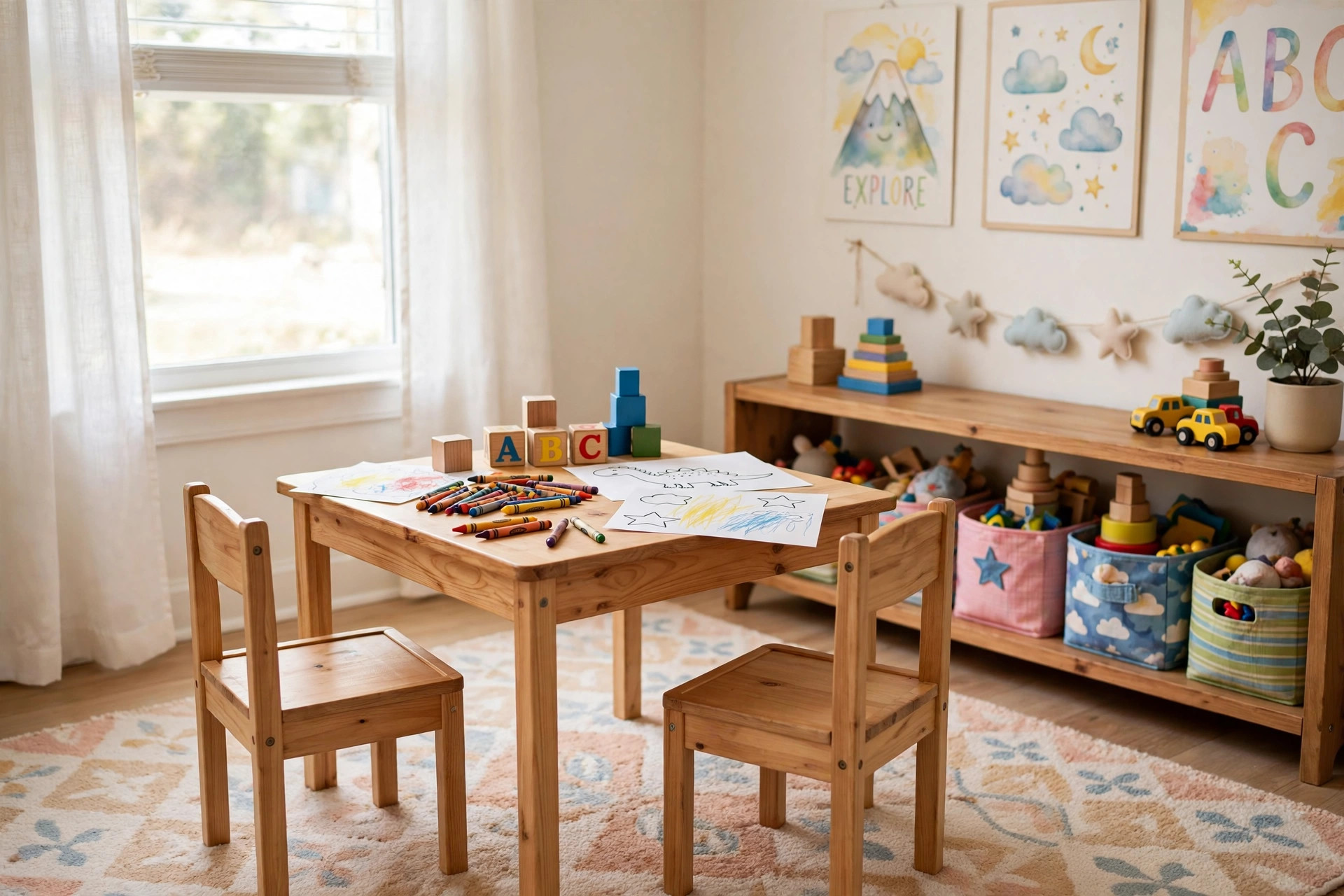

A toddler table and chair set for playroom use is one of the smartest small purchases a family can make. It gives a young child a place that is just their size. It keeps crayons and blocks off the living room floor. And it invites quiet, focused play in a room built for fun.
The best set is safe, solid, and easy to clean. It should fit the child now and still serve for a year or two of growth. This guide walks through the choices step by step. By the end, you will know what to look for, what to avoid, and how much to pay.
Why It Matters
A playroom needs a center. Without one, toys spread across the room. A toddler table and chair set for playroom corners gives play a fixed home. Children sit down with purpose. They draw, stack blocks, and work puzzles at the table. The rest of the room stays open for rough play and movement.
A table at the right height also builds good habits. The child learns to sit, to share space, and to put things away. These are small lessons. They add up. A set made for adults cannot do this job. Adult chairs are too tall. The child’s feet dangle. Their back aches. They climb down after five minutes.
Fit matters more than price. A cheap set that fits beats an costly set that does not. Health experts at HealthyChildren.org note that furniture sized for children supports better posture and safer movement. When the seat height matches the child’s legs, the child sits flat and steady. Falls are less likely. That is the first job of any toddler table and chair set for playroom use.
What to Look For When You Choose: Toddler Table and Chair Set for Playroom
Start with size. Measure the child, not the room. The seat height should let the child’s feet touch the floor with knees bent at a right angle. For most toddlers between 18 months and 4 years, a seat height of 10 to 12 inches works well. The table top should sit about 8 inches above the seat. That gives room for small arms to work.
Next, check weight limits. A toddler set should hold at least 50 pounds per chair. Some hold more. Look for a solid frame with no wobble. Press down on each corner of the table. Push the chairs side to side. The set should feel firm. If it rocks on the store floor, it will rock at home.
Materials matter. Solid wood is heavy and lasts long. Molded plastic is light and easy to wash. Wood with a non-toxic finish works well for a playroom that doubles as a craft room. Plastic works well where spills are common. Either way, ask about the finish. It should be non-toxic and lead free. The U.S. Consumer Product Safety Commission publishes guidance on safe children’s furniture. A quick check there before you buy can save trouble later.
Round corners are a must. Sharp edges on a table at head height for a toddler are a poor idea. Look for rounded corners and smooth edges. Check that screws sit flush or under caps. A loose screw cap is a choking risk. Pull gently on each part. If anything moves, skip that set.
Think about how the set will be used. Will the child eat snacks at it? Then pick a surface that wipes clean. Will it hold art projects? Then a larger top helps. Will it move from room to room? Then lighter is better. A toddler table and chair set for playroom use should match the real life of your family, not an ideal one.
Types and Options
There are four main types. Each suits a different home.
Wooden Sets
Classic wooden sets look good in any playroom. They often come in natural pine or painted colors. Brands like Pottery Barn Kids and IKEA sell wooden sets that pair well with other nursery and kids furniture. Wood is sturdy. It holds up to daily use. The cost is mid-range. The main task is to check the finish. Water-based, non-toxic paint is the safe choice.
Plastic Sets
Plastic sets are light and cheap. They come in bright colors that young children love. Retailers such as Target and Walmart carry many plastic options. Plastic wipes clean in seconds. It does not chip like paint can. The trade-off is stability. Light plastic can slide on hard floors. Look for sets with a wide base or add rubber pads under the legs.
Adjustable Sets
Adjustable sets grow with the child. The table legs extend. The chairs raise a notch or two. This type costs more at first but lasts longer. If you want one set to serve from age two to age six, this is the type to study. Wayfair lists many adjustable models with clear height charts. Check the lock on each leg. It must click firm and hold under weight.
Themed and Novelty Sets
Themed sets carry favorite shapes and colors. Some look like farm animals. Some match a room’s storybook theme. These sets win smiles. But check the build first and the charm second. A cute set with thin legs is still a poor set. Read parent reviews for notes on wobble and paint wear before you order.
How Many Chairs?
Most sets come with two chairs. That is enough for one child and a friend. If you have twins or run a small daycare, look for sets with four chairs. Extra chairs sold alone are harder to match later. Buy the count you need now.
Cost and Price
A toddler table and chair set for playroom use costs between 25 and 200 dollars. Plastic sets sit at the low end. Many good ones sell for 30 to 60 dollars. Wooden sets run 60 to 150 dollars. Adjustable and premium sets reach 200 dollars or more.
Price is not a full measure of value. A 40-dollar plastic set that lasts two years of hard play is a fine deal. A 180-dollar wooden set that lasts through two children is also a fine deal. Set your budget by how long you need it to last. Then buy the best build inside that budget.
Watch for hidden costs. Some sets ship flat and need assembly. That is normal. Some need tools you may not own. Check the box contents before you leave the store. Delivery fees add up on heavy wooden sets, so compare the final price, not just the tag. Home stores like The Home Depot often list delivery fees on the product page. Large catalog sites like Crate and Barrel do the same. Add it up before you decide.
Secondhand sets can save money. Many families sell outgrown sets in fine shape. If you buy used, inspect every joint. Check for cracks in wood and stress marks in plastic. Replace any missing screw caps. A fresh set of felt pads under the legs protects your floor either way.
Care and Upkeep
A playroom table sees paint, glue, and snack crumbs. Plan for mess. The good news is that most sets clean up fast.
For plastic, warm water and mild soap do the job. A soft cloth wipes the top. Avoid harsh bleach. It can fade bright colors. For wood, use a damp cloth, not a wet one. Too much water swells wood and lifts paint. Dry the surface right after. A mild wood-safe cleaner once a month keeps the finish fresh.
Check the set every few months. Tighten loose screws. Look for splinters on wood edges. Sand any rough spot with fine sandpaper and touch up with non-toxic paint. Check plastic for cracks near the legs. A cracked leg is a failure waiting to happen. Replace the chair if you find one.
Keep the set out of direct sun when you can. Sun fades color and dries wood. If the playroom has a bright window, a light curtain helps the whole room. A short guide to kids room blackout curtains may help if naps happen nearby. Keep small storage bins under or near the table so the child can learn to tidy up. A look at the best nursery storage for small apartment living offers ideas that fit tight playrooms too.
Safety
Safety comes first with any children’s furniture. Follow these rules.
Buy from a maker you trust. Look for labels that meet ASTM standards for children’s furniture. The U.S. Consumer Product Safety Commission tracks recalls. Check the set’s model on their site before you buy. It takes five minutes.
Place the set away from windows with cords. A toddler table near a window invites climbing. That is a fall risk. Keep cords, blinds, and heavy shelves out of reach of the play table.
Teach the child the rules. Chairs are for sitting. Tables are not for standing. Say it the same way each time. Young children learn by repeat. Put a soft rug under the set. It cushions the small tumbles that happen anyway.
Mind small parts. Some sets include caps, plugs, or toy bins. If a part is smaller than a golf ball, keep it out of reach of children under three. This is a firm rule. It is worth restating because choking is swift and silent.
Check stability often. Toddlers lean, rock, and push. A chair that was steady in spring may loosen by fall. The monthly screw check takes two minutes. Make it a habit.
Decor around the set matters too. Many families hang kids wall art canvas prints above the play table. Hang art high enough that a standing toddler cannot pull it down. Use frames with plastic, not glass.
Frequently Asked Questions
What age is right for a toddler table and chair set for playroom use?
Most children are ready between 18 months and 2 years. The child should sit up steady and climb into a low chair with help. Most sets serve well until age 5 or 6. After that, the child needs a taller desk.
What is the best material: wood or plastic?
Both work. Wood is heavier, steadier, and lasts longer. Plastic is lighter, cheaper, and easier to wash. Pick wood for a long-term playroom. Pick plastic for a travel or outdoor set. Either choice must have rounded corners and a non-toxic finish.
How do I stop the chairs from sliding on a hard floor?
Add stick-on felt or rubber pads to each leg. They grip the floor and protect it from scratches. Pads cost a few dollars at any home store. Replace them when they wear thin.
Can the set go outside?
Only if the maker says so. Some plastic sets are rated for indoor and outdoor use. Wooden sets can warp in rain. If you want outdoor play furniture, buy one made for it and bring it in during storms.
How much should I spend?
Spend 30 to 150 dollars for most families. That range buys a safe, solid set that lasts years. Pay more only for adjustable sets or premium wood. Pay less only if you check the build with care. Price guides at The Spruce show what different budgets buy in current seasons.
Should the set match the rest of the playroom?
It can, but it does not need to. A neutral wood set fits any room and lasts through redecorating. Bright colors suit a dedicated playroom. Some parents add a kids night light with timer nearby so evening cleanup feels calm. What matters most is fit and safety, not style.
A Final Word
A toddler table and chair set for playroom life is a small thing with a big effect. It gives the child a seat at the table of their own world. Choose for fit first, build second, and looks third. Keep it clean, check it often, and place it with care. Then step back and let the child get to work. That is what the playroom is for.
References
American Academy of Pediatrics. (n.d.). HealthyChildren.org. https://www.healthychildren.org Crate and Barrel. (n.d.). Furniture and home decor. https://www.crateandbarrel.com IKEA. (n.d.). Home furnishings. https://www.ikea.com Pottery Barn Kids. (n.d.). Kids furniture and decor. https://www.potterybarnkids.com Target. (n.d.). Retail store. https://www.target.com The Home Depot. (n.d.). Home improvement products. https://www.homedepot.com The Spruce. (n.d.). Home and garden advice. https://www.thespruce.com U.S. Consumer Product Safety Commission. (n.d.). Product safety information. https://www.cpsc.gov Walmart. (n.d.). Everyday low prices. https://www.walmart.com Wayfair. (n.d.). Furniture and home goods. https://www.wayfair.com
Was this guide helpful?

About Lisa Anderson
The My Garden US editorial team writes practical, in-depth home and garden guides for American homeowners — tested advice, no fluff.
You May Also Like

Nursery Diaper Caddy Organizer Portable: A Complete Guide
October 4, 2026 0 views
A Kids Bedroom Lamp for Reading in Bed: A Parent’s Guide
February 17, 2026 0 views
Kids Desk with Storage for Art Supplies: A Simple Guide for Parents
March 2, 2026 0 views