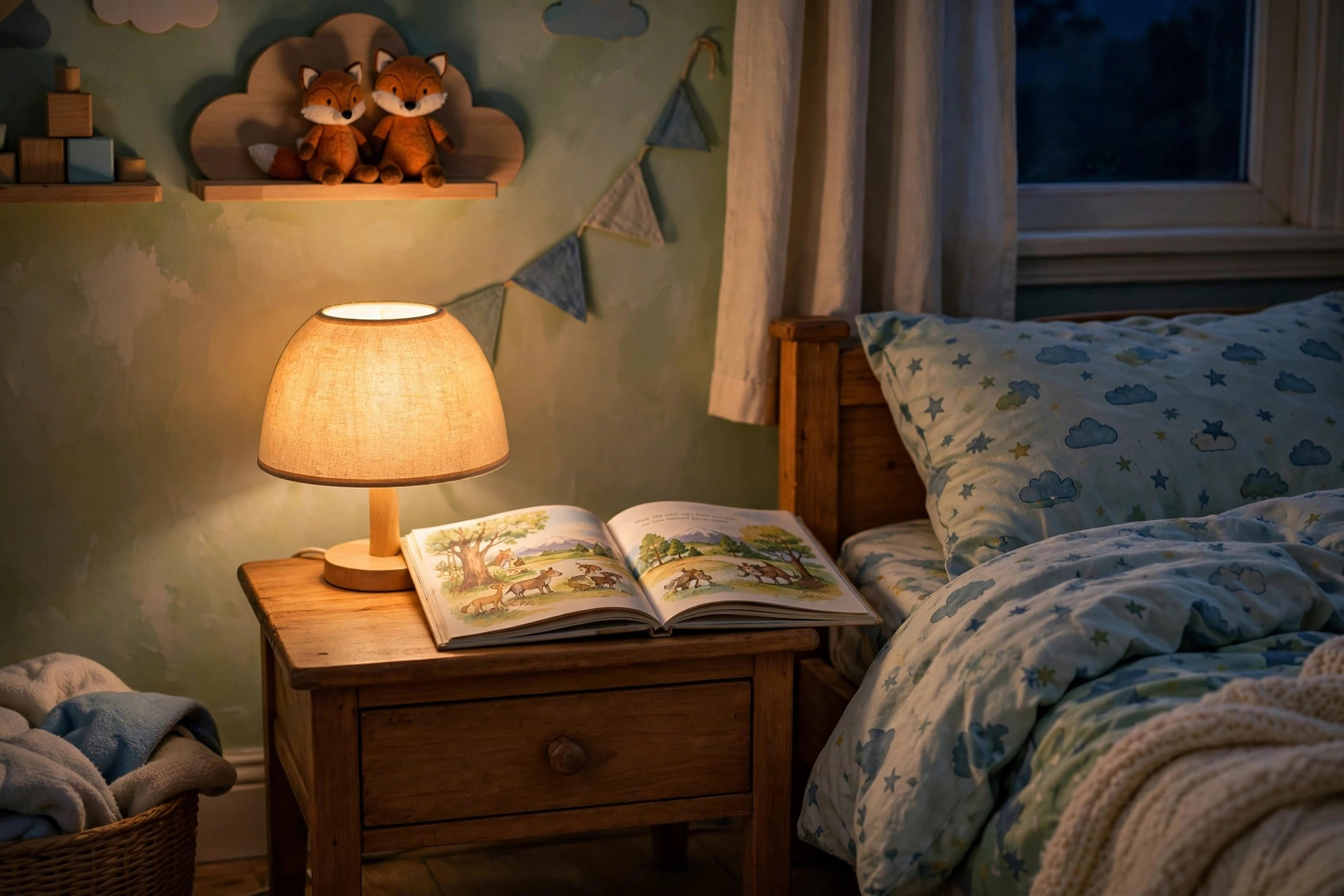

A kids nightstand lamp for bedtime reading is one of the simplest ways to end the day well. Many parents read to their children each night. Many older children also read on their own before sleep. In both cases, the room needs a gentle pool of light that is bright enough for the page but soft enough for the tired child.
The right lamp does more than light the book. It helps the child settle. It marks the change from play time to rest time. When the lamp clicks on, the child knows the stories will soon begin. When the lamp clicks off, the child knows it is time to sleep. That small nightly habit can make bedtime calmer for the whole house.
Why the Right Lamp Matters
Reading before bed is a strong habit to build. It helps a child learn new words. It helps the child learn to sit still and pay attention. It gives parent and child a quiet moment together at the end of a busy day. A kids nightstand lamp for bedtime reading supports all of this by giving the eyes what they need.
Children often read in dim rooms. The main ceiling light goes off. The rest of the room grows dark. If the only light is too weak, the child will hold the book too close. The eyes will strain. Over time the child may rub tired eyes or lose interest in the story. A lamp made for the nightstand fixes this. It sits close to the child. It throws a warm, steady light right where the book rests.
Good light also protects the child’s mood at night. Harsh white light can feel cold and keep the mind awake. Warm light feels safe. It lets the body relax. Sleep experts note that calm, dim surroundings before bed help children fall asleep faster. A small lamp with warm light fits that idea perfectly.
What to Look for in a Kids Nightstand Lamp: Kids Nightstand Lamp for Bedtime Reading
Brightness and Color Temperature
Look for a lamp that gives about 400 to 800 lumens. That range is enough to read by without hurting tired eyes. More light is not always better. A lamp that is too bright can glare off white pages and make the child squint.
Color temperature matters just as much. Choose a warm white bulb, near 2700K. This gives the soft yellow glow that feels like firelight. Cool daylight bulbs, near 5000K, are fine for a desk at school time. They are a poor match for bedtime. Many lamps now come with three color settings. That is a nice extra, but the warm setting is the one your child will use each night.
A dimmer is worth the extra cost. It lets you turn the light down low for the last few minutes before sleep. Some parents pair the reading lamp with a separate nursery night light with dimmer for feeding in the hall, so late-night trips feel safe and calm.
Size and Stability
The lamp will sit on a small table next to the bed. It must fit that space. Measure the nightstand before you shop. A good rule is that the lamp shade should sit below the child’s eye level when the child is sitting up in bed. This keeps the bulb out of direct view.
Stability is a safety matter. Children reach for things. They knock things over. Choose a lamp with a wide, heavy base that resists tipping. Short, sturdy shapes beat tall, thin ones. If the lamp rocks when you nudge it in the store, leave it there.
Shade Material and Heat
The shade shapes the light and guards the bulb. Fabric shades spread light softly. They suit a nursery or a young child’s room. Metal and glass shades give a cleaner look for an older child’s room. Open-top shades send some light upward. Closed-top shades push all the light down onto the book.
Heat is the real question here. Old-style bulbs grew very hot. A fabric shade over a hot bulb was a fire worry. LED bulbs run cool. They are the right choice for any kids nightstand lamp for bedtime reading. If you already own an older lamp, swap the bulb for an LED of the same size. You can browse current options through large home retailers such as IKEA or Wayfair to see what LED-ready styles are common now.
Switch Type
Think about little hands. A tiny twist knob can frustrate a young child. A big push button, a touch base, or a pull chain is easier. Some lamps have the switch on the cord. That works if the cord is within easy reach. The best lamp is one the child can turn on and off alone. That small act builds confidence and makes the child feel grown up.
Types of Kids Nightstand Lamps
Table lamps are the classic choice. They sit flat on the nightstand and stay put. They come in every shape, from rocket ships to plain round shades. For bedtime reading, a simple table lamp with a warm bulb is hard to beat.
Clip-on lamps clamp to a shelf, a headboard, or the edge of the nightstand. They save space on small tables. They work well in rooms where every inch counts. Make sure the clamp grips firmly and cannot slide off.
Wall-mounted reading lights attach to the wall above the bed. Some have swing arms that pull out over the book. They keep the tabletop clear. They need to be fixed to the wall with proper anchors, since children may pull on them. This type suits older children who read alone.
Lantern-style and novelty lamps shaped like animals or stars can delight a young child. They are fine as decoration. For actual reading, check that they cast enough light on the page. Many novelty lamps glow softly but do not throw light where it is needed. A novelty lamp can sit beside a true reading lamp, with each doing its own job.
Touch lamps turn on with a tap on the base. Children love them. They remove the struggle with small switches. The only drawback is that pets or blankets can switch them on by accident. Keep that in mind if the lamp sits where the cat sleeps.
Cost and Price Ranges
A kids nightstand lamp for bedtime reading does not need to cost much. Simple models start around fifteen to twenty-five dollars. These are usually small table lamps with fabric shades and basic switches. They do the job well.
Mid-range lamps cost about thirty to sixty dollars. This group adds touch controls, dimmers, or three color settings. Build quality is better. The lamp is more likely to survive years of nightly use.
Designer and specialty lamps can cost eighty dollars or more. These may be shaped like storybook characters or made from fine materials. They look lovely in a decorated room. For reading light alone, they are not needed. A parent planning a full room theme might pair the lamp with matching best blackout curtains for nursery windows usa to shape the whole bedtime mood.
Bulbs are a separate small cost. A warm LED bulb costs only a few dollars and lasts for years. If the lamp you buy includes a bulb, check that it is LED and warm white. If not, plan to replace it. The Home Depot lighting aisle and similar stores carry warm LED bulbs in nearly every size.
Care and Upkeep
A child’s lamp needs little care, but a few habits keep it safe and bright. Dust the shade every few weeks. Dust dims the light and can smell when it warms. A soft cloth is enough. For fabric shades, a lint roller works well.
Check the cord now and then. Children move lamps. Cords get pinched behind tables. Look for cuts, frays, or flat spots. If the cord is damaged, unplug the lamp and replace the cord or the lamp. Do not tape a damaged cord and keep using it.
Wipe the bulb with a dry cloth when the lamp is off and cool. A dusty bulb gives less light. When the bulb burns out, replace it with the same type and wattage or less. Never put in a bulb rated higher than the lamp allows. That limit is printed on a small sticker near the socket.
Teach the child to turn the lamp off when leaving the room. This is good practice for the home’s energy use. It also teaches respect for the things in the room. A small rug under the nightstand, such as a soft option chosen like a best nursery rug soft for crawling babies, also gives the child a warm spot to stand during the bedtime story.
Safety First
Safety is the most important part of choosing a kids nightstand lamp for bedtime reading. Children explore with their hands. The lamp must stand up to that curiosity.
Keep cords out of reach. Run the cord behind the nightstand and tape it down or use a cord cover. A dangling cord tempts a toddler to pull. A pulled lamp can fall on the child. The U.S. Consumer Product Safety Commission offers guidance on keeping cords and small electrical goods safe around children.
Use LED bulbs only. They stay cool to the touch. A curious child who touches the shade or the bulb area should not get burned. Keep the lamp away from bedding, curtains, and paper. Even a cool bulb should not touch fabric.
Anchor tall or top-heavy lamps. If the lamp wobbles, move it to a lower, wider surface. Some parents set the lamp on a low dresser instead of a small round nightstand. That is a sound choice.
Check the lamp for small parts. Decorative beads, loose finials, and tiny knobs can come off. A young child may put them in the mouth. Tighten anything that moves. Remove anything that cannot be tightened.
Water and electricity do not mix. Keep drinks in spill-proof cups away from the lamp base. This is a simple rule worth repeating to older children.
Sleep health matters too. Turn the lamp off once the story ends. A dark room helps the child fall asleep and stay asleep. Guidance from child health sources such as HealthyChildren.org and WhatToExpect supports keeping the sleep space dark and calm after reading time.
Frequently Asked Questions
What is the best bulb for a kids nightstand lamp for bedtime reading? A warm white LED bulb near 2700K is the best pick. It gives a soft yellow light that is easy on the eyes. It runs cool, which keeps little hands safe. It also uses very little power and lasts for years.
How bright should the lamp be? About 400 to 800 lumens is right for reading. That is bright enough to see the page clearly without glare. A dimmer lets you lower the light for the final minutes before sleep.
Where should the lamp sit on the nightstand? Place it on the side away from where the child climbs into bed. The bottom of the shade should sit below the child’s eye level when sitting up. This keeps the bulb out of direct sight and cuts glare.
Are touch lamps safe for children? Yes, touch lamps are safe and easy for children to use. The base works at low voltage on the outside. The main concern is that a pet or a blanket may switch the lamp on by accident. Keep the area around the base clear.
Can a night light replace a reading lamp? No. A night light glows softly to mark the room in the dark. It does not give enough light to read by. Use a real reading lamp for stories and let the night light do its own job. Reviews and roundups from The Spruce and Consumer Reports often explain the difference between task light and night lights.
What age can a child use the lamp alone? Most children can learn to switch a lamp on and off by age three or four. Always supervise the choice of lamp and its setup. Check the lamp now and then as the child grows, since older children may move it or swap the bulb.
Do I need a special lamp for a nursery? A nursery works well with a small, stable lamp that has a dimmer. Soft light helps during night feedings too. Themed children’s lines such as Pottery Barn Kids carry lamps made for nurseries, and broad marketplaces like Amazon list many warm LED options to compare.
A Final Word
A kids nightstand lamp for bedtime reading is a small thing that shapes a large part of the day. It lights the page. It warms the room. It tells the child that the day is closing in a safe and gentle way. Choose a lamp that is sturdy, warm, and easy for little hands to use. Keep the bulb LED and the cord out of reach. Then let the stories do the rest. Night after night, that small circle of light becomes one of the child’s happiest memories.
References
Amazon. (n.d.). Online shopping. https://www.amazon.com American Academy of Pediatrics. (n.d.). HealthyChildren.org. https://www.healthychildren.org Consumer Reports. (n.d.). Product reviews and ratings. https://www.consumerreports.org IKEA. (n.d.). Home furnishings. https://www.ikea.com Pottery Barn Kids. (n.d.). Kids furniture and decor. https://www.potterybarnkids.com The Home Depot. (n.d.). Home improvement products. https://www.homedepot.com The Spruce. (n.d.). Home and garden advice. https://www.thespruce.com U.S. Consumer Product Safety Commission. (n.d.). Product safety information. https://www.cpsc.gov Wayfair. (n.d.). Furniture and home goods. https://www.wayfair.com What to Expect. (n.d.). Pregnancy and parenting guidance. https://www.whattoexpect.com
Was this guide helpful?

About David Wilson
The My Garden US editorial team writes practical, in-depth home and garden guides for American homeowners — tested advice, no fluff.
You May Also Like
Toddler Pillow for First Bed Transition: How to Pick One That Is Safe
March 23, 2026 0 views
Kids Room Divider Curtain for Shared Bedroom: A Parent’s Guide
July 13, 2026 0 views
Nursery Dresser with Removable Changing Tray: A Practical Buying Guide
January 3, 2026 0 views