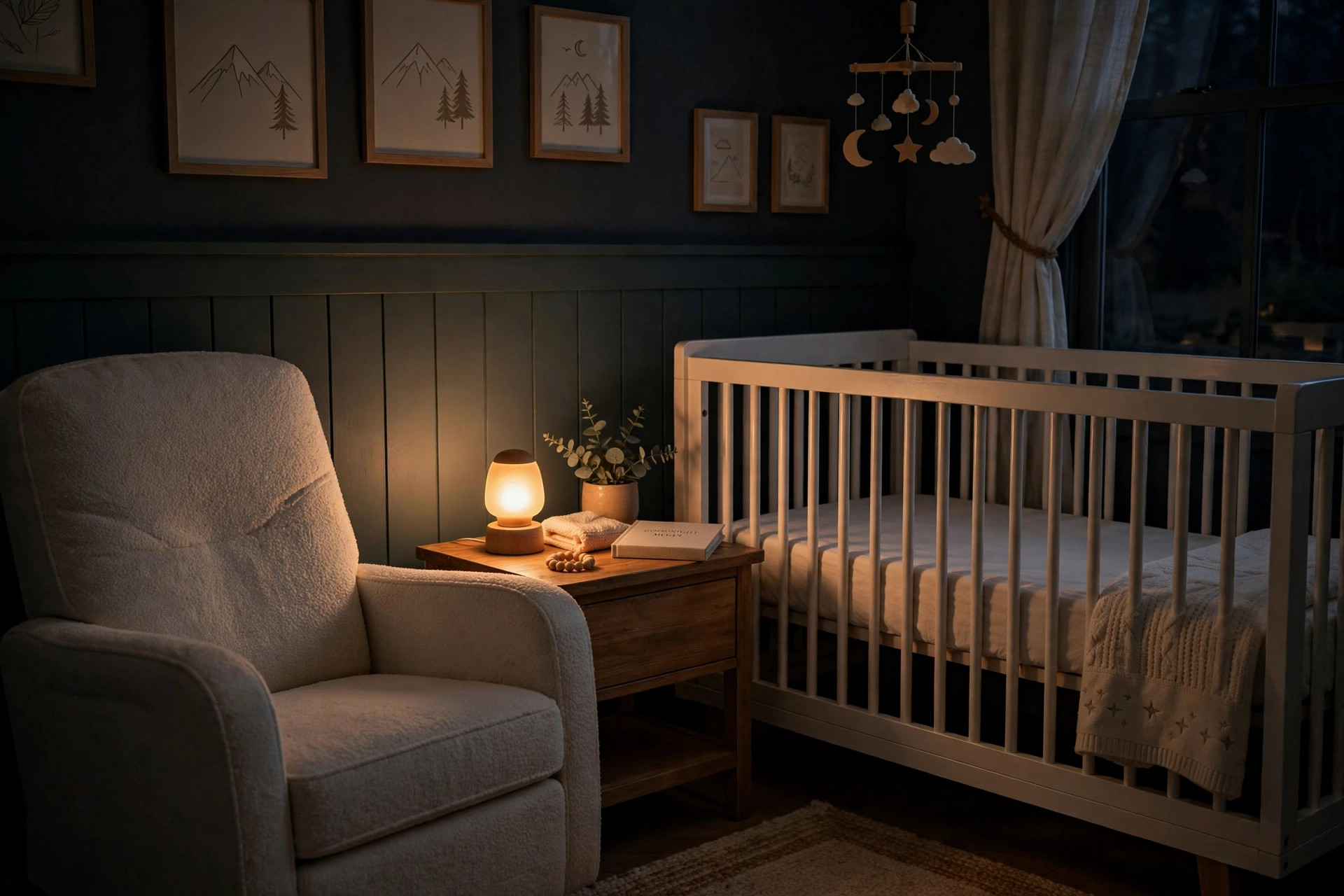

New parents feed their babies many times each night. The room is dark, and the baby is sleepy. A bright lamp wakes the baby too much. A nursery night light with dimmer for feeding solves this problem. It gives just enough soft light to see by. This guide explains why it matters, how to choose one, and how to keep it safe.
Why It Matters for Night Feeds
A baby wakes up hungry at two in the morning. The parent must find the bottle, hold the baby, and check that all is well. In total darkness this is hard. A strong light makes it harder in a different way. It tells the baby that morning has come. The baby then stays awake and will not go back to sleep.
A nursery night light with dimmer for feeding gives a low warm glow. The parent can see the baby’s face and the bottle. The baby stays calm. When feeding is done, the light goes down even lower or off. Both parent and baby fall back to sleep fast.
Doctors say that soft light at night helps keep sleep patterns steady. Bright light at night can confuse the body clock of a young child. A dimmer lets the parent set the lowest light that still works. Many parents say this small change made their nights much easier.
What to Look for When You Choose One: Nursery Night Light with Dimmer for Feeding
Not all night lights are the same. A nursery night light with dimmer for feeding needs a few key traits.
First, the light must be truly dimmable. Some lamps only have two levels, bright and dim. Look for one with a smooth dimmer or many small steps. The best lights go down to a very faint glow.
Second, the color of the light matters. Warm amber or warm white is best. Cool white and blue light feel harsh at night. They also disturb sleep more. Check the color temperature on the box. Aim for 2700K or lower.
Third, look at the controls. At three in the morning, no one wants to read a manual. A simple tap or touch control works well. Some lights have a remote control. Others let you set a timer so the light turns off by itself after feeding.
Fourth, think about power. Plug-in lights work well near a bed or chair. Battery lights can be carried anywhere. Rechargeable lights save money on batteries. Some plug-in models have a battery backup for power cuts.
Fifth, check the size and shape. A small light sits well on a nightstand or shelf. Some designs are fun shapes for a nursery, like animals or clouds. Make sure the shape does not have small parts that can break off.
Sixth, look at the dimmer range, not just the fact that it dims. Ask yourself how low the lowest setting goes. A light that only dims to half brightness is still too bright for a sleeping baby. The best models fade down to a faint ember of light. If you buy in a store, test the dimmer there. If you buy online, read buyer reviews that mention the lowest setting by name.
Seventh, think about glare. A bare bulb can glare even at low settings. A frosted cover or diffuser spreads the light and softens it. This is kinder on tired eyes in the middle of the night.
Types and Options
There are several types of nursery night light with dimmer for feeding on the market. Each has its own strengths.
Touch lamps. These turn on and dim with a tap. Tap once for low light, again for brighter light, and again to turn off. Some models dim by holding a finger on the lamp. They are simple and quiet.
Remote control lights. These come with a small remote. The parent can change the brightness without getting up. This is useful when rocking the baby in a chair far from the light.
Smart lights. These connect to a phone app or voice speaker. The parent can set schedules, colors, and brightness from bed. They cost more, but they offer the most control. Guides on smart home lighting at stores like IKEA and Wayfair show how these fit into a nursery plan.
Portable rechargeable lights. These are small and can be carried to any room. They charge by USB. Many also work as a gentle night light for toddlers later. Pottery Barn Kids and other nursery shops often list portable designs among their lighting picks.
Plug-in dimmer lights. These plug straight into a wall socket. They free up table space. Some have a light sensor that turns them on at dusk and off at dawn. Look for models with a manual dimmer switch on the side.
Sound machine combos. Some nursery devices combine a night light, a dimmer, and white noise. These save space on the nightstand. The white noise can help the baby fall back to sleep after feeding. Brands like Hatch are known for this kind of combo device.
Placement tip. Where you put the light matters as much as which light you buy. A light behind the feeding chair casts no glare in the baby’s eyes. A light across the room gives a soft wash of brightness. Try a few spots over several nights. Keep a note of which spot lets you see the bottle without waking the baby. Many parents settle on a low shelf near the chair, aimed at the wall.
Extra bulbs for travel. Some families keep a second small light for travel. Grandparents’ houses and hotel rooms are often too dark or too bright. A small rechargeable light in the diaper bag keeps the routine steady anywhere.
Cost and Price
Prices for a nursery night light with dimmer for feeding vary by type and brand. Most basic touch lamps cost between 10 and 25 dollars. They do the job well for many families.
Remote control models usually cost between 20 and 40 dollars. Smart lights with app control run from 40 to 90 dollars or more. Sound machine combos with lights often cost between 60 and 100 dollars.
A higher price does not always mean a better light. A simple 15-dollar lamp with a good dimmer often beats a fancy model with a poor dimmer. Read the box and check the lowest brightness level. Retail listings at Amazon and Target let you compare features and prices side by side.
LED lights use very little power. Running a small LED night light all night costs only a few dollars per year in electricity. Rechargeable models cost nothing to run except the small cost of charging. This makes a nursery night light with dimmer for feeding one of the cheapest nursery items to own.
Care and Upkeep
A night light needs little care, but a few habits keep it working well.
Keep the lamp clean. Dust the surface with a dry cloth each week. Dust can dim the light and make it look cloudy. Do not use wet cleaners on the lamp unless the manual says it is safe.
For rechargeable lights, charge them as the manual directs. Do not leave them plugged in for weeks if the manual says not to. A full charge usually lasts several nights of feeding.
For plug-in lights, check the cord now and then. Look for wear or damage near the plug. If the cord feels hot, stop using the light and replace it.
If the light has a timer or app, check the settings once a month. Power cuts can reset some models. Make sure the schedule still matches your night routine.
Store spare batteries safely if the light uses them. Keep them out of reach of small children. Button batteries are very dangerous if swallowed.
When the baby grows up, the light can move to a toddler room. Many families keep the same lamp for years. Cleaning tips and care ideas for nursery items appear in home guides at The Spruce.
Safety in the Nursery
Safety comes first with any nursery product. A night light sits close to the baby, so choose and place it with care.
Keep the light out of the baby’s reach. Do not put it inside the crib. Place it on a stable table or shelf where a crawling baby cannot pull it down. Keep cords behind furniture and out of reach. The Consumer Product Safety Commission warns that cords near cribs are a hazard.
Choose LED lights, not old-style bulbs. LEDs stay cool to the touch. Old bulbs get hot and can burn skin. Make sure the lamp has no small parts that could break off and become a choking hazard.
Check for safety marks on the box. Look for UL or ETL marks, which show the product passed safety tests. Avoid no-name lights with no safety marks.
Do not leave a damaged light in the nursery. If the case cracks or the cord frays, replace the unit. A cheap replacement costs far less than a repair bill after an accident.
Light level also affects safety. A very bright light pointed at the baby’s eyes is not good. Aim the glow at the wall or ceiling, not at the crib. The dimmer lets you keep the light low while still seeing enough. Health and safety guidance for new parents is available at HealthyChildren.org, run by the American Academy of Pediatrics.
FAQ
How bright should a nursery night light with dimmer for feeding be? As dim as you can manage while still seeing clearly. Start at the lowest setting. Turn it up one step at a time until you can see the baby and the bottle. Most parents find that a faint warm glow is enough.
Is a dim night light bad for the baby’s eyes? No. A soft, warm night light does not harm a baby’s eyes. Bright light pointed at the eyes is best avoided. Keep the light low and aimed away from the baby’s face. Ask your pediatrician if you have concerns.
Should the light stay on all night or only during feeds? Either way works. Some parents leave it on low all night so the room never goes pitch black. Others turn it on only for feeds. A timer can turn it off after feeding so you do not have to remember.
What color light is best for night feeding? Warm amber or warm white, around 2700K or lower. Avoid blue and cool white light at night. Warm light is gentler and disturbs sleep less.
Can I use the same light as the baby grows into a toddler? Yes. Many dimmable night lights work well for toddlers who fear the dark. The dimmer lets you raise the light a little as the child grows. Portable models can move from room to room.
Do I need a smart light, or is a simple lamp enough? A simple lamp is enough for most families. Smart lights add remote control and schedules, which some parents love. Start simple. You can upgrade later if you want more features. Parenting resources like What to Expect often note that simple nursery gear is fine.
A Short Final Word
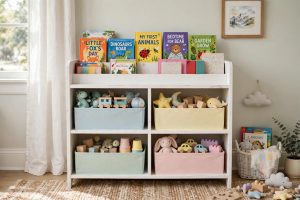
A nursery night light with dimmer for feeding is a small item with a big effect. It makes night feeds calmer. It helps the baby fall back to sleep. It helps the parent see without fully waking up. Choose a warm, truly dimmable LED light with simple controls. Keep it safe, keep it clean, and it will serve your family for years. As you set up the rest of the room, you may also want a kids bookshelf with bins for toy storage for the growing child, a kids desk chair adjustable for growing children for later years, and a nursery closet organizer for baby clothes to keep tiny clothes in order.
References
Amazon. (n.d.). Online shopping. https://www.amazon.com American Academy of Pediatrics. (n.d.). HealthyChildren.org. https://www.healthychildren.org Hatch. (n.d.). Nursery sound machines and night lights. https://www.hatch.co IKEA. (n.d.). Home furnishings. https://www.ikea.com Pottery Barn Kids. (n.d.). Kids furniture and decor. https://www.potterybarnkids.com Target. (n.d.). Retail store. https://www.target.com The Spruce. (n.d.). Home and garden advice. https://www.thespruce.com U.S. Consumer Product Safety Commission. (n.d.). Product safety information. https://www.cpsc.gov Wayfair. (n.d.). Furniture and home goods. https://www.wayfair.com What to Expect. (n.d.). Pregnancy and parenting guidance. https://www.whattoexpect.com
Was this guide helpful?

About James Carter
The My Garden US editorial team writes practical, in-depth home and garden guides for American homeowners — tested advice, no fluff.
You May Also Like

Crib Bumper Alternative Breathable Mesh Liner: A Complete Parent Guide
March 5, 2026 0 views
A Parent’s Guide to the Kids Room Rug Round for Play Area Use
February 6, 2026 0 views
Crib Mattress Topper for Extra Comfort Support: A Parent’s Guide
August 20, 2026 0 views