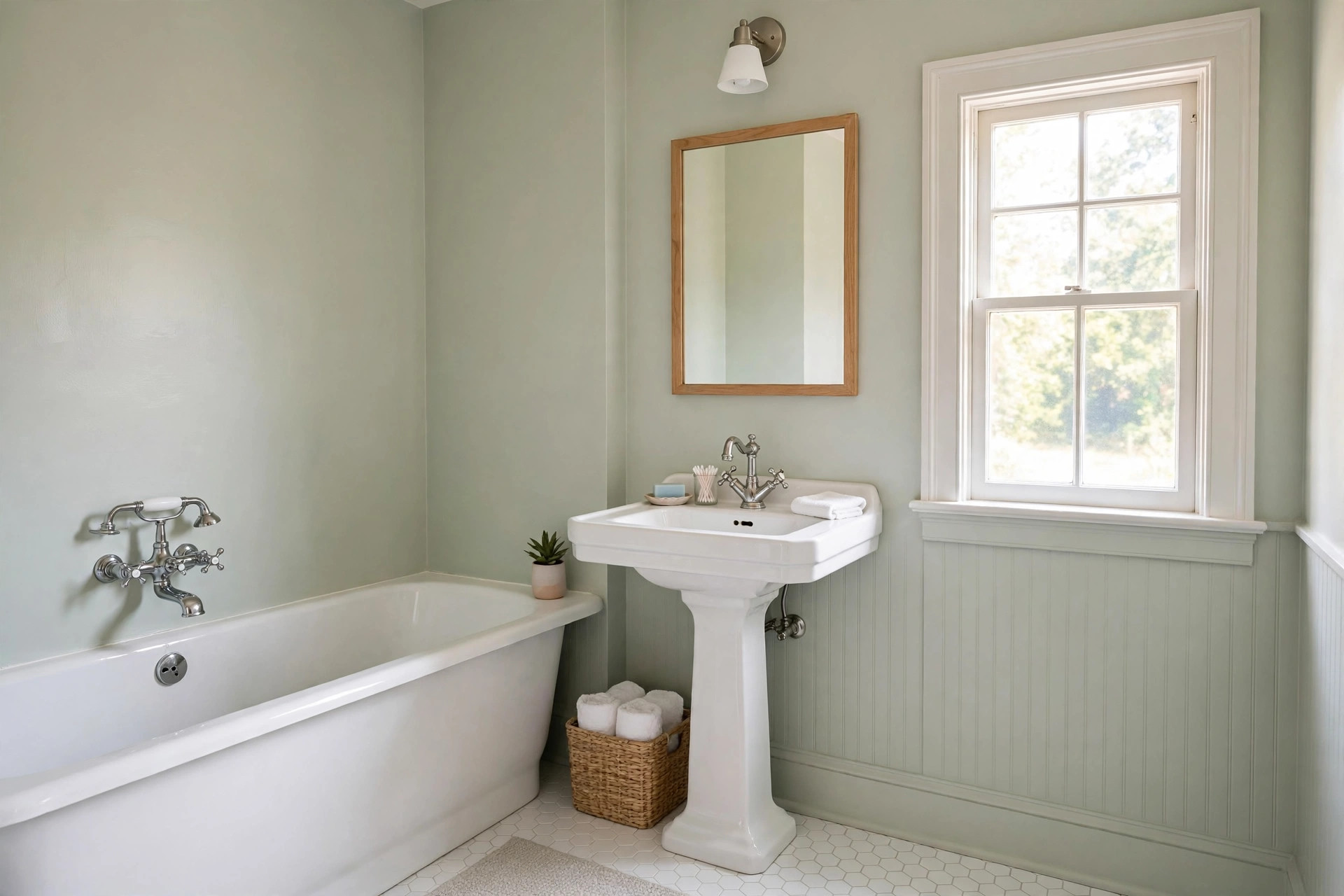

A bathroom is the hardest room in the house for paint. Steam from a hot shower fills the air. Water splashes on walls and trim. Vents often do little. In this damp air, plain paint can grow dark spots in a few months. That is why so many shoppers search for mildew resistant bathroom paint reviews usa. They want a coating that stands up to moisture and keeps walls clean for years, not weeks. This guide walks through what matters, what to look for, what the main types cost, how to apply the paint right, and how to keep the finish sound once the job is done.
Why Bathrooms Grow Mildew
Mildew is a kind of fungus. It loves warm, damp air and still corners. A bathroom gives it all three. Every shower pushes moisture into the air. The mirror fogs. Water drops sit on tile and on painted drywall. If the room has no window or a weak fan, the damp air stays for hours.
Plain interior paint soaks up some of that moisture. The surface stays soft and damp. Mildew spores land on it and take hold. Dark gray or black specks appear near the ceiling, around the shower, and behind the toilet. Paint with mildew resistant chemistry fights this. It holds a mildewcide in the dried film. The additive slows the growth of mildew on the painted surface. It does not make a room waterproof. It does not cure a leak. But it buys a bathroom paint job a much longer life.
Homes across the United States see the same trouble. Cold winters keep windows shut for months. The air inside stays damp. Summer humidity brings its own load of moisture. A paint that resists mildew is one of the cheapest ways to protect bathroom walls in both seasons.
What to Look for When You Choose a Bathroom Paint: Mildew Resistant Bathroom Paint Reviews Usa
Paint shelves hold dozens of cans that promise a bathroom grade result. A few traits separate the good ones from the rest.
Finish and Sheen
Flat and matte finishes soak up moisture. They mark fast and scrub poorly. In a bathroom, satin, eggshell, or semi-gloss work far better. Satin gives a soft look and still sheds water. Semi-gloss is harder and wipes clean with ease. Most paint makers now sell bathroom specific lines in satin or a washable matte made for damp rooms. Read the label. The maker will state that the product suits kitchens and baths. If the label says nothing about moisture, do not use it in a bathroom.
Mildew Resistance Claims
A can that says mildew resistant has an additive in the dried film that guards the paint surface. Look for that claim on the front of the label or in the fine print. Some cans also promise stain blocking or extra scrub resistance. Both traits help in a bathroom, where soap splash and steam grime build up fast.
Coverage and Hiding
Bathrooms are small, but dark old colors or water stains still need hiding. A paint with strong hiding power covers in one or two coats. This matters because two coats of bathroom paint give the mildewcide a thicker shield. Most reviews note that the best cans hide well in two coats over a primed wall.
Low Odor and Low VOC
Many bathroom jobs happen with the door shut and the fan on low. A low odor, low VOC formula makes the work far more pleasant. It also lets a family use the bathroom again sooner. Most top rated bathroom paints sold today meet low VOC rules.
Types of Mildew Resistant Paint
Shoppers in the United States will meet a few clear groups on the shelf. Each suits a different job.
Bathroom specific paint. Big brands sell lines made just for kitchens and baths. These cans hold a stronger mildewcide load and a moisture tough resin. They cost more per gallon than plain wall paint. Reviews often rate them the best for steamy rooms with weak vents. Paint makers such as BEHR and Benjamin Moore each offer bath rated lines, and shoppers can compare the details on the makers own pages.
Mildew resistant interior paint. Many quality interior paints now carry mildew resistance as a standard trait. These cans work in a bathroom if they have a satin or semi-gloss sheen and the label names bathrooms. They cost less than bath specific lines. In a room with a good vent and a window, they can last just as long. Retail listings at Lowe’s show how wide the range of mildew resistant interior paints has become.
Paint and primer in one. Some cans combine a stain blocking primer with mildew resistant topcoat chemistry. They suit walls with old water marks or smoke stains. The primer side seals the stain. The paint side guards against mildew. For a first time bathroom job over stained drywall, this type saves a full coat.
Primer with mildewcide. Pros often reach for a dedicated mildew resistant primer first, then add two topcoats. The primer grips chalky old paint and sealed drywall. It also puts mildewcide protection under the topcoat. Guides on Bob Vila walk through primer choice for damp rooms step by step.
Cost and Price in the United States
Mildew resistant bathroom paint costs more than basic wall paint. A gallon of a good bathroom grade can runs about 40 to 75 dollars in 2026. Premium lines from Sherwin-Williams sit at the top of that range. Store brand and value lines sit near the bottom. A small bathroom needs one to two gallons. Most need two coats plus a primer coat if the walls are stained or bare.
The full job often costs more in tools than in paint. Plan for a quality roller cover, an angled brush for trim, painter tape, drop cloths, and a mildew resistant caulk for tub and sink joints. Independent testing at Consumer Reports shows that mid price cans often score near the top brands for mildew resistance, so a careful shopper can save real money without losing protection.
Hiring a painter adds labor cost. A small bathroom repaint can run 300 to 700 dollars with labor, depending on the market and the wall condition. Homeowners who want help picking a pro often read local interior house painter reviews before they call. Doing the work yourself keeps the total near the price of paint and tools.
How to Paint a Bathroom the Right Way
Good paint cannot save a bad prep job. Follow these steps for a finish that lasts.
First, kill the mildew that is there now. Scrub dark spots with a mix of water and household bleach, or with a store bought mildew cleaner. Rinse the wall and let it dry fully. Paint never sticks well to live mildew. It will bleed back through the new coat.
Next, fix the source of moisture. Check the vent fan. It should move air strong enough to clear a fogged mirror in about 20 minutes. Clean the fan grill. Make sure the duct vents outside, not into the attic. Caulk gaps around the tub, the sink, and the window frame. Small leaks feed mildew no paint can stop.
Then prep the surface. Fill nail holes and cracks. Sand rough spots smooth. Wipe the walls with a damp cloth to lift dust. Tape the trim, the ceiling line, and fixtures. If the walls show stains, roll on one coat of stain blocking primer. How to guides at This Old House show each prep step with clear photos.
Now paint. Cut in the edges with an angled brush. Roll the walls with a 3/8 inch nap cover. Keep a wet edge so the coat lays smooth. Let the first coat dry the full time the label asks. Then roll a second coat. Two coats are the norm for bathroom work. They give even color and a full mildewcide shield.
Last, let the room cure. Keep the fan running for a day or two. Hold off on hot showers for 48 hours if you can. The paint film hardens as it cures. Early steam can soften a fresh coat and dull the sheen.
Care and Upkeep After Painting
A mildew resistant paint job lasts longest with a little care. Run the vent fan during every shower and for 20 to 30 minutes after. Wipe heavy splash off the walls now and then. A soft cloth with mild soap lifts grime without harming the sheen. Avoid harsh scrub pads. They dull satin finishes and wear the mildewcide layer thin.
Watch the trouble spots. Check the ceiling above the shower each month. Look at the corners near the tub and behind the toilet. If you see the first gray specks, wipe them off right away with a mild cleaner. Early cleaning keeps a small spot from turning into a full stain. Care tips at The Spruce list gentle cleaners that are safe for painted bath walls.
Repaint every five to seven years in a busy family bathroom. The mildewcide in the film wears down with time and steam. A fresh two coat job renews the shield. Homes with strong vents and light use can stretch longer between jobs.
Safety
Bathroom painting brings a few safety points worth care. Vent the room while you work. Open a window if the room has one. Wear gloves when you scrub old mildew with bleach. Keep bleach away from other cleaners. Never mix bleach with ammonia. The fumes are dangerous.
Check old paint for lead if the home was built before 1978. Scrape a small test area. If lead is a risk, use a certified lead safe work method or call a pro. Design and safety ideas at HGTV remind readers to treat old homes with extra care.
Ladders in a small bathroom need care too. Set the feet firm on dry tile. Do not reach past your balance point. A step stool with a wide base beats a wobbly chair.
Frequently Asked Questions
Does mildew resistant paint stop mold inside the wall? No. The additive guards the paint film on the surface. It does not reach mold growing inside drywall or behind tile. If a wall stays soft, smells musty, or shows stains that return after cleaning, the trouble may sit inside the wall. Call a pro to check before you paint.
Can I use regular interior paint in a bathroom? You can, but the job will not last. Regular flat paint soaks up steam and grows mildew fast. At a minimum, pick a satin or semi-gloss interior paint whose label names bathrooms. A bath specific line is the safer pick for steamy rooms.
How many coats does a bathroom need? Two finish coats over a clean, primed wall. One coat leaves thin spots where steam can reach the drywall. Two coats give even color and full mildew protection. Add a primer coat first if the walls are stained, bare, or patched.
Do I need to prime before bathroom paint? Prime when the surface is new drywall, patched, stained, or glossy old paint. A good primer grips the wall and blocks stains from bleeding through. Over clean, sound, flat latex paint in good shape, a quality paint and primer in one can skip the separate primer step.
What sheen is best for bathroom walls? Satin suits most bathrooms. It sheds moisture, scrubs well, and hides small wall flaws. Semi-gloss suits trim, doors, and heavy use baths. It is harder and wipes cleaner, but it shows every bump in the wall. Avoid flat and matte unless the can is made for baths and says washable.
Can I paint over wallpaper in a bathroom? It is possible, but damp rooms make it risky. Steam can loosen wallpaper seams under the paint. Many pros strip the paper first. If you want the full picture, read about the pros and cons of painting over wallpaper before you decide.
A Final Word
The search for mildew resistant bathroom paint reviews usa ends with a simple truth. The best can on the shelf cannot beat good prep, a working fan, and two full coats. Pick a bath rated paint in satin or semi-gloss. Kill old mildew first. Fix the moisture source. Then paint with care. Small extra steps, like painting cabinets and trim with the same tough approach, pay off as well. Homeowners weighing a cabinet job can read up on the pros and cons of painting thermofoil cabinets for a full view. Do the job right once, and the bathroom will stay bright and clean for years.
References
Behr. (n.d.). Paints, primers, and stains. https://www.behr.com Benjamin Moore. (n.d.). Paints and stains. https://www.benjaminmoore.com Bob Vila. (n.d.). Home improvement advice. https://www.bobvila.com Consumer Reports. (n.d.). Product reviews and ratings. https://www.consumerreports.org HGTV. (n.d.). Home and garden ideas. https://www.hgtv.com Lowe’s. (n.d.). Home improvement products. https://www.lowes.com Sherwin-Williams. (n.d.). Paints and coatings. https://www.sherwin-williams.com The Spruce. (n.d.). Home and garden advice. https://www.thespruce.com This Old House. (n.d.). Home renovation guidance. https://www.thisoldhouse.com
Was this guide helpful?

About Jennifer Lee
The My Garden US editorial team writes practical, in-depth home and garden guides for American homeowners — tested advice, no fluff.
You May Also Like
Wainscoting Installation Service Near Me Reviews: A Homeowner’s Guide
February 23, 2026 0 views
Grasscloth Wallpaper Installation Near Me: A Plain Guide
January 4, 2026 0 views
Efflorescence Sealer for Basement Walls: A Plain Guide for American Homeowners
March 2, 2026 0 views