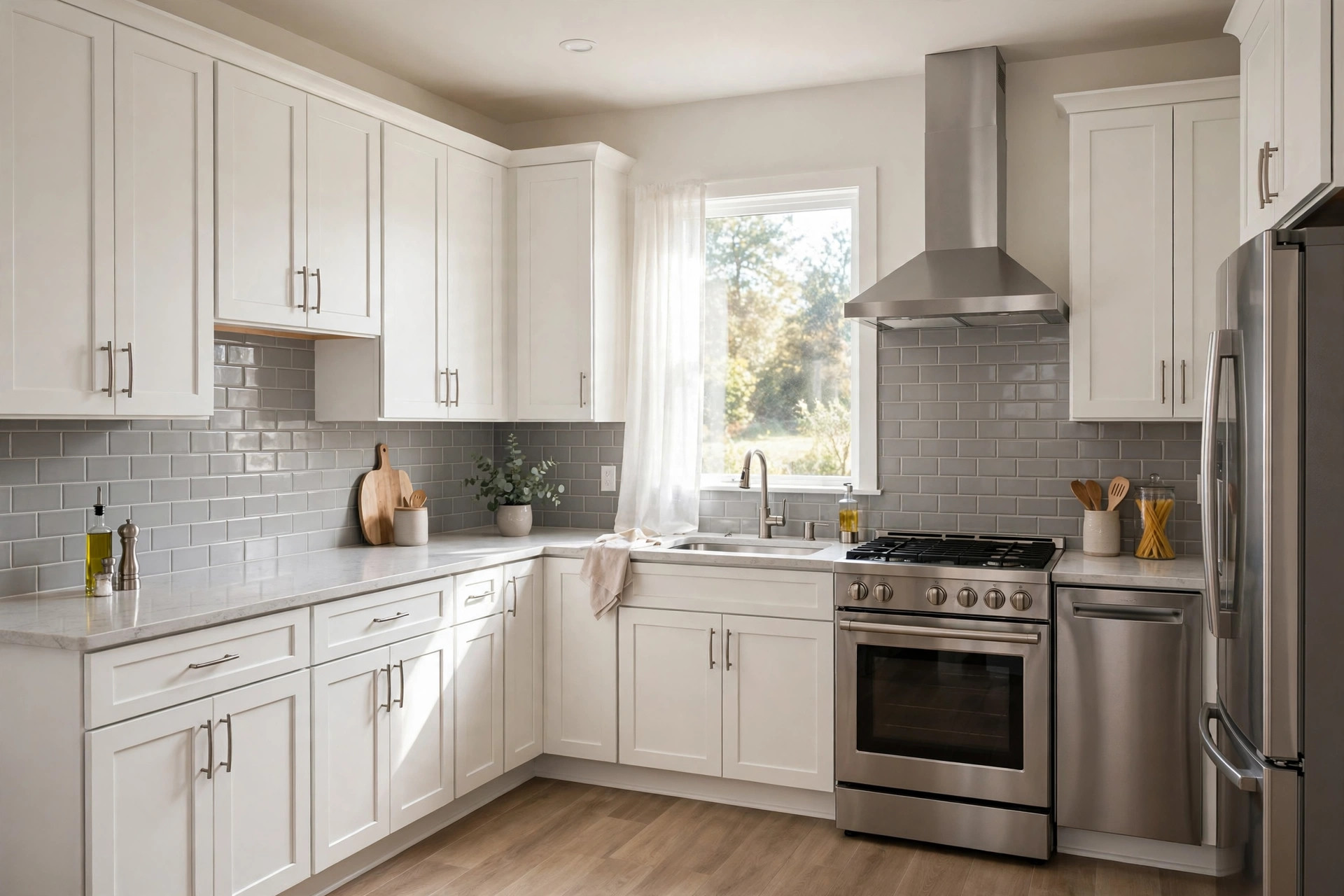

Thermofoil cabinets fill many American kitchens. They look clean, they cost less than wood, and they arrive with a smooth factory finish. After ten or fifteen years, that finish may yellow, peel, or simply go out of style. Painting thermofoil cabinets pros and cons then become a real question for the homeowner. A fresh coat of paint can give an old kitchen new life for a fraction of the cost of replacement. But paint does not stick to vinyl the way it sticks to bare wood, and a rushed job can peel within a year.
This guide lays out the full picture. It covers what thermofoil is, how painting works on it, the honest advantages, the real drawbacks, typical costs, and the prep steps that decide success or failure. Read it through before you buy a single can of paint.
What Thermofoil Cabinets Are
Thermofoil is not a wood and not a paint. It is a thin vinyl film bonded to medium-density fiberboard, often called MDF, with heat and pressure. The process is much like vacuum wrapping. The film wraps the door front and the edges in one smooth sheet. The result has no seams and no brush marks. Builders favor it because it is cheap to make, resists stains, and comes in many colors and wood looks.
The cabinet boxes behind the doors are usually melamine or painted wood. The doors and drawer fronts carry the thermofoil. When you hear people talk about painting thermofoil cabinets, they almost always mean these door and drawer faces.
The weak point of thermofoil is heat. Above a toaster oven or beside a self-cleaning range, the film can bubble and pull away. Glue failure lets edges lift. Once the film lifts, the MDF core can soak up moisture and swell. These weak points shape the painting thermofoil cabinets pros and cons debate. Paint can hide a dated color, but it cannot repair failed glue or swollen fiberboard.
Why Homeowners Consider Painting Thermofoil: Painting Thermofoil Cabinets Pros and Cons
A full cabinet replacement in a mid-size kitchen often runs from ten thousand to thirty thousand dollars. New custom doors alone can cost several thousand. Paint, brushes, primer, and supplies often total a few hundred dollars. The gap is wide enough to make anyone pause.
There are also practical reasons. The cabinet boxes may be solid. The layout may work well. The family may plan to sell in a few years and want a cheap refresh. In such cases, painting looks like the smart move. A homeowner who plans to refresh painted brick or other surfaces in the same remodel often folds cabinet painting into the same project.
For background on cabinet paints and primers, guides at Benjamin Moore and Behr describe product lines made for slick surfaces. Design ideas for kitchens appear at HGTV.
The Pros of Painting Thermofoil Cabinets
Low Cost
Cost is the strongest argument. A do-it-yourself paint job for a full kitchen often lands between two hundred and six hundred dollars. Supplies include a bonding primer, a durable topcoat, sanding pads, degreaser, and tape. Even hiring a professional painter for thermofoil usually costs far less than new cabinets. Typical pro jobs run from three to seven thousand dollars for an average kitchen, still a fraction of replacement cost.
Fast Change of Color
Paint lets you change the look in a week. White and warm gray remain the most popular cabinet colors. A dated honey or dark stain look can give way to a bright modern finish. For ideas on color schemes that pair well with painted surfaces, The Spruce offers many photo guides.
No Demolition Mess
Replacing cabinets means days of tear-out, dust, and lost kitchen use. Painting leaves the boxes in place. Most people remove only the doors and drawer fronts. The kitchen stays usable through much of the project.
Good When Selling a Home
Real estate agents often advise a light, neutral kitchen before listing. Painted cabinets photograph well and make a kitchen look cared for. Buyers react more to a clean bright kitchen than to the exact door material. The return on a modest paint job can be strong at sale time.
Keeps a Solid Layout
When the boxes, shelves, and hinges are sound, there is little reason to throw them away. Paint preserves what works. It also avoids the waste of a full tear-out, a point raised in many This Old House remodeling articles.
The Cons of Painting Thermofoil Cabinets
Adhesion Is Difficult
This is the central problem. Thermofoil is vinyl. Paint does not bond to vinyl on its own. It needs a bonding primer made for slick surfaces, careful sanding, and full curing time between coats. Skip any step and the paint will scratch or peel. Even a careful job never matches the bite that paint gets on bare wood.
Peeling Film Must Be Fixed First
Paint will not glue down lifted thermofoil. If the film is bubbling or the edges are curling, those areas must be repaired or removed before paint can work. Common fixes include re-gluing small lifts with contact cement or stripping the film entirely with a heat gun to expose the MDF. Stripping is laborious and risks tearing the board surface.
Heat and Steam Damage
Kitchens make heat and steam. The areas near the oven, the cooktop, and the dishwasher see the most stress. Paint on thermofoil in these zones can soften and lift over time. High-quality acrylic urethane enamels resist this better than ordinary wall paint, but no paint turns vinyl into wood.
Shorter Lifespan Than New Doors
A well-prepared paint job on thermofoil may last five to eight years before it needs touch-ups. New solid doors can last decades. Homeowners should treat painted thermofoil as a medium-term fix, not a permanent one. Honest Bob Vila project guides make the same point about painted finishes over man-made surfaces.
No Real Wood Texture
Some thermofoil films mimic wood grain. Paint buries that grain under a smooth coat. If you want the look of real stained oak or cherry, painting cannot deliver it. Replacement doors or refacing would be needed for that look.
How to Choose: Paint, Reface, or Replace
The choice depends on the state of the doors and your time frame.
– Paint when the film is flat and sound, the color is the only problem, and you want the lowest cost. – Reface when the boxes are good but the doors are worn. Refacing means new door and drawer fronts over old boxes. It costs more than paint and less than full replacement. – Replace when doors are swollen, warped, or widely peeling, or when the layout itself needs to change.
Retail guides at The Home Depot and Lowe’s list cabinet options and price ranges for each path. Paint suppliers like Sherwin-Williams carry primers rated for laminate and vinyl surfaces.
Types of Paint and Primer for Thermofoil
Not every paint works on vinyl. The common choices are:
Bonding Primer
A shellac-based or high-adhesion acrylic bonding primer is the base coat. It grips the vinyl and gives the topcoat something to hold. Brands label these as bonding or adhesion primers. Two thin coats beat one thick coat.
Acrylic Urethane Enamel
This is the topcoat most painters choose for cabinets. It levels smooth, dries hard, and resists water and scrubbing. It is water-based, so cleanup is easy and odor is low.
Oil-Based Enamel
Oil paint once ruled cabinet work. It flows smooth and cures very hard. Drawbacks include long dry times, strong odor, yellowing over time, and harder cleanup. Most do-it-yourself painters now choose acrylic urethane instead.
Chalk and Mineral Paints
Some craft brands sell paints that claim no primer is needed. On thermofoil, most experienced painters still recommend a bonding primer under them. Durability without primer is poor.
Cost and Price Breakdown
A typical do-it-yourself budget looks like this:
– Degreaser and sanding supplies: 30 to 60 dollars. – Bonding primer, one gallon: 40 to 70 dollars. – Acrylic urethane enamel, two gallons: 80 to 140 dollars. – Brushes, rollers, and tape: 40 to 80 dollars.
Total: roughly 200 to 350 dollars for an average kitchen of twenty to thirty doors.
Professional painting of thermofoil cabinets often runs 3,000 to 7,000 dollars, depending on door count and local labor rates. Pro work usually includes spray application, which gives the smoothest finish.
Refacing a mid-size kitchen often runs 8,000 to 15,000 dollars. Full replacement often runs 12,000 to 30,000 dollars or more. These numbers explain why painting stays popular despite its limits.
Prep Steps That Decide the Outcome
Prep is where painting thermofoil cabinets pros and cons are settled in practice. Good prep tilts the scale toward success. The steps are:
1. Remove doors, drawers, and hardware. Label each piece so it returns to its place. 2. Clean every surface. Kitchen grease is the enemy of adhesion. Wash with a degreasing cleaner, then rinse. 3. Repair the film. Re-glue lifted edges with contact cement. For badly bubbled areas, strip the film with heat and sand the MDF smooth. 4. Sand lightly. A 220-grit sanding scuffs the vinyl so primer can grip. Do not sand through the film. 5. Wipe down. Remove all dust with a tack cloth. 6. Prime. Apply one or two thin coats of bonding primer. Let each coat cure fully. 7. Paint. Apply two or three thin topcoats with a foam roller or sprayer. Sand lightly between coats. 8. Cure. Let doors cure for a full week before heavy use. Paint hardens over days, not hours.
For step-by-step cabinet painting guides, see the how-to libraries at This Old House and The Spruce.
Care and Upkeep of Painted Thermofoil Cabinets
Painted cabinets need gentle care to last.
– Wipe spills soon. Standing water attacks paint edges. – Use mild soap and a soft cloth. Avoid harsh scouring pads. – Do not hang wet dish towels over painted doors. – Keep heat shields in place above the range and toaster oven. – Save leftover paint for touch-ups. Small chips happen near handles and corners.
Related projects follow the same care rules. Our guides on sliding barn door paint ideas in the USA and best projector screen paint reviews in the USA cover finishes that also need gentle cleaning. For exterior painted surfaces, see painted brick maintenance tips for homeowners.
Safety
Safety steps are simple but worth stating.
– Ventilate the work area. Open windows and run fans when priming and painting. – Wear a respirator when sanding. MDF dust is a lung irritant. – Keep paint and solvents away from children and pets. – Follow label directions for dry and cure times. – Do not sand old cabinets that may carry lead paint without a proper test. Homes built before 1978 may have lead paint layers under later finishes.
FAQ
Can you paint over peeling thermofoil?
You can, but the result will fail. Paint cannot hold down lifted vinyl. Fix the peeling first by re-gluing or stripping the film, or the new paint will lift with the film beneath it.
What primer works on thermofoil cabinets?
A bonding primer made for slick surfaces works best. Shellac-based primers and acrylic bonding primers both grip vinyl well. Ordinary drywall primer will not hold.
Does paint stick to thermofoil without sanding?
No. Light sanding gives the primer a surface to grip. Skipping this step is the most common cause of peeling paint on thermofoil.
How long does painted thermofoil last?
A well-prepared job often lasts five to eight years in a busy kitchen. Areas near heat and steam may need touch-ups sooner. Doors that stay dry and cool last longer.
Is it cheaper to paint cabinets or replace the doors?
Painting is cheaper by a wide margin. A do-it-yourself paint job may cost a few hundred dollars. New replacement doors often cost several thousand dollars before labor.
Should I hire a professional or do it myself?
A careful do-it-yourselfer can get good results with brush and roller. A professional with spray equipment gives a smoother factory-like finish. Hiring costs far more but saves days of work and reduces the risk of peeling from poor prep.
A Final Word
Painting thermofoil cabinets pros and cons come down to this: paint is the cheapest and fastest way to refresh a sound set of doors, but it is a medium-term fix with real limits. Success rests on repair, degreasing, sanding, a true bonding primer, and patience during cure. If the film is flat and the boxes are solid, paint is a sound choice. If the doors are bubbling, swollen, or warped, put the paint money toward new doors instead. Choose with open eyes, and the kitchen will thank you.
References
Behr. (n.d.). Paints, primers, and stains. https://www.behr.com Benjamin Moore. (n.d.). Paints and stains. https://www.benjaminmoore.com Bob Vila. (n.d.). Home improvement advice. https://www.bobvila.com HGTV. (n.d.). Home and garden ideas. https://www.hgtv.com Lowe’s. (n.d.). Home improvement products. https://www.lowes.com Sherwin-Williams. (n.d.). Paints and coatings. https://www.sherwin-williams.com The Home Depot. (n.d.). Home improvement products. https://www.homedepot.com The Spruce. (n.d.). Home and garden advice. https://www.thespruce.com This Old House. (n.d.). Home renovation guidance. https://www.thisoldhouse.com
Was this guide helpful?

About Emily Rodriguez
The My Garden US editorial team writes practical, in-depth home and garden guides for American homeowners — tested advice, no fluff.
You May Also Like
Basement Waterproofing Paint Reviews and Cost: A Plain Guide for Homeowners
February 18, 2026 0 views
How Long Does Exterior Paint Last in the USA?
March 17, 2026 0 views
Kids Wallpaper Peel and Stick for Sale: A Plain Guide for Parents
August 23, 2026 0 views