
Many homeowners ask the same question when their old unit fails or a new kitchen takes shape: garbage disposal installation where to buy usa. The answer is wider than most people expect. You can buy a garbage disposal at big home centers, at appliance stores, and from online sellers. Some stores also sell a full package that includes the unit, the parts, and a licensed installer.
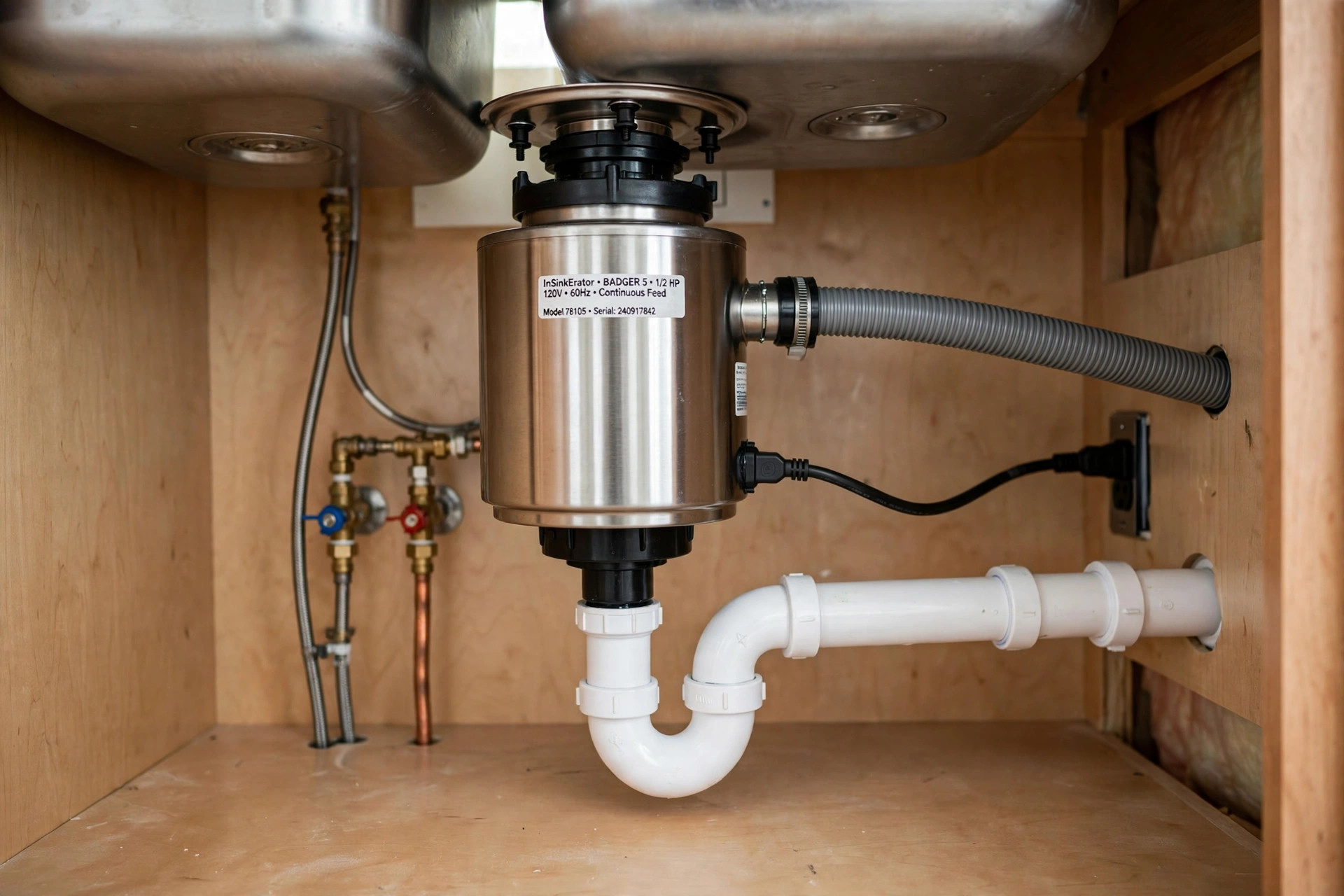
A garbage disposal grinds food scraps into small bits that wash down the drain. It sits under the sink, mounted to the drain flange. Most American kitchens with a modern plumbing setup can accept one. If your sink has never had one, you will need a drain line, an electrical outlet under the sink, and in some areas a permit. Before you shop, check what your sink and cabinet can hold.
Why It Matters
A good garbage disposal saves time at the sink. It cuts down on food waste in the trash can, which means less odor in the kitchen and fewer bags to haul out. Homes that compost or recycle food scraps may need one less, but many families still find a disposal a daily help.
The buying choice matters because the wrong unit can be loud, weak, or short lived. A weak motor jams on fibrous scraps. A cheap splash guard wears out and leaks. Buying from a trusted store with a clear return policy protects you if the unit does not fit or fails early. A garbage disposal buying guide with installation reviews can help you compare models before you spend money.
Local rules also matter. A few cities and counties in the United States limit or restrict garbage disposals because of sewer load. Septic system owners need a unit made for septic use. A quick call to your city building office or a local plumber will tell you what is allowed where you live.
Where to Buy in the USA: Garbage Disposal Installation Where to Buy Usa
Homeowners in the United States have three main places to buy a garbage disposal with installation: large home improvement chains, appliance and hardware stores, and online retailers.
Home improvement chains. The Home Depot and Lowe’s are the two largest national sellers. Both carry top brands on the shelf and online, and both sell installation services at checkout. You can buy the unit in the store and book the install in the same visit. Many shoppers read model details on The Home Depot or Lowe’s before they drive to the store, so they know the price and the stock level ahead of time.
Appliance and hardware stores. Regional appliance dealers and local hardware stores often carry the same brands. Their staff may know the local plumbing code better than a big box clerk. If you plan a full kitchen upgrade, you can bundle the disposal with other appliances. Shoppers comparing double wall ovens with USA online deals or dual fuel ranges with USA online deals often order the whole package from one dealer to get a single delivery and one install visit.
Online sellers. Buying online gives you the widest choice of models and the best price comparisons. The trade off is that you must arrange the install yourself unless the seller bundles it. Brand sites such as GE Appliances and Whirlpool list full model lines with specs.
How to Choose the Right Unit
Start with motor power. Disposals are rated in horsepower, usually from one third to one horsepower. A one third horsepower unit suits a small household with light use. A half horsepower unit is the common middle choice for a family. A three quarter or one horsepower unit grinds tougher scraps, runs quieter under load, and lasts longer. More power also means a larger body, so measure the space under your sink first.
Feed type is the next choice. Most homes use a continuous feed disposal, which runs while you feed scraps in with the water on. Batch feed models only run when you load the chamber and twist the stopper. Batch feed is safer around children because nothing can fall in while it runs, but it costs more and holds less.
Grind stages matter for noise and results. Single stage units use one grind ring. Two stage units grind finer, which helps with septic systems and reduces clogs. Stainless steel grind parts resist rust and last longer than galvanized steel. Reviews on Consumer Reports test noise, grind quality, and durability across brands, which makes them a useful second opinion before you buy.
Noise is a real factor. A disposal mounted to a thin stainless sink can roar. Units with sound insulation, anti vibration mounts, and a heavier build run much quieter. If your kitchen opens to the living room, pay for the quieter model.
Check the warranty. A one year warranty is the bare minimum. Better units carry three to eight year warranties, and some cover the whole unit including parts and labor. A long warranty signals that the maker trusts its motor and seals.
Types and Options
The market breaks into a few clear groups.
Entry level units cost the least and fit light use. They have smaller motors, basic grind rings, and short warranties. They work well in a rental or a second home where the disposal sees little action.
Mid range units are the sweet spot for most families. Half to three quarter horsepower, two stage grinding on many models, sound dampening, and warranties of three to five years. This is where most American buyers land.
Premium units offer one horsepower motors, the quietest operation, stainless grind chambers, and long warranties. They suit large families, serious cooks, and homes where the kitchen is the center of daily life.
Septic safe units add an enzyme injection or finer grind made for septic tanks. If your home is on septic, buy a model rated for it and follow the maker’s dosing schedule. Guides at The Spruce and Bob Vila explain the differences between standard and septic models in plain terms.
Compact units fit tight cabinets and shallow sinks. Measure the height from the sink flange to the cabinet floor, and the width between the drain and the cabinet wall. A unit that does not fit is a unit you return.
Cost and Price
The unit itself usually costs between 80 and 400 dollars in the United States. Entry models sit near the low end. Mid range models run 150 to 250 dollars. Premium models reach 300 dollars and more.
Installation is a separate cost. A simple swap of an old unit for a new one of the same size often costs 100 to 200 dollars from a handyman or a store install program. A first time install that needs new wiring, a new drain line, or an air switch can run 250 to 500 dollars or more. Plumbers in high cost cities charge at the top of that range.
Bundled deals can save money. Both national chains sell packages where the install price is fixed at checkout. Compare that fixed price with two or three quotes from local plumbers. Sometimes the store deal is the best value. Sometimes a local plumber beats it and gives you a workmanship warranty as well. Ask what the install price covers: the cord, the flange, the plumber’s putty, haul away of the old unit, and any permit fees.
Watch for hidden costs. If your sink drain opening is not the standard three and a half inches, you may need an adapter. If there is no outlet under the sink, an electrician must add one. Get the full quote in writing before work starts.
Installation Basics
A standard install follows the same steps in most homes. The installer shuts off power and water, removes the old unit, and cleans the sink flange. The new mounting assembly goes in with plumber’s putty or silicone. The disposal twists onto the mount, the drain pipes connect, and the dishwasher hose attaches if you have a dishwasher. Then the power connects, the water runs, and the installer tests for leaks.
Most installs take one to two hours. A first time install takes longer because of the wiring and drain work. Be home at the start to confirm the model and at the end to test it.
Some handy homeowners do the swap themselves. A like for like replacement is a common do it yourself project, and This Old House offers step by step guidance for confident DIYers. Turn off the breaker, not just the wall switch, before you touch any wires. If the job needs new wiring or new drain lines, hire a licensed plumber. Mistakes under a sink cause slow leaks that ruin cabinets.
After install, run cold water for a full minute before and after grinding. Cold water keeps fats solid so the grind ring can break them up. Never pour grease down the disposal. Wipe grease into the trash instead.
Care and Upkeep
A garbage disposal needs little care, but small habits add years to its life.
Run cold water every time you use it. Feed scraps in small amounts instead of dumping a full plate at once. Let it run for thirty seconds after the grinding sound stops so the chamber clears.
Avoid the foods that cause jams and clogs. Do not grind bones, fruit pits, corn husks, celery strings, coffee grounds in large amounts, pasta, or rice. These items tangle, swell, or turn to paste.
Clean it once a month. Freeze vinegar in an ice cube tray and grind a few cubes to scrub the chamber. Follow with cold water. A cut lemon or orange ground in small pieces freshens the smell. Never put your hand inside the chamber. Use tongs to fish out a lost spoon, with the power off.
If the unit hums but does not spin, it is jammed. Turn it off, press the red reset button on the bottom, and use the hex wrench that came with the unit to turn the flywheel from below. If it trips the reset often, the motor may be failing and a replacement is due.
Check under the sink twice a year for drips at the flange, the dishwasher hose, and the drain connections. A small drip caught early is a ten minute fix. A drip ignored for months rots the cabinet floor.
Safety
A garbage disposal is safe when used with care. It is still a machine with a fast spinning ring, so respect it.
Never put a hand or fingers into the drain opening, even when the unit looks off. Unplug it or switch off the breaker before you clear a jam. Keep the wall switch where children cannot reach it, or choose a batch feed model for extra safety.
Do not use drain chemicals in a disposal. Harsh chemicals can damage seals and splash back. Use the ice and vinegar method instead.
Make sure the unit is grounded and on a proper circuit. A disposal that trips the breaker needs an electrician, not a bigger breaker. If the power cord is cut or frayed, replace the unit or have the cord replaced by a pro.
Homes with small children should use the sink stopper or a drain cover when the disposal is not in use. Teach older children the rules: water on first, small amounts, never hands inside. Safety notes from Energy Star and maker sites like GE Appliances remind buyers that correct wiring and grounding are the foundation of safe operation.
Frequently Asked Questions
Where is the best place to buy a garbage disposal with installation in the USA? Large home improvement chains are the most common choice because they sell the unit and the install in one order. Local appliance dealers and plumbers are strong options too, and often give better advice on local code.
How much does garbage disposal installation cost in the United States? The unit costs 80 to 400 dollars. A simple replacement install costs 100 to 200 dollars. A first time install with new wiring and drain work can cost 250 to 500 dollars or more.
Can I install a garbage disposal myself? A like for like swap is a common DIY job for a handy homeowner. Turn off the breaker first. Hire a licensed plumber if the job needs new wiring, new drain lines, or a permit.
What size garbage disposal do I need? A half horsepower unit suits most families. Choose three quarter to one horsepower for heavy use, tough scraps, or quieter operation. Measure under the sink before you buy.
Are garbage disposals allowed everywhere in the USA? Most areas allow them, but some cities restrict them and septic owners need a septic rated model. Check with your local building office before you buy.
How long does a garbage disposal last? Most units last eight to twelve years with normal care. Hard water, heavy misuse, and cheap build quality shorten that life. A long warranty is a good sign of a longer lived unit.
Final Word
The question of garbage disposal installation where to buy usa has a simple answer: buy where you get the right unit, a fair install price, and a return policy you trust. National chains offer one stop shopping. Local dealers offer expert advice. Online sellers offer the widest choice. Compare two or three options, check the warranty, and confirm the install quote in writing. With the right unit and a proper install, your new disposal will serve your kitchen quietly for a decade or more.
References
Bob Vila. (n.d.). Home improvement advice. https://www.bobvila.com Consumer Reports. (n.d.). Product reviews and ratings. https://www.consumerreports.org ENERGY STAR. (n.d.). Energy efficient products. https://www.energystar.gov GE Appliances. (n.d.). Kitchen and home appliances. https://www.geappliances.com Lowe’s. (n.d.). Home improvement products. https://www.lowes.com The Home Depot. (n.d.). Home improvement products. https://www.homedepot.com The Spruce. (n.d.). Home and garden advice. https://www.thespruce.com This Old House. (n.d.). Home renovation guidance. https://www.thisoldhouse.com Whirlpool. (n.d.). Home appliances. https://www.whirlpool.com
Was this guide helpful?

About Jennifer Lee
The My Garden US editorial team writes practical, in-depth home and garden guides for American homeowners — tested advice, no fluff.
You May Also Like

Kitchen Island Hanging Lights for Sale in the USA: A Complete Buyer’s Guide
September 11, 2026 0 views
Stainless Range Hoods for Sale USA: A Plain Buyer’s Guide
July 1, 2026 0 views
French Door Refrigerators Reviews Buying Guide USA
May 2, 2026 0 views