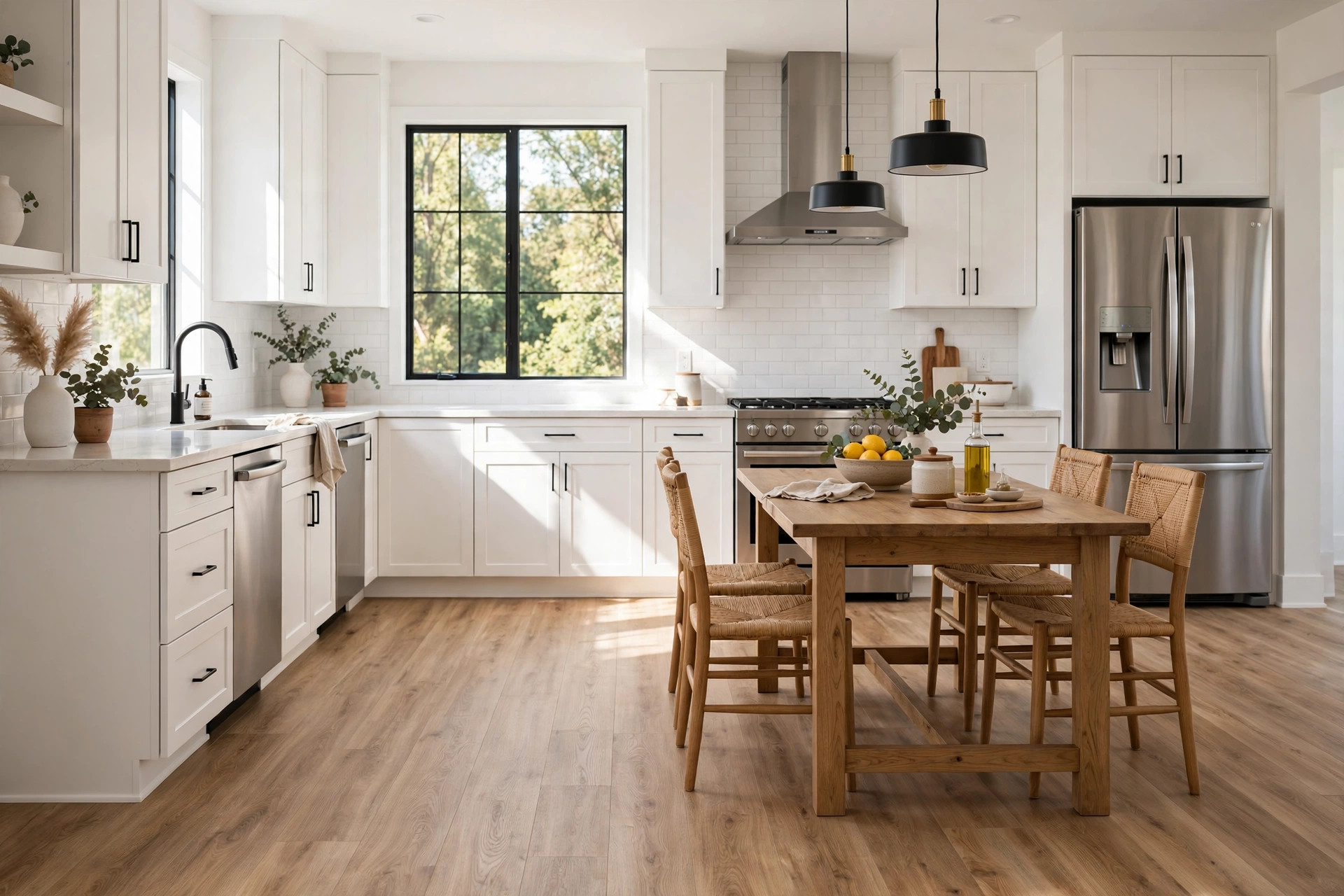

Buying a new kitchen floor is a big choice. The floor takes more abuse than almost any other surface in the house. It sees wet shoes, dropped pots, pet claws, and spills from family meals. A good vinyl plank flooring buying guide usa shoppers can trust should make this choice simple. It should explain what matters, what does not matter, and what a fair price looks like in American stores.
Vinyl plank flooring has become one of the most popular kitchen floors in the country. It looks like wood but it handles water like tile. It costs less than hardwood and it installs in a day or two. The planks come in hundreds of colors and grain patterns. Some are so realistic that guests will knock on them to check if they are real wood. This guide walks through every step of the purchase, from the wear layer to the warranty, in plain terms.
Why Vinyl Plank Matters for the American Kitchen
The kitchen is the hardest working room in the home. It is also the room where floors fail fastest. Hardwood swells and stains when water sits on it. Tile is cold and hard on the feet during long hours of cooking. Laminate can buckle in a flood from a leaky dishwasher. Vinyl plank solves these problems at once. The core of each plank resists water from the top and the bottom. A spill wiped up in an hour will leave no mark.
Comfort matters too. Many homeowners stand on kitchen floors for long stretches while cooking big meals. Vinyl plank has a slight give underfoot. It is warmer than tile in winter. It is also quieter. Dropped utensils land with a dull thud instead of a sharp ring. These small comforts add up over years of daily use.
Cost is the third reason. A full kitchen refloor in hardwood can cost several thousand dollars before labor. Vinyl plank often costs half as much for the material. It can also be installed over many existing floors, which saves the cost of tearing out the old one. For families remodeling on a budget, that difference can fund the rest of the project, from kitchen backsplash tiles to new lighting.
What to Look for Before You Buy: Vinyl Plank Flooring Buying Guide Usa
Not all vinyl plank is equal. Boxes that look alike on the shelf can differ in ways that matter. The numbers on the label tell the real story. Learn to read them before you spend money.
The Wear Layer
The wear layer is a clear protective film over the printed wood design. It is measured in mils, which are thousandths of an inch. This number decides how long your floor will look new. For a kitchen, 12 mil is the practical minimum. Heavy traffic areas and homes with dogs do better with 20 mil or more. Planks with thin wear layers, often 6 mil, are meant for light-use rooms or rentals. They cost less but they show scratches sooner.
Total Thickness and Core Type
Total thickness ranges from about 4 millimeters to 8 millimeters. Thicker is not always better, but it is usually quieter and hides small bumps in the subfloor. The core type matters more than the thickness. Rigid core planks use stone plastic composite, known as SPC, or wood plastic composite, known as WPC. SPC cores are denser and harder. They handle heavy appliances well. WPC cores are a bit softer and warmer. Both beat the old flexible planks for kitchen use because they bridge minor dips in the floor below.
Click Lock Against Glue Down
Most vinyl plank sold today uses a click lock system. The planks snap together along the edges without glue. A homeowner with basic tools can install a kitchen in a weekend. The floor floats over the subfloor, so it can expand and contract with the seasons. Glue down planks cost less per box but demand careful prep work and messy adhesive. They suit commercial spaces more than homes. For most American kitchens, click lock is the right call.
Water Resistance and Texture
Every quality vinyl plank is waterproof. Check that the box says waterproof and not merely water resistant. Water resistant products may survive a spill but fail in a real leak. Texture affects both looks and safety. Embossed grains feel like real wood under bare feet. Some textures are slightly rough, which gives better grip in wet socks. The Spruce has clear flooring articles that explain how wear layers and textures compare across brands.
Types of Vinyl Plank Flooring
Three main types sit on American store shelves. Knowing which is which keeps you from paying for features you do not need.
Rigid core SPC planks. These are the workhorse choice for kitchens. The dense core does not dent under a heavy refrigerator. It stays flat through hot summers and cold winters. Most come with an attached underlayment pad that softens each step.
Rigid core WPC planks. These have a foamed core that feels softer and warmer. They are a good pick for kitchens that open into living areas where you want one warm floor through the whole space. They cost a little more than SPC but many families prefer the feel.
Flexible and peel and stick planks. These thin planks glue or stick directly to the floor. They are the cheapest option and they suit small laundry rooms or rental updates. They show every bump in the subfloor, so the floor beneath must be very smooth. They are rarely the best choice for a main kitchen that sees daily traffic.
Before you choose, measure your kitchen and think about how you cook. A family that hosts holidays needs the toughest wear layer. A couple that orders takeout can spend less. Good kitchen planning pays off across the whole remodel, and Whirlpool offers helpful kitchen planning resources that show how floor choice fits with appliance layout.
Cost and Price in the USA
Price tags vary widely, and understanding the range keeps you from overpaying. As of recent years, material prices for vinyl plank in American stores run from about two dollars per square foot for basic peel and stick products to about six dollars per square foot for premium rigid core planks with thick wear layers. A mid range kitchen plank of good quality often lands near three to four dollars per square foot.
Professional installation adds roughly two to four dollars per square foot, depending on the region and the shape of the room. A small galley kitchen is easier and cheaper than a large kitchen with islands and angles. DIY installation saves the labor cost entirely. The click lock system means most careful homeowners can do it well. Tools are simple: a tape measure, a utility knife or saw, spacers, and a tapping block.
Do not forget the extras. You may need an underlayment if the planks do not include one. Transition strips connect the new floor to wood or tile in nearby rooms. Quarter round or shoe molding covers the expansion gap at the walls. These extras often add fifty cents to a dollar per square foot to the real total. Home Depot flooring departments list these supplies alongside the planks so you can price the whole job in one visit.
When you compare stores, compare the same specs, not just the price. A plank at two dollars with a 6 mil wear layer is not a bargain next to a plank at three dollars with a 20 mil wear layer. The second floor can last twice as long. Lowe’s vinyl plank aisles carry both budget and premium lines, which makes side by side comparison easy. Also check the warranty. A lifetime residential warranty is common on quality planks. Read the fine print, because some warranties exclude commercial style traffic or certain cleaning products.
Care and Upkeep
One reason vinyl plank wins in kitchens is how little care it asks for. Daily care is simple sweeping or dry mopping to remove grit. Grit is the enemy. Tiny grains of sand act like sandpaper under shoes and dull the finish over years. A weekly damp mop with a cleaner made for vinyl keeps the floor bright. Never use a steam mop. Steam can force moisture into the seams and weaken the click lock joints.
Spills are easy. Wipe them up when you see them. Even though the floor is waterproof, standing water at the edges can still cause trouble over long hours. Place mats at the sink and the stove, where water and grease land most often. Use felt pads under chair legs. Heavy chairs drag scratches across any floor, and pads are cheap insurance.
Refinishing is not needed. Unlike hardwood, vinyl plank never needs sanding and resealing. When a plank is damaged, many click lock floors let you remove and replace single planks. Keep a spare box from the original purchase. Dye lots change between production runs, so a box bought two years later may not match. Bob Vila flooring guides cover these maintenance basics in helpful detail.
Safety
Floors matter for safety, and vinyl plank has a good record. Look for planks certified low in volatile organic compounds. Third party marks such as FloorScore or Greenguard show that the product passed indoor air tests. This matters most in kitchens where children eat and play.
Slip resistance is worth a check. The box may list a dynamic coefficient of friction rating. A value of 0.42 or higher is considered slip resistant under common tests. Textured planks grip better than smooth glossy ones, especially in stocking feet. During installation, make sure transitions between rooms sit flat. A raised edge is a trip hazard no matter how good the floor is.
Fire safety is standard for this material. Vinyl does not ignite easily, and quality planks meet federal flammability tests for residential flooring. Consumer Reports flooring tests include durability and safety checks that buyers can read before choosing a brand.
Frequently Asked Questions
Is vinyl plank flooring good for kitchens? Yes. It is one of the best kitchen choices in American homes today. It is waterproof, comfortable, quiet, and less expensive than hardwood or stone. It suits busy families, pet owners, and anyone who wants a wood look without wood’s water worries.
How long does vinyl plank last in a kitchen? With a 20 mil wear layer and normal care, a quality kitchen floor can last fifteen to twenty years. Budget planks with thin wear layers may look worn in five to seven years. The wear layer, not the brand name, is the best predictor of life span.
Can I install vinyl plank over my old floor? Often yes. Click lock planks can go over clean, flat tile, vinyl, or laminate. The old floor must be solid and level. Take up any loose tiles and fill dips first. Carpet must come out. In some homes the added height affects door swings, so check doors before you start.
Will a heavy refrigerator dent the floor? SPC rigid core planks resist dents well. WPC planks are softer and can show shallow marks under very heavy loads over time. Wide furniture coasters under appliance feet spread the weight and prevent marks on either type.
Does vinyl plank add value to a home? It adds more value than tired old floors, and buyers like its clean modern look. It does not add as much value as real hardwood in high end markets. For most middle priced American homes it is a smart resale choice because it looks fresh and photographs well. If you are pairing the floor with new butcher block countertops, the whole kitchen reads as warm and updated.
What should I avoid when buying? Avoid planks with no stated wear layer thickness. Avoid products that say water resistant instead of waterproof for kitchen use. Avoid the cheapest peel and stick planks for a main kitchen, since they show every flaw in the subfloor. And avoid buying exactly the square footage of the room. Order ten percent extra for cuts and future repairs.
A Final Word
A kitchen floor should be chosen once and enjoyed for years. Vinyl plank earns its popularity because it balances looks, comfort, water protection, and price better than most options. Start with the wear layer and the core type. Match the thickness to your subfloor. Buy a little extra material. Install with care or hire a careful installer.
The floor is only one part of a kitchen that works well. Think of it together with the rest of the plan, from double wall ovens to cabinet hardware. GE Appliances kitchen design tips show how flooring, lighting, and appliances come together as one plan. This Old House offers steady renovation advice for homeowners who want the job done right the first time. And Bosch Home kitchen guides are useful when you coordinate floor color with appliance finishes. With a clear plan and the right planks, your kitchen floor will serve your family for many years.
References
Bob Vila. (n.d.). Home improvement advice. https://www.bobvila.com Bosch. (n.d.). Home appliances. https://www.bosch-home.com Consumer Reports. (n.d.). Product reviews and ratings. https://www.consumerreports.org GE Appliances. (n.d.). Kitchen and home appliances. https://www.geappliances.com Lowe’s. (n.d.). Home improvement products. https://www.lowes.com The Home Depot. (n.d.). Home improvement products. https://www.homedepot.com The Spruce. (n.d.). Home and garden advice. https://www.thespruce.com This Old House. (n.d.). Home renovation guidance. https://www.thisoldhouse.com Whirlpool. (n.d.). Home appliances. https://www.whirlpool.com
Was this guide helpful?

About Emily Rodriguez
The My Garden US editorial team writes practical, in-depth home and garden guides for American homeowners — tested advice, no fluff.
You May Also Like
Undermount Stainless Sinks for Texas Homes: A Plain Buying Guide
January 11, 2026 0 views
Kitchen Island Hanging Lights American Homes Guide: Styles, Sizing, and Installation
August 6, 2026 0 views
Garbage Disposal Installation in California Homes: A Complete Guide
September 3, 2026 0 views