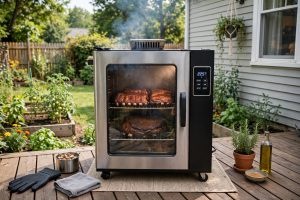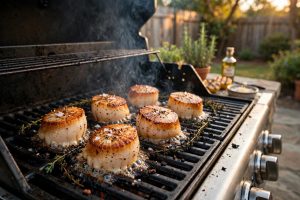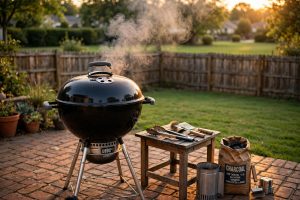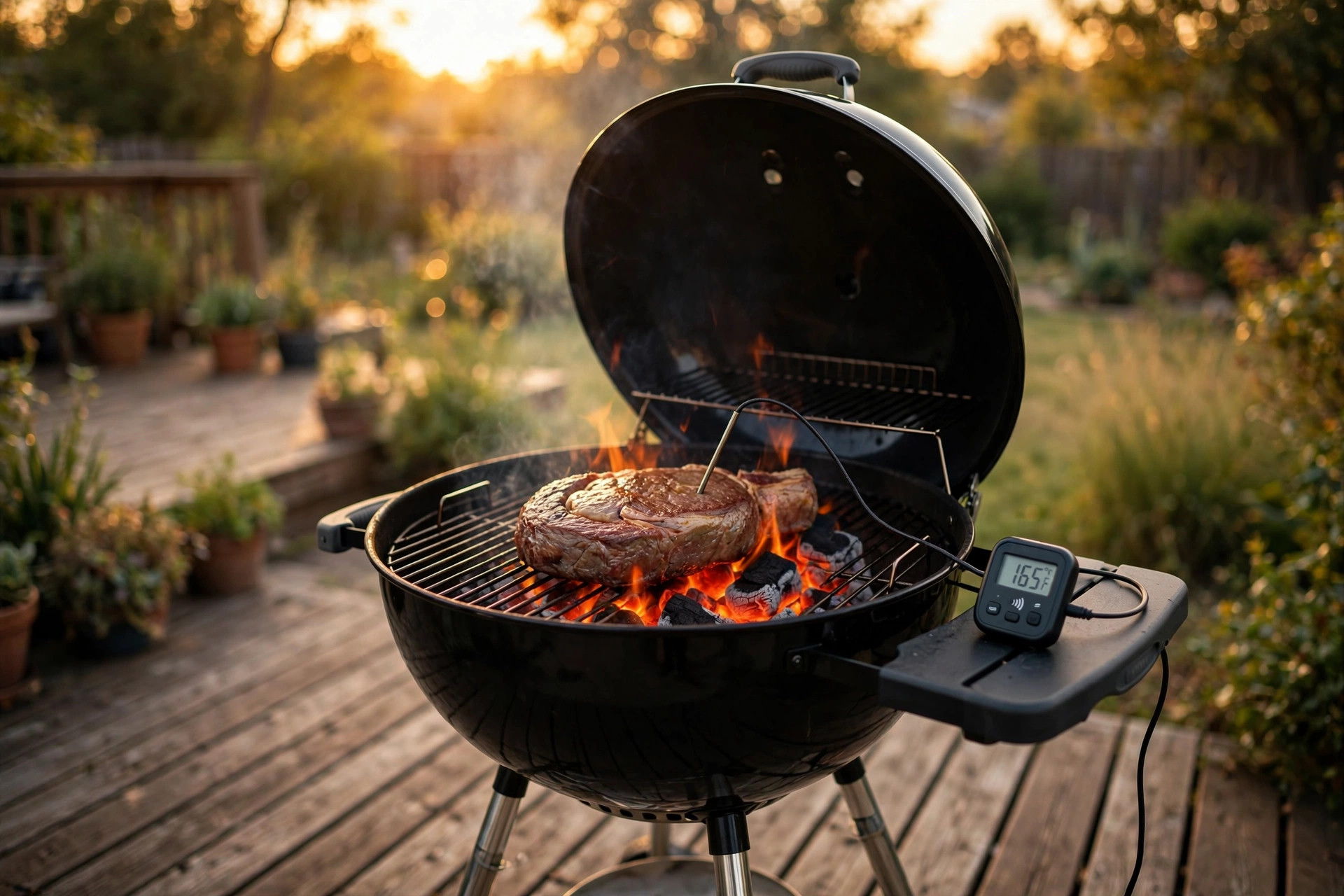
The best BBQ thermometer wireless for grilling is one of the smartest tools a cook can buy. Grilling is a game of heat and time. A few degrees can turn a perfect steak into a dry one. A wireless thermometer takes the guesswork out of the work. It reads the heat inside the meat while you stand far from the fire. This guide will show you what matters, what to look for, and how to use one well.
Why a Wireless Thermometer Matters
Grilling looks simple from the outside. Fire goes under food. Food cooks. The trouble is that no one can see what is happening inside a thick piece of meat. Color on the outside means very little. A chicken breast can look done and still be raw in the middle. A pork chop can look pale and already be overdone.
A thermometer solves this by measuring the inside heat. The best BBQ thermometer wireless for grilling does this without tying you to the grate. You place a probe in the meat and close the lid. The probe sends the reading to a small screen or to your phone. You can sit in a chair across the yard and still know the exact temperature of your brisket.
This matters for two reasons. The first is taste. Meat has a sweet spot. Beef steaks are at their best between 130 and 145 degrees Fahrenheit, depending on how you like them. Chicken needs to reach 165 degrees to be safe. Pork does well around 145. When you know the number, you can pull the meat off at the right moment, not too early and not too late.
The second reason is safety. Raw meat carries germs that heat kills. The only way to be sure the germs are gone is to reach the right temperature all the way through. Food experts at sites like AmazingRibs spend a great deal of time on this science. A wireless thermometer gives you the number you need without opening the lid and letting heat escape.
What to Look for When You Choose One: Best Bbq Thermometer Wireless for Grilling
Not all wireless thermometers are alike. Some cost little and do little. Some cost a lot and do more than most cooks need. Here are the traits that matter most.
Signal Range
Range is how far you can walk from the grill and still get a reading. Cheap models may reach only 100 feet. Better ones reach 300 feet or more. Walls cut the signal down. If your grill sits on a back patio and your kitchen is on the other side of the house, choose a longer range. For most home yards, 200 feet of open-air range is enough.
Number of Probes
A probe is the metal spike that goes into the meat. Many models come with two probes. Four probes are common on higher-end units. Two probes let you watch two pieces of meat, or one piece of meat plus the air temperature inside the grill. Four probes suit cooks who fill the grate with ribs, chicken, and sausages at once. Think about how you cook before you pay for extra probes you will never use.
Accuracy and Speed
A good thermometer reads within one or two degrees of the true temperature. Cheaper models may be off by three or four degrees. That sounds small, but on a steak it can be the difference between medium rare and medium. Speed matters too. The reading should settle in a few seconds, not a minute. Reviews from Consumer Reports often test this kind of detail, and their results are worth a look before you buy.
Display and App
Some models come with a small receiver unit that has its own screen. Others send readings only to a phone app. A few do both. A stand-alone receiver works even if your phone is charging in the house. An app can draw charts of the temperature over time, which is fun for long cooks like pulled pork. Make sure the app works with your type of phone before you buy.
Battery Life
Long cooks need long battery life. A brisket can sit on the grill for ten hours. Many wireless units run on standard AA or AAA batteries, which are easy to replace. Some have rechargeable batteries built in. Check how long a full charge lasts. Anything under eight hours may die before your meat is done.
Alarm Settings
The best feature of a wireless unit is the alarm. You set a target temperature, and the unit beeps when the meat gets there. Good models let you set a high and a low alarm, so you know if the grill itself runs too hot or too cold. This is the feature that lets you stop hovering over the fire.
Types of Wireless Grilling Thermometers
There are three main kinds. Each suits a different style of cooking.
Leave-In Probe Systems
This is the most common kind. Thin metal probes stay in the meat for the whole cook. A cable runs from the probe to a small transmitter that sits near the grill. The transmitter sends readings by radio to your receiver or phone. These systems are made for slow cooks and closed lids. They are the workhorses of backyard barbecue. Grill makers such as Weber and Char-Broil sell versions that pair well with their own grills, and many third-party brands work with any grill.
Bluetooth Instant-Read Models
Some instant-read thermometers now pair with a phone. You still walk to the grill and poke the meat, but the reading lands on your phone screen and gets saved in a log. These cost less than full leave-in systems. They suit cooks who grill thin foods like burgers and hot dogs, where a quick poke is all you need.
Smart Grill Probes
Pellet grills and some high-end gas grills come with probe ports built in. Brands like Traeger build probes into the grill itself, and the grill’s app shows the temperature. If you already own one of these grills, the best BBQ thermometer wireless for grilling may be the one that plugs into it. Before you buy a separate unit, check what your grill already supports.
How to Use a Wireless Thermometer on the Grill
Setup takes only a few minutes. Start by pairing the transmitter and the receiver, or by connecting the phone app. This is easier to do in the kitchen before the grill gets hot.
Place the probe in the thickest part of the meat. Keep the tip away from bone and fat, because both can fool the reading. For a whole chicken or turkey, push the probe into the thickest part of the thigh. For a steak, slide it in from the side so the tip sits in the center. For ribs, you may need to place the probe between two bones.
Close the grill lid with the probe cable running through a small gap or a vent. Most grills have enough play in the lid for a thin cable. Do not crush the cable under a heavy lid. Run the cable through the side vent if you can.
Set your target temperature on the receiver or app. Then step away. Check the reading now and then, but trust the alarm. When the alarm sounds, take the meat off the grill. Remember that large cuts keep cooking after they leave the heat. This is called carryover cooking, and it can add three to five degrees.
If you like to add smoke flavor with wood chips on a gas grill, the probe stays in place the whole time. You never need to lift the lid to check. That keeps the smoke and heat where they belong.
Cost and Price
Prices run from about fifteen dollars to over one hundred. What you pay decides what you get.
Budget models, in the fifteen to thirty dollar range, usually have two probes and a simple receiver. They work fine for a season or two. The probes may fail sooner, and the range may be short. For a cook who grills a few times each summer, this can be enough.
Mid-range models, from thirty to sixty dollars, are the sweet spot for most people. You get better probes, a longer range, and a more reliable signal. Many include four probes and a phone app. Retailers like Home Depot carry a wide range of these, so you can compare them in the store before you buy.
Premium models, from sixty dollars up, add fast readings, very long range, and sturdy probes that last for years. Some connect over Wi-Fi instead of Bluetooth, which means you can check the grill from the grocery store. Serious smokers and competition cooks often choose this level.
Do not pay for features you will not use. If you grill burgers on a small patio, a simple two-probe unit is all you need. If you smoke brisket overnight, spend more for range and battery life. A good guide on The Spruce Eats breaks down which features matter at each price point.
Care and Upkeep
A wireless thermometer is simple to care for, but the probes need attention. After each cook, wipe the probe with a damp cloth while it is still warm. Do not soak the probe or the cable in water. Water can seep into the joint where the cable meets the probe and ruin it.
Never put probes in the dishwasher. The harsh soap and high heat will shorten their life. Wash them by hand and dry them right away. Store the cables loosely coiled, not wrapped tight. A sharp bend can break the wire inside the cable.
Keep the transmitter away from direct heat. Most units are made to sit beside the grill, not on top of it. If the transmitter case warps from heat, the signal can fail. Check the battery or charge level before a long cook so the unit does not die halfway through.
Replace probes when readings start to drift. If the thermometer reads the wrong number in boiling water, which should read 212 degrees at sea level, the probe is worn out. Most brands sell replacement probes for a few dollars each.
Safety
Wireless thermometers make grilling safer, but a few rules still apply.
First, respect the maximum temperature of the probe. Many probes are safe only up to about 500 degrees Fahrenheit. A searing-hot grill can pass that number. If you sear steaks over very high heat, use an instant-read thermometer for a quick check instead of leaving a probe in.
Second, keep cables clear of open flame. A cable that touches the coals or a burner can melt. Route the cable over the edge of the grate and out through a vent.
Third, handle hot probes with care. The metal holds heat long after the meat comes off. Use tongs or a thick glove to pull the probe out. Set it on a plate, not on a plastic table.
Fourth, clean probes between uses. Old food on a probe can carry germs to the next meal. A quick wash with hot soapy water is all it takes.
Finally, do not trust the clock alone. Even the best recipe times are guesses. The thermometer is your proof. When the number is right, the food is done.
Frequently Asked Questions
How far does the wireless signal really reach?
Most home models reach 100 to 300 feet in open air. Walls, trees, and metal siding cut that number down. If you want to check the grill from inside a brick house, choose a unit rated for at least 300 feet of open-air range, or pick one that connects over Wi-Fi.
Can I use a wireless thermometer in an oven or smoker?
Yes. Leave-in probes work in ovens, smokers, and pellet grills as well as on gas and charcoal grills. Just keep the transmitter outside the hot chamber. Only the metal probe and cable go inside the heat.
How many probes do I need?
Two probes suit most home cooks. One goes in the meat and one measures the air temperature in the grill. Four probes help when you cook several cuts at once. Cooks who run big weekend cookouts for family and friends get the most from four-probe systems. Brands such as Napoleon and Broil King offer grills with enough grate space to make use of every probe.
Are phone apps worth it?
For most people, yes. An app shows the temperature as a graph over time, which helps you learn how your grill behaves. It also lets you set alarms without fiddling with small buttons. The main risk is that a phone call or a dead battery can break the link. Units with both an app and a stand-alone receiver give you a backup.
Do wireless thermometers work on a small balcony grill?
They work on any grill. If you cook on a compact grill on an apartment balcony, a small two-probe unit is ideal. The range does not need to be long, since the grill is close to your door. Just make sure your building rules allow grilling first.
What if my grill runs very hot in summer?
Heat affects the grill, not the thermometer. If you grill in desert heat or a hot climate, your fire may run hotter than planned. That is when the high-temperature alarm earns its keep. Set it a little above your target cooking temperature, and you will get a warning before the meat burns.
A Final Word
The best BBQ thermometer wireless for grilling is the one that fits how you cook. A simple two-probe unit will change your grilling more than any fancy gadget. It frees you from the grate, protects your food, and takes the guesswork out of dinner. Buy one before your next cookout. You will wonder how you ever grilled without it.
References
AmazingRibs.com. (n.d.). Barbecue and grilling science. https://www.amazingribs.com Broil King. (n.d.). Gas and charcoal grills. https://www.broilkingbbq.com Char-Broil. (n.d.). Gas and charcoal grills. https://www.charbroil.com Consumer Reports. (n.d.). Product reviews and ratings. https://www.consumerreports.org Napoleon. (n.d.). Fireplaces, grills, and heating products. https://www.napoleon.com The Home Depot. (n.d.). Home improvement products. https://www.homedepot.com The Spruce Eats. (n.d.). Recipes and cooking guides. https://www.thespruceeats.com Traeger. (n.d.). Wood pellet grills. https://www.traeger.com Weber. (n.d.). Grills and outdoor cooking. https://www.weber.com
Was this guide helpful?

About David Wilson
The My Garden US editorial team writes practical, in-depth home and garden guides for American homeowners — tested advice, no fluff.