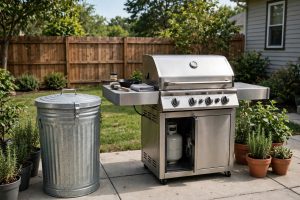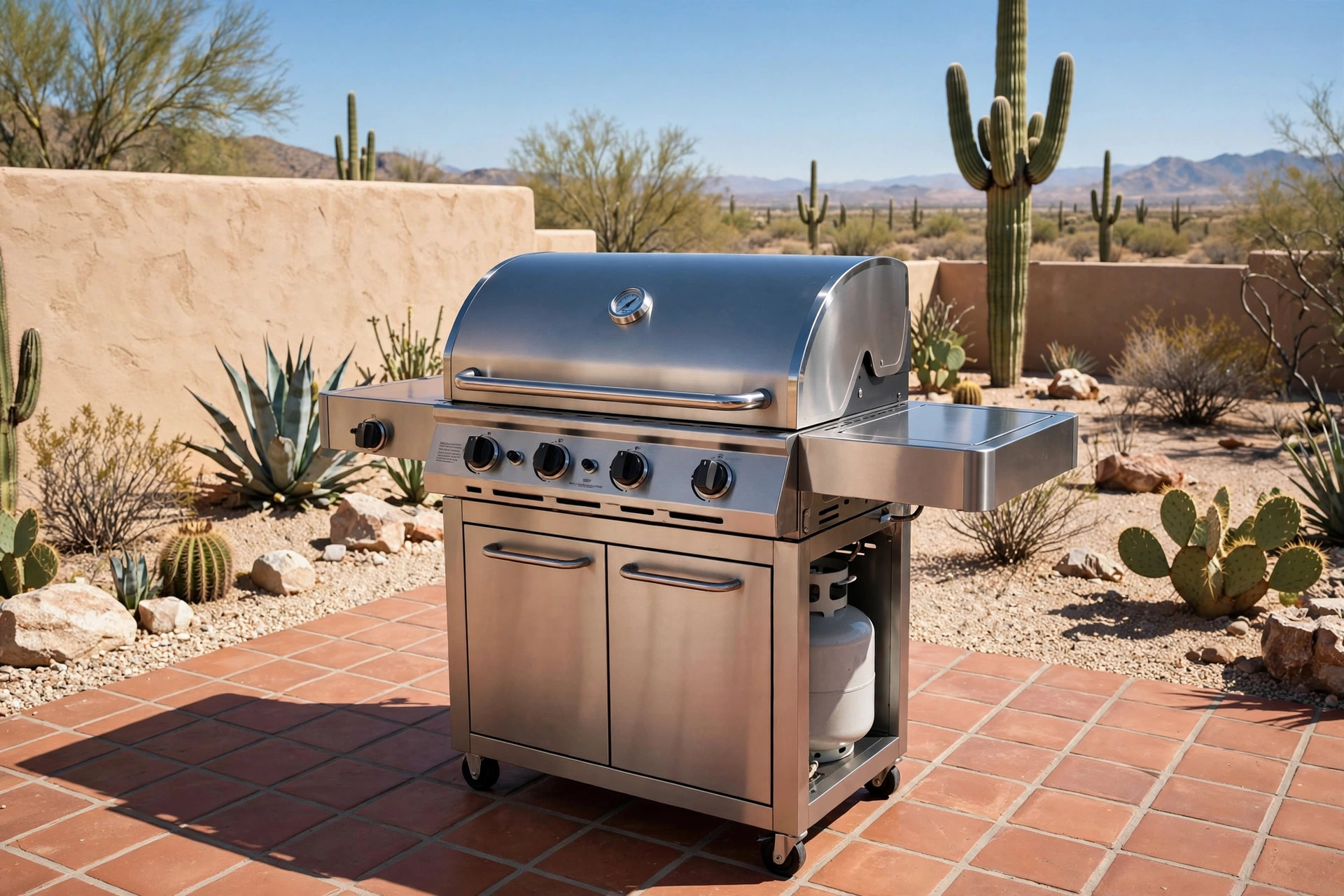

Grilling in the desert is a different game. When the air temperature sits near 110 degrees in July, and the sun beats down on a patio for ten hours a day, an ordinary grill will age fast. Plastic knobs crack. Paint fades. Thin lids warp. Gas hoses dry out. Finding the best outdoor grill for desert heat means looking past brand names and asking a harder question: what happens to this grill when summer never seems to end?
This guide walks through that question step by step. It covers why desert heat matters, what to look for in a grill body, which fuel types hold up best, and how to care for a grill in places like Phoenix, Las Vegas, and Palm Springs. Every section is written for the first-time buyer or the long-time griller who wants a unit that lasts.
Why Desert Heat Changes the Grill You Should Buy
Most grills are built for mild weather. A buyer in Ohio uses a grill from April to October. A buyer in Arizona may grill all year. That difference adds up.
Heat breaks down grills in several ways. Ultraviolet light fades paint and weakens plastic. High air temperature softens rubber gaskets and dries out hoses. Dust from windstorms gets into burners and vents. Sudden cooling at night can stress thin metal as it expands and contracts day after day.
A grill that would last eight years in a cool climate may last only three or four in the desert. That is why the best outdoor grill for desert heat is not always the best grill in a magazine review. It is the grill whose materials and design were made for constant heat and sun.
What to Look For When Choosing: Best Outdoor Grill for Desert Heat
Thick Gauge Metal
The body of the grill does most of the work in the heat. Thick metal holds temperature steady and resists warping. Cast aluminum and heavy stainless steel are strong choices. Thin painted steel is cheap but rusts and warps fast in the desert.
Look at the lid and firebox walls. If you can press them in with your thumb, the metal is too thin. A solid grill feels heavy before it is even lit.
High Heat Paint or Finish
Ordinary paint peels under desert sun. Grills with high-heat powder coating or porcelain enamel hold their finish longer. Stainless steel models skip paint entirely, which removes one weak point.
Sealed Lids and Strong Gaskets
A tight lid keeps heat where it belongs and keeps dust out. Kamado-style grills use ceramic bodies and thick gaskets that perform well in hot climates. If you lean toward a charcoal model, a best charcoal grill for backyard bbq with a heavy lid and sealed ash vents will do better in dusty desert air than a light kettle.
Quality Gas Components
For gas grills, the burner, regulator, and hoses matter more than the number of knobs. Brass valves and stainless burners resist corrosion. Rubber hoses should be thick and flexible. In desert heat, cheap hoses dry out and crack, which is both a nuisance and a safety risk.
Types of Grills That Handle Desert Heat
Gas Grills
Gas grills are the most common choice in desert cities. They heat up fast and cool down fast, which matters when the backyard is already hot. A stainless gas grill with cast iron or stainless grates holds up well.
The main worry is the plastic and rubber parts. Check that knobs and side shelves are rated for high heat. A grill built by a leading grill manufacturer will usually use better small parts than a discount store model.
Charcoal Grills
Charcoal grills run very hot, which fits desert cooking styles that favor searing. Ceramic kamado grills are a standout here. Their thick walls insulate so well that outside heat barely affects them. A best kamado grill for the money comparison can help you find one that fits your budget.
Steel charcoal grills also work, but they need thicker walls than normal. Thin steel rusts quickly when exposed to heat and dust.
Pellet Grills
Pellet grills use wood pellets and an electric auger. They are convenient, but they have more electronics than other types. Electronics and 115-degree patios do not always mix. If you choose a pellet grill, check that the maker stands behind its electronics in hot climates. Resources from pellet grill specialists explain how their controllers handle heat.
Flat Top Griddles
Flat tops are popular for breakfast and fajitas. Their thick steel cooking surface takes heat well. The main concern is the frame and the grease system. Dust plus grease makes a mess, so pick a model with a covered grease trap.
Key Features That Matter Most in the Desert
Wheels and Cart Build
You may want to move the grill into shade in the afternoon. Sturdy wheels that lock are worth the extra money. A wobbly cart wears out faster on hot concrete.
Wind Resistance
Desert winds arrive without warning. A grill with a heavy lid and low vents keeps running when the wind picks up. Side burners with wind guards are a nice bonus.
Thermometer Accuracy
Built-in lid thermometers are handy, but cheap ones drift in extreme heat. A good digital probe thermometer is a better tool. Guides at grilling resources show how to test and calibrate a thermometer.
Cover Fit
A cover is the single best investment for desert grill owners. It blocks UV light, keeps dust out of burners, and slows fading. Buy a cover made for your exact model so it fits tight. Independent reviews from consumer testing groups often rate covers along with grills.
Cost and Price Ranges
Grill prices in the desert follow the same ranges as elsewhere, but value means something different. A cheap grill that dies in two summers costs more per year than a good one that lasts ten.
– Under 300 dollars: Basic charcoal kettles and small gas grills. Thin metal. Expect short life in desert sun. – 300 to 700 dollars: Mid-range gas grills and entry kamados. The sweet spot for most desert buyers. – 700 to 1,500 dollars: Heavy stainless gas grills, large kamados, and quality pellet grills. Built for long service. – Over 1,500 dollars: Premium built-in units for outdoor kitchens. Worth it if you are building a permanent setup like a how to build outdoor kitchen on budget project that still demands quality materials.
Do not forget the cost of a cover, a good thermometer, and replacement parts. These small items add up but extend the life of the grill.
Care and Upkeep in Hot Climates
Desert maintenance is different from normal maintenance. Follow these habits:
1. Cover the grill every time. Every single time. Sun damage is cumulative. 2. Clean burners monthly. Dust and ash collect fast. Pull out the grates and brush the burner tubes. 3. Check hoses each spring. Bend the hose gently and look for cracks. Replace at the first sign of dryness. 4. Oil cast iron grates. Heat and low humidity do not rust iron as fast as wet climates, but a light coat of oil after cooking still helps. 5. Store pellets dry. If you own a pellet grill, keep pellets sealed. Monsoon season brings surprise moisture that swells pellets and jams the auger.
Experts at barbecue science sites offer detailed maintenance schedules that work in any climate.
Safety in Extreme Heat
Grilling near 110 degrees demands extra care. The air is hot, the ground is hot, and everything metal is already warm before you light a match.
– Place the grill at least ten feet from the house and away from dry bushes. – Keep a fire extinguisher or a bucket of sand nearby, not water for grease fires. – Do not leave a lit grill alone during wind gusts. – Wear heat-safe gloves. Handles that feel warm in spring will be scalding in August. Makers like Napoleon sell gloves rated for high heat. – Let the grill cool fully before covering it. Trapping heat under a cover can damage the cover itself.
More tips for safe outdoor cooking come from bbq equipment guides and big box retailer resources at home improvement stores.
Cooking Tips for Desert Grilling
Heat management is the skill that matters most. In summer, a gas grill reaches cooking temperature in half the usual time. Watch the food, not the clock.
Cook in the early morning or late evening when the air is cooler. Keep the lid closed as much as possible. Every opening lets in blazing air and throws off your timing.
Plan for shade. A patio cover or umbrella over the cook makes the work far more pleasant. Ceramic cookers like those from kamado specialists hold steady temperatures even when the air around them is scorching.
Storing Tools and Accessories
The grill is only part of the setup. Covers, brushes, gloves, and fuel also suffer in desert heat.
Keep spare propane tanks in a shaded spot, never in direct sun. A tank left in 115-degree heat builds pressure. Store charcoal in sealed bins so monsoon moisture does not ruin it.
Grill brushes with plastic handles crack fast in the sun. Choose a brush with a metal or wooden handle. Keep tools in a small storage box by the grill instead of leaving them on the side shelf.
Covers for side burners and rotisserie kits need the same care as the main grill. Wash them with mild soap once a season and let them dry in shade. Replace a torn cover at once. A small tear lets in dust and sun, and the damage spreads.
Spare Parts to Keep on Hand
Desert grilling goes easier when you keep a few spares. Extra burner knobs, a spare regulator, and a spare thermometer probe cost little. Order them when you buy the grill so they match your model. During a long hot summer, a broken knob should not end your cookout weekend.
FAQ
Can I leave my grill outside all year in the desert?
Yes, but only with a proper cover. An uncovered grill in Phoenix or Tucson will fade, rust, and wear out in a fraction of its normal life. A good cover adds years.
Do I need a special grill for desert heat, or will any grill work?
Any grill will work at first. The question is how long it lasts. The best outdoor grill for desert heat uses thicker metal, better gaskets, and heat-rated parts. A cheap grill will cook fine in year one and fall apart in year three.
Gas or charcoal in the desert?
Both work well. Gas is easier and cooler to run in summer. Charcoal and kamado cookers give better sear and smoke flavor. Many desert grillers own one of each.
How do I keep dust out of my gas burners?
Cover the grill after every use. Once a month, remove the grates and flavor bars and brush the burners with a stiff brush. Check the burner holes for clogs.
What is the best time of day to grill in summer?
Early morning or after sunset. The air is cooler, the wind is calmer, and the grill behaves more predictably.
Should I buy an extended warranty?
For an expensive grill, yes. Heat and UV damage are hard on parts. Check that the warranty covers the burners and the body, not just the frame.
Final Word
The best outdoor grill for desert heat is the one built to face the sun every day and still cook steady at night. Buy thick metal, good seals, and quality gas parts. Cover it always. Clean it often. With those habits, a well-chosen grill will serve a desert backyard for a decade or more, turning brutal summers into a long season of good food. Start with this guide, pick a grill built for the heat, and you will not regret the choice.
References
AmazingRibs.com. (n.d.). Barbecue and grilling science. https://www.amazingribs.com Big Green Egg. (n.d.). Kamado grills and outdoor cooking. https://www.biggreenegg.com Broil King. (n.d.). Gas and charcoal grills. https://www.broilkingbbq.com Consumer Reports. (n.d.). Product reviews and ratings. https://www.consumerreports.org Napoleon. (n.d.). Fireplaces, grills, and heating products. https://www.napoleon.com The Home Depot. (n.d.). Home improvement products. https://www.homedepot.com The Spruce Eats. (n.d.). Recipes and cooking guides. https://www.thespruceeats.com Traeger. (n.d.). Wood pellet grills. https://www.traeger.com Weber. (n.d.). Grills and outdoor cooking. https://www.weber.com
Was this guide helpful?

About Lisa Anderson
The My Garden US editorial team writes practical, in-depth home and garden guides for American homeowners — tested advice, no fluff.
You May Also Like
Gas Grill Safety Tips for Homeowners
March 19, 2026 0 views
Best Grill Cleaning Service Near Me: A Plain Guide for Homeowners
August 19, 2026 0 views
Best Outdoor Ice Chest for Parties: How to Choose and Use One
March 6, 2026 0 views