
A search for bathroom towel warmers deals near me can save you real money. A towel warmer is a small luxury that changes your daily bath. You step out of the shower and wrap yourself in a warm towel. It feels like a fine hotel. This guide will help you find the best local deals, choose the right model, and avoid costly mistakes.
Why a Towel Warmer Is Worth the Money
A towel warmer is a heated rack that warms towels and robes before you use them. It also helps towels dry faster between uses. Damp towels can smell musty. A warmer keeps them fresh. Many people find that towels last longer because they dry fully each day.
Warmth is not the only gain. A towel warmer can warm a small bath on cold mornings. It adds a touch of comfort that makes an old bath feel new. Guests often notice it. It is one of those small upgrades that makes a home feel cared for.
Bathrooms with heated touches are growing more popular. People who like warm floors often enjoy a warm towel too. Together they turn a plain bath into a cozy room. That is why so many shoppers type bathroom towel warmers deals near me into their phones each winter.
How to Find Bathroom Towel Warmers Deals Near Me
Start with local stores. Big home improvement chains often carry a few models in stock. Call ahead and ask what they have. Floor models and clearance items can carry deep cuts. Ask the staff about open-box deals. An open-box unit may be sold at a third off the sticker price. It still comes with the full warranty in most cases.
Check local bath and plumbing shops too. These stores serve contractors. They may offer trade discounts to the public at certain times of year. They can also order models that the big chains do not carry. A quick visit can reveal options you will not find online.
Then compare prices online. Many retailers list the same unit at a lower web price. Some stores will match their own web price in the store. Show them the listing on your phone. Ask for the match. Most managers will agree.
Timing matters. The best bathroom towel warmers deals near me tend to appear in late fall and early winter. Stores stock up for the cold season and then cut prices to move units. January is another strong month. After the holidays, shops clear winter goods. Watch for coupon codes in store flyers and mailers. A ten percent coupon on a two hundred dollar unit saves twenty dollars with one clip.
Do not forget warehouse clubs. They sell a few basic models at low prices. The selection is small. But the price per unit is hard to beat. Read the return policy before you buy. A good return window lets you test the unit at home.
Online marketplaces can help too. Look at ratings from real buyers. A model with many strong reviews is usually a safe pick. Be careful with no-name brands. Spare parts may be hard to find. Stick with makers that have been around for years.
One more tip: ask about bundle deals. If you are updating more than one fixture, a store may cut the price on the whole order. A towel warmer paired with a new faucet set or a mirror can cost less per item. This works best at local bath shops where the owner sets the price.
Types of Bathroom Towel Warmers
There are two main types: electric and hydronic. Each has clear strengths. Your choice depends on your home and your budget.
Electric Towel Warmers
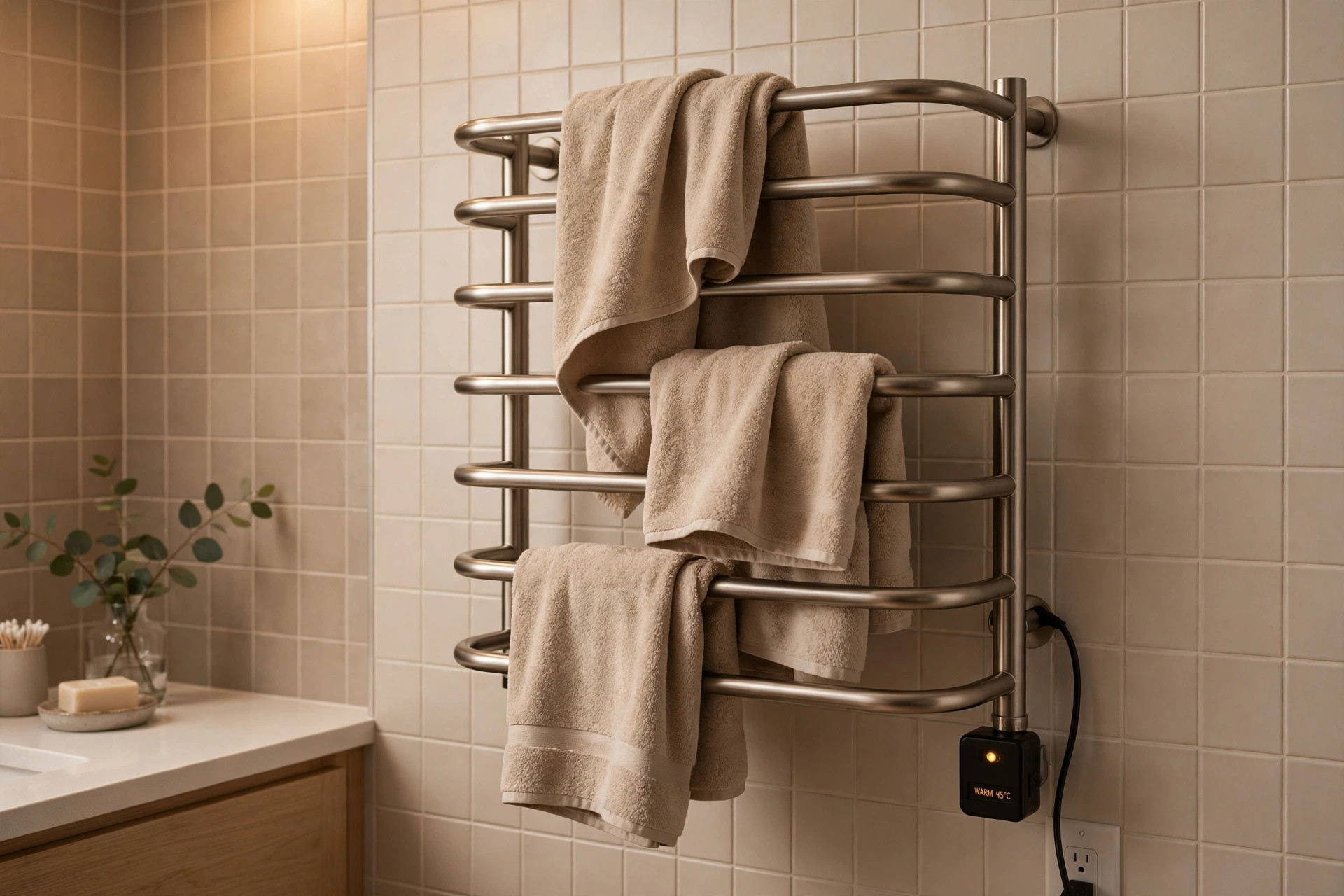
Electric models plug into a standard outlet or wire into the wall. They are the most common choice for homes. Installation is simple. A handyman can mount most units in under an hour. Plug-in models need no wiring work at all. You hang them like a picture and plug them in.
Electric warmers come in two styles. Hard-wired units connect to your home wiring. They look clean because no cord shows. Plug-in units are easier to install. The cord is the only trade-off. Many people choose plug-in models for rentals or quick upgrades.
Hydronic Towel Warmers
Hydronic models connect to your hot water heating system. Hot water flows through the rails and heats the towels. They work well in homes that already have hot water heat. They add no electric cost. The downside is the install. A plumber must tie the unit into your system. This costs more up front. It is a good choice during a full bath remodel when the plumber is already on site.
Freestanding vs. Wall-Mounted
Wall-mounted units save floor space. They are the classic choice. They hold one to three towels at a time. Freestanding units stand on the floor. You can move them from room to room. They suit renters and people who like change. They cost less but hold fewer towels.
Size and Heat Output
A small unit suits a powder room. A large family bath needs a bigger rack. Check the wattage. Most electric models draw 100 to 150 watts. That is less than a light bulb rack of two old bulbs. Running costs are low. A unit run two hours a day may add only a few dollars a month to your bill.
What to Look for When You Shop
Material matters most. Stainless steel is the best pick. It resists rust in damp air. It holds heat well. It keeps its shine for years. Chrome-plated steel costs less. It can flake if the bath stays damp. Aluminum is light and heats fast. It does not hold heat as long as steel.
Look at the rail count and spacing. More rails hold more towels. Wide spacing lets air flow. Air flow helps towels dry. A tight cluster of rails can trap damp spots. Choose a unit that fits your largest towel with room to spare.
A timer is worth the extra cost. A built-in timer turns the unit on before your morning shower. It shuts off by itself. You never waste power. Some models offer a simple on-off switch. That works too. But a timer adds real ease.
Check the finish. Polished chrome fits most baths. Brushed nickel hides water spots. Matte black suits modern rooms. Match the finish to your other fixtures. A mixed set of metals can look messy. If you plan to update towel bars too, our guide to brushed towel holders can help you match the set.
Safety marks count. Look for UL or ETL listing on the label. These marks show the unit passed safety tests. They matter most in a damp room. Never buy a heater without them.
Read the warranty. A good maker offers at least two years. Some offer five. A strong warranty shows faith in the build. Keep your receipt. Register the unit on the maker site. It takes five minutes and speeds up any claim.
Cost and Price: What You Should Expect
Prices vary by size, type, and brand. Here is a plain look at what shoppers see.
– Budget electric models: $80 to $150. Basic steel racks. Plug-in. Fine for a single bath. – Mid-range electric models: $150 to $350. Stainless steel. Timer options. Wall-mount. The sweet spot for most homes. – High-end electric models: $350 to $800. Designer shapes. Hard-wired. Premium finishes. – Hydronic models: $200 to $600 for the unit. Plus plumber fees of $200 to $500 for the install.
A search for bathroom towel warmers deals near me can knock these numbers down. Clearance units often sell at twenty to forty percent off. Open-box units can drop even more. A mid-range unit bought at a thirty percent discount costs about what a budget unit costs at full price. That is the real win in deal hunting.
Do not skip the install cost in your math. A plug-in unit costs nothing to set up. A hard-wired unit may need an electrician. That can add $100 to $250. A hydronic unit needs a plumber. Add that to the price tag. A cheap unit with a costly install is no deal.
Running costs are small. At average power rates, two hours a day costs roughly three to six dollars a month. A timer cuts that in half. Compare that to the cost of rewashing musty towels. The warmer can pay for itself in comfort alone.
Care and Upkeep
A towel warmer needs little care. Wipe the rails with a soft damp cloth each week. This stops dust and soap film from building up. Dry the rails after wiping. Standing water can spot the finish.
Never use steel wool or harsh powder. These scratch the surface. A mild dish soap works fine. Rinse well. For stainless steel, a drop of baby oil on a cloth can restore the shine. Wipe with the grain of the metal.
Check the cord and plug once a month on plug-in models. Look for frays or heat marks. A cord that feels hot is a warning. Unplug the unit and call an electrician. For hard-wired units, test the timer now and then. Make sure it still clicks on and off as set.
In hard water areas, mineral spots may form. A mix of equal parts white vinegar and water removes them. Spray, wait five minutes, and wipe. This keeps the finish bright.
Hang towels loosely. Do not pack the rails tight. Air must move between folds. A towel that stays damp will smell. Wash towels as you normally would. The warmer is not a washer. It only dries and warms.
Safety in the Bathroom
Heat and water need respect. A few rules keep your home safe.
First, only buy units rated for bath use. The box should say so plainly. A heater made for a dry room does not belong near a shower.
Second, follow the clearance rules in the manual. Most units need space from the shower head and the tub edge. Do not move a mounted unit to a new spot on your own if it is hard-wired. Call a pro.
Third, never drape plastic or synthetic fabrics on the rails. Some fabrics melt at low heat. Use cotton or linen towels. Keep small cloths away unless the manual allows them.
Fourth, turn the unit off when you leave town. A timer can do this for you. Unplug a plug-in model for long trips. It is a small step that buys peace of mind.
For wider safety guidance on home fixtures, the Consumer Product Safety Commission publishes plain rules for bath and home products. It is a good bookmark for any remodel. Advice from This Old House also walks through safe bath installs step by step.
Pairing Your Warmer With Other Upgrades
A towel warmer fits well into a larger bath plan. If you are already shopping deals, look at the whole room. A new vanity, a better faucet, or a brighter mirror can lift the space. Many shoppers who browse bathroom towel warmers for sale also check vanities in the same trip. One delivery fee beats two.
Warm floors are another natural partner. A heated floor kit guide can show you what that project costs. Together, warm floors and warm towels make winter mornings easy. Stores often discount both in the same season. Ask for a package price.
Design sites offer ideas for styling the new setup. HGTV shows real bath makeovers with warmers in place. The Spruce has clear how-to pieces on bath fixtures. Bob Vila covers install tips for home heaters. Big retailers like The Home Depot and Lowe’s list specs and buyer reviews side by side. Maker sites such as Kohler, Moen, Delta Faucet, and American Standard show finish options that match your other fixtures.
Frequently Asked Questions
How much does a bathroom towel warmer cost to run?
Very little. Most draw 100 to 150 watts. Two hours a day adds about three to six dollars a month to a typical bill. A timer cuts the run time. That lowers the cost further.
Can I install a towel warmer myself?
Plug-in models are easy. You mount the bracket and plug in the cord. Hard-wired models need an electrician. Hydronic models need a plumber. When in doubt, hire a pro. Bad wiring near water is not worth the risk.
Do towel warmers dry towels or just warm them?
They do both. The heat warms the towel and speeds drying. Air flow between the rails does the real drying work. Hang towels loosely for the best result.
Are towel warmers safe to leave on?
Units with timers are made for daily use. Set the timer and let it work. Turn the unit off when you leave home for days. Unplug a plug-in model for long trips.
What size towel warmer do I need?
Measure your bath wall. Leave at least a few inches of space on each side. A single bath needs a small to mid-size unit. A family bath does better with a large rack that holds two towels at once.
Where can I find bathroom towel warmers deals near me?
Check local home improvement stores, bath shops, and warehouse clubs. Ask about open-box and clearance units. Compare web prices and ask for a price match. Shop in late fall, winter, and January for the deepest cuts.
A Short Final Word
A search for bathroom towel warmers deals near me is worth the effort. The right deal turns a small luxury into a fair price. Start local. Compare online. Time your buy for the cold months. Choose stainless steel, a timer, and a trusted brand. Mount it with care or hire a pro. Then enjoy the simple joy of a warm towel every morning. Few home upgrades give so much comfort for so little money.
References
American Standard. (n.d.). Bathroom and kitchen products. https://www.americanstandard.com Bob Vila. (n.d.). Home improvement advice. https://www.bobvila.com Delta Faucet. (n.d.). Kitchen and bathroom faucets. https://www.deltafaucet.com HGTV. (n.d.). Home and garden ideas. https://www.hgtv.com Kohler. (n.d.). Bathroom and kitchen fixtures. https://www.kohler.com Lowe’s. (n.d.). Home improvement products. https://www.lowes.com Moen. (n.d.). Faucets and plumbing fixtures. https://www.moen.com The Home Depot. (n.d.). Home improvement products. https://www.homedepot.com The Spruce. (n.d.). Home and garden advice. https://www.thespruce.com This Old House. (n.d.). Home renovation guidance. https://www.thisoldhouse.com U.S. Consumer Product Safety Commission. (n.d.). Product safety information. https://www.cpsc.gov
Was this guide helpful?

About James Carter
The My Garden US editorial team writes practical, in-depth home and garden guides for American homeowners — tested advice, no fluff.
You May Also Like
Bathtub Refinishing Kits Texas Homes USA: A Plain Guide to Restoring Worn Tubs
August 28, 2026 0 views
Bathroom Towel Warmers Reviews Buying Guide USA
March 13, 2026 0 views
Bidet Toilet Seats for Sale USA: How to Choose the Right One
September 7, 2026 0 views