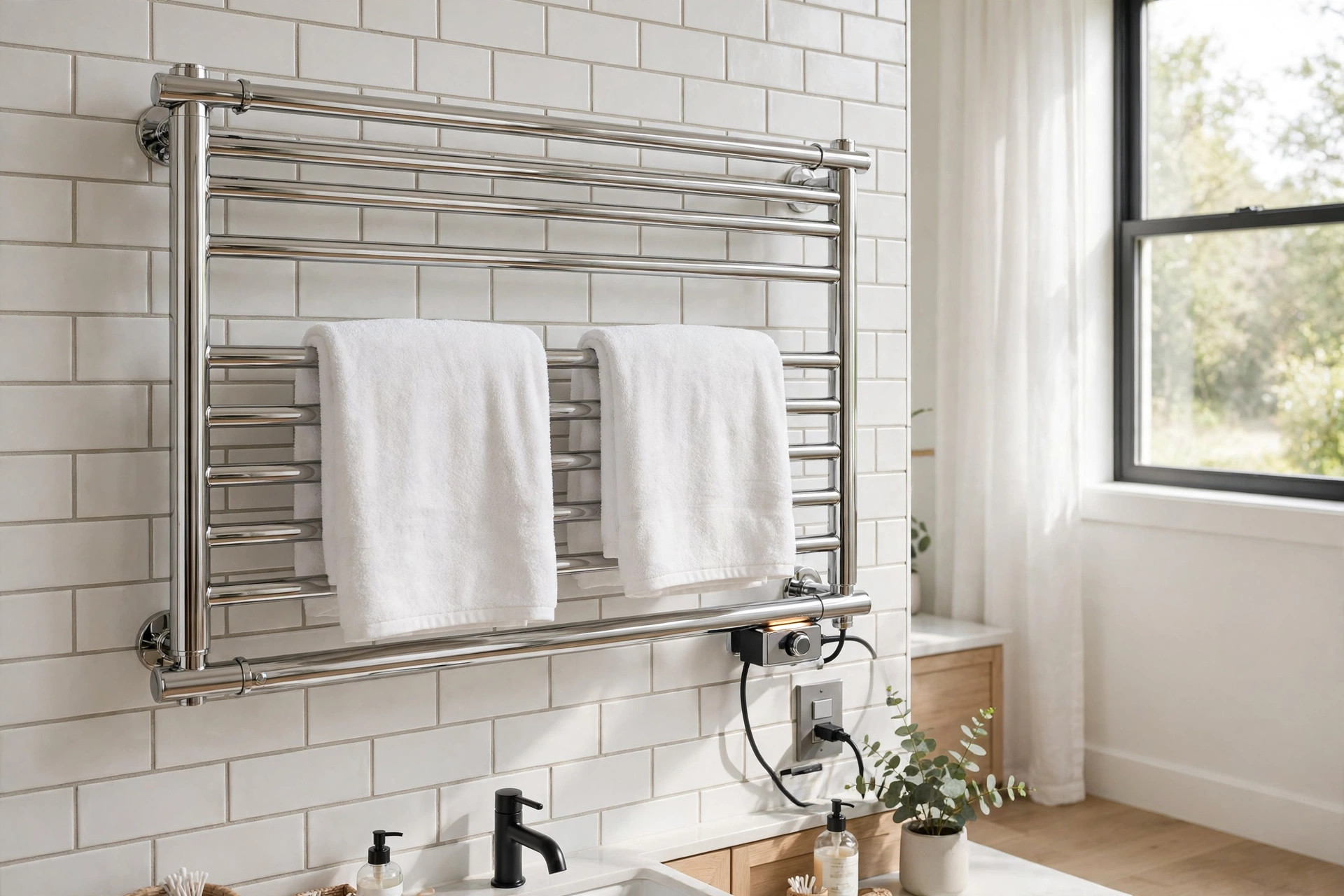
Anyone who searches for bathroom towel warmers for sale usa soon learns that these fixtures are more common than many people think. A towel warmer is a heated rack that holds bath towels. It warms the fabric before a shower and dries it after. The result is a dry towel, a warmer bathroom, and less damp smell in the room.
This guide explains what towel warmers are, how they work, and what to check before you buy one. It covers the main types, typical prices, care, and safety. The writing stays plain. The facts stay practical. By the end, you should know which model fits your bathroom and your budget.
Why a Towel Warmer Matters
A warm towel changes the feel of a cold morning. In winter, a bathroom can feel sharp and cold. A heated towel rail takes that edge away. You step out of the shower and reach for dry, warm fabric. It is a small comfort, but it is a real one.
There is also a practical reason. Damp towels hold moisture for hours. Moisture can lead to a sour smell. It can also lead to mildew in a small bathroom with poor air flow. A towel warmer dries towels fast. Fast drying means less odor and fewer towel washes. Many owners wash towels less often after they install one.
Towel warmers also add a touch of luxury to an ordinary bathroom. Hotels use them for that reason. A buyer who plans a remodel may add one along with other fixtures. It fits well in a full bath or a master bath. If you are already looking at new fixtures, you may want to read our notes on rain shower heads usa online deals and freestanding soaking tubs usa online deals, since many shoppers plan those upgrades together.
What to Look for Before You Buy: Bathroom Towel Warmers for Sale Usa
A towel warmer is a simple device, but the details matter. The sections below cover the main points to check.
Size and Capacity
Towel warmers come in many sizes. A small rack holds one towel. A large rack holds four or more. Think about how many people use the bathroom. A single person needs less space than a family of four.
Measure the wall where you plan to mount the unit. Leave room for the door swing and for other fixtures. Many guides at The Spruce and HGTV suggest sketching the wall on paper first. A paper plan helps you avoid a unit that crowds the room.
Heat Source
Most models sold in the United States are electric. Some use the home heating system instead. Electric models plug into an outlet or wire into the wall. Models that use the heating system are called hydronic. They run hot water through the rails. Hydronic models heat well, but they cost more to install. Most first-time buyers choose electric.
Mounting Style
There are two main mounting styles. Wall-mounted units attach to the wall with brackets. They save floor space. Freestanding units stand on legs. You can move a freestanding unit from one bathroom to another. Wall-mounted units look cleaner and stay out of the way. Freestanding units suit renters, since they need no drilling.
Types of Towel Warmers
When you look at bathroom towel warmers for sale usa, you will see three main types. Each one works in a slightly different way. The type you choose affects the cost, the heat level, and the install work.
Electric Plug-In Models
Plug-in models are the easiest to buy and use. You hang the rack on the wall and plug the cord into a GFCI outlet. Many have an on-off switch on the unit. Some have a built-in timer. These models heat up in about thirty minutes. They reach a safe, steady warmth. Because they need no wiring work, they are a good pick for renters and for quick upgrades.
Hardwired Electric Models
Hardwired models connect straight to the home wiring. An electrician does the install. Once wired, there is no cord to see. Many hardwired units include a timer or a wall switch. This type looks neat and works well in a full remodel. If you plan other wired fixtures, such as new vanity lights, you may want to review a full guide like a walk in shower kits american homes guide to plan the whole project at once.
Hydronic Models
Hydronic towel warmers connect to the home heating system. Hot water flows through the rails and heats them. These units often run hotter than electric models. They work best in homes with boiler heat. The install cost is high because a plumber must tie the unit into the heating pipes. Hydronic models suit large homes and cold climates. They are less common in the Sun Belt, where electric models do the job.
Cost and Price in the USA
Prices for bathroom towel warmers for sale usa vary with size, finish, and brand. Small plug-in racks start around forty dollars. Mid-size electric models cost between one hundred and three hundred dollars. Large stainless steel racks can reach five hundred dollars or more. Hydronic models cost the most, often eight hundred dollars and up, plus the plumber fee.
Finish affects price. Chrome is the most common and often the least costly. Polished nickel and brushed gold cost more. Stainless steel lasts long and resists rust, which matters in a humid bathroom.
Check big retailers for current prices. The Home Depot and Lowe’s both stock a range of heated towel rails, and they often run sales in the fall. Brand sites such as Kohler and American Standard show higher-end lines with strong warranties. Reviews at BobVila.com can help you compare build quality before you spend.
Install cost is separate from the unit price. A plug-in unit may need no install cost at all. A hardwired unit may add one hundred to two hundred dollars for the electrician. A hydronic unit may add several hundred dollars for the plumber. Ask for quotes before you buy.
Running cost is low. Most electric towel warmers use about one hundred watts. That is close to a bright light bulb. If you run the unit two hours a day, the yearly cost is only a few dollars. A timer keeps the cost down by turning the unit off when you do not need it.
Care and Upkeep
A towel warmer needs little care. Wipe the rails with a soft damp cloth once a week. Avoid harsh cleaners. Harsh cleaners can dull the finish over time. For chrome and stainless steel, a mild soap and water is enough.
Check the mounting brackets once a year. Screws can loosen with daily use. Tighten them with a screwdriver if the rack feels loose. For hydronic models, check the pipe joints for drips. A small drip can stain a wall or floor if it goes unnoticed.
Do not hang heavy items on the rack. Towel warmers are built for towels, not for wet jeans or heavy coats. Heavy loads can bend the rails. They can also pull the brackets from the wall.
Keep the area around the unit clear. Good air flow helps towels dry fast. Do not cover the rack with plastic or with a second layer of fabric. The heat needs room to move. For more general bathroom care tips, sites like This Old House offer solid step-by-step advice.
Safety Tips
Towel warmers are safe when used as directed. Still, a few rules keep your home safe.
First, use a GFCI outlet for any plug-in model. Bathrooms in the United States must have GFCI outlets near water. If your outlet is old, have an electrician update it. This is a basic rule for any electric bathroom fixture, from a hair dryer to a wall-mounted heater.
Second, keep the cord away from water. Do not let the cord rest in a puddle or across the tub edge. If the cord is too short, move the unit closer to the outlet. Never use an extension cord in a bathroom.
Third, follow the weight limit in the manual. Overloading the rack is a fire risk in some electric models, because blocked heat has nowhere to go. Hang towels flat across the rails. Do not bunch them in a thick pile.
Fourth, give the unit space from children and pets. The rails get warm, not hot, but a child could still feel pain from long contact. Mount the unit high enough that small hands cannot grab it with ease.
Fifth, turn the unit off when you leave home for days. A timer makes this easy. Unplug portable models during a long trip. These habits are simple, and they remove risk.
Frequently Asked Questions
Do towel warmers use a lot of electricity? No. Most electric towel warmers use about one hundred watts. That is about the same as a large light bulb. If you use a timer and run the unit for an hour or two each day, the cost adds up to only a few dollars per year. Hydronic models use no extra electricity at all, since they draw heat from the home heating system.
Can I install a towel warmer myself? A plug-in model is a do-it-yourself job. You mount the brackets with a drill and plug in the cord. A hardwired model needs an electrician. A hydronic model needs a plumber. When in doubt, hire a pro. Poor wiring in a bathroom is a real danger, and the cost of a service call is small next to the risk.
Will a towel warmer dry my towels fully? Yes, in most cases. A heated rail dries a bath towel in one to two hours. Thick, heavy towels take longer. Spread the towel flat across the rails for the best result. In a very humid bathroom, run the bath fan while the warmer works. The pair clears moisture fast.
Are towel warmers safe to leave on all day? Most modern units are built to run for long hours. Many have timers that shut them off after a set time. Still, it is best to use a timer and to turn the unit off when you are away from home for days. Follow the manual that comes with your model. Brand resources from makers like Moen and Delta Faucet stress the same habit: use the timer, and do not overload the rails.
Which finish lasts longest in a humid bathroom? Stainless steel holds up best in humid air. Chrome is also strong and costs less. Painted finishes can chip over time if they are struck by hard objects. Whatever finish you pick, wipe the rails dry after heavy steam, and skip abrasive pads.
Where is the best place to buy one in the USA? Big home stores, brand websites, and online marketplaces all sell them. Compare prices across at least two or three sellers. Check shipping costs, since large racks are heavy. Read return policies too, in case the size does not fit your wall.
A Short Final Word
A towel warmer is a small upgrade with a daily reward. It dries towels, cuts odor, and adds warmth to a cold room. Prices in the United States fit most budgets, from simple plug-in racks to fine hydronic units. Pick the right size, choose a finish you like, and follow the safety rules. Your mornings will thank you.
References
American Standard. (n.d.). Bathroom and kitchen products. https://www.americanstandard.com Bob Vila. (n.d.). Home improvement advice. https://www.bobvila.com Delta Faucet. (n.d.). Kitchen and bathroom faucets. https://www.deltafaucet.com HGTV. (n.d.). Home and garden ideas. https://www.hgtv.com Kohler. (n.d.). Bathroom and kitchen fixtures. https://www.kohler.com Lowe’s. (n.d.). Home improvement products. https://www.lowes.com Moen. (n.d.). Faucets and plumbing fixtures. https://www.moen.com The Home Depot. (n.d.). Home improvement products. https://www.homedepot.com The Spruce. (n.d.). Home and garden advice. https://www.thespruce.com This Old House. (n.d.). Home renovation guidance. https://www.thisoldhouse.com
Was this guide helpful?

About Lisa Anderson
The My Garden US editorial team writes practical, in-depth home and garden guides for American homeowners — tested advice, no fluff.