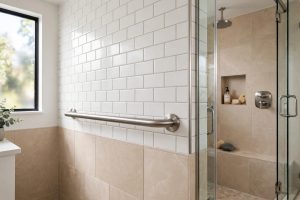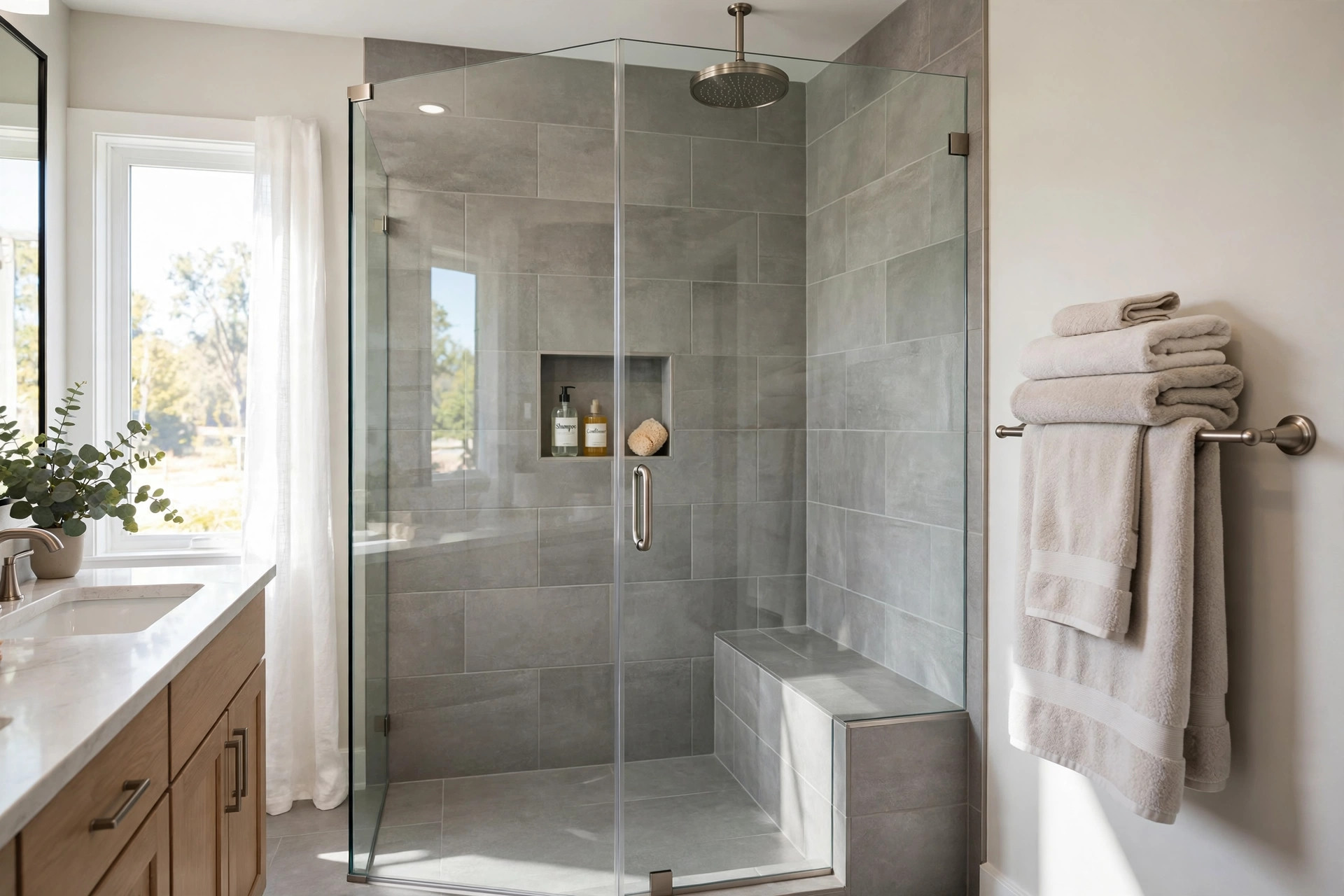
Many American homes still hold a small tub with a shower ring and a curtain. A walk in shower kits american homes guide helps a buyer see a better way. Walk in shower kits bring the open shower into reach of the average home owner. The kit holds all the main parts in one box. The walls, the pan, the drain, and the trim come matched and ready. This guide walks through why these kits matter, what to look for, the types on the market, the costs, and the care they need.
Why It Matters
A walk in shower kit changes the way a bath feels each morning. The space opens up. Light moves across the room. A low or zero threshold makes entry easy for young children and older adults. For homes where an aging parent moves in, this change is not a luxury. It is a matter of daily safety.
Kits also save time. A custom tiled shower takes a crew of tradesmen and several days of labor. A kit arrives with parts made to fit together. Many home owners finish the work over a long weekend. The result looks clean and even, much like work done by a shop. Resale value often rises too. Buyers in many markets ask for a walk in shower by name, and a neat kit install can set a listing apart.
What to Look For: Walk in Shower Kits American Homes Guide
A good kit starts with the shower pan, also called the base. The pan must sit level and drain well. Look for a pan with a slight slope toward the drain. The surface should feel firm under foot, not hollow. Thick acrylic or solid surface pans hold up best over years of use.
Wall Panels
Walls come in acrylic, cultured marble, solid surface, or tile-ready backer. Acrylic walls are light and easy to clean. Cultured marble looks rich and holds a shine. Tile-ready panels let the buyer set real tile over a water tight core, which gives the look of custom work without the risk of leaks. Check that panels lock into the pan with a channel or a flange. Caulk alone is not enough.
Drain and Valve
The drain should sit in the pan from the factory, or fit a standard two inch line. A center drain is simple to rough in. A linear drain looks modern but needs care in framing. The shower valve should meet standard codes. A pressure balance or thermostatic valve guards against sudden changes in water temperature. Many buyers add rain shower heads buying guide usa to the plan at this stage, since the valve choice affects the head that can be used.
Size and Fit
Measure the bath before buying. Kits come in common American sizes, such as 36 by 36, 36 by 48, and 60 by 36 inches. A 60 inch kit often drops into the space of an old tub. Alcove kits fit three walls. Corner kits fit two walls and leave the room open. Note the door swing and the glass panels. Frameless shower doors buying guide usa is a fine match for many walk in kits, because the kit walls accept standard glass hardware.
Types and Options
Walk in shower kits fall into a few broad groups. Each suits a different home and a different budget.
Acrylic kits. One piece or multi piece walls in white or almond acrylic. They are the most common and the most forgiving to install. Seams are few. Cleaning is simple. They do not offer the look of stone, but they serve well for rental units and quick remodels.
Solid surface kits. Walls cut from sheets of solid surfacing, much like a counter top. Joints nearly vanish. The feel is solid and warm. These kits cost more than acrylic, but they wear well and repair with light sanding.
Cultured marble kits. Walls cast from marble dust and resin, polished to a gloss. They bring an upscale look at a middle price. They are heavy, so the installer should have help on hand.
Tile ready kits. The kit supplies a water tight pan and backer boards. The buyer adds real tile. This route takes more skill and more time, but the finish can match any high end bath. Built in niches are common in this class. A shower niche inserts buying guide usa helps the buyer pick the right shelf for shampoo and soap.
Barrier free kits. The pan sits flush with the bath floor. There is no curb to step over. A wheel chair can roll straight in. These kits need a recessed or notched floor and careful water proofing, so many buyers hire a pro for this one.
Cost and Price
Kit prices in the United States run wide. A basic acrylic alcove kit may sell for a few hundred dollars at a home center. Mid range solid surface and cultured marble kits run from about one thousand to three thousand dollars. Large barrier free or tile ready systems can pass five thousand dollars before tile and glass.
Labor adds to the bill. A skilled home owner can set a simple kit with basic tools. A pro install often costs as much as the kit itself, and sometimes more, depending on plumbing changes and tile work. Extra items add up too: the valve trim, the glass door, the shower head, and the grab bars each carry a price. Plan the full list before buying, so the total stays in sight.
Where to shop matters as well. Large home centers carry the common sizes and stock parts for warranty claims. Specialty bath shops carry wider choices and can order odd sizes. Online sellers list many kits, but the buyer should check freight terms, since a cracked pan in shipping is a real risk. Guides from established home sites can help a buyer compare brands. The buying guides at The Spruce and the project library at This Old House both carry walk in shower material worth reading.
Care and Upkeep
A walk in shower kit asks little, but it asks it often. Rinse the walls after each use. Hard water leaves spots on glass and on dark pans. A soft squeegee on the glass keeps it clear. Mild soap and a soft cloth clean acrylic and cultured marble. Never use abrasive pads on a gloss wall. They leave dull trails that no polish will fully hide.
Check the caulk lines twice a year. The joint where the wall meets the pan carries the most stress. If the bead pulls away or darkens, cut it out and lay a fresh bead of bath grade silicone. Keep the drain clear. Hair and soap gather fast in a shower used by a family. A simple drain screen costs little and saves much trouble.
For tile ready kits, seal the grout once a year. Unsealed grout drinks water and grows mildew. Vent the bath well. A fan that runs during the shower and twenty minutes after cuts moisture and guards the walls and the paint beyond the shower.
Glass panels need their own routine. Hard water etches glass over time if spots are left to dry. A daily pass with a squeegee takes seconds and keeps the glass clear for years. For spots that have already set, a mix of white vinegar and water on a soft cloth lifts most film. Skip harsh powders. They scratch the glass and void many maker warranties. Check the door hinges and the sweep at the base of the glass twice a year, and tighten what has worked loose.
Safety
A walk in shower is safer than a tub in many ways, but it still needs care. A wet pan can turn slick. Choose a pan with a textured floor, or lay a non slip mat. Grab bars give a firm hand hold where it counts. Place one at the entry and one along the back wall. Bars must screw into studs or solid blocking, never into tile alone.
Water temperature needs a limit. Set the water heater to 120 degrees. A pressure balance valve stops the shock of a cold burst when a toilet flushes. Good light helps too. A bright, damp rated light over the shower shows the floor clearly and keeps slips down.
Building codes vary by state and county. Many places call for a water tight membrane under a barrier free pan and a set slope to the drain. The buyer should read the local code or ask the building office before the first cut. The safety pages at Moen and the fixture standards at American Standard give useful background on valves and clearances.
A bench or a fold down seat adds comfort and a steady place to rest. Many kits offer a matching seat as an option. For a home with an older resident, a seat and a hand held shower wand turn the kit into a safe daily routine. The wand also makes rinsing the walls and the pan a quick job, which keeps mildew down.
FAQ
Will a walk in shower kit fit where my tub sits now? Often, yes. A 60 inch alcove kit matches the standard American tub length. Measure the width and the depth of the opening. Check the drain spot. If the tub drain lines up with the kit drain, the swap is simple.
Can I install a kit myself? Many kits are made for the handy home owner. The work calls for level setting, shimming, and careful sealing. Plumbing changes, such as moving a drain, call for a licensed plumber in most states. Barrier free kits often call for a pro from start to finish.
How long does a kit install take? A basic acrylic kit can go in over a weekend. Tile ready kits take longer, since tile setting and grouting add days. Glass doors often ship last, so plan the final week around the door delivery.
Do kits leak? A kit that is set level and sealed per the manual holds water well. Most leaks come from rushed caulk or a pan that rocks on an uneven floor. Take the time to bed the pan in mortar or foam as the maker directs.
What brands make good walk in shower kits? Several American makers serve this market well. Delta Faucet and Moen supply valves and trim that pair with many kits. Big box stores such as Home Depot and Lowe’s stock the common kit sizes and carry parts for years. Reviews at Bob Vila and the idea galleries at HGTV help buyers compare looks before they buy.
Should I keep a tub in the house? Many real estate agents say yes. A home with small children often needs one tub. If the house holds two baths, many owners keep the tub in the second bath and turn the main bath into a walk in shower.
A Final Word
A walk in shower kit brings a clear, open bath within reach of most American homes. The buyer who measures well, picks a pan with care, and seals every joint will enjoy the shower for many years. Take the project step by step. Read the manual twice. Ask the building office when in doubt. The reward is a bath that feels larger, looks current, and serves every member of the house with ease.
References
American Standard. (n.d.). Bathroom and kitchen products. https://www.americanstandard.com Bob Vila. (n.d.). Home improvement advice. https://www.bobvila.com Delta Faucet. (n.d.). Kitchen and bathroom faucets. https://www.deltafaucet.com HGTV. (n.d.). Home and garden ideas. https://www.hgtv.com Lowe’s. (n.d.). Home improvement products. https://www.lowes.com Moen. (n.d.). Faucets and plumbing fixtures. https://www.moen.com The Home Depot. (n.d.). Home improvement products. https://www.homedepot.com The Spruce. (n.d.). Home and garden advice. https://www.thespruce.com This Old House. (n.d.). Home renovation guidance. https://www.thisoldhouse.com
Was this guide helpful?

About Robert Taylor
The My Garden US editorial team writes practical, in-depth home and garden guides for American homeowners — tested advice, no fluff.